

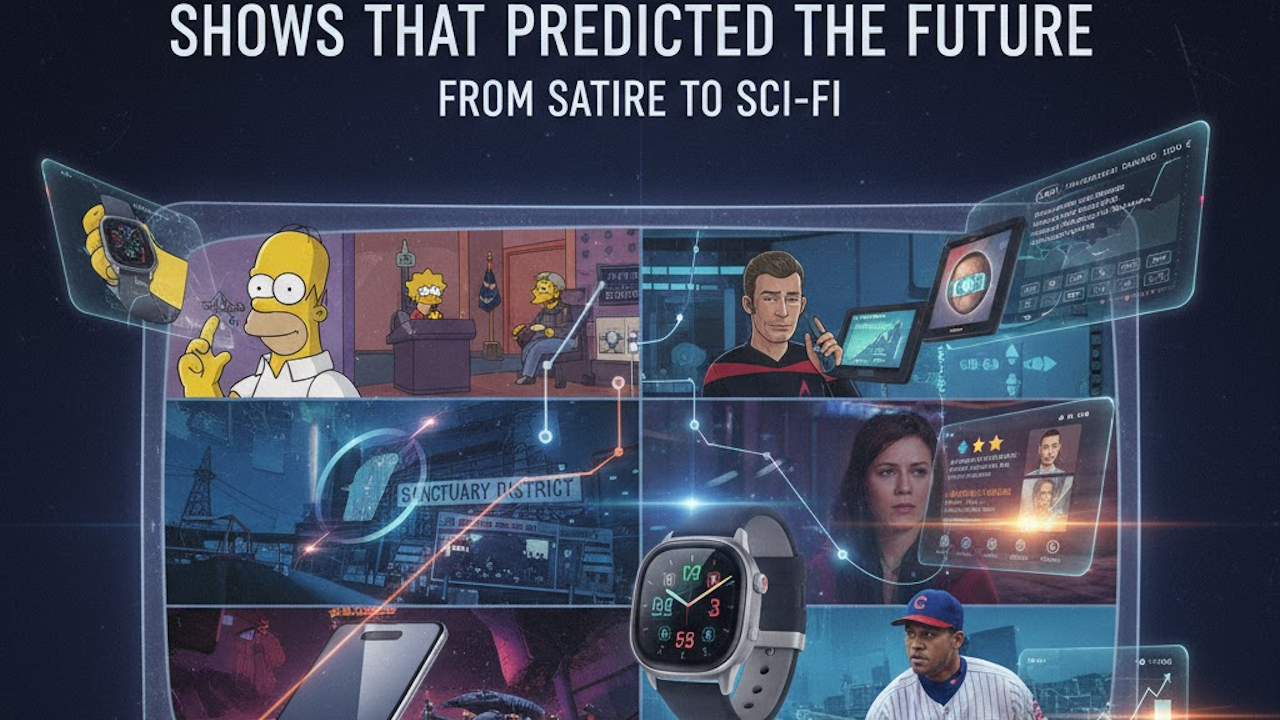
Television has long served as a mirror to society, reflecting current trends while occasionally peering into what lies ahead. Some shows, through clever writing, satire, or visionary speculation, have depicted events, technologies, and cultural shifts that later materialized in surprising ways. These predictions range from political outcomes and technological innovations to social phenomena and global crises. While many are coincidences born from astute observation of human nature and emerging patterns, they continue to fascinate audiences and spark discussions about the blurred line between fiction and reality. This article explores notable television series that seem to have foreseen aspects of our world today.
The Simpsons: A Cartoon Oracle
Few shows match the prophetic reputation of The Simpsons, which has aired since 1989. The long-running animated series has racked up an impressive list of accurate forecasts, often dismissed as lucky guesses but remarkable in their specificity.
In a 2000 episode titled “Bart to the Future,” Lisa Simpson becomes president of the United States following the tenure of Donald Trump, who had been depicted as president earlier in the same storyline. This aired well over a decade before Trump’s 2016 election victory. The show also anticipated the Disney acquisition of Fox in 2019 through a 1998 episode where the Itchy and Scratchy franchise falls under Disney’s control.
Technological predictions abound. A 1995 episode featured a smartwatch-like device, predating widespread consumer adoption by years. Other hits include references to video chat, touchscreen interfaces, and even the discovery of the Higgs boson particle. Sports outcomes have also aligned eerily: the show correctly foresaw the 2015 FIFA corruption scandal and aspects of Olympic curling results.
Critics argue that with hundreds of episodes and a satirical approach that exaggerates trends, some alignments are inevitable. Yet the volume and precision of these moments cement The Simpsons as a cultural touchstone for future-gazing.
Black Mirror: Dystopian Reflections
Black Mirror, the anthology series created by Charlie Brooker, specializes in dark explorations of technology’s impact on humanity. Premiering in 2011, many of its episodes have grown uncomfortably prescient.
The episode “Nosedive” portrays a society where social media ratings determine personal worth and opportunities, mirroring China’s social credit system and the broader gamification of online approval seen in apps and influencer culture. “Be Right Back” depicts AI recreations of deceased loved ones using digital footprints, a concept now echoed in real-world AI chatbots trained on personal data.
“White Christmas” and other installments touch on digital consciousness, surveillance, and online shaming that parallel modern cancel culture and data privacy concerns. The series’ strength lies in extrapolating from existing technologies, making its warnings feel less like predictions and more like logical extensions of current trajectories.
Star Trek: Boldly Going Where Technology Follows
The Star Trek franchise, beginning with the original series in 1966, has influenced real-world innovation perhaps more than any other show. Communicators inspired early mobile phone designs, while tablet-like padds anticipated modern devices. Voice-activated computers and universal translators have parallels in today’s AI assistants and translation software.
Star Trek: The Next Generation (1987-1994) expanded on these ideas with advanced holodecks, replicators, and ethical explorations of artificial intelligence that resonate with contemporary debates around AI rights and capabilities. The show’s optimistic vision of a united future continues to inspire scientists and engineers.
Person of Interest: Surveillance and Predictive Algorithms
This 2011-2016 series centered on an artificial intelligence system that predicts crimes and identifies persons of interest. It anticipated mass surveillance revelations, such as those from Edward Snowden, and the rise of predictive policing technologies. The show’s depiction of government and corporate data overreach feels increasingly relevant in an era of widespread digital tracking.
Parks and Recreation: Political and Cultural Foresight
The mockumentary sitcom set in small-town government included a 2015 episode referencing the Chicago Cubs winning the World Series in 2016, which they did after a long drought. It also featured storylines involving political figures and events that echoed later real-world developments.
The Lone Gunmen: A Chilling Coincidence
A short-lived 2001 spin-off from The X-Files, this show aired an episode involving a plot to crash a plane into the World Trade Center just months before the September 11 attacks. The similarity stunned viewers and highlighted how fiction can sometimes mirror unfolding threats.
30 Rock and Other Comedies
30 Rock predicted elements of the Harvey Weinstein scandal through a character’s reference to turning down his advances. Friends had a storyline that some interpret as foreshadowing social media platforms. Arrested Development touched on border wall concepts years before they dominated political discourse.
Supernatural and Pandemic Themes
Even a fantasy series like Supernatural featured plot points involving a global virus outbreak that viewers later connected to the COVID-19 pandemic, though such apocalyptic scenarios are common in the genre.
Knight Rider: Automotive and AI Innovations
The 1980s series starring David Hasselhoff featured KITT, a talking, self-driving car with advanced capabilities. Modern autonomous vehicles and voice-activated AI in cars owe conceptual debts to such portrayals, even if the execution differs.
Broader Patterns and Why It Matters
Science fiction and satirical shows often draw from expert consultations and trend analysis, giving them an edge in forecasting. Writers observe societal undercurrents and amplify them for dramatic effect. Technologies like video calls, seen in The Jetsons, or gesture interfaces from other productions, transitioned from concept to commonplace.
These predictions serve multiple purposes. They entertain, warn, and sometimes inspire. Star Trek communicators reportedly motivated engineers at companies like Motorola. Black Mirror episodes spark ethical debates that influence policy discussions around technology.
Not all forecasts are positive. Many highlight dystopian risks: loss of privacy, erosion of human connection, and unintended consequences of progress. This duality encourages viewers to approach innovation thoughtfully.
The Limits of Prophecy
It is important to note that confirmation bias plays a role. Audiences remember hits and forget misses. With thousands of hours of television produced annually, statistical inevitability ensures some alignments. Nonetheless, the most compelling examples demonstrate deep insight into human behavior and technological momentum.
Conclusion
From The Simpsons‘ satirical jabs to Black Mirror‘s chilling anthologies and Star Trek‘s hopeful visions, television shows have repeatedly captured glimpses of tomorrow. They remind us that storytelling is not merely escapism but a tool for understanding and shaping the future. As new series emerge amid rapid technological change, audiences will continue to watch with one eye on the screen and another on the headlines, wondering which fictional elements will next cross into reality. These shows invite reflection on our choices today and their long-term impacts, proving that art and life remain inextricably linked.