

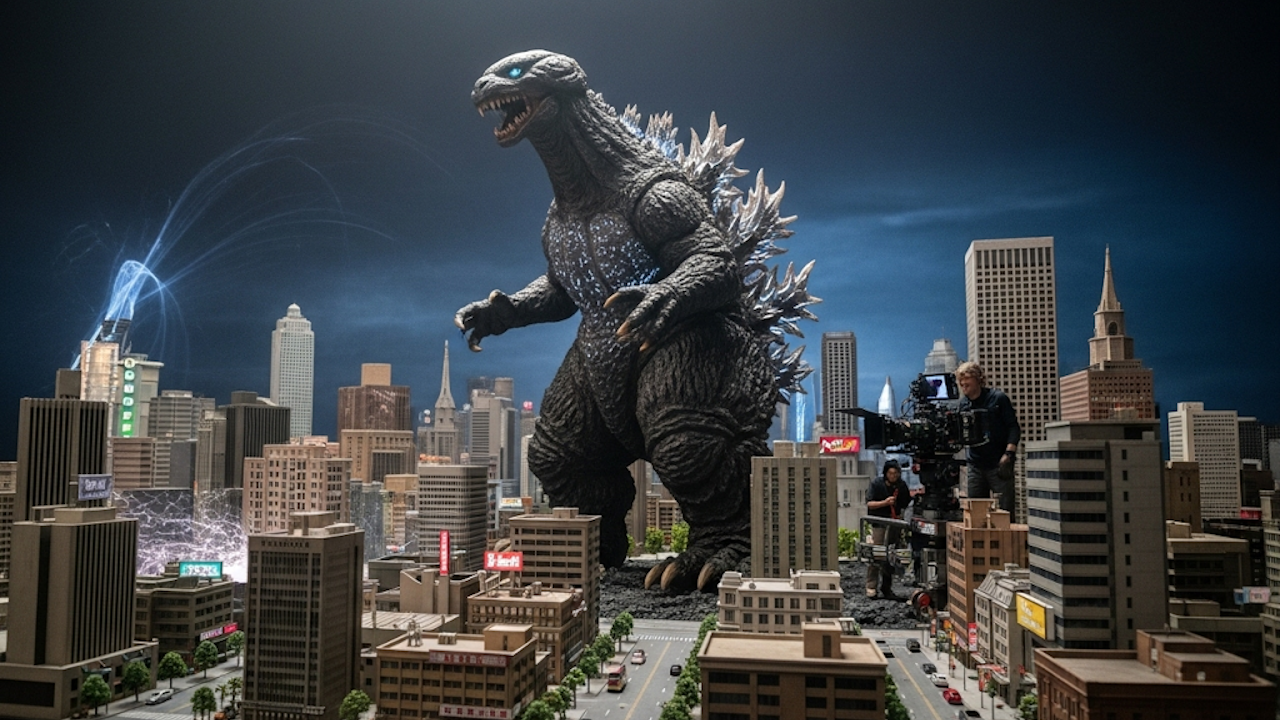
In the world of modern filmmaking, a quiet revolution is underway. For decades, computer-generated imagery promised limitless possibilities, allowing directors to conjure entire universes from pixels alone. Yet in recent years, many acclaimed filmmakers have begun stepping away from heavy reliance on digital wizardry. Instead, they are turning back to practical effects: the hands-on craft of building sets, sculpting prosthetics, rigging explosions, and capturing stunts in real time. This shift is not a rejection of technology but a recognition that tangible, in-camera techniques often deliver something CGI struggles to match: raw authenticity that resonates with audiences on a visceral level.
The resurgence of practical effects reflects growing audience fatigue with polished but hollow digital visuals. Films that once dazzled with seamless computer enhancements now risk feeling artificial under the scrutiny of high-resolution screens and savvy viewers. Directors like Christopher Nolan and Denis Villeneuve have championed hybrid approaches that prioritize physical elements, proving that practical methods can elevate storytelling without sacrificing scale. As Hollywood navigates the post-pandemic era of blockbuster fatigue and streaming demands, practical effects are reclaiming their place as a cornerstone of cinematic craft. This article explores the history, advantages, and current renaissance of practical effects, examining why they are increasingly preferred over pure CGI in an industry long dominated by digital tools.
To understand the current shift, it is essential to revisit the evolution of special effects in cinema. Practical effects dominated filmmaking for nearly a century, from the stop-motion creatures of King Kong in 1933 to the groundbreaking model work and makeup in the original Star Wars trilogy. Artisans built miniature ships, engineered mechanical monsters, and applied intricate prosthetics that allowed actors to inhabit their roles fully. These techniques required meticulous planning, skilled crews, and on-set improvisation, but the results carried an undeniable weight and texture. Light interacted with real materials in ways that felt organic, and performers reacted to physical props, enhancing emotional truth in every frame.
The 1980s and 1990s marked a transitional period. Films like Jurassic Park blended practical dinosaurs with early CGI, creating a benchmark for integration. Yet the true tipping point came in the early 2000s with the Star Wars prequels and the Lord of the Rings trilogy. While Peter Jackson relied heavily on physical miniatures and prosthetics for the Rings films, the prequels leaned into digital characters like Jar Jar Binks, sparking debates about authenticity. As computing power grew exponentially, studios embraced CGI for its speed and flexibility. Entire cities could be destroyed without insurance risks, actors could be de-aged or duplicated, and impossible landscapes materialized overnight. By the 2010s, franchises like the Marvel Cinematic Universe had normalized green-screen-heavy production, where vast portions of the final image were painted in post-production.
This CGI dominance was driven by practical considerations. Digital effects allowed last-minute script changes, reduced the need for dangerous stunts, and enabled global collaboration among visual effects houses. Budgets ballooned, but returns often justified the investment through spectacle-driven marketing. Studios could promise ever-larger scales: armies of thousands, planetary battles, or superhuman feats that no physical set could contain. For a time, it seemed inevitable that practical effects would fade into niche applications, preserved only for low-budget horror or prestige dramas.
Yet cracks began to appear. Audiences, now watching films on 4K televisions and large-format screens, started noticing the flaws. Over-polished CGI often exhibited a plastic sheen or uncanny valley effect, where digital creatures moved with unnatural precision or failed to interact convincingly with real light and shadow. Early CGI from the 2000s and 2010s aged poorly compared to practical work from decades earlier. A puppet or model filmed in 1982 retains its realism on modern displays because it exists in physical space; digital approximations, by contrast, reveal their algorithmic origins as display technology advances.
Critics and viewers alike began voicing dissatisfaction. Overuse of CGI contributed to a sense of visual sameness across blockbusters, where explosions lacked the chaotic grit of real pyrotechnics and environments felt weightless. In some cases, heavy digital intervention even undermined actor performances. Performers reacting to tennis balls on sticks or green fabric struggled to convey genuine fear or wonder, leading to scenes that felt detached. Reports from visual effects artists highlighted grueling deadlines and budget cuts that rushed post-production, resulting in subpar integration. The result was a growing perception that many modern films prioritized quantity of effects over quality of execution.
Enter the practical comeback. By the mid-2020s, several high-profile releases signaled a deliberate pivot. Christopher Nolan’s Oppenheimer exemplified this trend. For the film’s pivotal Trinity test sequence, Nolan insisted on capturing the nuclear explosion through practical means. Special effects supervisor Scott Fisher and his team experimented with combinations of gasoline, propane, aluminum powder, and magnesium to create the blinding flash and towering fireball. No computer-generated imagery was used for the blast itself. This approach not only delivered a visceral, threatening spectacle but also forced the production to commit to precise choreography and lighting in advance. Nolan has long argued that CGI can feel safe and detached, particularly in sequences meant to evoke danger. His philosophy influenced peers and reinforced the idea that practical effects ground stories in reality.
Denis Villeneuve’s Dune films further accelerated the trend. Praised by Nolan himself as one of the finest blends of live-action and digital work, Dune prioritized massive physical sets, real sand dunes, and practical ornithopter vehicles. While CGI enhanced scale for sandworms and vast battles, the foundation remained tactile: actors performed amid dust storms created on set, and costumes incorporated real materials that caught the light naturally. Villeneuve’s commitment to in-camera elements created an immersive world that felt lived-in rather than rendered. Similar strategies appeared in other sci-fi and action fare. Mad Max: Fury Road, though released earlier, served as a blueprint with its fleet of over 150 real vehicles crashing and exploding on location, delivering kinetic energy that pure digital simulation rarely matches.
The revival extends beyond tentpoles. In 2024’s The Substance, practical prosthetics accounted for 70 to 80 percent of the grotesque transformations, with makeup artist Pierre de Pouey collaborating closely with director Coralie Fargeat. The result was a body-horror experience that lingered because the distortions were physical and immediate. Wicked embraced elaborate practical costumes and sets to evoke the magical land of Oz, blending them sparingly with digital enhancements for a sense of wonder that felt handmade. Even lower-budget projects like the 2025 horror film Weapons combined practical gore with targeted CGI touch-ups, achieving haunting results on a modest budget of 38 million dollars while preserving the craft of on-set effects.
What drives this shift? Several compelling advantages set practical effects apart. First, they foster superior actor performances. When a performer shares the frame with a real creature, prop, or environment, reactions become instinctive and layered. Physical interaction builds chemistry that green-screen work rarely replicates. Second, practical effects enhance world-building through tangible details. Dust, shadows, reflections, and textures emerge naturally from real materials, creating depth that digital artists must laboriously simulate. Third, they promote disciplined filmmaking. Directors and crews must plan meticulously because changes cannot be made easily in post-production. This pre-visualization often leads to tighter scripts and more focused storytelling.
Audiences respond to this authenticity on a subconscious level. Psychological studies and viewer feedback suggest that the brain registers physical objects as more believable, even when stylized. Practical explosions carry a chaotic unpredictability that heightens tension, while digital ones can appear too controlled. Moreover, practical work ages gracefully. As display resolutions improve, older CGI often exposes its limitations, whereas a well-executed practical effect retains its power indefinitely. This longevity appeals to studios seeking catalog value in an era of endless streaming reruns.
Hybrid approaches represent the sweet spot for many contemporary productions. Rather than abandoning CGI entirely, filmmakers use it as a supporting tool: enhancing practical elements, removing wires, or extending sets beyond what can be built. This integration respects the strengths of both. In Dune, practical sand and vehicles provided the foundation, while CGI scaled up the spectacle. Such methods reduce the uncanny valley risk by anchoring digital work in real photography. They also respect the artistry of practical crews, whose skills in mechanics, pyrotechnics, and sculpting remain irreplaceable for close-up detail and emotional impact.
Of course, practical effects come with challenges. They demand significant upfront investment in time, specialized labor, and safety protocols. Building large-scale sets or rigging complex stunts can exceed budgets if not managed carefully, and weather or location constraints introduce variables absent in digital environments. Insurance and liability concerns persist for anything involving fire, heights, or moving machinery. Not every story suits practical methods; abstract or microscopic phenomena may still require digital visualization. Yet these hurdles have not deterred the growing cohort of directors who view them as worthwhile trade-offs for creative control and audience engagement.
Industry voices increasingly echo this sentiment. Guillermo del Toro, known for his love of creature design, has publicly championed practical techniques, arguing that over-reliance on digital shortcuts diminishes the magic of cinema. At a 2025 press event for his Frankenstein project, discussions highlighted how physical effects restore presence and authenticity. Makeup and effects legends like those behind The Substance emphasize that practical work bridges the gap between imagination and reality in ways pixels alone cannot. Meanwhile, visual effects supervisors note that the best CGI often begins with practical reference: scanning real models or filming plates to inform digital enhancements.
Looking ahead, the future appears balanced rather than binary. Advancements in AI and real-time rendering may streamline hybrid workflows, but they are unlikely to supplant the human touch of practical artisans. Streaming platforms, once accused of accelerating CGI overuse through rapid content demands, are now greenlighting projects that highlight craftsmanship to differentiate themselves. Audiences, empowered by social media and behind-the-scenes content, crave transparency and celebrate the visible effort behind practical feats. As one industry observer noted in late 2025 analyses, the pendulum has swung because viewers have grown weary of visual excess that lacks soul.
In conclusion, the rise of practical effects signals a maturing industry that values substance over spectacle alone. CGI remains a vital tool for the impossible and the economical, but it is no longer the default solution. By prioritizing tangible craft, filmmakers are rediscovering the joy of creation and the power of shared reality on screen. Practical effects remind us that cinema at its best is not merely an illusion of light and code but a collaboration between human ingenuity, physical materials, and the camera’s unblinking eye. As more directors embrace this philosophy, audiences stand to gain richer, more immersive experiences that linger long after the credits roll. The backseat for CGI is not permanent dismissal but a necessary recalibration, ensuring technology serves story rather than overshadowing it. In reclaiming the physical, Hollywood is not retreating into the past but advancing toward a more authentic future.