

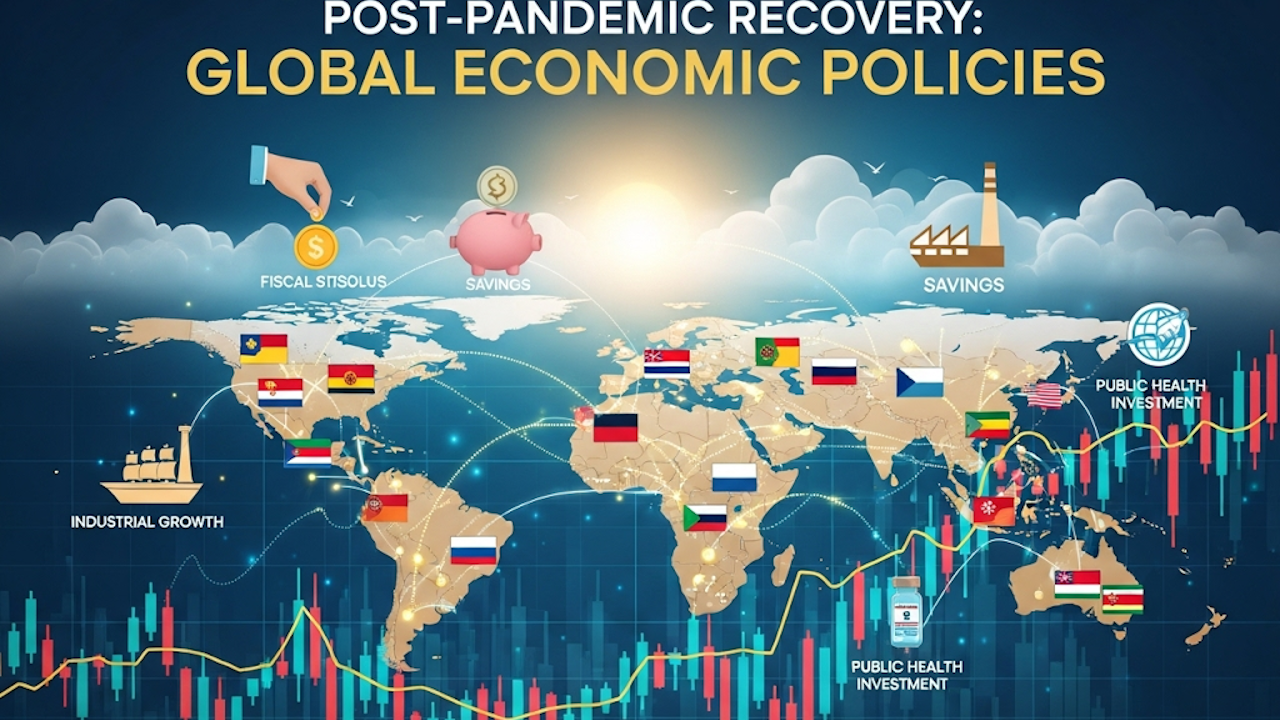
The COVID-19 pandemic triggered the sharpest global economic contraction since the Second World War. In 2020, world output plunged by approximately 3 percent, with advanced economies experiencing even steeper declines. Lockdowns, supply disruptions, and a collapse in demand created a unique crisis that demanded unprecedented policy responses. Governments and central banks worldwide deployed massive fiscal and monetary stimuli to prevent financial collapse and support households and businesses. As the world moved into the recovery phase from 2021 onward, these policies shaped divergent outcomes across regions. This article examines the key global economic policies implemented in the post-pandemic era, their impacts, challenges encountered, and lessons for future resilience.
The Initial Economic Shock and Immediate Policy Response
The pandemic’s economic fallout was swift and severe. Global trade contracted dramatically in early 2020, with supply chains fracturing due to factory closures and mobility restrictions. Unemployment surged in many countries, and consumer spending plummeted. Unlike previous recessions driven primarily by financial crises, this downturn stemmed from health measures and uncertainty.
Central banks acted decisively with monetary policy. The US Federal Reserve cut its target federal funds rate to near zero in March 2020 and launched large-scale asset purchases, including government securities and mortgage-backed securities. Similar actions occurred in the Eurozone, United Kingdom, Japan, and other advanced economies. Emerging markets also eased policy where possible, though many faced constraints from capital outflows and currency pressures.
Fiscal policy responses were equally aggressive. The US enacted packages totaling trillions of dollars, including the CARES Act with direct payments, enhanced unemployment benefits, and the Paycheck Protection Program for small businesses. The European Union introduced the NextGenerationEU recovery fund, worth over 800 billion euros, combining grants and loans to support member states. Many developing countries increased spending on health, social protection, and economic lifelines, though their capacity was limited by pre-existing debt burdens.
These measures prevented a deeper collapse. Global GDP rebounded strongly in 2021, with growth exceeding 5 percent in many forecasts. Employment recovered faster in some nations, particularly the US, where job levels surpassed pre-pandemic figures by mid-2022. However, the recovery proved uneven from the outset.
Fiscal Policies in the Recovery Phase
Post-2020, fiscal policy shifted from emergency support to targeted recovery efforts. Advanced economies focused on infrastructure, green transitions, and digitalization. The US American Rescue Plan and subsequent legislation emphasized household support and long-term investments. The EU’s Recovery and Resilience Facility tied funds to reforms promoting sustainability and competitiveness, with disbursements linked to milestones.
In emerging markets and developing economies (EMDEs), fiscal space was tighter. Many nations relied on multilateral support from the IMF and World Bank. Policies often prioritized debt sustainability while addressing vaccine access and social needs. Some countries, like those in Asia, leveraged stronger starting positions for quicker rebounds through export-led growth.
Global coordination through institutions like the G20 helped align efforts, including debt service suspensions for low-income countries. Yet, rising public debt levels became a concern. In many advanced economies, deficits remained elevated, prompting debates over the timing of consolidation.
Monetary Policy: From Accommodation to Tightening
Monetary authorities initially provided ample liquidity to stabilize markets. Quantitative easing programs expanded central bank balance sheets significantly. Forward guidance assured markets of prolonged low rates.
By 2021, however, inflation emerged as a major challenge. Supply chain bottlenecks, pent-up demand, energy price spikes from the Ukraine conflict, and labor shortages fueled price pressures. Global inflation peaked in 2022, forcing central banks to tighten policy. The Federal Reserve raised rates aggressively by over 5 percentage points in a short period. The European Central Bank and others followed suit, though at varying paces.
This shift highlighted tensions in policy coordination. In a multispeed recovery, advanced economy tightening affected EMDEs through capital flow volatility and higher borrowing costs. Central banks in emerging markets balanced domestic needs with external pressures, often resulting in higher rates earlier than desired.
Key Challenges in the Recovery
Several factors complicated the post-pandemic rebound. Supply chain disruptions persisted longer than anticipated, affecting manufacturing, trade, and inflation. Port congestion, semiconductor shortages, and shifts in consumer demand from goods to services amplified these issues. Global trade growth slowed markedly in 2022-2023 before gradual normalization.
Inflation proved sticky in some regions, eroding purchasing power and prompting tighter policy that risked slowing growth. Labor markets showed resilience in advanced economies but faced mismatches and participation gaps. Inequality widened during the crisis, with vulnerable groups and developing nations lagging in recovery.
Public debt surged globally, raising sustainability questions, especially for countries with limited fiscal buffers. Geopolitical tensions, including trade fragmentation, added uncertainty. Climate change and the need for green investments further shaped policy priorities.
Regional and Country Experiences
The United States achieved one of the strongest recoveries among advanced economies, with rapid job growth and output surpassing pre-pandemic trends by 2023. Aggressive fiscal support and monetary easing contributed, though inflation required subsequent correction.
Europe faced energy shocks from the Ukraine war, leading to varied national performances. Germany’s industrial base struggled with costs, while service-oriented economies rebounded faster. The EU’s joint fiscal instrument provided cohesion and long-term investment focus.
China’s recovery followed a different path with zero-COVID policies delaying normalization until late 2022. Property sector issues and local government debt posed domestic challenges despite strong export performance earlier.
Emerging markets showed divergence. Asian economies with manufacturing strengths recovered robustly, while many in Africa and Latin America grappled with debt, commodity dependence, and slower vaccine rollout. Low-income countries often lagged, highlighting global inequities.
Policy Innovations and Structural Reforms
The crisis accelerated certain shifts. Digital payments and remote work expanded, prompting policies to support technological adoption. Green recovery packages in Europe and elsewhere aimed to align stimulus with net-zero goals. Supply chain resilience became a priority, with efforts toward diversification, nearshoring, and friendshoring to reduce vulnerabilities.
International cooperation evolved. The IMF and World Bank updated lending frameworks and emphasized inclusive growth. Trade policies balanced openness with security concerns. Many nations pursued reforms in taxation, labor markets, and social safety nets to build resilience.
Outlook and Lessons Learned
By 2025-2026, the global economy demonstrated resilience, with growth stabilizing around 3 percent despite headwinds. Projections from the World Bank and others indicate continued but moderated expansion, contingent on managing trade tensions, debt, and climate risks.
Key lessons include the value of swift, coordinated action in crises. Complementary monetary and fiscal policies proved effective in cushioning shocks. However, the experience underscored risks of prolonged stimulus, the importance of supply-side policies, and the need for better global safety nets.
Future policies should emphasize flexibility, sustainability, and equity. Building fiscal buffers in good times, enhancing supply chain transparency, investing in human capital, and strengthening multilateral institutions will be essential. As economies navigate an era of higher geopolitical risks and technological change, adaptive policymaking remains critical for durable recovery and long-term prosperity.
The post-pandemic period revealed both the power of decisive economic intervention and the complexities of managing interconnected global systems. While challenges persist, the policies enacted laid foundations for a more resilient world economy, provided lessons are applied thoughtfully.