

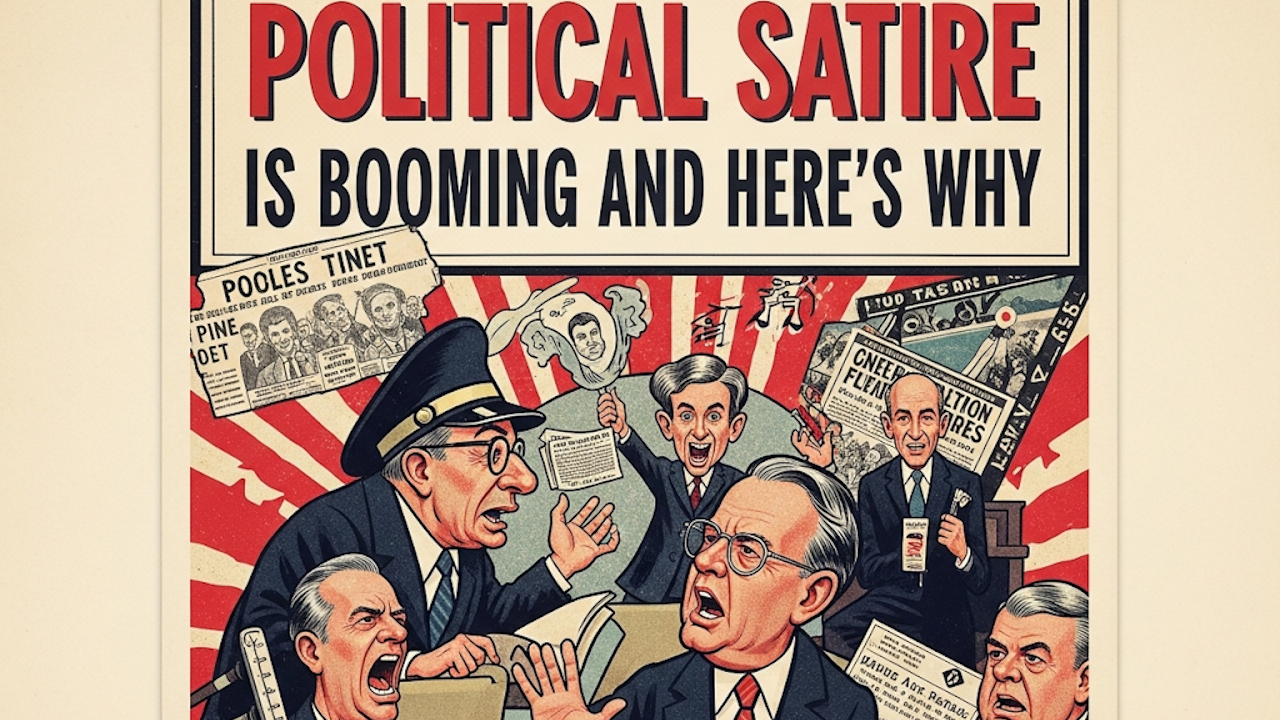
Political satire is booming in 2026, thriving across late-night television, streaming platforms, podcasts, social media, and user-generated content. Audiences turn to humor to process the complexities of modern politics, where traditional news often feels exhausting or untrustworthy. Viewership data shows clear growth: 32 percent of Americans now regularly watch satire and sketch comedy, up from 20 percent in 2020, with 30 million considering it one of their top five genres. This surge reflects deeper cultural and technological shifts that make satire not just entertaining but essential for many.
The reasons behind this boom are numerous. Polarized politics, declining trust in institutions, the rise of digital platforms, and the sheer absurdity of current events all play roles. Satire provides relief, explanation, and a sense of shared understanding in chaotic times. It engages younger audiences who might otherwise tune out serious news, while offering veterans of political discourse a fresh, critical lens. Yet the form also faces challenges, including backlash, accusations of bias, and the difficulty of satirizing a reality that sometimes outpaces exaggeration.
A Long Tradition Meets Modern Chaos
Political satire has deep roots in democratic societies. From ancient Greek playwrights mocking leaders to 18th-century pamphleteers and 20th-century cartoonists, humor has long served as a tool to expose hypocrisy, incompetence, and power abuses. In America, it gained modern prominence through shows like “Saturday Night Live,” “The Daily Show” with Jon Stewart, and “The Colbert Report.” These programs blended news parody with sharp commentary, attracting viewers who felt mainstream media fell short.
Today, the landscape has expanded dramatically. Late-night hosts such as Stephen Colbert, Jimmy Kimmel, and Seth Meyers continue delivering monologues that dissect daily headlines, often outperforming straight news in certain time slots. Conservative voices like Greg Gutfeld on Fox News have built large audiences with their own brand of satire, proving the format appeals across the spectrum. Podcasts and streaming have further democratized the space. Shows blending comedy with political talk, including those hosted by figures like Joe Rogan or Theo Von, reach millions even when not explicitly labeled as satire.
The current boom accelerated during heightened political tension. Events that feel larger than life, filled with dramatic rhetoric and unexpected twists, lend themselves naturally to exaggeration and ridicule. When real-world developments border on the theatrical, satirists find rich material without much invention. This dynamic creates a feedback loop: outrageous moments generate viral clips, memes, and discussions that keep the cycle alive.
Distrust in Institutions Fuels the Turn to Humor
One major driver is widespread skepticism toward government, media, and traditional authorities. As public trust erodes, many seek alternative sources that feel more authentic or approachable. Comedy fills this gap by making complex issues digestible. A policy debate on economics or foreign affairs can seem impenetrable in a news report, but a well-crafted joke or sketch breaks it down into relatable terms.
Studies and observations highlight how satire keeps younger Americans engaged. With declining faith in official channels, humor offers entry points into political awareness. Viewers learn key facts while laughing, increasing the likelihood they remember and share the content. This “infotainment” approach boosts political efficacy, the belief that ordinary people can influence events. Even if satire reinforces preexisting views for some, it draws in those with low interest who might skip dry analysis entirely.
In an era of information overload, satire cuts through noise. Short-form videos on platforms like TikTok deliver quick hits of irony or exaggeration that resonate instantly. Longer podcast episodes allow deeper dives wrapped in conversational humor. The result is a form of civic education that feels voluntary rather than obligatory. People consume it not out of duty but because it entertains, fostering incidental learning about current affairs.
Technology and Social Media Amplify Reach and Speed
Digital platforms have transformed satire from a scheduled broadcast event into a constant, participatory phenomenon. Anyone with a smartphone can create and distribute content. Memes, deepfake-style videos (used ethically or otherwise), and rapid-response sketches spread faster than traditional media can respond. This immediacy suits a 24-hour news cycle where stories evolve by the minute.
Streaming services have contributed to the surge. As linear television declines, satire and sketch comedy have gained ground, rising notably in popularity among digitally native audiences. Platforms favor relatable, shareable humor that keeps users engaged longer. Viral moments from shows or independent creators rack up millions of views, turning niche commentary into mainstream conversation.
Social media democratizes production. TikTok trends, Instagram reels, and YouTube channels allow comedians and amateurs alike to comment on events in real time. A single well-timed post can spark widespread discussion or even influence public perception. This shift has broadened the voices involved, moving beyond network gatekeepers to a more diverse, if sometimes chaotic, ecosystem.
Podcasts deserve special mention. Their growth has been remarkable, with listeners tuning in across age groups and political affiliations. Political or comedy-focused episodes often blend analysis, guest interviews, and humorous asides. Conservative-leaning comedy podcasts have amassed significant followings, diversifying the satirical landscape beyond the traditionally left-leaning late-night shows.
The Absurdity of Politics as Satire’s Best Material
Contemporary events often provide ready-made fodder. When political figures behave in ways that seem exaggerated or contradictory, satirists highlight the gap between rhetoric and reality. This incongruity, a core element of humor, becomes potent when the stakes feel high. Audiences turn to comedy for catharsis, processing frustration or disbelief through laughter.
Some observers note that certain developments make traditional satire harder because reality already stretches credibility. Yet creators adapt by leaning into “ironic irony” or focusing on underlying patterns rather than isolated gaffes. Conservative outlets like The Babylon Bee have found success with headlines and articles that parody news from a different angle, showing the format’s flexibility.
Research suggests satire can be more damaging to reputations than straightforward criticism because it reduces targets to caricatures, making ridicule stickier in memory. This power explains both its appeal and the backlash it provokes. Politicians and partisans sometimes decry it as unfair or biased, yet attempts to suppress or cancel comedic voices often backfire, increasing their visibility.
Benefits and Potential Drawbacks
Satire serves several positive functions. It encourages critical thinking by questioning authority and exposing inconsistencies. It fosters social bonding among those who share the joke, creating communities around common perspectives. For democracy, it acts as a safety valve, allowing dissent through humor rather than more confrontational means. Historical examples show how comedy has rallied public sentiment or highlighted issues that might otherwise be ignored.
It also boosts participation. Exposure to satirical content correlates with higher likelihood of discussing politics, sharing information, or even voting. Young people, in particular, report feeling more tuned in when comedy explains events in accessible ways.
However, drawbacks exist. Satire often reinforces echo chambers, with audiences preferring material that aligns with their views. It can foster cynicism if it portrays all politics as inherently ridiculous or corrupt. In polarized times, it risks deepening divisions rather than bridging them. Some worry that when reality feels surreal, the line between satire and actual news blurs, complicating informed discourse. Deepfakes and AI-generated content add another layer, raising questions about authenticity in humorous formats.
Concerns about “too hot for TV” satire emerged in recent years, with reports of network adjustments or host challenges amid shifting political winds. Yet the overall trend points to resilience, as digital alternatives provide outlets when traditional ones face pressure.
A Diverse and Evolving Landscape
The boom includes voices from multiple directions. Liberal-leaning programs dominate certain TV slots, but conservative satirists and podcasters have built substantial audiences by offering contrasting takes. This pluralism strengthens the genre, preventing any single perspective from monopolizing the form.
Emerging formats like satirical games, web series, and interactive content further expand possibilities. Short videos on emerging platforms allow rapid experimentation. Established shows adapt by incorporating social media strategies, encouraging viewers to engage beyond passive watching.
Global influences appear as well. While American politics drives much of the domestic conversation, international events and cross-cultural humor add depth. The universal appeal of poking fun at power ensures satire remains relevant worldwide.
Why the Boom Matters for Society
Political satire’s current popularity signals something important about public appetite. In stressful, uncertain times, laughter provides psychological relief without requiring denial of serious issues. It humanizes abstract problems and reminds audiences that power structures deserve scrutiny.
For democracy to function, citizens need mechanisms to hold leaders accountable and process collective experiences. Satire offers one such mechanism, imperfect but potent. It entertains while informing, critiques while connecting. As long as politics produces material worthy of mockery, and technology enables wide distribution, the boom seems likely to continue.
Challenges remain. Creators must navigate cancellation risks, audience fatigue, and the ethical lines of representation. Audiences benefit from consuming a variety of sources, using humor as a supplement rather than sole guide. Media literacy helps distinguish exaggeration from fabrication.
Ultimately, the rise of political satire reflects human resilience. When faced with division, complexity, or absurdity, people turn to wit as a coping strategy and a weapon of the mind. It keeps discourse alive, prevents complacency, and injects levity into weighty matters. In 2026 and beyond, as long as free expression endures, expect satire to keep booming, evolving with the times while performing its timeless role: making us laugh while prompting us to think.