

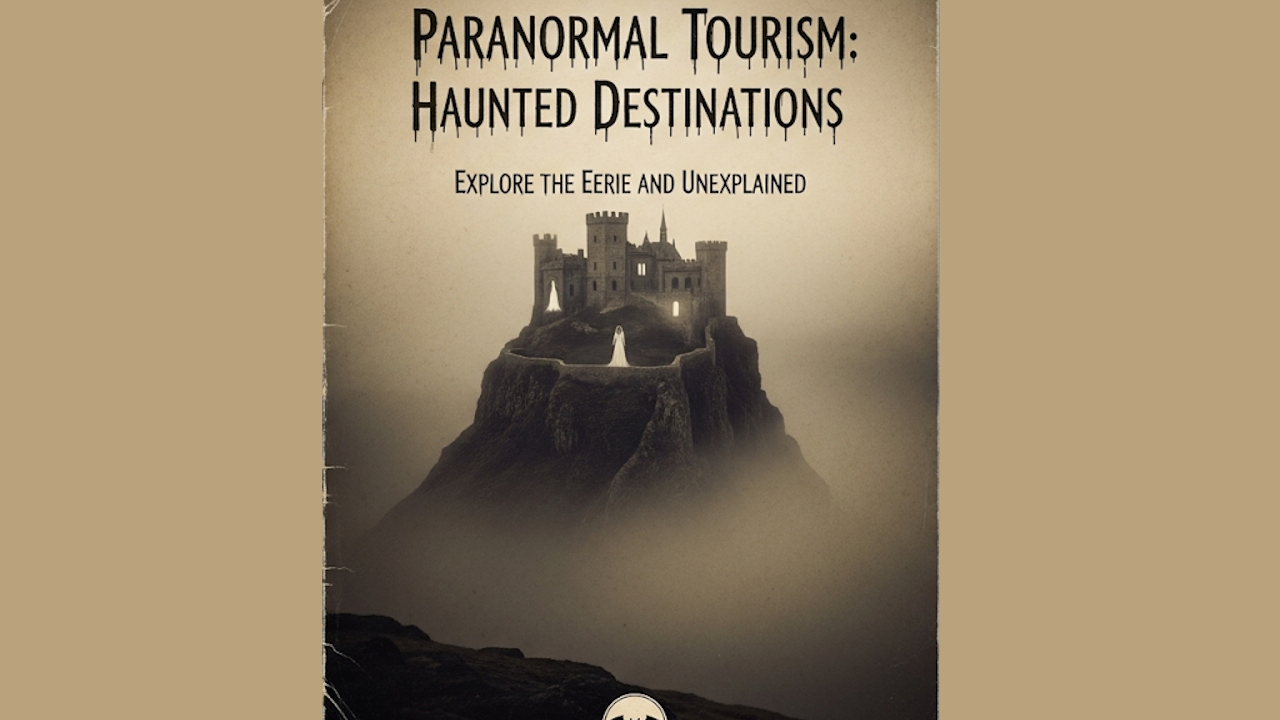
Paranormal tourism has emerged as a vibrant niche within the broader travel industry, drawing millions of visitors each year to sites where history, tragedy, and the unexplained intersect. Often referred to as ghost tourism or a subset of dark tourism, it involves journeys to locations reputedly inhabited by spirits, offering experiences that range from guided walking tours and overnight stays to full scale paranormal investigations. Travelers are not merely sightseeing. They seek something deeper: a brush with the unknown, a shiver down the spine that confirms or challenges beliefs about life after death. This form of tourism taps into universal human curiosity about mortality, the afterlife, and the stories that linger in old walls and forgotten corners.
The growth of paranormal tourism reflects broader cultural shifts. Once dismissed as fringe interest limited to Halloween enthusiasts or dedicated ghost hunters, it has become a mainstream pursuit fueled by popular media, social platforms, and a desire for immersive, story driven travel. Market estimates place the global ghost tourism sector at approximately 3.8 billion dollars in 2025, with projections indicating expansion to 8.1 billion dollars by 2034 at a compound annual growth rate of 8.7 percent. In key destinations such as Salem, Massachusetts, or Savannah, Georgia, haunted attractions and tours can account for up to 20 percent of local tourism revenue. The rise aligns with the larger dark tourism market, valued in the tens of billions, where visitors confront sites of tragedy not for morbidity but for reflection, education, and thrill. Television programs featuring paranormal investigators, viral videos of alleged encounters, and a post pandemic appetite for unique experiences have all accelerated this trend. What began as small scale ghost walks in historic cities has evolved into a sophisticated industry complete with professional guides, specialized equipment rentals, and even luxury haunted accommodations.
North America stands out as a powerhouse for paranormal tourism, boasting a wealth of sites tied to colonial history, Civil War battles, and frontier legends. One of the most iconic is the Stanley Hotel in Estes Park, Colorado. Opened in 1909, this grand resort perched against the Rocky Mountains gained worldwide fame after author Stephen King spent a night there and drew inspiration for his novel The Shining. Guests and staff report hearing piano music echoing from empty ballrooms, seeing apparitions of former owners Freelan and Flora Stanley, and witnessing the laughter of children who are nowhere to be found. The hotel embraces its reputation with nightly ghost tours, psychic readings, and even a dedicated paranormal research room where visitors can attempt electronic voice phenomena recordings. Overnight stays here combine historic elegance with the possibility of unexplained activity, making it a bucket list destination for enthusiasts.
Nearby in the American West, the Queen Mary ocean liner, permanently docked in Long Beach, California, offers another layer of maritime mystery. Once a luxurious transatlantic vessel that served during World War II, the ship is now a floating hotel and attraction renowned for its haunted encounters. Reports include sightings of a woman in a white evening gown near the first class swimming pool, the sounds of splashing in empty areas, and the ghost of a crew member crushed by a watertight door. The vessel hosts a variety of paranormal attractions, including guided Haunted Encounters tours and after hours Paranormal Ship Walks that allow participants to explore restricted decks with flashlights and recording devices. These experiences blend historical narration with hands on investigation, appealing to both skeptics and believers.
Further east, Gettysburg, Pennsylvania, draws crowds eager to walk the blood soaked fields of the 1863 Civil War battle. The Jennie Wade House, home to the only civilian killed during the fighting, features tours that recount her tragic story while inviting guests to listen for footsteps and voices in rooms unchanged since the conflict. Nearby battlefields and historic inns offer evening ghost walks where lanterns illuminate tales of fallen soldiers whose spirits are said to linger. Many visitors combine these tours with overnight stays in reputedly active inns, where electromagnetic field meters and spirit boxes sometimes capture responses that defy easy explanation.
New Orleans, Louisiana, pulses with paranormal energy rooted in its layered past of French, Spanish, African, and Creole influences. The French Quarter and surrounding cemeteries teem with ghost tours that weave voodoo lore, vampire legends, and yellow fever epidemics into nighttime strolls. Sites like the Bourbon Orleans Hotel, once an orphanage and convent, report the patter of children’s feet and the scent of lavender from long departed nuns. Tours here often include stops at haunted plantations and above ground tombs, where participants learn how cultural practices shape beliefs about restless spirits. The city’s emphasis on theatrical storytelling makes its paranormal offerings accessible yet deeply atmospheric, attracting families, couples, and solo adventurers alike.
Europe provides an equally rich tapestry, with medieval castles, ancient prisons, and plague scarred streets that seem tailor made for ghostly encounters. Edinburgh, Scotland, ranks among the world’s most haunted cities, its underground vaults and cobblestone alleys alive with legends of the poor, the plague stricken, and executed criminals. Extreme Paranormal Underground Ghost Tours lead groups through the Edinburgh Vaults, where cold spots, disembodied voices, and shadowy figures have been documented for centuries. Edinburgh Castle itself, perched on volcanic rock, hosts tales of a headless drummer boy and a phantom piper whose music echoes on quiet nights. Visitors can join graveyard tours or overnight investigations that encourage the use of dowsing rods and digital recorders to seek evidence of the beyond.
Across the English Channel, London offers its share of spectral sites within landmark hotels and palaces. The Langham Hotel, a grand Victorian property, is said to host several resident ghosts, including a doctor who murdered his wife before taking his own life and a figure in a gray suit who vanishes when approached. Similar stories surround other historic properties, where luxury accommodations meet whispers of the past. In Denmark, Dragsholm Slot, a 13th century castle turned hotel, welcomes guests with reports of three prominent spirits: a white lady who wanders corridors, a gray lady tied to a former maid, and the Earl of Bothwell who rides his carriage through the grounds. Overnight stays here allow travelers to experience the blend of medieval architecture and modern comfort while remaining alert for unexplained phenomena.
Further afield, Asia and other regions contribute unique perspectives to paranormal tourism. Japan’s Aokigahara Forest at the base of Mount Fuji carries a somber reputation linked to its history as a site of suicides, with some visitors reporting eerie silences broken by whispers or the sensation of being watched. Guided tours emphasize respect for the natural and cultural significance of the area, framing paranormal elements within broader themes of mental health and folklore. In Australia, the Monte Cristo Homestead in Junee, New South Wales, once a grand residence, now operates as a museum and bed and breakfast where apparitions of former owners and servants appear in photographs and during vigils. These international sites highlight how paranormal tourism adapts to local traditions, turning tragedy and mystery into opportunities for cross cultural understanding.
What draws people to spend nights in these locations varies widely. Some participate in structured investigations using tools like spirit boxes, infrared cameras, and motion sensors to capture potential evidence. Others prefer passive experiences, such as sitting quietly in a darkened room or joining a theatrical ghost tour that prioritizes entertainment and history. Many haunted hotels and attractions now offer packages that include catered dinners, expert led presentations, and group séances. The Crescent Hotel in Eureka Springs, Arkansas, for instance, known as America’s most haunted hotel due to its past as a fraudulent cancer hospital, provides ghost tours and overnight paranormal events that have been featured on numerous television programs. Similarly, the Villisca Axe Murder House in Iowa and the Lizzie Borden House in Massachusetts allow brave guests to rent rooms where infamous crimes occurred, complete with historical context and optional investigation equipment.
Ethical considerations play an important role in responsible paranormal tourism. Operators and visitors alike stress respect for sites that may involve real human suffering, such as battlefields or former asylums. Guidelines often include refraining from provoking spirits, avoiding damage to property, and honoring cultural sensitivities around death and burial grounds. Skeptics contribute to the conversation by pointing out natural explanations for many reported phenomena, including infrasound, carbon monoxide leaks, electromagnetic fields from wiring, and the power of suggestion in dimly lit, emotionally charged environments. Scientific investigations using controlled methods have occasionally debunked claims while leaving room for genuine mysteries that defy current understanding. This balance keeps the field dynamic, encouraging critical thinking alongside open minded exploration.
Planning a paranormal journey requires preparation. Research destinations in advance to select tours or stays that match your comfort level, whether that means family friendly daytime walks or intense overnight vigils. Packing essentials might include a sturdy flashlight, comfortable shoes for uneven terrain, a notebook for recording observations, and perhaps a digital recorder for capturing potential electronic voice phenomena. Many locations prohibit personal investigation equipment during standard tours to maintain safety and flow, so check policies beforehand. Booking during shoulder seasons can reduce crowds and heighten the sense of intimacy with the site. Travelers should also consider physical and emotional readiness, as some experiences can evoke strong reactions ranging from excitement to unease.
Paranormal tourism continues to evolve as technology integrates with tradition. Augmented reality apps now overlay historical images onto real time views of haunted sites, while virtual tours bring distant locations to those unable to travel. Yet the core draw remains the in person encounter: standing in a silent corridor, feeling the temperature drop, or hearing a door creak when no one else is near. These moments, whether interpreted as supernatural or psychological, create lasting memories that connect travelers to the past in profound ways.
In the end, haunted destinations offer more than chills and thrills. They provide windows into history’s darker chapters, opportunities for personal reflection, and a shared sense of wonder that transcends borders and beliefs. As the industry grows, it invites a new generation of explorers to step beyond the ordinary, listen closely to the stories embedded in stone and timber, and perhaps, just perhaps, catch a glimpse of something that lingers just out of sight. Whether one returns convinced of the paranormal or enriched by the journey itself, paranormal tourism leaves an indelible mark, reminding us that some places hold secrets that time has not yet fully revealed.