

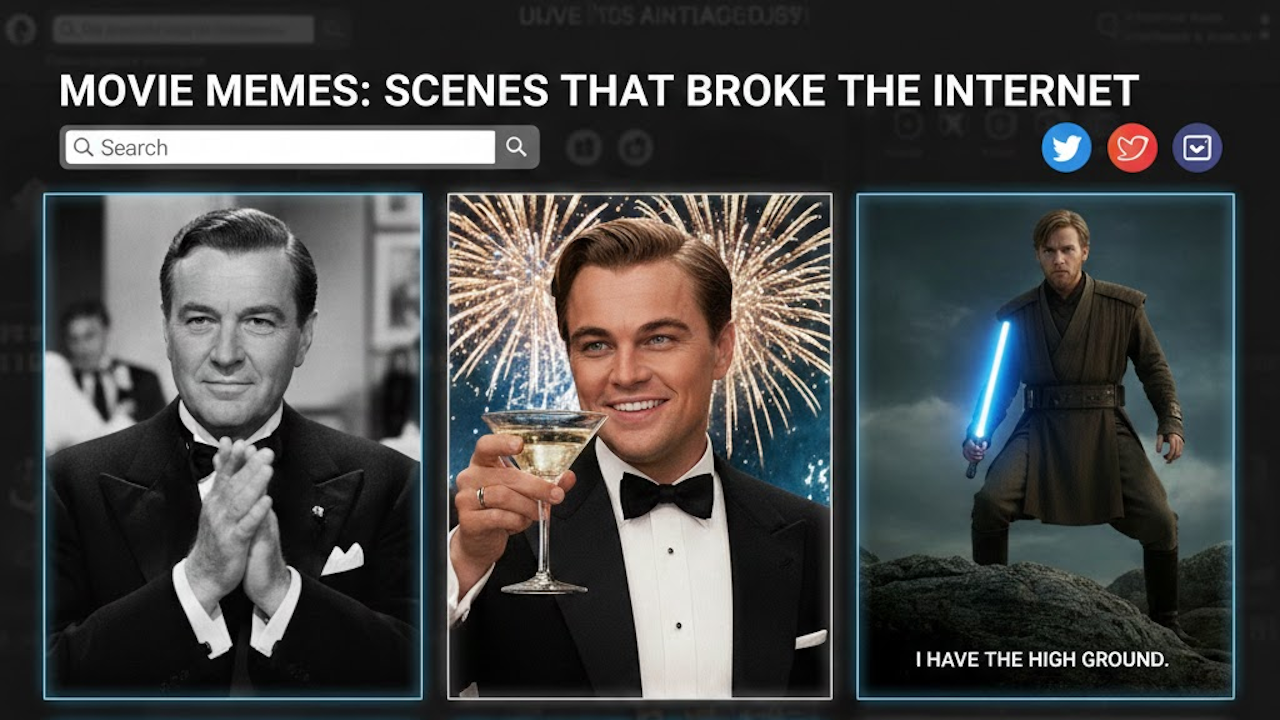
In the early days of widespread broadband and platforms like YouTube, Reddit, and early social networks, certain movie moments escaped the screen and took on lives of their own. They were clipped, subtitled, remixed, and turned into templates that millions used to express everything from everyday annoyance to grand declarations. These were not just funny lines or cool visuals. They became shorthand in digital conversations, reaction tools, and cultural touchstones that outlasted their films in many cases. A well timed kick, a stern warning about impossible tasks, or a furious rant in a bunker could spark waves of creativity across the web. People who never saw the original movie still quoted or referenced the meme versions. This phenomenon changed how audiences interacted with cinema and how studios thought about shareable content.
The scenes that succeeded as memes shared certain traits. They featured strong visuals that worked in still images or short loops. The dialogue was punchy and repeatable. There was often an emotional peak, whether defiance, absurdity, sarcasm, or over the top intensity. Most importantly, they lent themselves to endless reinterpretation. A single frame or a few seconds of footage could be paired with new text or context to comment on politics, relationships, work, sports, or the frustrations of modern life. What started as organic sharing on forums and video sites grew into global trends. Some moments even influenced real world behavior, from chants at events to how people caption photos or videos.
One of the most iconic early examples arrived with the 2006 film 300, directed by Zack Snyder. In a stylized depiction of the Battle of Thermopylae, King Leonidas faces a Persian messenger demanding Sparta’s surrender and tribute. After a tense standoff filled with insults and defiance, Leonidas delivers a thunderous kick that launches the messenger into a massive pit. As the man falls, Leonidas bellows, “This is Sparta!” The scene combines slow motion action, dramatic lighting, and an unforgettable delivery from Gerard Butler. It captured raw, unapologetic resistance in a visually striking package.
The kick and the line spread rapidly once clips hit the internet. Viewers loved the sheer bravado and the perfect quotability. It became a battle cry for any situation involving standing one’s ground or rejecting authority. Sports fans used it during games. People applied it to personal boundaries or group identity. Parodies and remixes appeared everywhere, with the phrase swapped for local references or absurd scenarios. The visual of the kick proved ideal for GIFs and reaction videos. Even years later, the moment remains a go to for expressing pride or rejection. It showed how a single over the top action sequence could define an entire film’s online legacy and enter everyday language.
Another early standout came from The Lord of the Rings: The Fellowship of the Ring in 2001. During the Council of Elrond, Boromir warns the gathered leaders about the dangers ahead. He declares that “One does not simply walk into Mordor.” The line underscores the perilous journey required to destroy the One Ring, highlighting the ring’s corrupting power and the sheer impossibility of a direct assault on the dark land. Sean Bean’s delivery, combined with the serious tone of the meeting, gave the moment weight.
The meme format took the image of Boromir, often with his serious expression or gesturing hand, and paired it with text variations. The structure became “One does not simply [insert difficult or ridiculous task].” It applied to everything from waking up early on a Monday to complex video game achievements or navigating bureaucracy. The template proved incredibly versatile because it captured the universal feeling of facing an overwhelming challenge. Image macros spread across forums and later social media. Variations included edited backgrounds or additional characters. The meme’s longevity comes from its flexibility. It works for any context where effort meets resistance. Boromir’s warning, meant to be grave within the story, turned into a lighthearted way to acknowledge life’s hurdles. It remains one of the most enduring template memes in internet history.
A darker yet wildly popular example emerged from the 2004 German historical drama Downfall, also known as Der Untergang. The film portrays Adolf Hitler’s final days in his Berlin bunker. One extended scene shows Hitler receiving news that his planned counteroffensive has failed. He erupts in a furious rant at his generals, pacing, shouting, and gesturing wildly while his staff remains mostly silent. Bruno Ganz’s intense performance conveys rage, denial, and despair in a raw, contained space.
Once clips circulated online, users began creating parody subtitles. The serious historical footage was overlaid with text about mundane modern problems: slow internet, terrible customer service, video game losses, bad dates, or failed cooking attempts. The contrast between the dramatic acting and the silly complaints created instant humor. The rants became a perfect vehicle for venting frustrations in a shared, exaggerated way. Videos racked up millions of views across platforms. The format inspired countless imitators using other dramatic scenes, but the original bunker clip set the standard. It demonstrated how meme creators could repurpose heavy source material for cathartic comedy. The phenomenon also sparked conversations about the ethics of using such footage, yet its popularity never faded. It proved that even the most somber cinematic moments could fuel widespread creative expression when the structure allowed for easy adaptation.
From the 1999 sci fi classic The Matrix, another enduring image macro arose. Morpheus, played by Laurence Fishburne, sits across from Neo and poses a philosophical question while offering a choice between a red pill and a blue pill. The line “What if I told you…” often precedes a revelation or twist in the meme versions. The scene carries weight within the film as it introduces the simulated nature of reality and the path to awakening.
The meme typically features Morpheus in his sunglasses or serious pose, with text revealing some supposed truth or ironic observation. It spread as a way to present conspiracies, obvious facts framed dramatically, or humorous “reveals” about everyday life. The visual of the character leaning forward added to the conspiratorial feel. People used it to comment on politics, technology, pop culture, or personal realizations. The template’s strength lies in its ability to make any statement feel profound or secretive. Even those unfamiliar with the full film recognize the format. It became a staple in image sharing and later video edits. The scene’s philosophical undertones lent themselves to both serious commentary and playful exaggeration, ensuring broad appeal across different online communities.
Comedy provided fertile ground too. In the 2004 film Anchorman: The Legend of Ron Burgundy, Will Ferrell’s character delivers news in his usual bombastic style. After a calm setup, he suddenly declares, “That escalated quickly,” in response to a situation spiraling out of control. The line and the delivery captured the absurdity of rapid, unexpected turns.
The meme took off as a caption or reaction for any scenario that went from normal to chaotic in seconds. It paired perfectly with GIFs of the character or similar escalating moments from other media. People applied it to arguments, news stories, personal stories, and online drama. The phrase highlighted the human tendency to note when things get out of hand while doing little to stop them. Its simplicity made it instantly usable. The meme thrived because it offered a witty way to acknowledge absurdity without needing further explanation. It joined the ranks of quotable comedy moments that became everyday digital language.
Gene Wilder’s performance in the 1971 film Willy Wonka & the Chocolate Factory yielded another classic reaction image. In one scene, Wonka responds to a child’s question or statement with a subtle, knowing smile and a raised eyebrow. The expression conveys condescension, sarcasm, or quiet judgment.
The “Condescending Wonka” or “Creepy Wonka” meme used stills from this moment to react to naive comments, bad ideas, or obvious statements. The image macro format allowed users to add text that amplified the judgmental tone. It became a favorite for pointing out flaws in logic or mocking pretension. The subtlety of Wilder’s acting made the meme versatile. It worked for light teasing or sharper critique. Because the original scene is brief and visually distinctive, it translated seamlessly into shareable content. The meme endured as a tool for online discourse, showing how a single facial expression could carry volumes in digital shorthand.
Action cinema contributed the legendary slow motion handshake from the 1987 film Predator. Arnold Schwarzenegger and Carl Weathers, as Dutch and Dillon, greet each other with an extended, intense handshake that lasts far longer than normal while dramatic music plays. The moment emphasizes their camaraderie and macho energy.
The “Epic Handshake” meme turned the prolonged grip into a symbol of agreement, mutual respect, or ironic manliness. Still images or looped clips were edited with new text or paired with other elements to represent two parties coming together on an idea. It appeared in discussions of alliances, shared opinions, or humorous bromance scenarios. The visual absurdity of the extended shake made it instantly recognizable and remixable. It captured a specific brand of 1980s action movie excess that felt ripe for affectionate parody. The meme’s staying power comes from its flexibility in representing unity or exaggerated toughness across countless contexts.
Other notable moments include the awkward “Oh hi Mark” exchange from the cult film The Room, which became shorthand for cringeworthy dialogue or bad acting. Nicolas Cage’s exaggerated reactions in films like Vampire’s Kiss spawned “You don’t say?” face memes for obvious statements. Leonardo DiCaprio’s toast in The Great Gatsby and his laugh in Django Unchained provided versatile reaction images for celebration or sinister amusement. Each added to the rich library of cinematic shorthand available online.
These scenes succeeded because they offered more than entertainment. They provided tools for connection and expression in an increasingly digital world. A shared reference to “This is Sparta” or “One does not simply” signals cultural literacy and invites participation. Creators could build on the original without needing the full context of the film. Platforms rewarded short, loopable content, and these moments fit perfectly. They also reflected broader human experiences: defiance, impossibility, frustration, sarcasm, and bonding. The memes turned passive viewing into active creation and sharing.
The rise of these memes influenced the film industry in turn. Studios and marketers began considering clipability and meme potential during production and promotion. Actors sometimes embraced or referenced their meme status in interviews or later roles. New releases often saw immediate meme activity around key scenes, amplifying buzz. At the same time, some viewers felt certain moments lost impact after heavy meme exposure. A first time watcher of 300 or Downfall might approach the scene already familiar with its internet afterlife. This double edged effect highlights how deeply these moments embedded themselves in popular culture.
The phenomenon continues to evolve with new platforms and formats. Short form video has given fresh life to older clips through edits and trends. Yet the foundational examples from earlier decades retain their power. They represent a time when the internet transformed cinema from something watched in isolation into something collectively remixed and referenced. They created communities around shared humor and commentary. They kept films alive long after theatrical runs or awards seasons ended.
Ultimately, movie scenes that broke the internet reveal the unique alchemy of cinema and digital culture. A few seconds of film, when captured at the right emotional or visual peak, can generate endless creativity. These moments do not diminish the original works. Instead, they extend their reach and relevance. They turn individual viewing experiences into collective ones. As long as people seek ways to communicate through humor, sarcasm, and shared references, the legacy of these scenes will persist. They stand as proof that great filmmaking can echo far beyond the theater, shaping conversations and creativity across the web for years to come. The internet may move fast, but the best movie memes have proven remarkably durable.