

In the digital age, a movie’s legacy is no longer defined solely by its box office returns or critical acclaim. Instead, a film often finds immortality through the “meme-ification” of its most iconic moments. When a specific scene is stripped of its original context and repurposed to express relatable human emotions, it enters the permanent lexicon of internet culture.
From tears of genuine heartbreak to moments of unintentional comedy, these are the cinematic scenes that broke the internet and redefined how we communicate online.
1. The “Distracted Boyfriend” of the 1940s: Citizen Kane
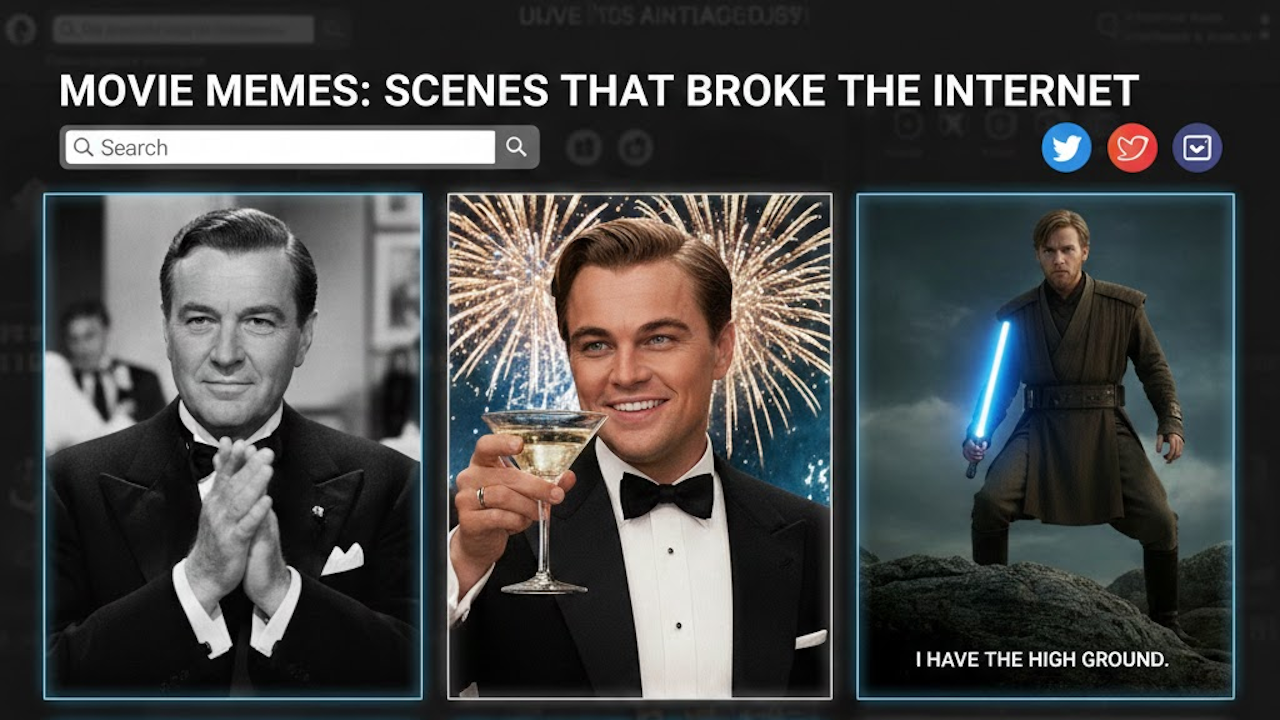
While we often think of memes as a modern phenomenon, internet users have a knack for reaching back into film history to find the perfect reaction. Orson Welles’ masterpiece, Citizen Kane, provided the world with the “Slow Clap.”
Originally intended to show Kane’s defiant support for his wife’s failing opera career, the GIF is now the universal gold standard for sarcastic appreciation. It is the go-to response for when someone does something technically impressive but fundamentally stupid.
2. Leonardo DiCaprio: The King of Memes
If there were an Academy Award for “Most Memeable Actor,” Leonardo DiCaprio would have a shelf full of them. Two specific scenes from his filmography have become inescapable:
- The Great Gatsby Toast: The image of Jay Gatsby raising a martini glass with a fireworks display in the background is the ultimate symbol of “Cheers” or “We made it.”
- The Wolf of Wall Street “I’m Not Leaving”: Jordan Belfort’s high-energy refusal to exit his firm has become the anthem for anyone digging their heels in, whether it is a sports star staying with a team or a social media user refusing to log off during a heated argument.
3. The Prequel Renaissance: Star Wars
Perhaps no franchise has benefited more from meme culture than the Star Wars prequels. For years, these films were criticized for their dialogue. However, the internet transformed those perceived weaknesses into comedic gold.
The scene in Revenge of the Sith where Obi-Wan Kenobi declares, “It’s over, Anakin! I have the high ground,” has transitioned from a dramatic climax to a literal and figurative punchline about any situation involving a slight advantage. Similarly, Palpatine’s “I am the Senate” and “Dew it” have become shorthand for anyone embracing their inner villain.
4. Emotional Vulnerability: “Sad Dawson” and “Crying Peter Parker”
Memes often thrive on exaggerated emotion. While James Van Der Beek’s crying face in Dawson’s Creek (a TV show) paved the way, movies perfected the “Ugly Cry” meme.
Tobey Maguire’s pained expression in the original Spider-Man trilogy is a prime example. The sheer intensity of his grief during the death of Uncle Ben or his struggles with his dual identity was so raw that it became a humorous way for people to express minor inconveniences, such as a favorite restaurant being closed or a phone battery dying at 1 percent.
5. The “Pointing Rick Dalton”
DiCaprio appears on the list again with a scene from Once Upon a Time in Hollywood. The moment where his character, Rick Dalton, leans forward in his chair and points at his television screen went viral almost instantly. It perfectly captures that specific feeling of recognition when you see something familiar in a movie or hear a song you know in public. It is the digital equivalent of saying, “Hey, I get that reference!”
Why Certain Scenes Go Viral
What makes a scene break the internet? Usually, it requires a combination of three specific factors:
| Feature | Description |
| High Expressiveness | The actor’s face must convey a clear, unmistakable emotion. |
| Versatility | The scene must be applicable to everyday life situations. |
| Composition | The shot is often a clean close-up or a distinct action that looks good as a static image. |
The Cultural Impact
Memes have changed the way we consume media. There is now a “meme-first” marketing strategy where studios purposefully include shots that they hope will become viral templates. While some purists argue this cheapens the art of filmmaking, others believe it creates a bridge between the silver screen and the palm of our hands.
When a scene breaks the internet, it stops being just a part of a story. It becomes a piece of our shared language. We no longer need words to describe feeling overwhelmed when we can simply post a GIF of Ben Affleck smoking a cigarette in a state of existential dread.