

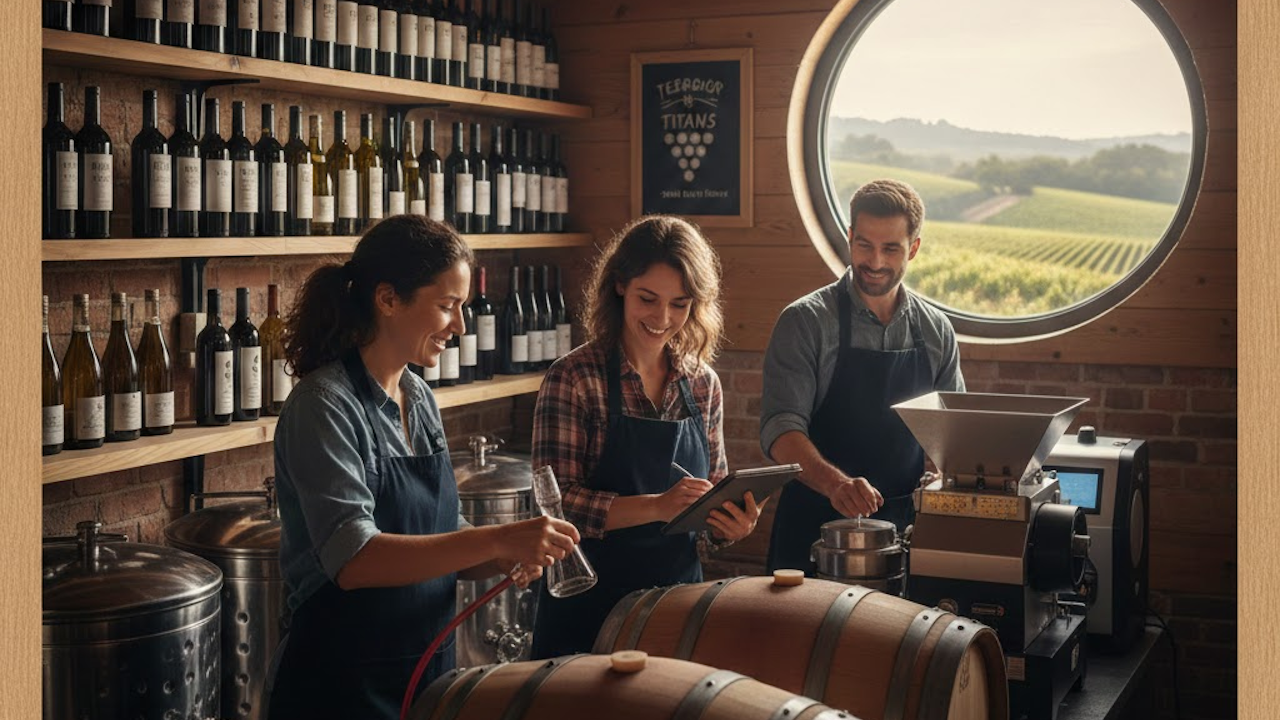
In the sprawling landscape of the global wine industry, where corporate giants and sprawling estates often dominate headlines and supermarket shelves, a quieter revolution is underway. Micro-wineries, those small-scale producers crafting limited quantities of wine with intense personal care, are steadily reshaping how people discover, taste, and value the beverage. These operations, typically family-run and focused on quality over volume, are making outsized impacts through authenticity, direct connections with drinkers, and a commitment to the land that larger operations struggle to match. Far from being mere hobby projects, they represent a resilient model of winemaking that prioritizes terroir, storytelling, and sustainability in an era of shifting consumer preferences and industry pressures.
Micro-wineries lack a single universal definition, but common thresholds place them in the realm of producing fewer than 5,000 cases annually, with many operating well below that, often in the range of a few hundred to a couple thousand cases. In places like Napa Valley, local ordinances have formalized the category around production limits of roughly 5,000 gallons, emphasizing estate vineyards and restricted hospitality to keep the focus on agriculture rather than tourism spectacle. Elsewhere, the label simply signals a hands-on approach where the same people who tend the vines often crush the grapes, manage the fermentations, and pour the finished bottles for visitors. These are working farms more than polished destinations, places where the winemaker might still be out in the vineyard during a tasting appointment.
What sets them apart is not just scale but philosophy. Production follows the rhythms of nature rather than market forecasts. Vintages reflect specific seasons, soil conditions, and the decisions of a small team rather than the demands of national distribution networks. Many emphasize sustainable, organic, or biodynamic practices not as marketing slogans but as practical necessities when every vine and every barrel counts. The result is wine that carries a clear sense of place and personality, bottles that rarely appear in large retail channels and instead reach drinkers through wine clubs, direct website sales, and intimate cellar-door experiences.
This model has gained particular traction in regions facing regulatory and economic headwinds. In Napa and Sonoma, the rise of the Micro-Winery Guild illustrates the movement’s organizational strength. Originally rooted in efforts to protect family farms, the guild supports independent producers making under 5,000 cases, advocating for practical regulations that allow limited vineyard tastings and collective visibility without forcing small operators into the costly infrastructure required of traditional wineries. Members gain credibility through verified authentic experiences, shared storytelling, and peer networks that help them compete against better-funded neighbors. The emphasis is on genuine hospitality: conversations with the people who farm the land, rather than scripted tours or large event spaces.
Examples from Napa Valley show the range and depth of this approach. Elkhorn Peak Cellars, a father-daughter operation, produces fewer than 1,000 cases a year of estate-grown Pinot Noir from vines cared for since the 1980s. Their wines reach customers almost exclusively through direct channels, preserving both scarcity and the personal story behind each bottle. Campbell Cellars turns out just 200 cases of Cabernet Sauvignon annually from a Rutherford Bench vineyard, with the family handling every step from sustainable farming to corking. Chaix Family Vineyards, one of the oldest continuously family-owned sites in Rutherford dating to 1880, crafts a bit more than 500 cases of certified organic and biodynamic Cabernet that captures the classic character of the bench. Battuello Vineyards, a fifth-generation farm since 1909, keeps production under 1,200 cases of estate varieties including Cabernet Sauvignon and lesser-seen grapes like Valdiguié. These producers, along with others such as Lost Valley Wines and Hillwalker Vineyards on Mt. Veeder, demonstrate how limited scale enables meticulous farming, minimal intervention, and wines that feel inseparable from their origins.
Beyond California, the micro-winery ethos appears in many forms. In eastern U.S. states, the majority of wineries already operate at this scale, with more than 80 percent producing fewer than 5,000 cases. They lean heavily on tasting-room sales and local tourism, buffering some of the wholesale challenges that larger brands face. In Europe, Italian micro and small producers have long navigated resilience through family continuity and regional identity, while Australian regions like Geelong, Mornington Peninsula, and parts of the Barossa host craft-focused operations that prioritize single-site expression and experimental styles. Across these landscapes, the common thread is agility: the ability to adapt to climate variability, try new grape varieties or techniques, and respond quickly to what drinkers actually want.
Consumers are responding. In a market where overall wine consumption has faced headwinds from changing demographics, health-conscious choices, and competition from other beverages, many drinkers seek authenticity and narrative. A bottle from a micro-winery often comes with a direct line to the maker, whether through a club allocation, a vineyard walk, or a simple conversation at the cellar door. This creates loyalty that mass-market brands find hard to replicate. Direct-to-consumer channels now drive more than half of sales for the average U.S. winery, and for the smallest producers the figure can be far higher. Digital tools help extend that reach: personalized email, social media that doubles as a sales platform, and straightforward e-commerce reduce reliance on the traditional three-tier distribution system that often favors volume players.
The advantages extend both ways. For producers, small scale means lower capital barriers in some respects, greater control over quality, and the freedom to experiment without risking massive inventories. They can focus on detail, pick grapes at peak ripeness for tiny lots, and age wines with precision. For drinkers, the payoff is access to distinctive, limited wines that larger houses rarely produce, often at price points that reflect genuine scarcity rather than marketing markup. Sustainability becomes more tangible when the same hands that farm also ferment, and when production decisions prioritize long-term soil health over short-term yields.
Challenges remain substantial. Regulatory hurdles can be steep. Building even a modest facility involves septic systems, permits, and infrastructure costs that stretch thin for family operations. In competitive regions, ordinances intended to preserve agricultural character sometimes limit the very hospitality that keeps micro-wineries viable. Climate change adds pressure through unpredictable weather, shifting ripening patterns, and extreme events that hit small vineyards especially hard because they lack the resources to absorb losses. Market conditions compound the difficulty: oversupply in some segments, rising input costs for bottles, corks, and barrels, and the constant need to attract visitors without becoming just another tourist stop. Industry data shows many smaller wineries navigating tight margins, with some virtual or hobby-scale operations exiting as costs rise. Yet the same data reveals that the smallest producers, those under 1,000 or 5,000 cases, have sometimes outperformed larger peers in direct sales growth by staying close to their customers.
Looking ahead, micro-wineries appear well positioned for several converging trends. Demand for low-intervention, transparent, and place-specific wines continues to grow. Wine tourism is evolving toward more intimate, educational, and wellness-oriented experiences rather than high-volume tastings. Digital personalization and subscription models favor producers who already know their buyers by name. Organizations like the Micro-Winery Guild provide collective strength for advocacy and visibility that individual farms could not achieve alone. At the same time, broader industry shifts, from regenerative farming practices to selective experimentation with lower-alcohol or innovative styles, play to the strengths of operations that can pivot without bureaucratic delay.
The impact of these small producers reaches beyond their own tasting rooms. They help preserve agricultural land and multigenerational knowledge in regions under pressure from development or consolidation. They keep genetic and stylistic diversity alive by championing lesser-known varieties or traditional methods. They remind the wider industry that wine is still, at its core, an agricultural product shaped by people and place rather than pure commodity. In an age when many consumers feel disconnected from how their food and drink are made, micro-wineries offer a tangible counterpoint: a bottle that carries the fingerprints of the people who grew and crafted it.
Micro-wineries will not displace the large brands that supply everyday drinking or the iconic estates that define luxury categories. Their power lies elsewhere. By staying small, they remain personal. By focusing on the land and the craft, they produce wines that feel rare and meaningful. And by connecting directly with the people who drink their wine, they build communities rather than mere customer lists. In doing so, these modest operations continue to send ripples through the industry, proving that scale is not the only measure of influence. In the world of wine, sometimes the smallest producers make the largest impression.