

In the ever-evolving world of cryptocurrency, few phenomena capture the imagination quite like meme coins. These digital assets, often inspired by internet memes, viral trends, or humorous concepts, have become a staple in the crypto ecosystem. Dogecoin, launched in 2013 as a joke based on the popular “Doge” meme featuring a Shiba Inu dog, stands as the archetype. Since then, countless others have followed, including Shiba Inu (SHIB), Pepe (PEPE), and more recent entrants like Bonk (BONK) on Solana or various animal-themed tokens on other blockchains.
Meme coins differ from traditional cryptocurrencies like Bitcoin or Ethereum, which emphasize utility, security, or technological innovation. Instead, meme coins thrive on cultural relevance, community enthusiasm, and speculative fervor. They often lack intrinsic value or practical applications, yet they can achieve staggering market capitalizations in short periods. This article delves into the reasons behind their existence and the mechanisms that drive their dramatic price surges, known as “pumps.” By understanding these elements, one can appreciate the unique role meme coins play in the broader financial landscape.
The Origins and Reasons for the Existence of Meme Coins
Meme coins did not emerge in a vacuum. Their roots trace back to the early days of cryptocurrency, when the technology was still novel and experimental. Bitcoin, introduced in 2009, aimed to create a decentralized digital currency free from government control. Ethereum, launched in 2015, expanded this vision by enabling smart contracts and decentralized applications. However, as the crypto space grew, so did the desire for lighter, more accessible alternatives.
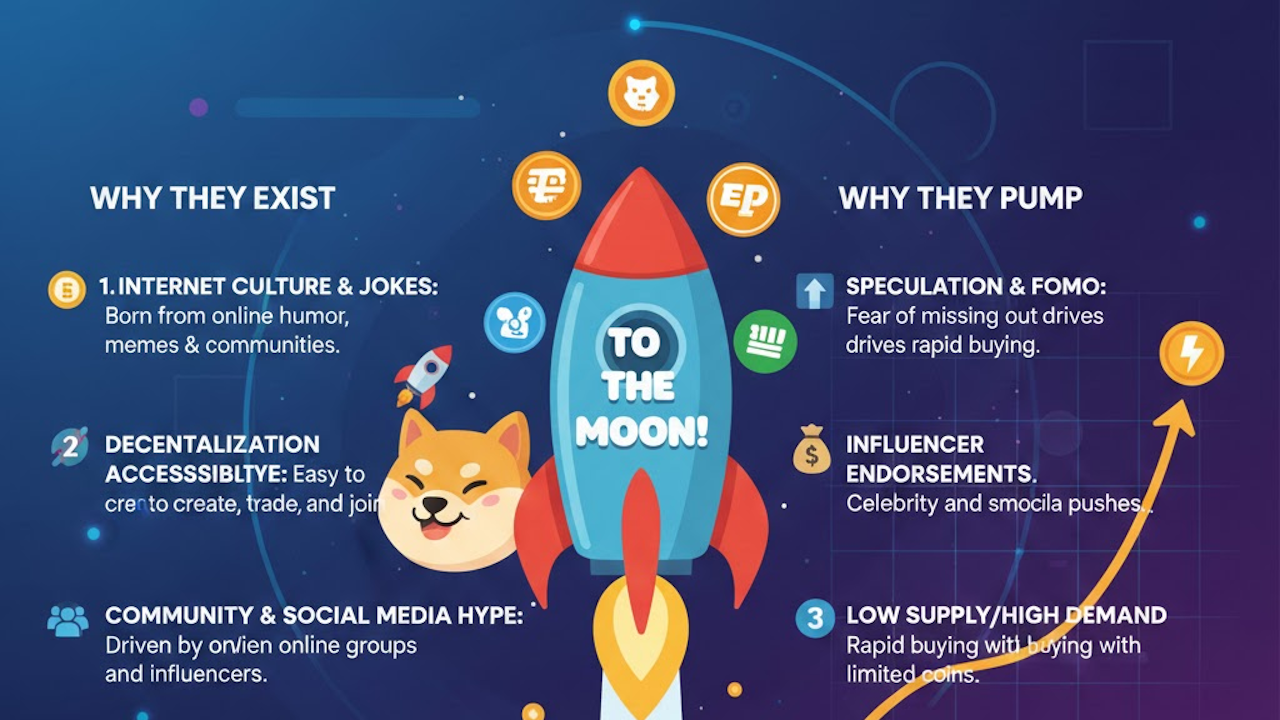
One primary reason meme coins exist is to democratize cryptocurrency. Creating a meme coin requires minimal technical expertise, especially with tools like token generators on platforms such as Ethereum or Solana. Anyone with basic knowledge can launch a token by forking existing code or using no-code platforms. This low barrier to entry allows ordinary people, often inspired by online communities, to participate in the crypto economy without needing venture capital or advanced programming skills.
Humor and satire also play a crucial role. Dogecoin’s creators, Billy Markus and Jackson Palmer, intended it as a parody of the speculative hype surrounding altcoins at the time. They wanted to highlight the absurdity of valuing digital assets based on little more than hype. Ironically, this self-aware joke resonated with users, leading to widespread adoption. Meme coins exist because they tap into the playful side of human nature, offering a counterpoint to the serious, sometimes pretentious tone of traditional finance and even other cryptocurrencies.
Community building is another key factor. Meme coins often originate from online forums, social media platforms like Reddit, Twitter (now X), or Discord. Subreddits such as r/wallstreetbets or r/cryptocurrency have birthed numerous meme coins through collective enthusiasm. These communities form around shared memes, inside jokes, or cultural phenomena, fostering a sense of belonging. For instance, the Shiba Inu coin positioned itself as the “Dogecoin killer,” leveraging the popularity of dog memes to attract holders who felt part of an exclusive club.
Moreover, meme coins serve as a form of social commentary or protest. In an era of economic inequality, where traditional financial systems seem rigged against the average person, meme coins represent a rebellious alternative. They allow retail investors to challenge institutional dominance by pooling resources and driving prices through viral marketing. The GameStop stock saga in 2021, fueled by retail traders on Reddit, shares parallels with meme coin pumps, illustrating how decentralized movements can disrupt established markets.
Technological advancements have further enabled their proliferation. Blockchains like Binance Smart Chain, Solana, and Base offer low transaction fees and high speeds, making it easier to trade meme coins without prohibitive costs. Pump-and-dump schemes, while risky, are facilitated by these efficient networks. Additionally, the rise of decentralized exchanges (DEXs) like Uniswap or Raydium allows anyone to list a token without regulatory approval, bypassing traditional gatekeepers.
In essence, meme coins exist because they fill a niche in the crypto world: they provide entertainment, accessibility, and a platform for grassroots financial experimentation. They reflect the internet’s culture of virality, where ideas spread rapidly and can translate into real economic value, however fleeting.
The Mechanics Behind Meme Coin Pumps
The allure of meme coins lies in their potential for explosive growth. A token that starts with a market cap of a few thousand dollars can skyrocket to billions in weeks or even days. But why do they pump? Several interconnected factors contribute to these surges, blending psychology, technology, and market dynamics.
First and foremost, social media hype is the lifeblood of meme coin pumps. Platforms like X, TikTok, and Reddit amplify narratives around a coin, creating FOMO (fear of missing out) among potential buyers. Influencers, celebrities, or even anonymous accounts can ignite interest with a single post. For example, Elon Musk’s tweets about Dogecoin in 2021 sent its price soaring, as his massive following interpreted them as endorsements. This viral marketing turns a obscure token into a trending topic, drawing in waves of new investors.
Community engagement amplifies this effect. Meme coin holders often form tight-knit groups that actively promote the token through memes, giveaways, and coordinated social media campaigns. These efforts create a self-reinforcing cycle: more visibility leads to more buyers, which increases the price, attracting even more attention. Tokens like PEPE, inspired by the Pepe the Frog meme, pumped dramatically in 2023 due to relentless community shilling on crypto forums.
Speculative trading plays a significant role as well. Meme coins are highly volatile, appealing to traders seeking quick profits. Liquidity pools on DEXs allow for rapid buying and selling, often with leveraged positions on platforms like perpetual futures exchanges. When a coin starts pumping, bots and algorithms detect the momentum, triggering automated buys that accelerate the rise. This is compounded by “whale” investors large holders who can manipulate prices by dumping or accumulating tokens strategically.
Scarcity mechanisms built into some meme coins also drive pumps. Many implement token burns, where a portion of supply is permanently removed from circulation, theoretically increasing value over time. Others use deflationary models or staking rewards to encourage holding. However, these features are often more marketing gimmicks than genuine innovations, yet they entice investors with promises of moonshots.
Market cycles influence pumps too. During bull markets, when Bitcoin and Ethereum are rising, capital flows into riskier assets like meme coins. Investors, flush with profits from blue-chip cryptos, seek higher returns in speculative plays. Conversely, in bear markets, meme coins can pump as boredom trades, where traders bet on short-term hype to escape broader downturns.
Psychological factors cannot be overlooked. The gamification of trading, with apps offering easy access and real-time charts, turns investing into an addictive game. The prospect of turning a small investment into life-changing wealth fuels irrational exuberance. Behavioral economics terms like herd mentality explain how people buy into pumps simply because others are doing so, ignoring fundamentals.
Finally, external events can trigger pumps. News about integrations, listings on major exchanges like Binance or Coinbase, or partnerships (real or rumored) can spark rallies. Even unrelated cultural moments, such as a viral meme resurgence, can breathe new life into a coin.
The Risks and Downsides of Meme Coins
While pumps are exciting, they come with substantial risks. Meme coins are notorious for rug pulls, where developers abandon the project and drain liquidity, leaving investors with worthless tokens. Pump-and-dump schemes are common, with insiders hyping a coin to attract buyers before selling off their holdings.
Regulatory scrutiny is increasing. Governments worldwide are cracking down on unregistered securities, and meme coins often skirt these rules. The U.S. Securities and Exchange Commission has pursued cases against promoters of certain tokens, highlighting the legal perils.
Environmental concerns arise too, as energy-intensive blockchains host many meme coins, contributing to carbon footprints without proportional societal benefits.
Moreover, the psychological toll on investors is real. The volatility can lead to significant losses, exacerbating mental health issues like addiction or depression.
The Future of Meme Coins
Looking ahead, meme coins are likely to persist, evolving with technology. Integration with NFTs, metaverses, or AI could add layers of utility, blurring lines between pure memes and functional assets. However, greater regulation might temper wild pumps, pushing the space toward more sustainable models.
As of early 2026, meme coins continue to thrive on chains like Solana and Base, with new trends emerging around AI-generated memes or celebrity-backed tokens. Their future depends on balancing fun with responsibility, ensuring they remain a vibrant, if unpredictable, part of crypto.
Conclusion
Meme coins exist as a testament to the internet’s power to turn humor into value, democratizing finance while challenging norms. They pump due to a potent mix of hype, community, speculation, and market forces, offering thrills but demanding caution. In the crypto world, they remind us that not all value is tangible; sometimes, it’s just a good laugh that pays off. Whether you’re a holder or observer, understanding meme coins provides insight into the chaotic, innovative spirit of decentralized finance.