

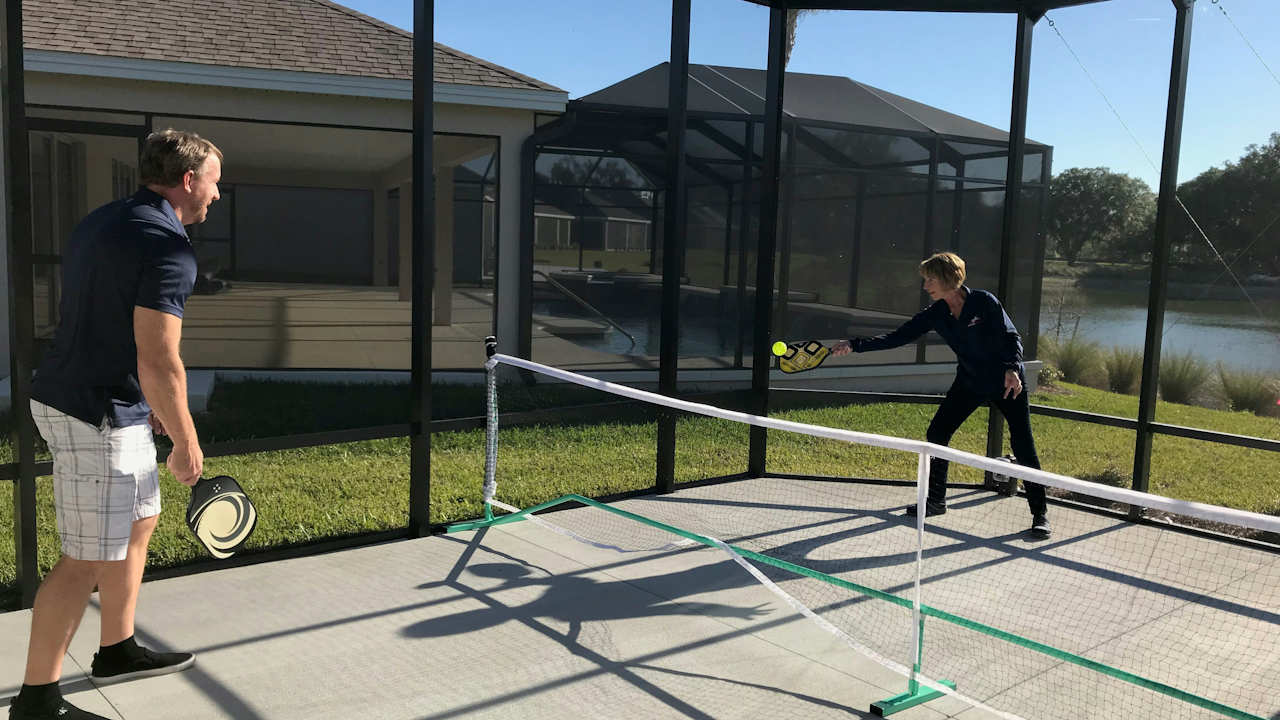
Pickleball has exploded onto the recreational sports scene in recent years, drawing millions of players to its smaller courts, solid paddles, and perforated plastic balls. The game blends elements of tennis, badminton, and table tennis into a format that feels approachable yet competitive. As participation numbers continue to climb, a central question emerges: Is pickleball merely a passing fad fueled by post-pandemic boredom and social media hype, or does it represent a lasting shift in how people engage with fitness, community, and competition?
To address this, it helps to examine the sport’s origins, its remarkable growth trajectory, the factors driving its appeal, the obstacles it faces, and expert perspectives on its long-term prospects. The evidence suggests pickleball possesses structural advantages that position it for endurance, even as growth rates naturally moderate from their peak.
The Humble Beginnings of Pickleball
Pickleball traces its roots to the summer of 1965 on Bainbridge Island, Washington. Congressman Joel Pritchard, businessman Bill Bell, and friend Barney McCallum sought a backyard activity to entertain their bored families after a day of golf. They improvised with ping-pong paddles, a perforated plastic ball (originally a wiffle ball), and a lowered badminton net on an asphalt surface. The rules evolved over subsequent weekends, incorporating an underhand serve and the non-volley zone (often called the “kitchen”) to prevent dominance by taller players and keep the game inclusive for all ages.
The name “pickleball” has two popular explanations. One ties it to Pritchard’s dog, Pickles, who would chase errant balls. The more widely accepted account, endorsed by USA Pickleball, references “pickle boats” in rowing, where crews consist of leftover oarsmen. This reflected the game’s hybrid nature, borrowing from multiple sports. The first permanent court appeared in 1967 at Pritchard’s home, and the inaugural tournament took place in 1976 in Tukwila, Washington.
For decades, pickleball remained a niche activity, popular mainly in retirement communities and Pacific Northwest recreation centers. It spread gradually through word of mouth and community programs, but it lacked mainstream visibility until the 2010s and especially the early 2020s.
Explosive Growth in Participation and Infrastructure
The sport’s modern surge is undeniable. According to the Sports and Fitness Industry Association (SFIA), 24.3 million Americans played pickleball in 2025, marking a 22.8 percent increase from 2024 and a staggering 171.8 percent rise over three years. Broader surveys, such as one from the Association of Pickleball Players, suggest nearly 50 million U.S. adults have played at least once in the past 12 months. Projections for 2026 estimate continued growth, potentially reaching 28 to 29 million active participants in the United States alone, with annual increases settling into the 15 to 20 percent range.
This expansion has not been limited to any single demographic. While older adults initially drove much of the interest, younger players, including Gen Z, have joined in growing numbers. Participation has increased across every age group and region. Infrastructure has struggled to keep pace: USA Pickleball’s database tracked over 18,000 locations and more than 82,000 courts by the end of 2025, with thousands of new sites and courts added annually. Dedicated indoor and outdoor facilities, often converted from tennis or racquetball spaces, have proliferated, alongside private clubs and franchise models.
Globally, pickleball has gained traction in dozens of countries, with international events like the Pickleball World Cup drawing participants from over 60 nations. Professional tours have professionalized the sport, featuring high-profile broadcasts, sizable prize pools, and team formats that mirror successful models in other leagues.
The economic footprint reflects this momentum. The global pickleball market, encompassing equipment, apparel, and related services, was valued in the low billions in recent years and is projected to grow at compound annual rates exceeding 15 percent through the 2030s, potentially reaching several times its current size. Equipment sales alone, from paddles to balls, have boomed, while facility investments run into the hundreds of millions of dollars to meet court demand.
Why Pickleball Resonates: Accessibility, Social Connection, and Health Benefits
Several core attributes explain pickleball’s broad appeal and differentiate it from traditional racket sports. The court measures 20 by 44 feet, one-quarter the size of a tennis court, making it suitable for smaller spaces, including backyards, driveways, and community centers. Rules are straightforward to learn in minutes, yet the game rewards strategy, quick reflexes, and positioning rather than raw power or elite athleticism.
The social element stands out. Doubles play dominates, encouraging interaction, laughter, and camaraderie among partners and opponents. Many players describe sessions as equal parts exercise and social hour, fostering friendships and combating isolation. This aspect resonates particularly in an era when many seek low-barrier ways to connect in person.
Health-wise, pickleball offers moderate to vigorous activity that improves cardiovascular fitness, balance, coordination, and agility. It burns calories at a rate comparable to casual tennis while placing less continuous strain on joints than running or high-impact sports. For older adults, it provides a gateway to staying active without intimidation. Newer or less experienced players can compete meaningfully against veterans due to the forgiving equipment and court dimensions.
Cost barriers remain low relative to many sports. Basic paddles and balls are affordable, and public courts often charge little or nothing. These factors lower entry thresholds, enabling rapid adoption across income levels and skill backgrounds.
Compared to tennis, pickleball demands less court space and physical endurance for beginners, allowing longer rallies and more frequent play. Versus padel, another fast-growing racket sport popular in Europe and Latin America, pickleball emphasizes open-court dinking and volleys over wall rebounds, appealing to different preferences. Padel has a strong international following with millions of players, but pickleball dominates the North American market and continues expanding abroad.
Challenges and Criticisms: Not Without Growing Pains
Despite its successes, pickleball encounters hurdles that fuel skepticism about its longevity. Noise complaints from residential areas have sparked local debates and even lawsuits, as the distinctive “pop” of plastic balls against paddles carries farther than tennis strokes. Some municipalities have restricted play hours or required sound-dampening measures.
Injury rates have risen alongside participation. Studies indicate that a majority of regular players experience some form of musculoskeletal issue annually, with knees, shoulders, backs, and elbows most affected. Overuse strains, sprains, and falls contribute, particularly among middle-aged and older players who ramp up activity without adequate conditioning. Emergency department data show increases in fractures, especially among women over 60, and exertional events in seniors. Newer players and frequent participants face elevated risks, prompting calls for better warm-ups, strength training, and injury prevention education. While the sport is generally low-impact, its quick lateral movements and repetitive motions can catch unprepared bodies off guard.
Facility shortages persist in high-demand areas, leading to crowded courts and wait times that frustrate enthusiasts. Some private clubs have faced financial difficulties, with isolated reports of closures or loan issues as the initial boom phase matures. Professional structures continue evolving, with mergers, capital raises in the hundreds of millions, and investments from athletes and billionaires signaling confidence, yet questions remain about sustainable business models for facilities and tours.
Demographic concentration among older adults in certain regions raises concerns about long-term youth engagement, though recent trends show broadening appeal. Critics sometimes dismiss the game as “not a real sport” due to its casual origins and perceived lower physical demands compared to tennis, but such views overlook its strategic depth and growing competitive ecosystem.
Signs of Staying Power: Institutional Support and Cultural Integration
Several indicators point toward pickleball embedding itself as a fixture rather than fading. Court construction continues at scale, with public and private investments addressing infrastructure gaps. Schools, universities, and community programs have begun incorporating the sport, laying groundwork for younger generations. Professional leagues under the United Pickleball Association and others are consolidating, securing broadcast deals, and planning expansions into new markets, including Europe and the Middle East.
Corporate and celebrity involvement adds legitimacy. Major brands sponsor events, while high-net-worth investors and athletes back teams and facilities. The sport’s inclusion in discussions for larger multi-sport events and its status as Washington’s official state sport further normalize it.
Market forecasts anticipate steady rather than explosive growth, which many view as healthy maturation. A deceleration from triple-digit annual increases to sustainable double-digit rates allows time for refinement without the volatility of unchecked hype. Social media and viral videos initially amplified visibility, but organic community growth now sustains momentum.
Comparisons to past fads, such as certain fitness crazes or short-lived equipment trends, fall short because pickleball builds tangible infrastructure, governing bodies, and cultural habits. It addresses modern needs: accessible movement, social bonds, and fun in an increasingly sedentary and isolated society.
Looking Ahead: Fad or Enduring Legacy?
Weighing the evidence, pickleball appears far more likely to endure as a mainstream activity than to vanish as a mere fad. Its accessibility, social rewards, and adaptability provide a foundation that transcends temporary enthusiasm. Challenges like noise, injuries, and infrastructure strain are real but addressable through innovation, education, and planning. Growth has already transitioned from hyper-rapid to robust and broad-based, with projections supporting continued expansion into the late 2020s and beyond.
For individuals, pickleball offers an inviting entry into active living. Communities benefit from its potential to promote health and connection. Investors and organizers see economic opportunity in a sport that scales efficiently. While no guarantee exists against future shifts in preferences or unforeseen disruptions, the sport’s deep roots in everyday recreation, combined with professional and institutional scaffolding, suggest it will remain part of the sporting landscape for decades.
Ultimately, pickleball’s trajectory reflects broader societal desires for inclusive, enjoyable ways to move and interact. Whether played casually in a park or competitively in packed arenas, it delivers value that resonates across ages and backgrounds. The coming years will test its resilience, but current data and dynamics indicate a sport building toward a lasting future rather than peaking prematurely. Pickleball has moved beyond novelty into something more substantial: a genuine evolution in recreational sports that shows every sign of sticking around.