

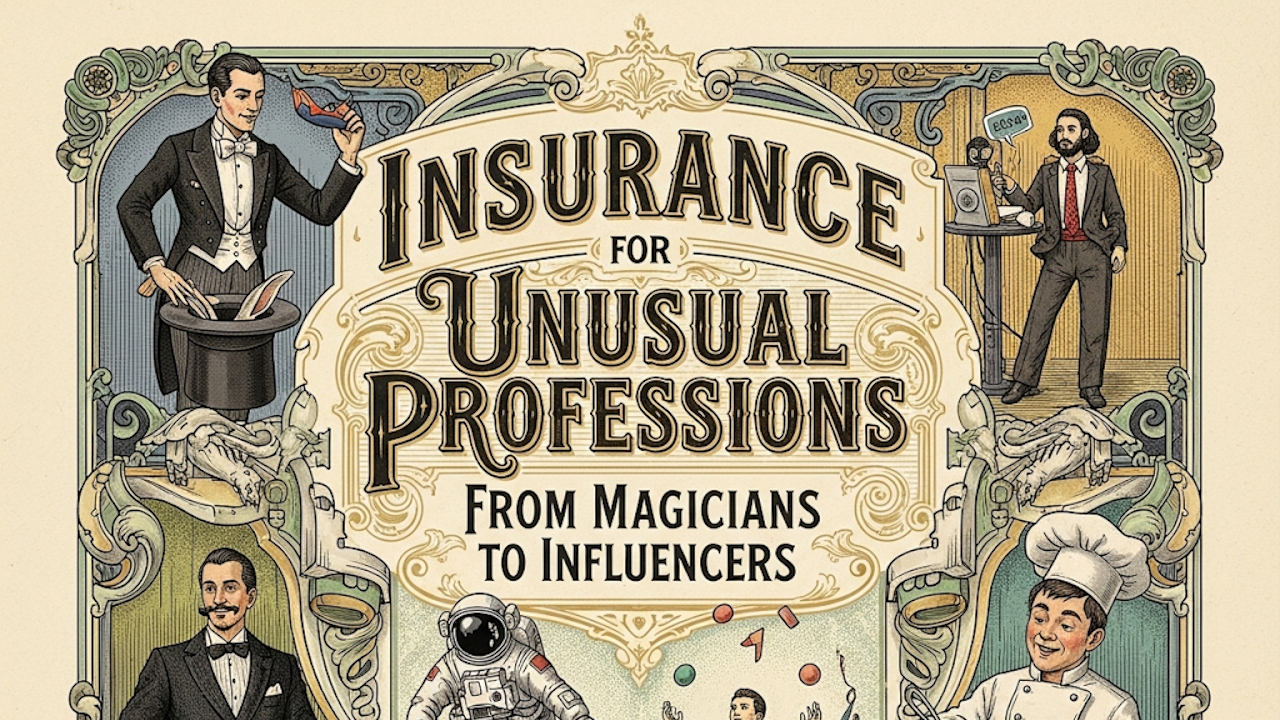
In a world where traditional careers like teaching or accounting come with straightforward insurance options, certain professions demand far more creative and specialized coverage. Unusual occupations often involve unique hazards that standard policies simply do not address, ranging from physical dangers during live performances to digital liabilities in the online realm. From the stage magician pulling rabbits from hats to the social media influencer shaping consumer trends, these professionals face risks that can jeopardize their livelihoods or lead to costly lawsuits. Specialty insurance has evolved to meet these needs, offering tailored protection that keeps the show going and reputations intact. This article explores the insurance landscape for such unconventional careers, highlighting the specific challenges, available coverages, and practical considerations for those in the spotlight.
The entertainment industry has long relied on insurers willing to underwrite the unpredictable. Organizations like Lloyd’s of London have built a reputation for handling bizarre and high-stakes risks, from insuring celebrity body parts essential to a performer’s act to covering one-of-a-kind events. While many policies today stem from more conventional markets, the principle remains the same: unusual professions require bespoke solutions because everyday policies exclude high-risk activities or fail to account for the creative, unpredictable nature of the work. Whether the job involves pyrotechnics, audience interaction, or viral content creation, the right insurance can mean the difference between a minor mishap and financial ruin.
Magicians and illusionists represent one of the classic examples of professions needing specialized performer insurance. These artists captivate audiences with sleight of hand, props, and elaborate tricks, but the very elements that make their shows memorable also introduce liability risks. A spectator might trip over equipment during a close-up routine, a prop could malfunction and cause injury, or an audience volunteer could claim emotional distress from a startling illusion. Fire-eating variants or escape acts add layers of physical danger, where burns or equipment failures could lead to claims. General liability insurance is the cornerstone here, protecting against bodily injury or property damage to third parties. Policies typically offer limits of one million dollars per occurrence and two million dollars aggregate, with options to increase coverage as needed.
Professional associations have stepped up to provide accessible options for magicians. The Society of American Magicians, for instance, offers a superior-rated liability policy to its members for an annual fee of around two hundred dollars, covering performances across all fifty states and U.S. territories. This includes instant issuance of additional insured certificates for venues or events, a critical feature since many gig contracts require proof of coverage upfront. Other providers like Insurance Canopy and Thimble cater to independent magicians with policies starting as low as eighteen dollars and fifty cents per month for annual coverage or even hourly options for one-off shows. These plans often include professional liability components to address claims related to the quality of the performance itself, such as allegations of negligence in setup or failure to deliver promised entertainment.
Equipment coverage frequently comes as an optional add-on, safeguarding expensive props, illusions, and tools against theft, damage, or loss during travel. A magician transporting a custom vanishing cabinet or intricate card decks risks thousands in replacements if gear is stolen from a vehicle or damaged in transit. Costs for such riders start low but scale with the value insured, making them worthwhile for full-time professionals. Fire performers or those incorporating knives and aerial elements fall into higher-risk categories, where premiums rise due to the potential for severe incidents. Specialty agencies group these acts separately, charging slightly more but still providing essential protection that standard homeowner policies explicitly exclude.
Beyond magicians, a broader category of live entertainers shares similar insurance demands. Clowns, jugglers, balloon artists, face painters, and comedians all qualify under performer liability programs designed for independent contractors. These policies shield against common scenarios like a child choking on a balloon fragment, a juggler dropping props onto audience members, or a comedian’s routine sparking a defamation claim from an offended attendee. Providers such as the Fellowship of Christian Magicians and Specialty Insurance Agency extend coverage to a wide array of acts, with annual premiums often hovering between three hundred and four hundred dollars depending on the number of performance days and risk level. Higher-risk groups, including aerialists, fire handlers, and knife throwers, pay incrementally more but benefit from exclusions for audience participation in dangerous elements, ensuring the policy aligns precisely with the performer’s routine.
Stunt performers and circus artists push the boundaries even further, requiring insurance that accounts for extreme physical hazards. Film and television productions involving fights, falls, vehicle chases, or pyrotechnics turn to specialized programs that underwrite these elements explicitly. Coverage here might include workers’ compensation equivalents for freelancers or production-specific riders for hazardous activities. While not every stunt goes wrong, the potential for serious injury demands robust protection, often bundled with general liability to cover third-party claims from set visitors or bystanders. Circus performers, including contortionists and animal trainers, face analogous risks, where policies must address everything from equipment failure during high-wire acts to interactions with exotic animals.
As the industry has shifted toward digital platforms, influencers and content creators have emerged as a new class of professionals with entirely different yet equally pressing insurance needs. Social media stars, YouTubers, and brand ambassadors wield significant influence over consumer behavior, but their work exposes them to intellectual property disputes, reputational harm, and cyber threats that traditional policies overlook. An influencer’s sponsored post might inadvertently infringe on a copyright through background music or imagery, leading to takedown demands or lawsuits. A negative product review could trigger defamation claims from the brand, or a data breach involving follower information might result in privacy violations. These scenarios highlight why general liability alone falls short; influencers require media liability or errors and omissions coverage to defend against content-related allegations.
Professional liability insurance, often called errors and omissions, forms the backbone for influencers. It covers legal defense costs and settlements arising from claims of misleading endorsements, invasion of privacy, or breach of contract with brands. Media liability policies go further, addressing libel, slander, and intellectual property infringement in published content. Providers like The Hartford and Foundershield have developed tailored packages for content creators, emphasizing cyber liability to protect against hacking or data theft that could expose personal or client information. Property insurance is equally vital, as influencers invest heavily in cameras, lighting, editing software, and laptops that travel with them to events or collaborations. A stolen rig during a travel vlog could halt production and income streams for weeks.
Costs for influencer insurance vary widely based on audience size, content type, and revenue. Annual policies might start in the low hundreds of dollars for hobbyists but climb into the thousands for those with million-follower reach and multiple brand deals. Some carriers now offer content creator-specific endorsements that bundle general liability with professional protections, recognizing that influencers operate as sole proprietors or small businesses. Additional insured status often extends to collaborating brands, satisfying contract requirements and fostering stronger partnerships. Cyber coverage has grown in importance as influencers handle email lists, analytics, and payment details, with policies reimbursing for breach response, notification costs, and even extortion demands.
The evolution from physical performers to digital creators illustrates how insurance adapts to societal changes. Early policies focused on tangible risks like slips and falls, while modern ones tackle intangible ones like viral misinformation or algorithm-driven reputational damage. Influencers who sell merchandise or launch their own products may also need product liability add-ons, shielding them if a recommended item causes harm to followers. Public speakers, psychics, and fortune tellers, often grouped with entertainers, face hybrid risks that blend performance liabilities with professional advice claims, further underscoring the need for customized plans.
Obtaining insurance for these unusual professions involves more than a quick online quote. Professionals should begin by assessing their specific exposures: How many shows or posts per year? What equipment is involved? Do contracts require additional insureds? Working with brokers experienced in entertainment or media risks ensures comprehensive coverage without unnecessary exclusions. Associations like the Society of American Magicians or industry groups for creators often negotiate group rates that lower barriers for newcomers. Short-term options from providers like Thimble suit sporadic gigs, while annual policies offer better value for consistent workers.
It is also wise to review policy fine print for exclusions. Many performer plans bar coverage for intentional acts or audience participation in prohibited stunts, and influencer policies may limit protection for sponsored content unless disclosed properly. Maintaining detailed records of performances, contracts, and content approvals strengthens claims processing and demonstrates due diligence in court. As professions continue to blend live and digital elements, hybrid policies are emerging that cover both a stage show and its social media promotion under one umbrella.
Ultimately, insurance for unusual professions is not a luxury but a necessity that enables creativity and risk-taking. Magicians can focus on perfecting their next illusion without fearing a lawsuit from a startled volunteer. Influencers can build authentic connections with audiences knowing that a copyright dispute will not derail their careers. By partnering with insurers who understand the nuances of these fields, professionals safeguard their passions and futures. In an era where work increasingly defies convention, specialized coverage ensures that innovation thrives without the shadow of financial peril. Whether enchanting crowds with magic or inspiring millions online, the right policy keeps the spotlight shining brightly.