

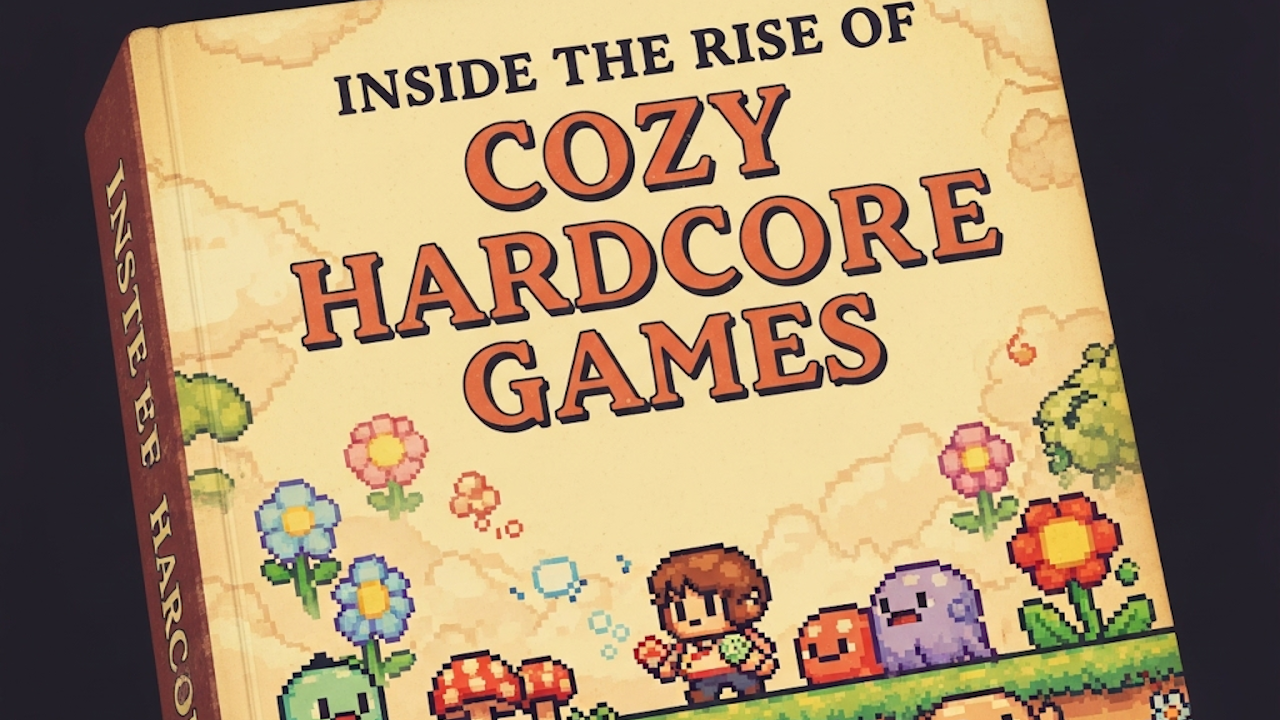
In the past few years the gaming world has seen an explosion of titles designed to wrap players in warmth and low-stakes comfort. Think pastel palettes, gentle soundscapes, and activities like watering crops or arranging furniture. Yet a quieter but unmistakable counter-trend has emerged alongside this cozy boom: games that pair those same soothing aesthetics with demanding mechanics, high stakes, and the kind of punishing loops traditionally reserved for hardcore titles. Call it cozy hardcore, a hybrid that refuses to choose between relaxation and challenge. These games invite you to settle into a charming world only to confront real consequences, intricate systems, and replayable difficulty that rewards mastery without sacrificing the emotional safety net of a cozy atmosphere.
The term itself is still finding its footing. Some players discovered it through YouTube series titled “cozy hardcore Minecraft,” where creators build idyllic cabins and sprawling farms while playing the game’s permadeath mode. Others spotted it in indie descriptions, such as Tiny Throne’s self-proclaimed “cozy-hardcore loop.” Whatever the label, the phenomenon reflects a growing audience that craves comfort but grows restless without depth. As the cozy genre matures from its early explosion into something more sophisticated, developers are experimenting with ways to add bite. The result is a subgenre that feels fresh precisely because it bridges two audiences long thought to be at odds.
To understand the rise, it helps to recall the separate histories of its parent genres. Cozy games as we know them today trace their modern surge to the mid-2010s. Stardew Valley arrived in 2016 and sold millions by offering a gentle alternative to high-pressure farming simulators. Its success was amplified during the COVID-19 pandemic when Animal Crossing: New Horizons became a cultural phenomenon, selling over 40 million copies and giving isolated players a digital haven. By 2024 Steam data showed hundreds of new releases tagged “cozy,” more than one per day. The genre’s appeal was obvious: accessible controls, forgiving failure states, and narratives centered on community and personal growth rather than conquest.
Hardcore gaming, by contrast, has always thrived on friction. From the precision platformers of the 1980s to modern roguelikes and survival titles with permadeath, these experiences deliver satisfaction through mastery of complex systems, repeated failure, and the adrenaline of high risk. Players invest dozens or hundreds of hours honing skills, optimizing builds, and chasing leaderboards or personal bests. The two philosophies seemed incompatible until recently. Cozy games were accused of being shallow or repetitive; hardcore games were criticized for being exhausting or exclusionary.
The fusion began as an organic response to player fatigue. After years of pure coziness, some fans reported boredom once the initial charm wore off. They still wanted the warm visuals and calming loops but needed mechanical meat to keep engagement high. At the same time, self-described hardcore gamers started seeking palate cleansers that offered accomplishment without constant stress. The pandemic accelerated both trends: people wanted escapism, but many also longed for a sense of progress and agency that passive activities could not provide. Indie developers noticed the gap and began filling it with titles that look like bedtime stories yet play like strategic puzzles.
Consider Serin Fate, released in 2021 and still praised in cozy gaming communities for its uncompromising edge. On the surface it checks every cozy box: a hand-crafted fantasy world, farming plots, fishing spots, creature taming, and a gentle story about apprenticeship at a witchcraft academy. Beneath that veneer lies a full-featured action RPG with monster-infested dungeons, real-time combat, equipment crafting, and difficulty that scales aggressively for players who seek it. The game explicitly encourages an “adventurous spirit” and greater challenge for the brave. Combat is not optional padding; it demands timing, resource management, and tactical decisions. Death matters. Progression feels earned rather than handed out. Yet the pixel-art style remains soft, the music soothing, and the daily routines of tending crops provide reliable comfort between expeditions. Serin Fate proved that a single developer could blend Rune Factory-style action with Stardew Valley warmth without diluting either.
Grimshire takes the hybrid even further by injecting genuine peril into the farming sim formula. Early access versions and demos released in 2025 positioned it as a “not-so-cozy” experience. Players arrive in a mountain village after escaping disaster only to face a deadly plague that threatens the entire community. Villagers are adorable anthropomorphic animals with distinct personalities and relationships, but they can die if food supplies dwindle or the player mismanages resources. Harvests rot if not stored properly. Foraging carries risk. The game offers difficulty sliders for those who prefer lighter pressure, yet its default mode forces tactical planning and long-term thinking that would feel at home in a city-builder or survival title. The art style is muted and atmospheric, evoking quiet melancholy rather than candy-coated cheer, yet the core loop of planting, harvesting, and building friendships remains deeply satisfying. Reviewers and streamers describe it as cozy in vibe but gripping in consequence, a rare combination that keeps players emotionally invested in every season.
Tiny Throne pushes the concept into roguelike territory. Marketed directly with the phrase “cozy-hardcore loop,” this medieval deckbuilder casts players as the architect of a tiny kingdom. You draft blueprints to expand your village, manage resources through card play, and switch between defensive survival phases and offensive raiding expeditions. The visuals are charming and miniature-scale, reminiscent of a storybook diorama. The economy, however, is punishing. One miscalculated expansion can cascade into starvation or collapse. Runs are short enough to feel approachable yet deep enough to reward repeated experimentation. Dynamic combat phases demand adaptation rather than rote grinding. The game’s structure mirrors classic roguelikes while wrapping every setback in pastel charm and satisfying audio cues. It is the kind of title that lets you relax into the aesthetic while your brain stays fully engaged solving interlocking systems.
These examples are not isolated. Minecraft’s hardcore mode has spawned an entire subculture of cozy content creators who treat permadeath as a narrative constraint rather than a barrier. They spend hundreds of episodes terraforming landscapes, constructing elaborate cabins, and tending farms under the constant shadow of one fatal mistake. The tension heightens the coziness; every sunset feels precious when night could bring the end. Other titles experiment in adjacent spaces. Cult of the Lamb combines adorable cult management and base-building with roguelike dungeon crawls that punish failure through lost followers and resources. Sun Haven and similar life sims layer deep skill trees, combat, and romance onto farming foundations. Even strategy veterans like Civilization VI have been described in some circles as surprisingly cozy when played at slower paces with relaxed victory conditions, though they retain the genre’s signature complexity.
What explains the timing of this rise? Several cultural and technological factors converged. First, the cozy boom created market saturation. With dozens of near-identical farming simulators flooding Steam each month, developers needed differentiators. Adding meaningful challenge became a way to stand out while retaining broad appeal. Second, accessibility tools matured. Modern games include robust difficulty sliders, assist modes, and modular systems that let players dial intensity up or down. A title can market itself as cozy hardcore because players can experience the “hardcore” half at their own pace. Third, player demographics shifted. Millennials and Gen Z, now the core gaming audience, grew up with both intense competitive titles and the rise of mindfulness culture. Many seek balance: escapism that still delivers dopamine through mastery.
Community discussions on platforms like Reddit’s r/CozyGamers reflect this hunger. Threads asking for “challenging cozy games” or “cozy games with real stakes” consistently surface recommendations for Serin Fate, Grimshire, and hybrids like Oxygen Not Included played on lower difficulties. Streamers and YouTubers have built audiences around “cozy but with depth” playthroughs, further legitimizing the niche. The industry has responded. Publishers once focused solely on pure cozy now highlight mechanical depth in trailers. Wholesome Direct showcases increasingly include titles that blend genres rather than repeating the same farming template.
The appeal extends beyond mechanics to emotional resonance. Cozy hardcore games satisfy two seemingly contradictory needs: the desire to feel safe and the desire to feel capable. The warm presentation lowers the psychological barrier to entry. Soft lighting, gentle music, and charming characters create a psychological safety net. When the game then introduces genuine risk, the payoff feels earned rather than punishing. Losing a villager in Grimshire hurts more precisely because you have spent hours chatting with them and watching their daily routines. Mastering a tough combat encounter in Serin Fate delivers triumph because the world around it feels like home. The contrast prevents the numbness that pure hardcore titles can induce after too many failures and the boredom that pure cozy titles sometimes provoke after the hundredth identical harvest.
Critics of the trend worry about dilution. Some argue that labeling a game “hardcore” when it includes accessibility options misleads traditional players. Others fear that the cozy label might attract audiences unprepared for the emotional weight of permadeath or high-stakes management. Yet the data suggests otherwise. Titles embracing the hybrid have found dedicated followings without alienating their core cozy base. Player retention appears higher when challenge is optional rather than mandatory, allowing the genre to expand rather than fracture.
Looking ahead, the future of cozy hardcore seems bright. Upcoming releases continue to experiment. Roguelike deckbuilders with village-management themes are in development. Survival games add peaceful modes that still retain crafting depth. Life simulators layer narrative branching and consequence-driven stories onto familiar loops. As virtual reality and AI-driven NPCs advance, these worlds could become even more immersive, letting players form genuine attachments while facing tailored challenges. The economic incentives are clear: a game that appeals to both the 40-million-copy cozy audience and the dedicated hardcore crowd stands to capture a larger market than either genre alone.
In the end, the rise of cozy hardcore games signals a maturing industry that no longer treats relaxation and rigor as opposites. Players no longer have to choose between unwinding after work and flexing strategic muscles. They can do both inside the same lovingly crafted world. Whether tending plague-threatened farms in Grimshire, drafting kingdom blueprints in Tiny Throne, or surviving one more day in a Minecraft hardcore paradise, these titles prove that comfort and challenge can coexist beautifully. The result is not a watered-down compromise but a richer experience that respects the full spectrum of what gamers want: a place to breathe and a reason to push forward. As the genre continues to evolve, one thing is certain: the future of cozy is anything but soft.