

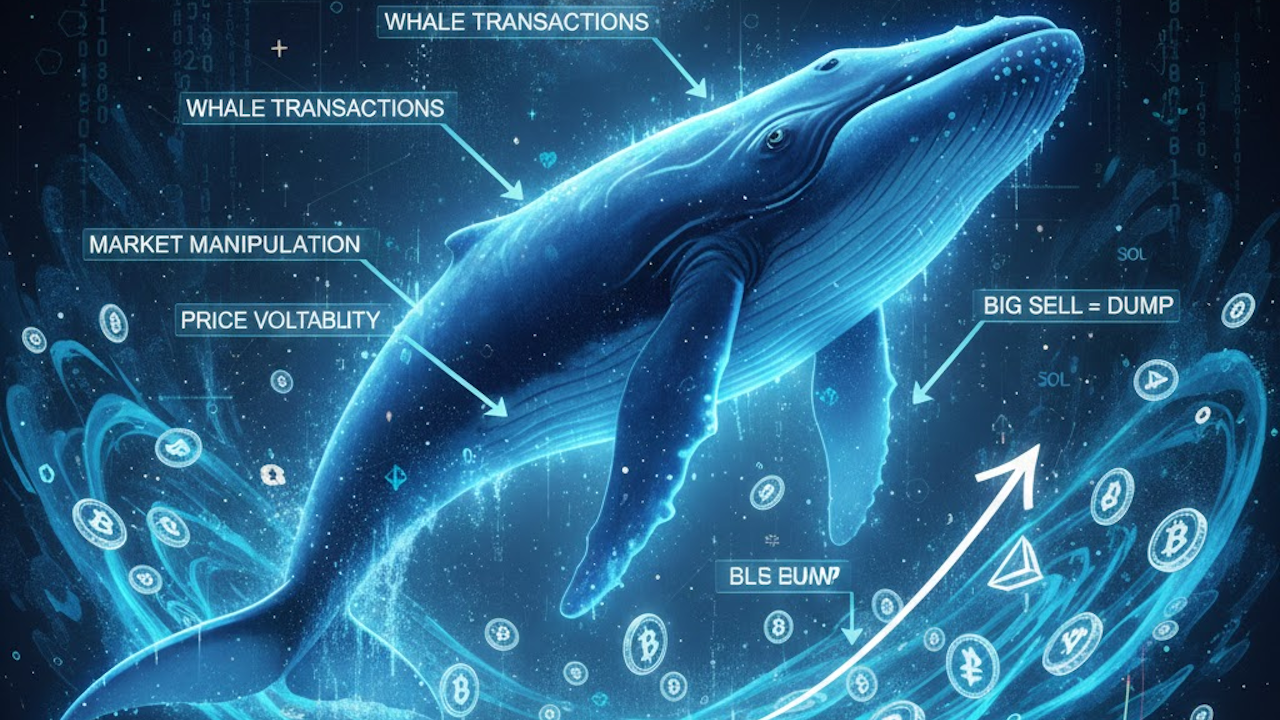
In the volatile world of cryptocurrencies, few entities wield as much power as “whales.” These are individuals or organizations holding massive amounts of digital assets, often enough to sway market prices with a single transaction. The term “whale” originates from the idea of a gigantic creature dominating the ocean, much like how these large holders dominate the crypto seas. Understanding their influence is crucial for any investor, as their actions can lead to sudden price surges, crashes, or prolonged trends. This article explores who crypto whales are, the mechanisms they use to affect prices, real-world examples, the broader market impacts, tracking methods, regulatory considerations, and strategies for navigating whale-dominated waters.
Crypto markets are decentralized and relatively unregulated compared to traditional finance, making them susceptible to manipulation by those with substantial resources. Whales can hold anywhere from thousands to millions of units of a cryptocurrency, giving them the leverage to influence supply and demand dynamics. Their trades often create ripples that affect retail investors, who may react emotionally to price changes without realizing the underlying causes. As cryptocurrency adoption grows, the role of whales continues to evolve, sometimes stabilizing markets and other times exacerbating volatility.
Who Are Crypto Whales?
A crypto whale is typically defined as an entity that owns a significant portion of a cryptocurrency’s supply, enough to impact its price through buying or selling activities. For Bitcoin, this might mean holding at least 1,000 BTC, valued at tens of millions of dollars depending on current prices. In smaller altcoins, the threshold could be lower due to reduced market capitalization. Whales can be individuals, such as early adopters who mined or bought coins cheaply, or institutions like hedge funds, exchanges, and corporations.
Notable examples include figures like Michael Saylor of MicroStrategy, who has amassed billions in Bitcoin for his company, or the Winklevoss twins, known for their early Bitcoin investments. Elon Musk, through his company Tesla and personal influence, has also acted as a whale by announcing large Bitcoin purchases or sales that directly moved prices. Institutions like Grayscale or BlackRock, managing crypto ETFs, can behave like whales when they accumulate or liquidate positions.
Whales are not always malicious; many are long-term holders (HODLers) who believe in the asset’s future. However, their sheer size means even routine transactions can cause market turbulence. Recent data shows that new Bitcoin whales now control more value than long-term holders, adding potential supply overhang that could trigger volatility. This shift indicates fresh capital entering the market but also highlights how whales can create ceilings on price growth by selling to realize profits.
Mechanisms of Influence
Whales influence crypto prices through several direct and indirect methods, leveraging their capital to manipulate liquidity, sentiment, and trading volumes.
Large-Scale Buying and Selling
The most straightforward way whales affect prices is through massive trades. When a whale buys a large amount, it reduces available supply, driving up prices due to increased demand. Conversely, a big sell-off floods the market with supply, pushing prices down. In illiquid markets, such as those for lesser-known altcoins, even a modest whale trade can cause double-digit percentage swings.
For instance, whales often buy over-the-counter (OTC) to avoid immediate price impact, but eventually, these holdings enter the market. This stealth accumulation allows them to position themselves before public announcements or market shifts.
Pump and Dump Schemes
One notorious tactic is the pump and dump, where whales coordinate to inflate a coin’s price artificially before selling at the peak. They start by accumulating cheaply, then use social media or bots to hype the asset, attracting retail investors. Once the price surges, they dump their holdings, leaving others with losses. This is common in low-liquidity tokens, where whales target coins with small circulating supplies to maximize control.
Manipulation Techniques
Whales employ advanced strategies like wash trading, where they buy and sell the same asset to themselves to fake volume and attract traders. Spoofing involves placing large fake orders to mislead the market about supply or demand, only to cancel them later. Insider trading occurs when whales use non-public information, such as upcoming listings or partnerships, to trade profitably.
Social media plays a key role too. A whale’s tweet or post can spark FOMO (fear of missing out) or FUD (fear, uncertainty, doubt), amplifying price movements. Additionally, in proof-of-work networks, whales controlling mining pools can influence network decisions, indirectly affecting coin values.
Research from the Federal Reserve Bank of Philadelphia highlights how whales in Ethereum and Bitcoin markets increase positions before price rises, capitalizing on retail-driven volatility. Small investors often sell prematurely, while whales hold or add during dips.
Accumulation and Distribution Phases
Whales often accumulate during bear markets, buying low when retail sells in panic. They distribute during bull runs, selling high to eager buyers. This cycle perpetuates volatility, as whale balances on exchanges surge during sell-offs, signaling potential dumps.
Real-World Examples of Whale Activity
History is rife with whale-driven events. In 2017, Bitcoin’s surge to nearly $20,000 was partly fueled by Tether (USDT) manipulation, where issuers allegedly printed tokens to buy BTC artificially. This created fake demand, inflating prices before a crash.
Elon Musk’s 2021 tweets about Dogecoin and Bitcoin caused massive swings; Tesla’s $1.5 billion BTC purchase sent prices soaring, while later sales triggered drops. More recently, in 2023-2024, whales pumped low-liquidity tokens like CYBER, PERP, and HIFI, leading to rapid rises followed by 40-50% crashes as they dumped.
In 2025, reports emerged of fewer than 500 whales responsible for $3.2 trillion in artificial trading volume, underscoring ongoing manipulation. Solana’s ecosystem saw whale movements shift liquidity without long-term price changes, affecting short-term trading.
Broader Market Impacts
Whales’ actions heighten volatility, as their trades amplify price swings in a market already prone to speculation. This can deter new investors, eroding trust. On the positive side, whales provide liquidity in thin markets, facilitating larger trades without extreme slippage.
However, they exacerbate inequality: whales profit from retail hype, while smaller holders bear losses. Market sentiment shifts rapidly based on whale signals, leading to herd behavior. In extreme cases, whales can crash prices to liquidate leveraged positions, profiting from shorts.
Data shows that as whale proportions increase, volatility spikes, especially in network structures like small-world graphs. Whales control 10-18% of some supplies, making coordinated moves impactful.
Tracking and Countering Whales
Investors can monitor whales using tools like Whale Alert, which tracks large transactions on blockchains. On-chain analytics platforms like Nansen or Glassnode provide insights into wallet activities and exchange inflows. Metrics like the Exchange Whale Ratio, which measures top inflows, are crucial; for Bitcoin, 96% of exchange influxes come from whales, versus 11% for Ethereum.
To counter, retail traders should avoid high-leverage positions in volatile coins, use stop-losses, and diversify. Following whale wallets can signal upcoming moves, but beware of fake signals.
Regulatory Considerations
Regulators are increasingly scrutinizing whale activities. The SEC and CFTC have pursued cases against manipulators, but crypto’s global nature complicates enforcement. Proposals for better transparency, like mandatory reporting for large holders, aim to level the field. However, over-regulation could stifle innovation.
In the EU and US, stablecoin regulations target tools like Tether used in past manipulations. As markets mature, whale influence may diminish with increased institutional participation and liquidity.
Conclusion
Crypto whales are pivotal players whose actions shape prices through sheer holding power and strategic maneuvers. While they can drive innovation and liquidity, their potential for manipulation underscores the need for caution. By understanding their tactics, tracking their moves, and advocating for fair regulations, investors can better navigate this dynamic landscape. As the market evolves, the balance between whale dominance and retail empowerment will define crypto’s future. Whether whales continue to rule or become integrated into a more equitable system remains to be seen, but their influence is undeniable.