

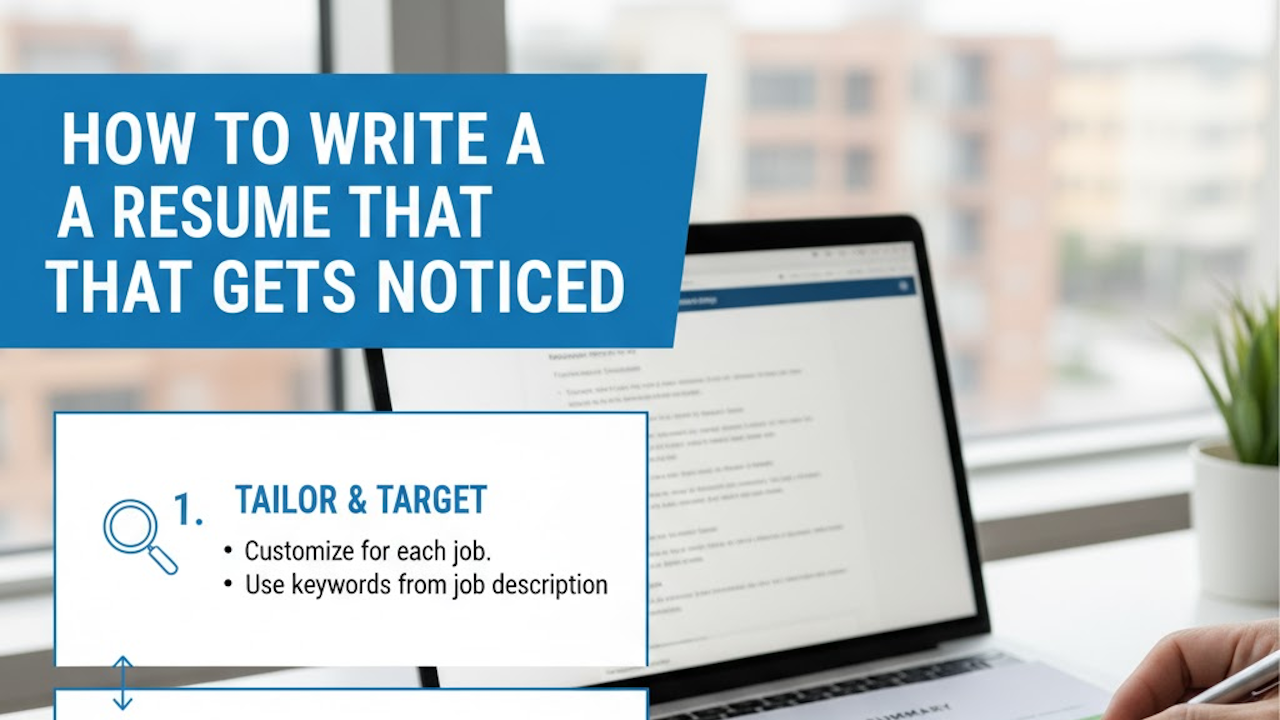
In a crowded job market where hundreds of candidates compete for the same role, a resume serves as your first and often only chance to make an impression. Recruiters and hiring managers sift through stacks of applications daily, and most spend only a brief moment deciding whether to read further or move on. A resume that gets noticed does more than list jobs and dates. It tells a compelling story of your value, aligns closely with the target role, and survives both human review and automated screening systems. Writing one requires strategy, precision, and attention to detail. This guide walks through every stage of the process, from initial research to final polishing, so you can create a document that stands out for the right reasons and opens doors to interviews.
Why Most Resumes Fail to Capture Attention
Many resumes blend into the background because they follow a generic template without customization. They focus on duties rather than results, use vague language, or ignore the specific language of the job posting. Others suffer from poor organization, inconsistent formatting, or excessive length that buries key information. Some candidates include irrelevant details from decades ago while omitting recent accomplishments that demonstrate current capabilities. The result is a document that feels like a form rather than a marketing tool. Understanding these pitfalls early helps you avoid them and build something stronger from the start.
A strong resume works on multiple levels. It must pass through applicant tracking systems that scan for keywords and structure. It must then appeal to a human reader who wants quick evidence of fit and potential impact. Finally, it should prompt the next step: an invitation to interview. Achieving all three requires deliberate choices at every turn.
Research Before You Write a Single Word
Effective resumes begin long before typing starts. Thorough research ensures every section speaks directly to the opportunity at hand. Begin by studying the job description carefully. Highlight required skills, preferred qualifications, and any specific tools or methodologies mentioned. Note the responsibilities that appear most frequently or seem most critical to success in the role.
Next, investigate the company itself. Visit its website, read recent news articles, and review its mission and values statements. Look for clues about company culture, growth areas, and challenges the organization faces. This context helps you frame your experience in terms that resonate. For example, if a company emphasizes innovation and rapid scaling, you can highlight projects where you introduced new processes or helped a team expand.
Also examine the industry landscape. Understand current trends, common pain points, and language professionals in the field use. This research allows you to incorporate relevant terminology naturally, which strengthens both human appeal and keyword matching. Spend time on LinkedIn reviewing profiles of people who currently hold similar roles at the target company or comparable organizations. Observe the achievements they emphasize and the skills they list. This gives you a realistic picture of what success looks like in the position you want.
Finally, clarify your own career narrative. Identify the threads that connect your past roles, the skills you most enjoy using, and the types of problems you solve best. When you understand both the job and yourself, you can position your background as the ideal solution rather than a random collection of experiences.
Choosing the Right Resume Format
Not every resume follows the same structure. The format you select should match your career situation and the expectations of your target industry. The three primary formats each serve different purposes.
The chronological format remains the most widely used and preferred by recruiters in most fields. It lists work experience in reverse chronological order, beginning with the most recent position. This format highlights career progression and stability. It works especially well when your recent roles show clear advancement or when you have stayed in the same industry or function for several years. Recruiters can quickly see how your responsibilities have grown and what level of impact you have delivered.
The functional format shifts emphasis away from dates and job titles toward skills and accomplishments. It groups experience under skill categories rather than under specific employers. This approach can benefit career changers, those with employment gaps, or individuals whose most relevant experience comes from volunteer work, projects, or earlier roles. However, many recruiters view functional resumes with suspicion because they can obscure employment history. Use this format only when your situation genuinely requires it and when the target role values demonstrated abilities over linear progression.
The combination or hybrid format blends elements of both. It typically opens with a strong summary and skills section, followed by a condensed work history that still shows chronology. This format offers flexibility for professionals with diverse backgrounds or those transitioning into new areas while still providing the timeline most employers expect. Many modern resumes use this hybrid approach because it balances marketing power with transparency.
Consider your industry as well. Creative fields such as design, marketing, or media sometimes welcome more distinctive layouts, while conservative sectors like finance, law, or government prefer traditional structures. When in doubt, lean toward clarity and simplicity. A clean chronological or hybrid resume rarely offends, whereas an overly stylized one can distract from your content.
Crafting the Header and Contact Information
The top of your resume must make your identity and availability unmistakable. Place your full name in a larger, bold font so it stands out immediately. Directly beneath it, list your phone number, professional email address, LinkedIn profile URL, and city and state. If you maintain a personal website or portfolio that showcases relevant work, include that link as well.
Keep this section concise and professional. Use a dedicated email address rather than a casual personal one. Ensure the phone number you provide has a professional voicemail greeting. Omit full street addresses in most cases, as they add little value and can raise privacy concerns. If you are open to relocation, you may note that fact briefly, but avoid long explanations about moving plans.
The header sets the tone for everything that follows. A clean, error-free presentation here signals attention to detail from the very first glance.
Writing a Compelling Professional Summary
The professional summary, sometimes called a profile or branding statement, appears near the top after your contact information. This short paragraph or set of bullet points serves as your elevator pitch. It should capture who you are professionally, what you offer, and why you are a strong fit for the specific role.
Effective summaries avoid generic phrases such as “hardworking team player” or “results-oriented professional.” Instead, they weave in specific strengths, years of experience, and notable achievements. For example, a marketing manager might write: “Strategic marketing leader with eight years of experience driving demand generation campaigns that increased qualified leads by 40 percent year over year. Skilled in content strategy, marketing automation platforms, and cross-functional collaboration to align sales and marketing goals.”
Tailor the summary to each application. Mirror language from the job description where it accurately reflects your background. Mention the job title or functional area you are targeting. Keep the entire summary to four or five lines at most. The goal is to entice the reader to continue rather than to provide a complete autobiography.
Some candidates prefer a short list of core competencies or value propositions instead of a paragraph. Either approach works as long as the content remains specific and forward-looking. Avoid writing in the first person. Use strong, active language throughout.
Detailing Your Professional Experience
The experience section forms the heart of most resumes. Here you demonstrate what you have accomplished rather than simply listing what you were responsible for doing. Recruiters want evidence of impact, not a job description.
Organize entries in reverse chronological order. For each position, begin with the job title, company name, and dates of employment. Follow with three to six bullet points that describe your contributions. Start every bullet with a strong action verb such as “led,” “developed,” “increased,” “streamlined,” or “negotiated.” Vary the verbs to keep the section engaging.
Focus on outcomes and scale. Quantify results whenever possible. Instead of writing “managed social media accounts,” write “grew Instagram following from 5,000 to 45,000 in 18 months, resulting in a 30 percent increase in website traffic from social channels.” Numbers create credibility and make abstract claims concrete. If exact figures are unavailable, use reasonable estimates or percentages that show direction and magnitude.
Apply the STAR method internally when drafting bullets. Recall the Situation you faced, the Task you needed to complete, the Actions you took, and the Results you achieved. Then distill that story into one powerful bullet point. This ensures each line carries substance.
Prioritize relevance. Emphasize accomplishments that relate most closely to the target role. If you held multiple positions at the same company, you may combine some entries or focus bullets on the most senior role while briefly noting earlier responsibilities. For older positions, reduce the number of bullets or summarize them more briefly so recent experience receives the most space.
When describing experience from more than ten or fifteen years ago, consider condensing it into a single line or omitting details altogether unless those early roles directly support your current candidacy. Space on a resume is limited, and recent achievements usually matter more.
Presenting Education and Professional Development
The education section typically follows experience for mid-career professionals. List degrees in reverse chronological order, including the degree name, institution, and graduation year. If you earned honors or maintained a strong grade point average, you may include that information, though it becomes less relevant as your career advances.
For recent graduates or those with limited work experience, move the education section higher and expand it with relevant coursework, academic projects, or extracurricular leadership roles. These details help demonstrate capabilities when professional history is still developing.
Include certifications, licenses, and professional development courses in a dedicated section or integrated with education. List the credential name, issuing organization, and date earned or expected. Only include items that remain current and add value to the target role. Outdated or unrelated certifications can dilute focus.
If you are pursuing additional education or certification relevant to the position, note it as “in progress” with an expected completion date. This shows initiative without overstating current qualifications.
Building a Targeted Skills Section
A well-constructed skills section helps both automated systems and human readers quickly confirm your fit. Divide skills into logical categories such as technical skills, software proficiency, languages, or industry-specific competencies. Within each category, list items that appear in the job description or that you have used successfully in recent roles.
Prioritize hard skills that can be verified through work samples or references. Soft skills such as leadership or communication are better demonstrated through accomplishment bullets rather than listed in isolation. However, if the job description specifically requests certain interpersonal abilities, you can include them briefly.
Keep the skills section concise. A long, unfiltered list dilutes impact and may suggest you are padding the resume. Aim for relevance over quantity. Update this section for every application so it reflects the exact requirements of the role.
Incorporating Additional Sections Strategically
Certain candidates benefit from sections beyond the core four. Projects can showcase hands-on work, especially in technical or creative fields. Volunteer experience demonstrates character and transferable skills when paid roles do not fully capture your capabilities. Publications, presentations, or patents highlight thought leadership in research-oriented or expert roles.
Only add these sections when they strengthen your candidacy for the specific position. A lengthy list of unrelated volunteer activities can distract from stronger professional achievements. Place additional sections toward the bottom of the resume so primary qualifications remain prominent.
Designing for Readability and Professionalism
Even strong content loses power if the document is difficult to scan. Use a clean, professional font such as Calibri, Arial, or Garamond in 10 to 12 point size for body text. Your name can appear slightly larger. Maintain consistent formatting throughout: the same bullet style, date format, and heading treatment on every page.
Leave adequate white space. Margins of at least half an inch on all sides prevent a cramped appearance. Use bold sparingly to highlight job titles or key achievements. Avoid excessive underlining, italics, or color unless your industry encourages creative expression.
Limit length based on experience level. Most professionals with fewer than ten years of experience should aim for one page. Those with extensive senior-level accomplishments may use two pages, but every line must justify its presence. Never exceed two pages unless you are applying for academic or certain government positions that traditionally accept longer curricula vitae.
Save the final version as a PDF to preserve formatting across devices and applicant tracking systems. Name the file professionally, such as FirstName_LastName_Resume.pdf, rather than using generic titles.
Optimizing for Applicant Tracking Systems
A growing number of organizations use applicant tracking systems to manage high volumes of applications. These systems parse resumes for keywords, structure, and other data points before a human ever sees the document. Understanding how these systems work helps you increase the chances that your resume reaches a recruiter.
Incorporate exact phrases and keywords from the job description naturally throughout your summary, experience bullets, and skills section. Avoid “keyword stuffing,” which involves repeating terms unnaturally. Instead, weave relevant language into genuine accomplishment statements.
Use standard section headings that systems recognize easily: Professional Experience, Education, Skills. Avoid creative alternatives that might confuse parsing algorithms. Stick to common file formats and avoid tables, text boxes, or graphics that some systems cannot read.
Test your resume by submitting it through a job portal and then requesting a copy of the parsed version if the system offers that option. Review the output for missing information or formatting issues and adjust accordingly.
Tailoring Your Resume for Every Application
A generic resume rarely performs well. Customization dramatically improves response rates. For each opportunity, adjust your professional summary to reference the role and company. Reorder or rewrite experience bullets so the most relevant accomplishments appear first. Update the skills section to emphasize tools and competencies mentioned in the posting.
This process takes time, but the effort pays off. A tailored resume demonstrates genuine interest and makes it easier for the reader to see the connection between your background and the open position. Keep a master version of your resume that contains all possible content, then create targeted versions by selecting and refining the most appropriate elements.
Proofreading and Gathering Feedback
Even small errors can undermine credibility. After drafting, set the resume aside for a day or two before reviewing it with fresh eyes. Read it aloud to catch awkward phrasing. Check for consistency in verb tense, date formats, and punctuation. Verify all contact information and ensure links work.
Use spelling and grammar tools, but do not rely on them exclusively. They often miss context-specific issues. Ask a trusted colleague, mentor, or professional contact to review the document. Provide them with the job description so they can assess alignment and clarity. Welcome constructive criticism and revise accordingly.
Consider professional resume review services if you are changing careers, targeting highly competitive roles, or struggling to articulate your value. An outside perspective can identify blind spots and suggest stronger phrasing.
Common Mistakes That Sabotage Resumes
Several recurring errors reduce effectiveness. Listing duties instead of achievements makes the resume read like a job description rather than a record of success. Including personal information such as age, marital status, or photographs is unnecessary in most markets and can introduce bias. Using an objective statement focused on what you want rather than what you offer feels outdated and self-centered.
Submitting resumes with inconsistent formatting, typos, or overly long paragraphs signals carelessness. Failing to quantify results leaves accomplishments vague and forgettable. Sending the same generic document to every opening wastes the opportunity to demonstrate fit.
Another frequent issue involves overusing jargon or buzzwords without substance. Phrases like “synergized cross-functional teams” sound impressive until the reader realizes they lack specific meaning. Replace empty language with concrete examples of what you actually did and what changed as a result.
Advanced Strategies for Standing Out
Once you have mastered the fundamentals, consider techniques that elevate your resume further. Incorporate brief stories or context that reveal problem-solving ability. For instance, instead of simply stating that you reduced costs, explain the challenge the organization faced and the creative approach you used.
For senior roles, emphasize leadership scope, strategic influence, and business outcomes rather than tactical execution. Board-level or executive resumes often highlight vision, stakeholder management, and transformative initiatives.
If you have gaps in employment, address them honestly but briefly in a cover letter or during an interview rather than trying to hide them on the resume. Focus on what you accomplished during any time away, such as skill-building, caregiving, or entrepreneurial projects.
Finally, maintain your resume as a living document. Update it after every significant project or role change while details remain fresh. Regular maintenance makes future applications faster and ensures you always have a current version ready.
Conclusion
Writing a resume that gets noticed demands more than filling in a template. It requires research, strategic thinking, and relentless focus on the value you deliver. By understanding what recruiters and systems seek, structuring your content for clarity and impact, and refining every element for the specific opportunity, you transform your resume from a simple record into a powerful advocate for your candidacy.
The process takes effort, but the reward is greater visibility among decision-makers and more invitations to discuss how you can contribute. Start by gathering your materials and studying the roles you want most. Then build section by section, always asking whether each line advances your case. With persistence and attention to the principles outlined here, you can create a resume that opens conversations and advances your career. Take the first step today by reviewing your current document against these guidelines and making one meaningful improvement. The opportunities you seek are waiting for the right presentation of your story.