

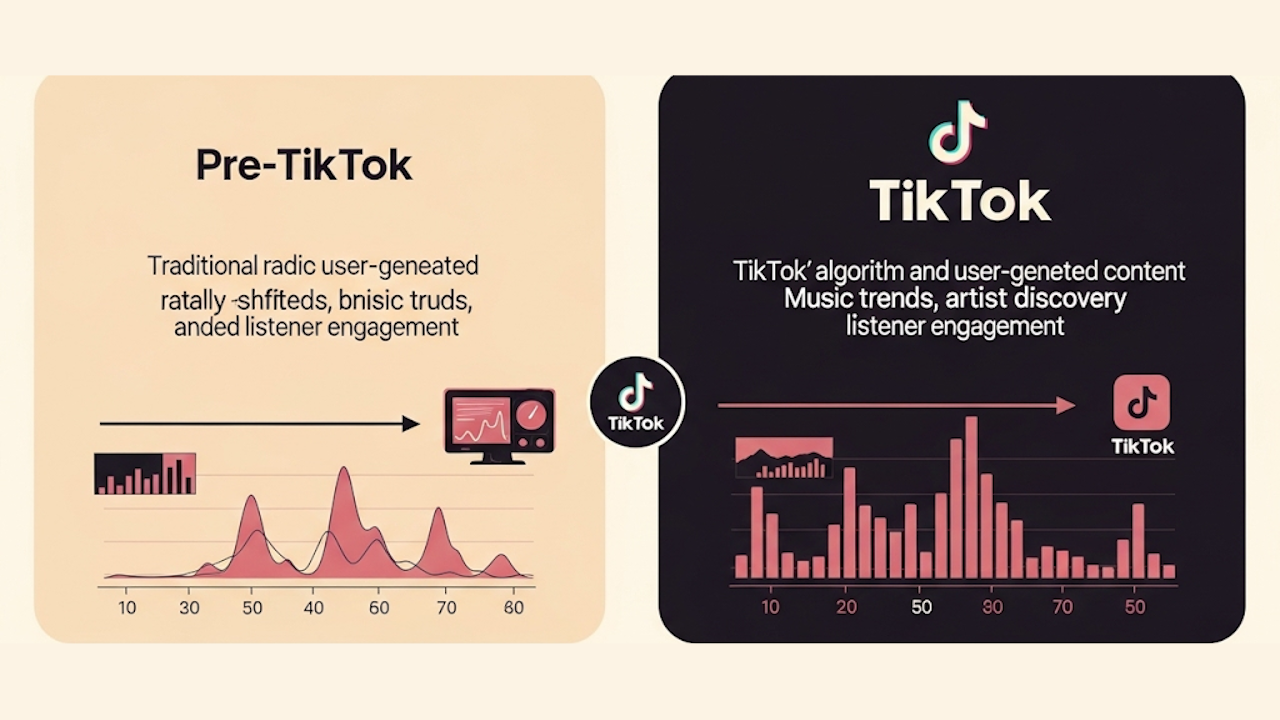
In the span of less than a decade, TikTok transformed from a niche lip-syncing app into the most powerful force in global music culture. What began as Musical.ly in 2014 evolved into TikTok after its 2018 merger and international expansion, but it was the COVID-19 pandemic that propelled the platform into everyday life for billions. With over one billion monthly active users by the mid-2020s, TikTok did not merely host music videos. It rewrote the rules of discovery, creation, promotion, and consumption. Songs no longer needed radio airplay, expensive marketing campaigns, or even traditional label support to reach number one on charts. A 15-second clip, paired with user-generated dances or memes, could catapult an unknown track to billions of streams and cultural ubiquity. This shift democratized access for independent artists, forced major labels to rethink their strategies, shortened song structures, revived catalog tracks, and created new revenue streams while raising questions about artistic depth and industry sustainability. TikTok did not just influence music. It changed music forever.
The platform’s rise coincided with a perfect storm in the music business. Traditional gatekeepers such as radio programmers and MTV had already lost ground to streaming services like Spotify and YouTube. Yet those platforms still favored established artists with polished marketing budgets. TikTok flipped the model entirely. Its algorithm rewards engagement over follower count or paid promotion. When users create videos using a specific sound, the track gains exponential visibility. This participatory element turned passive listeners into active participants. A user scrolling late at night might encounter a snippet of an emerging song in a dance challenge, save it to their camera roll, and share their own version within minutes. The result was a feedback loop that labels could never replicate on their own. By 2024, according to data from TikTok’s Music Impact Report released in early 2025, 84 percent of songs entering Billboard’s Global 200 chart had gone viral on TikTok first. Another 12 percent achieved virality after charting, leaving only 4 percent without any notable TikTok presence. These numbers illustrate a seismic power shift: virality on the app became the primary predictor of commercial success.
Consider the mechanics that made this possible. Unlike longer-form platforms, TikTok thrives on brevity. Users typically encounter music in 15- to 30-second bursts, so the most effective tracks deliver an immediate hook. Producers and songwriters adapted quickly. Verses shrank or disappeared. Choruses hit within the first few seconds. Repetitive, meme-friendly lyrics and simple melodies became assets rather than limitations. Nicky Youre’s “Sunroof,” for instance, followed a structure heavy on choruses and instrumental breaks designed for easy looping. The average length of songs on major charts dropped noticeably after TikTok’s mainstream arrival around 2019, falling to about three minutes and twelve seconds by some analyses. This compression did not happen by accident. Artists and their teams began testing snippets on the app before full releases, gauging reaction and refining accordingly. What emerged was a new creative calculus: write for the clip first, then build the full song around it.
Early breakout examples demonstrated the platform’s disruptive potential. Lil Nas X uploaded “Old Town Road” as an independent artist in late 2018. A viral “Yeehaw Challenge” turned the track into a cultural phenomenon, leading to a record 19 weeks at number one on the Billboard Hot 100 after a remix with Billy Ray Cyrus. The song blended country, hip-hop, and meme energy in a way that felt tailor-made for short videos. Doja Cat’s “Say So” followed a similar path in 2020. An organic dance created by user Haley Sharpe spread across millions of videos, pushing the single to the top of charts and prompting an official music video that incorporated the choreography. These were not isolated cases. GAYLE’s “abcdefu” exploded through breakup-themed videos and simple sing-alongs, while tracks like Tai Verdes’ “A-O-K” rode upbeat, feel-good vibes to streaming success. Even established artists benefited. Fleetwood Mac’s 1977 hit “Dreams” surged back onto charts in 2020 after a video of Nathan Apodaca skateboarding while sipping cranberry juice racked up tens of millions of views. The track saw a 374 percent jump in sales and an 89 percent increase in streams, proving TikTok could resurrect catalog music for new generations.
The empowerment of independent and emerging artists stands as one of TikTok’s most profound legacies. Before the app, breaking through required connections, money, or luck with traditional media. Now, bedroom producers and unsigned talents could reach global audiences overnight. PinkPantheress built a career from dorm-room recordings that gained traction through sped-up samples and nostalgic vibes. Steve Lacy, already somewhat known, saw his track “Bad Habit” catapult to new heights after years of modest success. In 2020 alone, over 70 artists who broke on TikTok secured major label deals, according to platform reports. By 2025, industry observers noted that TikTok had created more new stars than traditional label A&R departments. The app’s data tools allowed labels to monitor real-time engagement metrics and sign acts only after organic momentum had already generated millions of streams. This reversed the old pipeline. Audiences discovered talent first. Labels followed.
Major labels adapted, sometimes reluctantly. They established dedicated TikTok teams to scout trends, seed content, and analyze performance data. Partnerships with the platform provided early access to insights that helped predict hits. Yet tensions arose. In 2024, Universal Music Group pulled its catalog from TikTok amid licensing disputes, highlighting concerns over artist compensation and the platform’s leverage. The move disrupted emerging artists temporarily but underscored a broader truth: the industry had grown overly dependent on a single private company whose algorithm remained opaque. Despite such friction, the economic incentives proved irresistible. Viral peaks on TikTok correlated with an average 11 percent lift in on-demand streaming in the following three days. U.S. TikTok users were 74 percent more likely to discover and share new music than average short-form video users. They also spent 46 percent more on music purchases, 52 percent more on live experiences, and 62 percent more on merchandise each month compared to typical listeners. These behaviors translated into tangible revenue for artists, from sync licensing opportunities to sold-out tours.
Beyond economics, TikTok reshaped cultural conversations around music. Dance challenges fostered communal creativity. Global sounds crossed borders effortlessly. Nigerian artist CKay’s “Love Nwantiti” became a worldwide hit through remixes and user videos, reaching number two on the Global 200. K-pop acts and Latin tracks found new audiences through algorithmic amplification. The platform amplified diversity in ways radio never could, though critics argued it still favored certain upbeat, accessible aesthetics over deeper genres like jazz or experimental hip-hop. Old songs regained relevance through ironic or nostalgic reinterpretations. Musical Youth’s “Pass the Dutchie” and other 1980s tracks enjoyed second lives. This revival effect extended the lifespan of intellectual property and introduced younger listeners to music their parents once loved.
Yet the changes came with trade-offs that sparked debate within the creative community. Some artists and songwriters praised TikTok for lowering barriers and rewarding authenticity when it aligned with viral moments. Others worried it encouraged formulaic output. Simple, repetitive choruses and list-like lyrics, such as those in “abcdefu,” drew accusations of being manufactured for algorithms rather than emotional resonance. Songwriters reported pressure to prioritize virality over storytelling or experimentation. As one observer noted in 2025 analyses, success increasingly hinged on how many TikToks featured a song rather than traditional metrics like album sales. This “TikTok-ification” risked sidelining nuance in favor of instant gratification. Attention spans shortened further, and full albums sometimes felt secondary to the next trend. Labels openly encouraged artists to craft tracks with the app in mind, prompting concerns that art was being optimized for a computer algorithm instead of human connection.
Critics also pointed to broader industry implications. Over-reliance on one platform created vulnerability. When algorithms shifted or licensing battles erupted, careers could stall. Emerging acts without major backing sometimes struggled to convert fleeting virality into sustainable careers. Questions about fair compensation persisted, as many artists earned far less from TikTok streams relative to the exposure they generated. Moreover, the echo-chamber effect of personalized feeds could limit musical exploration, pushing users toward similar-sounding hits while marginalizing niche genres. Despite these drawbacks, data from 2025 showed TikTok users remained highly engaged: 40 percent more likely than average listeners to buy music specifically to boost an artist’s chart position, and far more inclined to attend release-week album listening parties.
Looking ahead, TikTok’s influence shows no signs of waning. Even as regulators scrutinize the app and competitors emerge, its core model of short-form, participatory music discovery has influenced other platforms. Instagram Reels and YouTube Shorts adopted similar strategies. Artists continue to drop teasers directly on TikTok to build anticipation. The next wave may involve deeper integration, such as in-app purchases or enhanced creator tools that let musicians monetize trends more directly. For the industry, the lesson is clear: music now lives in a participatory ecosystem where fans co-create value. Traditional promotion still matters, but organic community momentum drives the biggest wins.
In the end, TikTok accomplished what no previous technology had managed on this scale. It turned music into a daily conversation rather than a product to be consumed in isolation. Listeners became creators, trends became careers, and the distance between artist and audience shrank dramatically. The platform empowered bedroom geniuses, revived forgotten gems, and forced every corner of the business to evolve or risk irrelevance. Yet it also raised enduring questions about depth versus reach, authenticity versus algorithm, and long-term artistry in an era of instant virality. Whether one views these changes as liberation or limitation, the evidence is undeniable. TikTok did not merely popularize songs. It redefined the very DNA of modern music, ensuring that from now on, the next global phenomenon will almost certainly begin with a simple sound and a scroll.