

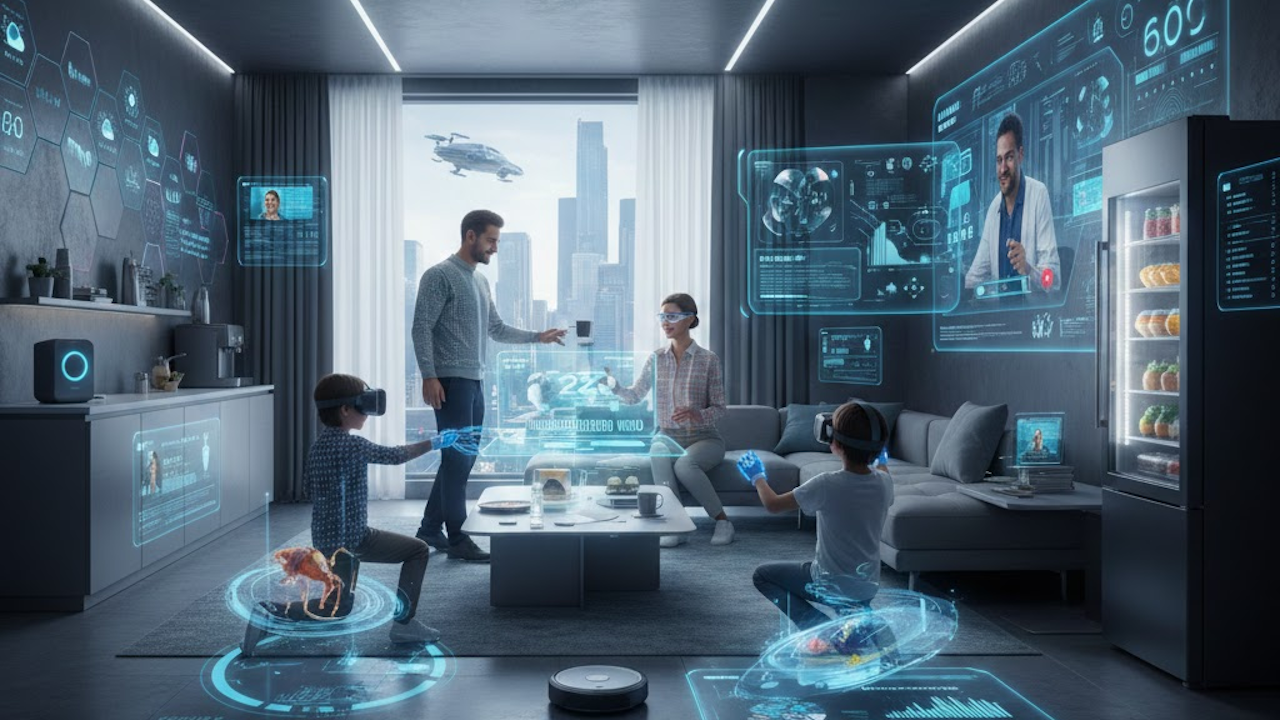
Smart technology has become the invisible architecture of daily existence by 2026. From the moment an alarm gently stirs you from sleep to the final notification that dims your lights at night, algorithms and connected devices orchestrate routines with precision once reserved for science fiction. This seamless integration promises convenience and efficiency but also raises questions about autonomy, privacy, and the subtle reshaping of human behavior. In this article, we explore how smart tech permeates every facet of life in 2026, drawing on the rapid evolution of artificial intelligence, Internet of Things sensors, and predictive analytics.
Awakening to a Personalized Morning
Your day begins not with a blaring traditional alarm but with a smart sleep system that monitors brainwaves, heart rate, and room conditions overnight. By 2026, devices like advanced wearable bands or under-mattress sensors analyze sleep cycles in real time. They adjust bedroom temperature, humidity, and even subtle audio cues to ensure you wake at the optimal moment within your circadian rhythm. If your REM sleep was disrupted by external noise, the system logs it and suggests environmental tweaks for the next night.
The kitchen activates moments later. A smart coffee maker receives data from your fitness tracker indicating low energy levels and brews a stronger cup with added nootropic supplements tailored to your biometric profile. Voice assistants, now far more conversational and context-aware, review your calendar, weather, and traffic patterns. They suggest an outfit based on scheduled meetings and current fashion trends pulled from aggregated user data. Grocery lists update automatically as inventory sensors in your fridge detect low milk or expiring produce, placing orders with delivery drones that arrive within the hour.
This morning orchestration feels helpful, yet it conditions users to expect perfection. Delays in any part of the chain can trigger mild anxiety, as people grow accustomed to frictionless starts.
Smart Homes as Command Centers
Homes in 2026 function as responsive ecosystems. Central hubs integrate lighting, security, entertainment, and climate control. Motion sensors and cameras distinguish between family members, pets, and strangers using facial recognition refined by on-device AI to minimize cloud dependency and privacy risks. Lights dim automatically during movie time or brighten for reading, adapting to natural light levels and user preferences learned over months.
Energy management has advanced significantly. Solar panels paired with battery storage and AI predictors optimize usage based on weather forecasts, electricity rates, and household patterns. Your home might shift non-essential loads like laundry to off-peak hours without input. Voice and gesture controls allow adjustments from anywhere, but multimodal interfaces, including augmented reality overlays via smart glasses, let you visualize energy flows or security feeds in real space.
Appliances communicate proactively. Ovens preheat based on recipe apps synced to your meal plans, while washing machines notify you of cycle completion via wrist vibrations. For families, these systems track children’s routines, reminding them of homework or chores through personalized audio messages. Elderly relatives benefit from fall detection and medication reminders integrated into ambient displays.
Yet this connectivity introduces vulnerabilities. A single compromised device can expose the entire home network, prompting widespread adoption of zero-trust security models and biometric authentication.
Productivity and the Intelligent Workplace
At work, smart tech blurs boundaries between physical and digital environments. Hybrid offices use occupancy sensors to allocate desks dynamically, adjusting ventilation and lighting per user profiles. Collaboration tools powered by large language models transcribe meetings in real time, summarize action items, and even suggest follow-up emails drafted in your style.
Wearables monitor focus levels through subtle biometrics, recommending micro-breaks or adjusting notification volumes. AI project managers analyze team workloads, predicting bottlenecks and reallocating tasks before they arise. For remote workers, virtual reality meeting spaces simulate presence with spatial audio and shared digital whiteboards that feel tangible.
Freelancers and entrepreneurs rely on smart scheduling assistants that negotiate meeting times across time zones while factoring in personal energy patterns derived from sleep data. Financial tools automatically categorize expenses, flag anomalies, and optimize tax strategies using predictive modeling.
This augmentation boosts output but can erode personal agency. Constant performance metrics may foster a culture of surveillance, where downtime feels unproductive and creativity suffers under optimization pressure.
Health and Wellness Under Constant Watch
Healthcare has shifted toward prevention through continuous monitoring. Smartwatches and implantable sensors track glucose, blood pressure, and inflammatory markers, alerting users and doctors to irregularities before symptoms appear. AI-driven apps interpret this data alongside genetic profiles to recommend personalized nutrition, exercise, or even medication adjustments.
Mental health support integrates seamlessly. Mood-tracking features analyze voice tone, typing speed, and social media patterns to detect early signs of stress or depression, offering guided breathing or connecting users to therapists via instant video. Sleep coaches evolve into full wellness companions that correlate diet, activity, and environment for holistic advice.
Hospitals use smart beds and predictive analytics to anticipate patient needs, reducing wait times and errors. Wearable patches deliver real-time ECG readings during daily activities, transforming chronic disease management.
Public health benefits from aggregated anonymized data, enabling faster responses to outbreaks. However, the line between helpful insights and over-medicalization blurs. Users report feeling tethered to their metrics, sometimes prioritizing data over intuitive bodily signals.
Transportation Transformed by Autonomy
Commuting in 2026 involves layers of smart coordination. Electric vehicles with advanced driver assistance systems handle most driving tasks, navigating traffic using vehicle-to-everything communication that anticipates congestion and coordinates with public transit. Route optimization considers not just time but carbon footprint, weather, and personal preferences like scenic paths.
Smart cities deploy sensor networks for traffic lights that adapt in real time, minimizing delays. Delivery robots and autonomous shuttles handle last-mile logistics, while augmented reality windshields overlay navigation and hazard warnings. Bike-sharing and e-scooter fleets self-position based on demand predictions.
Air travel incorporates biometric boarding and AI cabin environments that adjust seating, air quality, and entertainment per passenger. For long hauls, in-flight health monitoring prevents issues proactively.
Safety improves dramatically, with accident rates plummeting due to machine precision. Still, reliance on these systems sparks debates over liability in edge cases and the deskilling of basic navigation abilities.
Entertainment and Social Connections Redefined
Leisure time revolves around hyper-personalized content. Streaming platforms use deep learning to generate recommendations so accurate they anticipate tastes before users articulate them. Interactive stories adapt plots based on emotional responses detected via cameras or wearables.
Smart speakers and displays curate ambient soundscapes or visual art that evolves with mood and time of day. Gaming incorporates full-body tracking and AI opponents that learn your style for balanced challenges. Social platforms facilitate virtual gatherings in persistent digital spaces where avatars mirror real-time expressions.
Dating apps leverage compatibility algorithms drawing from extensive behavioral datasets, suggesting matches during optimal emotional windows. Friend groups maintain shared smart calendars that propose activities based on collective availability and interests.
This connectivity combats isolation but risks echo chambers and superficial interactions. Screen time management tools ironically compete with the very platforms they seek to moderate.
Privacy, Ethics, and the Human Element
As smart tech embeds deeper, privacy concerns intensify. Regulations in 2026 mandate transparent data practices and user-controlled silos, yet enforcement varies. Many opt for local processing on edge devices to limit data sharing, accepting slightly reduced functionality.
Ethical questions emerge around algorithmic bias, addiction potential, and digital divides. Rural areas with patchy connectivity lag behind urban smart ecosystems, exacerbating inequalities. Children growing up with always-on assistance may develop different cognitive skills, prompting educational reforms emphasizing critical thinking over tool dependency.
Society grapples with “tech fatigue,” leading to voluntary disconnection periods facilitated by smart home modes that enforce device limits. Mental health professionals note rising cases linked to over-reliance, advocating balanced integration.
Looking Ahead: Empowerment or Enslavement?
By mid-2026, smart technology has undeniably enhanced quality of life through efficiency gains, health insights, and enriched experiences. It frees time for relationships, creativity, and rest that previous generations spent on drudgery. Yet this convenience extracts a price in vigilance and data sovereignty.
The future depends on deliberate choices. Developers prioritize human-centric design that augments rather than supplants decision-making. Users cultivate digital literacy to question recommendations and maintain offline competencies. Policymakers balance innovation with protections against exploitation.
In the end, smart tech runs your life only to the extent you permit. It serves best as a tool wielded with awareness, ensuring technology enhances humanity rather than defining it. As integration deepens toward 2030 and beyond, the core challenge remains preserving the unpredictable, messy essence of being human amid flawless algorithms.
This evolution invites reflection: Are we crafting lives of greater meaning, or merely optimizing existence? The answer lies in mindful adoption, one connected morning at a time.