

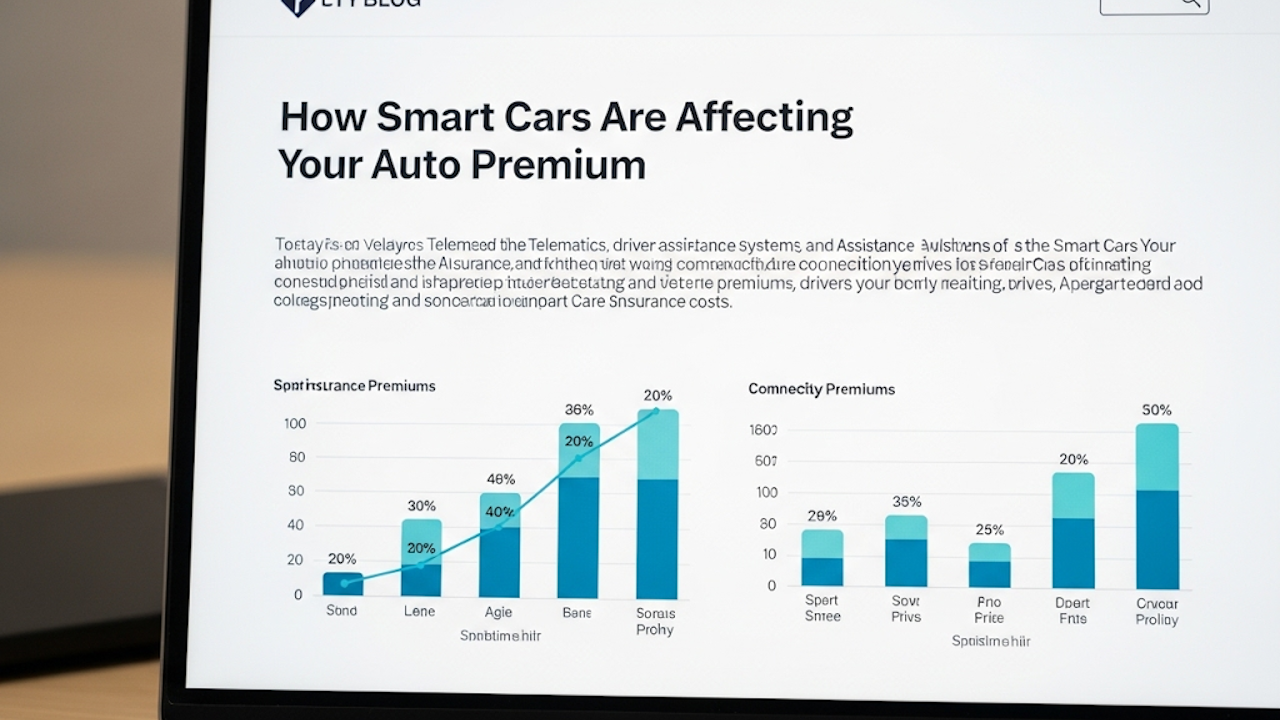
Smart cars, equipped with advanced driver assistance systems, connected technologies, and increasingly autonomous features, are transforming the automotive landscape. These vehicles use sensors, cameras, radar, lidar, and artificial intelligence to monitor surroundings, assist drivers, and in some cases take control of critical functions. From automatic emergency braking to lane-keeping assistance and real-time telematics data sharing, smart cars promise safer roads and more efficient driving. Yet their impact on auto insurance premiums is complex and often debated among experts, insurers, and consumers. While safety innovations can reduce accident risks and qualify drivers for discounts, the high costs of repairing sophisticated components frequently push premiums upward. This article explores the multifaceted ways smart cars influence what you pay for coverage, drawing on industry data and trends as of 2026.
Defining Smart Cars and Their Core Technologies
Smart cars encompass a range of features under the umbrella of advanced driver assistance systems (ADAS) and connected vehicle technology. Level 1 and Level 2 automation, common in many new models from manufacturers like Tesla, General Motors, Ford, and Hyundai, include adaptive cruise control, forward collision warning, blind-spot monitoring, and automated parking. Higher levels edge toward partial autonomy, where the vehicle can handle steering, acceleration, and braking in specific conditions, though the driver must remain alert. Fully autonomous vehicles (Level 4 or 5) remain rare on public roads but are expanding in testing and limited commercial fleets.
These technologies rely on embedded telematics that collect data on speed, braking patterns, acceleration, and even phone usage. Insurers tap into this data through usage-based insurance programs or vehicle manufacturer partnerships. The result is a shift from traditional risk assessment, which relied heavily on driver age, location, and claims history, to more granular, behavior-driven pricing. However, this evolution does not uniformly lower costs. Repair complexity and data privacy add layers that complicate the equation.
Safety Benefits: Fewer Accidents and Potential Premium Relief
One of the clearest advantages of smart cars lies in their ability to prevent crashes. Studies indicate that ADAS features can reduce crash risk by up to 50 percent in certain scenarios. For instance, rear automatic emergency braking alone has been linked to nearly 30 percent fewer property damage liability claims. Forward collision warning and automatic emergency braking systems have shown reductions in bodily injury claims by around 23 percent and collision claims by about 17 percent in some analyses.
These safety gains translate into fewer overall claims for insurers. Highway Loss Data Institute research highlights meaningful drops in claim frequency for vehicles equipped with these systems, particularly in rear-end collisions, which account for a large share of minor accidents. Insurers respond by offering discounts for ADAS-equipped vehicles in many cases. Some companies provide explicit reductions for features like electronic stability control or advanced braking systems, sometimes amounting to modest annual savings.
The broader industry impact appears positive on the frequency side. One reinsurance analysis projected that increasing ADAS penetration could decrease total auto insurance loss cost trends by about 1 percent per year. For drivers, this means safer habits encouraged by the technology can lead to lower risk profiles over time. In usage-based programs, consistent safe driving further amplifies these benefits.
Telematics and Usage-Based Insurance: Personalized Savings for Safe Drivers
Telematics represents one of the most direct ways smart cars lower premiums for many policyholders. Also known as usage-based insurance (UBI), these programs use a plug-in device, mobile app, or the vehicle’s built-in connectivity to track driving behavior. Factors monitored include hard braking, rapid acceleration, speeding, time of day, and total miles driven.
Major insurers have embraced this model aggressively. Nationwide’s SmartRide program offers up to 15 percent off upon enrollment and as much as 40 percent at renewal for safe drivers in most states. Allstate’s Drivewise, Progressive’s Snapshot, and similar offerings from Geico, Liberty Mutual, State Farm, and Travelers advertise discounts ranging from 10 to 40 percent based on performance. On average, participants in telematics programs save around 3 percent compared to traditional policies, though top performers can achieve far more.
Pay-as-you-drive variants reward lower-mileage drivers with savings averaging 33 percent in some programs. These options appeal particularly to urban commuters or retirees who log fewer miles. The data also allows insurers to refine risk models, rewarding good behavior more precisely than demographic factors alone. For owners of smart cars, factory-installed telematics often integrates seamlessly, eliminating the need for aftermarket devices and providing real-time feedback via dashboards or apps to improve habits.
Consumer reports suggest satisfaction scores run higher among UBI participants, with many appreciating the transparency and potential rewards. However, drivers with aggressive habits or those who frequently drive at night may see minimal discounts or even slight increases, underscoring that telematics rewards consistency rather than punishing isolated incidents in most programs.
The Counterbalance: Higher Repair Costs Offset Safety Gains
Despite accident reductions, smart cars often cost more to repair after a collision, driving up claim severity and pressuring premiums. ADAS components such as cameras, radar sensors, and lidar units are fragile and expensive to replace. Calibration after even minor repairs is mandatory and requires specialized equipment, adding hundreds or thousands of dollars to a typical body shop visit.
Industry data reveals that ADAS repairs can constitute nearly 38 percent of total repair costs in common crash scenarios and over 40 percent in minor rear-end collisions. A simple bumper replacement that once cost a few hundred dollars can balloon to several thousand when sensors and calibration are involved. Windshield repairs on vehicles with forward-facing cameras may triple in price due to the need for precise recalibration to maintain system functionality.
These elevated costs affect every insured vehicle on the road indirectly. Even drivers without smart cars face higher rates because insurers pool risks across their portfolios. Repair shops report longer turnaround times and higher labor demands for ADAS-equipped models, further inflating expenses. Electric vehicles with smart features compound the issue through high-voltage battery risks and specialized parts scarcity in some cases.
Experts point out that while ADAS cuts the number of small, low-dollar claims, the remaining incidents tend to be costlier. This dynamic has contributed to rising overall insurance rates in recent years, even as vehicle safety improves. One analysis noted that U.S. average full-coverage premiums hovered around $2,100 in 2025, partly due to these technological factors.
Current Net Effect on Premiums: A Mixed and Evolving Picture
The net impact of smart cars on auto premiums remains debated. Some insurers and analysts argue that safety benefits outweigh repair hikes, leading to modest downward pressure on rates for ADAS-equipped models. Others contend that increased claim severity dominates, particularly for luxury or high-tech vehicles like certain Teslas, where parts availability and repair networks remain limited.
For example, vehicles with Level 2 automation features do not yet command broad premium reductions because human drivers retain ultimate responsibility. Premiums for models like Tesla’s with Full Self-Driving capability or GM’s Super Cruise often exceed averages for comparable non-smart cars due to repair complexity. However, specific discounts for safety packages exist, and telematics data can personalize rates favorably for cautious operators.
Regional variations play a role too. States with high urban density or strict repair regulations may see sharper premium increases for smart cars. Insurers increasingly use vehicle-specific data in underwriting, meaning a smart car with proven low-risk telematics history can still secure competitive quotes. Overall, the picture is not uniformly cheaper or more expensive; it depends on the driver’s habits, the vehicle’s specific features, and the insurer’s pricing philosophy.
The Future Horizon: Autonomous Vehicles and a Potential Insurance Revolution
As smart cars advance toward full autonomy, the insurance model faces profound disruption. Projections suggest that widespread adoption of autonomous technology could slash accidents by up to 90 percent, since human error causes the vast majority of crashes today. Goldman Sachs analysts forecast insurance costs per mile declining more than 50 percent over the next 15 years, from around $0.50 in 2025 to $0.23 by 2040.
Liability will shift dramatically from individual drivers to manufacturers, software developers, and fleet operators. Personal auto policies may give way to product liability and cyber coverage, with insurers handling claims through subrogation against automakers rather than policyholders. Early experiments, such as specialized products for autonomous miles, already offer rate cuts of 50 percent in some cases based on verified lower risk.
Commercial fleets and robotaxis will accelerate this change, requiring new policy frameworks that blend auto, technology, and operational risks. Regulators are beginning to address standardization, but legal complexities around multi-party liability and data logs will persist in the near term. For consumers, this could mean lower premiums long-term but transitional uncertainty, including higher rates during the hybrid period when both human-driven and autonomous vehicles share the roads.
Privacy and Data Concerns in the Smart Car Era
Telematics and connected features raise legitimate questions about data privacy. Insurers collect detailed behavioral information, which some drivers view as intrusive. While most programs promise not to share data beyond underwriting and offer opt-out options, concerns persist about potential misuse or rate increases for unrelated lifestyle factors.
Consumers should review privacy policies carefully before enrolling. Many states regulate data usage, and reputable insurers provide clear consent processes. Balancing the savings from UBI against comfort with monitoring remains a personal choice. As smart cars become standard, expect stronger consumer protections and more transparent data practices.
Practical Tips for Smart Car Owners Seeking Lower Premiums
To maximize benefits and minimize costs, drivers should take proactive steps. First, verify that all ADAS features are enabled and functioning properly by consulting the owner’s manual. Second, enroll in a telematics program if your driving record supports it; even an initial signup discount can help. Third, shop around and highlight your vehicle’s safety technologies when obtaining quotes, as not every insurer automatically applies credits.
Maintain your car according to manufacturer guidelines, especially calibration after repairs, to preserve coverage eligibility. Consider bundling policies or increasing deductibles where feasible to offset any tech-related hikes. Finally, stay informed about emerging autonomous insurance products if upgrading to higher automation levels.
Conclusion: Navigating a Transformative Shift
Smart cars are reshaping auto insurance in ways that blend opportunity and challenge. Enhanced safety and telematics deliver real savings for many responsible drivers, while repair costs and technological complexity introduce upward pressure on rates. The transition to greater autonomy promises a future of dramatically lower premiums and fewer claims, but the interim period requires adaptation from insurers, regulators, and consumers alike.
Ultimately, the effect on your premium hinges on how you drive, which car you choose, and which insurer you select. By understanding these dynamics, smart car owners can position themselves to benefit from innovation rather than be burdened by it. As the industry evolves, staying engaged with your policy and exploring usage-based options will remain key to controlling costs in an increasingly intelligent automotive world.