

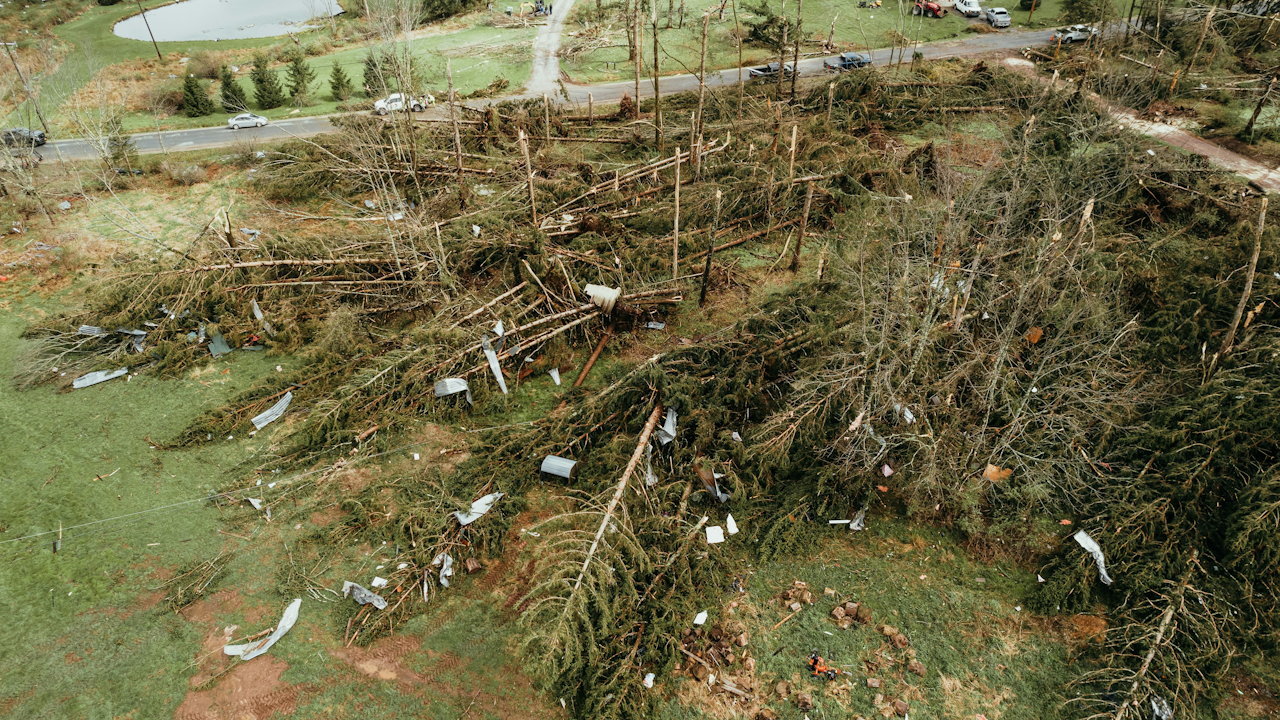
Natural disasters have long tested the resilience of communities and economies, but in recent years their growing intensity and frequency have forced a profound transformation in the global insurance landscape. What was once a relatively stable system for spreading risk has become a dynamic and often strained map of availability, pricing, and coverage. Insurers are redrawing this map by retreating from high-risk zones, sharply increasing premiums, and tightening policy terms, while governments step in as backstops of last resort. The result is a new insurance geography shaped less by traditional actuarial tables and more by the relentless march of climate-driven events such as wildfires, hurricanes, floods, and severe storms. This shift carries far-reaching implications for homeowners, businesses, real estate markets, and public finances worldwide.
The underlying driver is the unmistakable rise in natural catastrophes. Climate change has amplified the frequency and severity of extreme weather, turning what were once rare events into annual occurrences in many regions. Billion-dollar disasters in the United States alone have become routine, with dozens occurring each year. Globally, the pattern holds: economic losses from natural catastrophes reached approximately 220 billion dollars in 2025, according to data from reinsurers. Of that total, insured losses stood at around 107 billion dollars, marking the sixth consecutive year above the 100-billion-dollar threshold. Secondary perils, including wildfires, severe convective storms, and floods, accounted for a record 92 percent of those insured losses, highlighting how non-peak events now dominate the damage ledger rather than headline-grabbing hurricanes or earthquakes alone.
This escalation is not a one-off anomaly but part of a long-term trend. Inflation-adjusted insured losses from natural catastrophes have risen by an average of 5 to 7 percent annually since the mid-1990s. Reinsurers project that 2026 could see losses climb to 148 billion dollars under normal conditions or surge as high as 320 billion dollars in a severe scenario. The protection gap, or the portion of losses left uninsured, remains stubbornly wide. In 2025, only about 49 percent of total economic losses were covered by insurance, leaving governments, businesses, and individuals to absorb the rest. That gap widens further in developing regions with lower insurance penetration, but even in mature markets such as the United States the uninsured share of homeowners has climbed from roughly 5 percent a few years ago to around 12 to 13 percent today.
The insurance industry’s traditional model, built on pooling diverse risks and relying on historical data for pricing, is buckling under this new reality. Correlated risks, where a single event or season triggers widespread claims across entire regions, challenge the principle of diversification. Insurers face not only higher claim volumes but also soaring reinsurance costs, inflation in repair expenses, and regulatory hurdles in some jurisdictions that delay necessary rate adjustments. As a result, many companies have responded by limiting new policies, non-renewing existing ones, or exiting markets entirely. This retreat is redrawing the insurance map in stark terms: some neighborhoods or entire states are becoming difficult or impossible to insure through private carriers at affordable rates.
Nowhere is this transformation more evident than in California, where wildfires have upended the property insurance market. The state’s long history of dry seasons and expanding wildland-urban interface has collided with climate-driven extremes, producing devastating blazes that destroy thousands of structures in a matter of days. In early 2025, the Pacific Palisades and Eaton fires alone generated insured losses estimated in the tens of billions of dollars, contributing heavily to the national and global totals. Major carriers, including State Farm and Allstate, have halted or severely restricted new homeowners policies in recent years. Non-renewals have accelerated, with some ZIP codes seeing the majority of policies dropped by large insurers. The state’s insurer of last resort, the California FAIR Plan, has seen its policies in force more than double and its total exposure more than triple between 2021 and 2025. By mid-decade, the plan’s potential claims liability exceeded 700 billion dollars in some estimates. Even after regulatory reforms allowing catastrophe models in ratemaking, premiums continue to climb, and many homeowners find themselves underinsured or reliant on limited-coverage plans that pay actual cash value rather than full replacement cost.
Florida presents a parallel but distinct crisis centered on hurricanes and severe convective storms. The state endured multiple major landfalls in quick succession in recent years, including events in 2024 that inflicted cumulative damages in the hundreds of billions. Insurers have responded by non-renewing policies en masse or exiting the market. Florida’s Citizens Property Insurance Corporation, the state-backed insurer of last resort, has grown into the largest property insurer in the state, with policy counts tripling in just a few years. Premiums there now run nearly five times the national average, and further rate increases have been proposed. The combination of high exposure, litigation costs, and reinsurance volatility has made the Florida market one of the most challenging in the country. Similar dynamics are emerging in Louisiana, North Carolina, and parts of Texas and the Midwest, where floods and storms compound the pressure.
The insurance map is shifting beyond these headline states as well. Non-renewal rates have risen nationwide, even in areas not traditionally viewed as high-risk. Data from federal sources show that ZIP codes with elevated exposure to wind, wildfire, or flood perils experience non-renewal rates nearly 80 percent higher than low-risk areas. In the Northeast and Mid-Atlantic, where severe storms and flooding have intensified, some carriers are scaling back exposure. Internationally, the pattern repeats. Australia has grappled with massive bushfires and floods that prompted insurers to reassess coverage in certain coastal and bushland zones. Parts of Europe have seen premium spikes following record floods, while Asia-Pacific nations face growing typhoon and monsoon risks. The result is a global patchwork where insurance availability correlates ever more tightly with modeled climate risk rather than simple geography or historical norms.
These changes carry significant economic and social consequences. Homeowners in newly uninsurable or high-cost areas face a cascade of problems. Skyrocketing premiums, which rose nationally by about one-third between 2020 and 2023 and faster in vulnerable states, strain household budgets and erode home equity. Mortgage lenders often require proof of insurance, meaning some properties become difficult to sell or finance. Real estate markets in high-risk zones cool as buyers weigh ongoing insurance costs against potential appreciation. In extreme cases, entire communities risk depopulation or stagnation if insurance becomes effectively unavailable. Businesses, particularly in real estate and construction, encounter higher operating expenses and uncertainty in project planning. The broader economy absorbs these shocks through reduced consumer spending, higher public expenditures on disaster relief, and potential fiscal strain on state-backed programs.
Governments have become increasingly entangled in the insurance ecosystem as private markets retreat. State FAIR plans and residual market mechanisms now shoulder billions in exposure, often funded by assessments on the broader insurance industry. In California, the FAIR Plan required a 1-billion-dollar assessment on member insurers following the 2025 Los Angeles-area fires. Florida’s Citizens program similarly relies on policyholder surcharges and reinsurance. At the federal level, the National Flood Insurance Program continues to play a central role in flood-prone areas, though it too faces solvency challenges and calls for reform. Policymakers are experimenting with incentives for resilience measures, such as fortified building codes, defensible space requirements around homes, or nature-based solutions like wetland restoration that can lower premiums. Some jurisdictions now mandate or encourage the use of advanced catastrophe modeling to ensure rates reflect actual risk, a step that promotes fairness but can accelerate affordability pressures in exposed areas.
The insurance industry itself is adapting through innovation and technology. Reinsurers and primary carriers are investing heavily in sophisticated modeling that incorporates climate projections rather than relying solely on past events. Artificial intelligence and satellite data help assess individual property risks with greater precision, enabling more granular pricing and targeted discounts for mitigation efforts such as fire-resistant roofing or elevated foundations. Parametric insurance products, which pay out based on predefined triggers like wind speed or rainfall totals rather than assessed damage, offer faster claims resolution and appeal in catastrophe-prone regions. Some firms are exploring public-private partnerships or green bonds tied to resilience projects. Insurtech startups are entering the space with usage-based or on-demand coverage tailored to specific perils. These developments signal a shift from pure risk transfer toward risk management and reduction, a role the industry is increasingly called upon to fulfill.
Looking ahead, the insurance map will continue to evolve as climate trends persist. Projections suggest that without aggressive global emissions reductions and widespread adaptation, losses will keep climbing, potentially pushing more areas into the uninsurable category. Reinsurers warn that a single peak-peril event or cluster of secondary perils could drive annual insured losses toward 300 billion dollars or higher in the coming years. Yet the industry’s capitalization remains robust enough to absorb such shocks for now, provided markets adjust pricing and terms appropriately. The ultimate test will be whether society can balance affordability, availability, and accurate risk signaling. Homeowners and policymakers alike must embrace prevention, from individual retrofits to community-scale infrastructure upgrades. Insurers, for their part, will need to balance profitability with their societal role as stabilizers of economic activity.
In the end, natural disasters are not merely rewriting the actuarial tables. They are forcing a wholesale reconsideration of how risk is shared across populations and generations. The insurance map of tomorrow will likely feature clearer delineations between resilient and vulnerable zones, higher but more equitable premiums, and a greater emphasis on proactive measures that reduce losses before they occur. This transition is painful in the short term, particularly for those in the path of escalating hazards, but it also presents an opportunity to build a more sustainable and climate-resilient future. As the data from recent years demonstrate, the status quo is no longer viable. Adaptation is not optional; it is the new foundation upon which the insurance industry and the communities it serves must stand.