

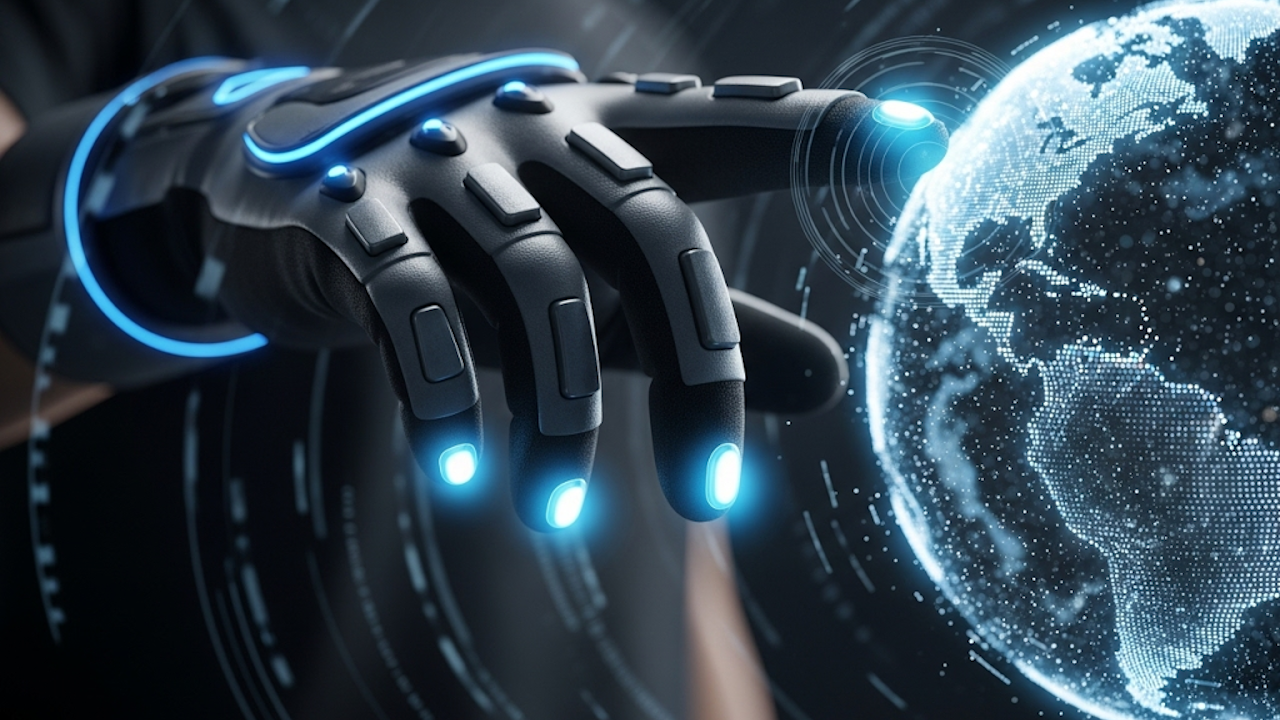
Haptic technology brings the sense of touch into our interactions with digital systems. It translates virtual information into physical sensations that we can feel through our skin. From the subtle vibration of a smartphone notifying us of a message to the immersive force feedback in virtual reality simulations, haptics bridges the gap between the digital and the physical. As screens and interfaces dominate modern life, this technology promises to make our experiences richer, more intuitive, and more human by engaging one of our most fundamental senses.
The term haptic comes from the Greek word haptikos, meaning pertaining to touch. In engineering and computer science, it refers to any technology that creates or simulates tactile experiences. Unlike vision or sound, which we process at a distance, touch requires direct contact or close proximity. Haptic systems recreate pressure, vibration, texture, temperature, or even pain to mimic real world interactions. This capability is transforming fields as diverse as consumer electronics, healthcare, automotive design, and remote robotics.
The roots of haptic technology trace back decades, though early forms were rudimentary. In the 1960s and 1970s, researchers experimented with force feedback devices for teleoperation, allowing operators to feel resistance when controlling remote robotic arms. One notable early system was the Grope project at the University of North Carolina in the late 1960s, which used a mechanical arm to let users feel molecular forces in virtual environments. By the 1990s, consumer products began incorporating basic haptics. Gaming controllers from companies like Logitech and Immersion Corporation introduced rumble feedback, where motors created vibrations to signal events like explosions or collisions in video games.
The breakthrough for widespread adoption came with mobile devices. The first iPhone in 2007 used a simple eccentric rotating mass motor for vibration alerts. Later models shifted to more sophisticated linear resonant actuators and eventually Apple’s Taptic Engine, which delivers precise, nuanced feedback. This evolution allowed haptics to move beyond simple buzzing to directional cues, simulated button clicks, and textured scrolling. Today, nearly every smartphone, smartwatch, and gaming controller relies on haptic feedback as a core feature.
At its core, haptic technology relies on a combination of hardware actuators and software algorithms. The most common actuators are electromagnetic devices. Eccentric rotating mass motors spin an unbalanced weight to produce vibration. Linear resonant actuators oscillate a mass back and forth along a single axis for cleaner, more controllable feedback. Piezoelectric materials change shape when voltage is applied, enabling faster and more precise responses. Newer approaches include electrostatic friction modulators that alter surface texture on touchscreens and ultrasonic transducers that create mid air sensations without physical contact.
Software plays an equally important role. Haptic engines process data from virtual environments or user inputs and convert them into electrical signals for the actuators. Developers use libraries and engines such as Unity’s Haptic SDK or Apple’s Core Haptics to design patterns. These patterns can vary in frequency, amplitude, duration, and waveform to simulate different sensations. A gentle pulse might represent a notification, while a series of sharp bursts could mimic the recoil of a virtual gun. Advanced systems incorporate machine learning to adapt feedback based on user preferences or contextual data.
One of the most prominent applications today is in virtual and augmented reality. Companies like Meta, HTC, and Sony have integrated haptics into headsets and controllers. The Meta Quest series uses hand tracking combined with haptic gloves or wristbands that deliver sensations of grasping objects or feeling textures. In medical training, haptic simulators allow surgeons to practice procedures on virtual patients while feeling realistic tissue resistance. Haptic feedback reduces errors in training and improves skill transfer to real operations.
The automotive industry has embraced haptics for safety and comfort. Modern steering wheels and seats provide directional vibrations to alert drivers to lane departures or nearby vehicles. Touchscreens in electric vehicles replace physical buttons with haptic confirmation, reducing the need for drivers to look away from the road. Luxury brands experiment with full body haptic suits that enhance the driving experience by simulating road textures or engine vibrations.
Gaming remains a driving force for innovation. Beyond simple rumble, next generation controllers like those from Sony’s DualSense for PlayStation 5 use adaptive triggers with variable resistance and multiple haptic motors positioned throughout the device. Players can feel the tension of drawing a bow, the splash of walking through water, or the granular feedback of driving on different surfaces. This level of immersion heightens emotional engagement and can even provide accessibility benefits for players with visual impairments.
In healthcare, haptics extends beyond training. Prosthetic limbs equipped with sensory feedback restore a measure of touch for amputees. Users can feel pressure, temperature, or texture through electrodes that stimulate nerves. Remote surgery systems like the da Vinci platform incorporate force feedback so surgeons can sense how much pressure they are applying with robotic tools. Rehabilitation devices use haptics to guide patients through physical therapy exercises with corrective vibrations.
Consumer electronics continue to push boundaries. Wearable devices such as smart rings or fitness trackers use haptics for discreet notifications. Smart clothing with embedded actuators can deliver immersive experiences for entertainment or therapeutic purposes, such as calming vibrations for anxiety management. Touchscreen displays with programmable friction can make digital interfaces feel like physical materials. Researchers have demonstrated prototypes where users can feel virtual fabrics or even the keys on a flat glass keyboard.
Education stands to benefit significantly. Students learning anatomy can explore 3D models with haptic styluses that let them feel bone structures or organ textures. Chemistry students can manipulate virtual molecules and sense bonding forces. This multisensory approach improves retention and understanding compared to traditional visual only methods. Museums and cultural institutions use haptic exhibits to make artifacts accessible to visually impaired visitors, allowing them to feel the shape and surface details of historical objects.
The industrial sector employs haptics for remote operation in hazardous environments. Operators controlling drones or underwater robots can receive force feedback that simulates contact with objects. This improves precision and safety in mining, nuclear facilities, or deep sea exploration. Telepresence robots for remote work or social interaction use haptics to convey gestures or physical presence.
Despite its progress, haptic technology faces several challenges. Creating realistic sensations remains difficult because human touch is incredibly complex. The skin contains multiple types of receptors sensitive to different frequencies, pressures, and temperatures. Replicating all of these accurately requires sophisticated multi modal systems that are still expensive and bulky. Battery life is another constraint, as powerful actuators consume significant energy. Miniaturization for wearable or implantable devices continues to be an engineering hurdle.
Consistency across devices poses problems for developers. A haptic pattern designed for one smartphone may feel completely different on another due to variations in actuator hardware. Standardization efforts are underway, but widespread compatibility remains limited. User variability adds complexity. Sensitivity to touch differs by age, gender, skin condition, and cultural background. What feels subtle to one person may be overwhelming to another.
Cost and accessibility represent barriers to broader adoption. High end haptic systems for professional use can cost thousands of dollars. While consumer versions are becoming more affordable, premium experiences remain out of reach for many. Integration with existing software ecosystems requires investment from developers who may prioritize visual and auditory features first.
Looking ahead, several exciting developments point to a more tactile digital future. Ultrasound based mid air haptics create focused pressure points in space without requiring users to wear gloves or hold controllers. This technology could enable truly contactless interfaces for public kiosks or sterile environments. Electro tactile stimulation directly activates nerves through small electrical currents, potentially creating more nuanced sensations on the skin or tongue.
Brain computer interfaces combined with haptics could restore sensory feedback for people with spinal injuries. Researchers are exploring ways to stimulate the somatosensory cortex directly, bypassing damaged nerves. In entertainment, full body haptic suits synced with movies or concerts could deliver synchronized sensations of wind, impact, or texture.
Artificial intelligence will play a growing role in personalizing haptic experiences. Machine learning models can analyze user responses and automatically adjust feedback patterns for optimal comfort and effectiveness. Generative haptic design tools could allow creators to describe a sensation in natural language and have the system produce the corresponding actuator signals.
Haptic technology also raises interesting questions about human computer interaction and society. As digital experiences become more embodied, they may reduce the distinction between online and offline life. This could enhance empathy in remote communication. Feeling a loved one’s virtual hug across distances might strengthen emotional bonds. On the other hand, overly realistic haptic simulations might blur reality and virtuality, potentially leading to addiction or desensitization to real world touch.
Privacy concerns emerge with advanced systems that collect biometric data through touch sensors. How will companies handle information about user grip strength, skin conductivity, or emotional responses inferred from haptic interactions? Accessibility benefits must be balanced with the risk of creating new divides between those who can afford advanced haptic devices and those who cannot.
In the realm of ethics, haptic technology could be used for both beneficial and manipulative purposes. Positive applications include pain management through counter stimulation or therapeutic touch for mental health. Less desirable uses might involve subtle haptic persuasion in advertising or gaming to encourage certain behaviors.
The integration of haptics with other sensory technologies points toward truly multisensory computing. Combined with high resolution displays, spatial audio, and even olfactory systems, future interfaces could approach the richness of natural human experience. This convergence may fundamentally change how we learn, work, play, and connect.
Haptic technology has evolved from simple buzzers to sophisticated systems that expand the bandwidth of human machine communication. By engaging the sense of touch, it makes digital interactions more intuitive, immersive, and emotionally resonant. As hardware improves, software matures, and creative applications multiply, haptics will continue to deepen our connection to the digital world.
The journey toward fully feeling the digital realm is ongoing. Researchers, engineers, and designers are collaborating across disciplines to overcome technical limitations and unlock new possibilities. In the coming years, we can expect haptic feedback to become as commonplace and essential as visual displays and audio output. When that happens, the way we experience technology will shift from primarily observing and hearing to actively touching and feeling, bringing us closer to a truly embodied digital existence.
This tactile revolution invites us to reconsider what it means to interact with machines. Touch is not merely another input channel but a fundamental aspect of human perception and emotion. By incorporating it thoughtfully, haptic technology has the potential to create more compassionate, effective, and delightful digital experiences for everyone. The digital world is becoming something we can reach out and feel, one vibration, one texture, and one sensation at a time.