

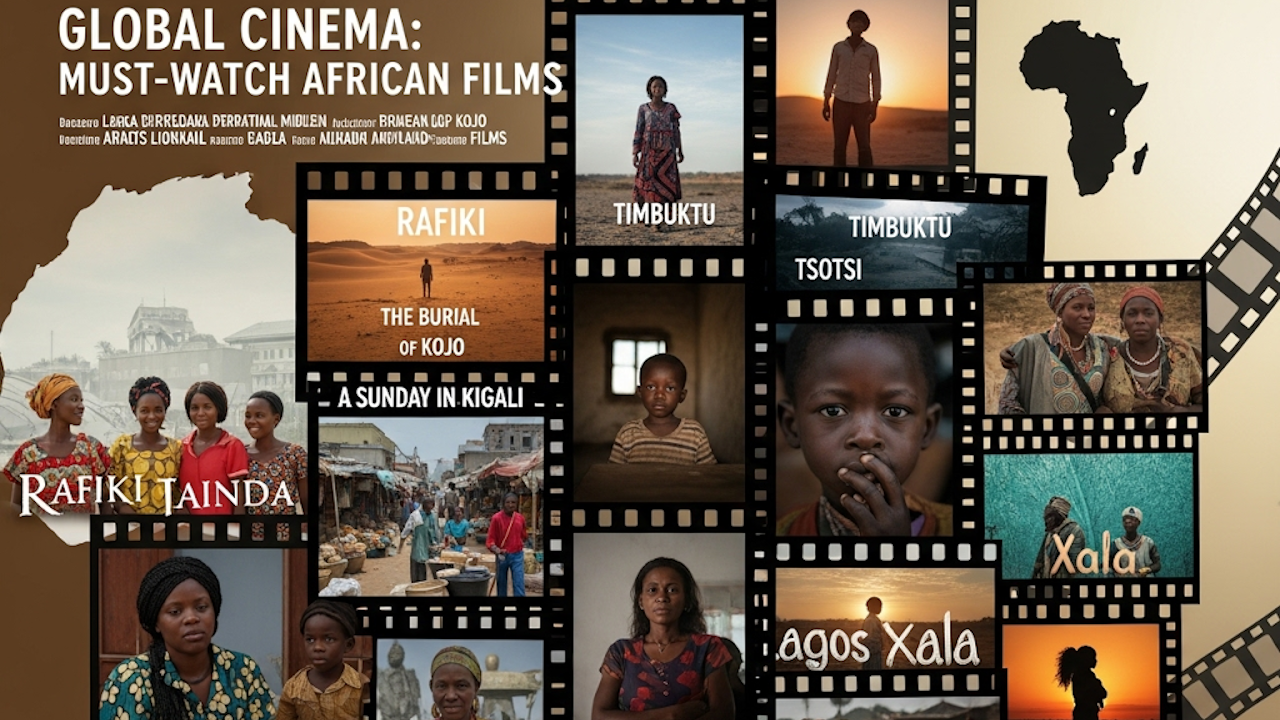
African cinema offers a vibrant and diverse tapestry of storytelling that reflects the continent’s rich histories, cultures, cultures, struggles, and aspirations. From pioneering works that challenged colonial narratives to contemporary productions that capture modern realities, these films provide essential perspectives often overlooked in mainstream global cinema. African filmmaking spans multiple languages, styles, and traditions, encompassing everything from politically charged dramas in North Africa to experimental narratives in West Africa and high-energy commercial features from Nigeria’s Nollywood industry. This article explores must-watch films that showcase the depth and innovation of African cinema across regions.
The Foundations of Sub-Saharan African Cinema
Ousmane Sembène, often called the father of African cinema, laid crucial groundwork with films that addressed post-colonial life. His 1966 debut feature Black Girl (La Noire de…) stands as a landmark. This Senegalese film follows Diouana, a young woman who moves from Dakar to France as a domestic worker. Through her experiences of isolation, exploitation, and cultural disconnection, Sembène delivers a powerful critique of neocolonialism. Shot in a stark, realistic style, the film uses voiceover and symbolic imagery to convey the protagonist’s inner turmoil. Its international recognition marked a turning point, proving that African directors could produce compelling art-house cinema with global resonance.
Sembène followed with Mandabi (1968), a satirical comedy about a man in Senegal who receives a money order and faces bureaucratic hurdles and opportunistic relatives. The film highlights themes of tradition versus modernity and the challenges of urban life in newly independent Africa. Its accessible storytelling and humor make it an excellent entry point into West African cinema.
Djibril Diop Mambéty brought a more experimental, freewheeling approach. His 1973 film Touki Bouki follows two young lovers in Dakar dreaming of escaping to Paris. With its nonlinear structure, vibrant visuals of city life, and a memorable motorbike adorned with cow horns, the film captures youthful rebellion and the pull of migration. It blends jazz, Senegalese music, and social commentary in a style reminiscent of the French New Wave but distinctly African. The film’s influence endures, even inspiring references in contemporary pop culture.
From Mali, Souleymane Cissé’s Yeelen (1987) stands as a masterpiece of mystical storytelling. This epic draws on Bambara mythology to tell the story of a young man with supernatural powers pursued by his jealous father. The film’s breathtaking desert landscapes, ritualistic elements, and exploration of power and tradition create a visually stunning experience that feels both ancient and timeless. It won the Jury Prize at Cannes and introduced many international audiences to African cinematic traditions rooted in oral history.
North African Voices and Political Cinema
North African cinema, particularly from Egypt and Algeria, boasts a long and influential history. Egypt’s golden age produced numerous classics, with Youssef Chahine’s Cairo Station (1958) ranking among the greatest. Set in the bustling Cairo train station, the film weaves multiple storylines around a disabled newspaper seller’s obsessive love. Chahine blends melodrama, humor, and social realism to portray class divides, desire, and urban chaos. Its energetic crowd scenes and psychological depth make it a universal yet deeply Egyptian work.
Algeria’s The Battle of Algiers (1966), directed by Gillo Pontecorvo with Algerian participation, reconstructs the Algerian War of Independence using a documentary-like style. Shot in black and white with non-professional actors, it depicts urban guerrilla warfare with remarkable balance and intensity. The film has been studied by military strategists and revolutionaries alike for its unflinching portrayal of resistance, torture, and the costs of colonialism. Its relevance persists in discussions of conflict worldwide.
Mohammed Lakhdar-Hamina’s Chronicle of the Years of Fire (1975) offers another Algerian epic, tracing a village’s journey from colonial oppression through World War II to the independence struggle. Its sweeping scope and fiery imagery earned it the Palme d’Or at Cannes.
East and Central African Perspectives
Mahamat-Saleh Haroun from Chad delivers intimate, humanistic stories. His film Abouna (2002) follows two brothers searching for their absent father. The narrative unfolds with quiet tenderness, exploring themes of abandonment, faith, and growing up amid uncertainty. Its measured pace and emotional authenticity earned widespread acclaim.
In Kenya, Wanuri Kahiu’s works, including earlier features like From a Whisper (2009), address contemporary issues such as terrorism and personal trauma with sensitivity. East African cinema continues to grow, often focusing on local stories that resonate universally.
Abderrahmane Sissako’s Timbuktu (2014) from Mauritania/Mali portrays life under jihadist occupation in the historic city. The film mixes quiet defiance, humor, and tragedy as residents resist cultural erasure through small acts like playing music or wearing colorful clothing. Its measured style and moral clarity make it a powerful statement on extremism and resilience.
South African Cinema: Apartheid, Crime, and Identity
South Africa has produced internationally recognized films that grapple with its complex history. Tsotsi (2005), directed by Gavin Hood, follows a young gangster in Johannesburg who finds redemption after taking in an abandoned baby. Based on Athol Fugard’s novel, the film won the Oscar for Best Foreign Language Film. Its raw portrayal of township life, moral ambiguity, and human connection remains gripping.
Neill Blomkamp’s District 9 (2009) blends science fiction with sharp social commentary on xenophobia and segregation. Set in an alternate Johannesburg where aliens are confined to a slum, the mockumentary style and visceral action sequences make it both entertaining and thought-provoking. It earned multiple Oscar nominations and highlighted South Africa’s genre filmmaking potential.
Other notable South African works include apartheid-era dramas and post-apartheid stories that explore reconciliation and ongoing inequalities.
The Rise of Nollywood and Commercial Cinema
Nigeria’s Nollywood industry produces hundreds of films annually, dominating African screens with accessible stories of love, family, morality, and ambition. Living in Bondage (1992) is credited with launching the video-film era. This horror-drama about a man who turns to ritual sacrifice for wealth captured audiences with its supernatural elements and moral lessons. It established tropes that define much of Nollywood output.
Modern Nollywood offers polished productions like The Wedding Party series, romantic comedies, and thrillers such as King of Boys. These films often blend entertainment with cultural commentary, reaching vast diaspora audiences through streaming platforms. While sometimes criticized for formulaic plots, they represent a vital popular cinema that prioritizes African stories told for African viewers.
Why These Films Matter
African films challenge stereotypes and provide authentic voices on topics ranging from colonialism’s legacy to globalization, gender roles, and spiritual beliefs. They employ diverse aesthetics: oral traditions in Mali, neorealism in Senegal, high-drama in Nigeria, and hybrid genres in South Africa. Many are available through festivals, Criterion Channel, Netflix, or YouTube, making discovery easier than ever.
Viewers new to African cinema might start with Black Girl or Touki Bouki for foundational works, then explore Tsotsi or Timbuktu for emotional impact, and sample Nollywood for sheer energy. Each film opens a window into specific contexts while addressing universal human experiences.
African cinema continues to evolve with new directors gaining international platforms. Its growth reflects broader continental dynamics of innovation amid challenges. Exploring these must-watch films enriches understanding of global cinema and the shared stories that connect us across borders. Whether through quiet introspection or bold spectacle, these works affirm cinema’s power to illuminate the human condition in all its complexity.