

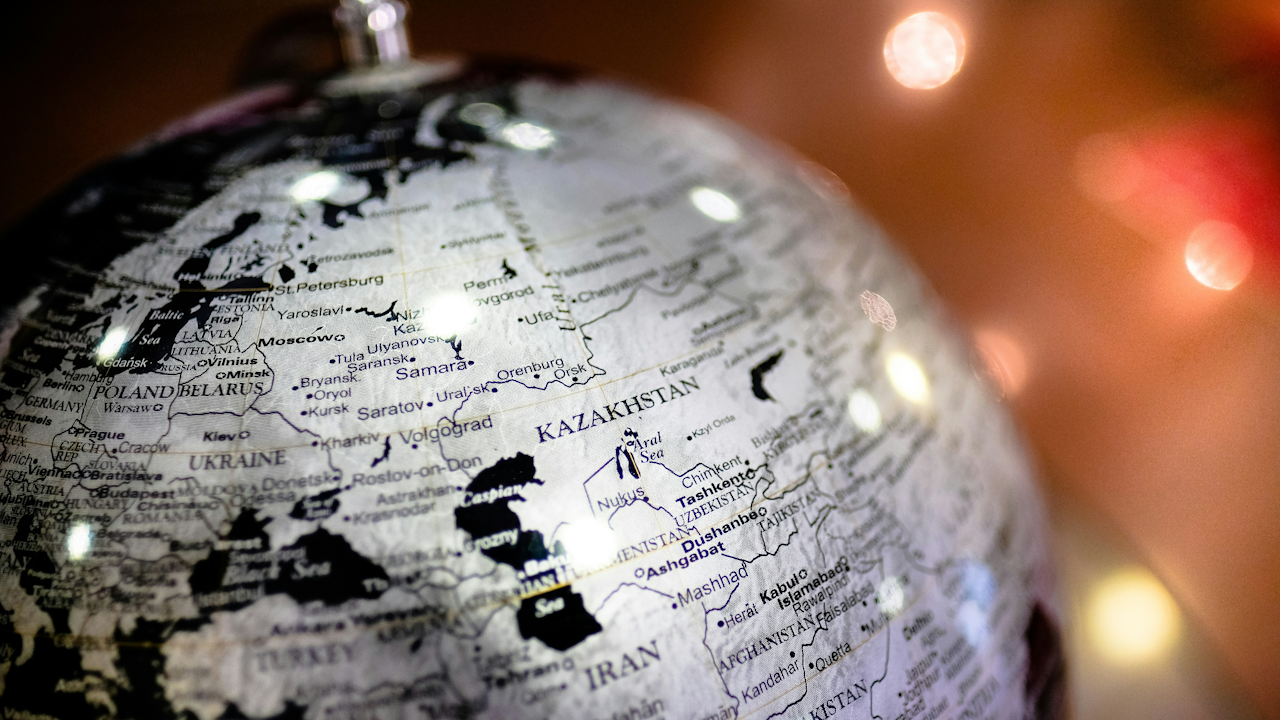
The year 2025 marked a pivotal acceleration in the reconfiguration of global power structures. Long-standing assumptions about a unipolar or bipolar world order gave way to a more fragmented, multipolar reality. Traditional alliances faced strains from economic pressures, leadership changes, and persistent conflicts, while emerging groupings gained momentum through expansion and strategic coordination. At the heart of these shifts stood the rise of new power blocs, most notably an enlarged BRICS framework representing a substantial portion of the global population and economic output. This evolution reflected deeper trends: the assertiveness of non-Western states, the deepening partnership between Russia and China, the adaptation of Western-led networks in the Indo-Pacific, and the growing influence of middle powers hedging between competing poles. These developments did not produce outright confrontation on a global scale but instead fostered parallel systems in trade, finance, security, and diplomacy. The result was a world where influence increasingly flowed through competing blocs rather than universal institutions.
The most visible manifestation of change came with the continued expansion of BRICS. Originally formed as an economic dialogue among Brazil, Russia, India, China, and South Africa, the group transformed into a broader platform for geopolitical coordination. By early 2025, full membership reached eleven countries following the accession of Egypt, Ethiopia, Iran, the United Arab Emirates, and Indonesia in phased expansions that began in 2024 and culminated with Indonesia’s formal entry on January 7. Saudi Arabia also formalized its participation mid-year during the 17th BRICS Summit hosted in Rio de Janeiro. Collectively, these members accounted for nearly half the world’s population and a commanding share of global GDP when measured in purchasing power parity terms. The addition of partner countries, including Belarus, Bolivia, Cuba, Kazakhstan, Malaysia, Nigeria, Thailand, Uganda, and Uzbekistan, further extended the bloc’s reach into diverse regions.
This enlargement signaled more than numerical growth. BRICS positioned itself as a champion of the Global South, advocating for reforms in global governance, greater representation in international financial institutions, and alternatives to dollar-dominated trade. Discussions at the Rio summit emphasized geoeconomic sovereignty, including initiatives for settlement in local currencies and exploration of new payment mechanisms. While internal differences persisted, particularly between democratic members like India and Brazil and more authoritarian ones such as Russia and China, the bloc demonstrated cohesion on key issues: opposition to unilateral sanctions, support for multipolarity, and economic cooperation amid Western trade barriers. Indonesia’s entry brought Southeast Asian strategic weight, while energy producers like Iran and the UAE enhanced the group’s leverage in global commodity markets. By year’s end, BRICS had evolved from a loose forum into a functional counterweight to Western-led bodies like the G7, though it stopped short of formal military integration.
Parallel to BRICS expansion ran the consolidation of the Russia-China strategic partnership. What began as a tactical alignment deepened into a durable axis that shaped Eurasian dynamics throughout 2025. Bilateral trade surpassed previous records, exceeding 240 billion dollars annually, with over 90 percent conducted in rubles or renminbi to bypass Western financial systems. Energy flows from Russia to China increased, providing Moscow with critical revenue amid ongoing sanctions related to the Ukraine conflict. Military and technological cooperation advanced through joint exercises, intelligence sharing, and supply chains that supported Russia’s defense needs. Leaders in Beijing and Moscow framed their relationship as a stabilizing force for multipolarity, explicitly contrasting it with what they described as Western hegemony.
This partnership operated within broader platforms such as the Shanghai Cooperation Organization, where coordination extended to Central Asia and beyond. Russia functioned increasingly as a resource supplier and security partner, while China provided economic ballast and diplomatic cover. The duo’s alignment influenced responses to conflicts elsewhere, including muted criticism of each other’s regional actions. North Korea and Iran gravitated toward this axis through arms transfers and political support, hinting at an informal authoritarian network. Yet the relationship remained asymmetric: Russia’s economy grew more dependent on Chinese markets and technology, limiting its maneuverability. Still, the bloc’s existence complicated Western strategies, forcing policymakers in Washington and European capitals to contend with a united front on sanctions evasion, technological decoupling, and narrative control in international forums.
On the other side of the ledger, Western alliances demonstrated resilience and adaptation, though not without internal frictions. The North Atlantic Treaty Organization maintained its core focus on collective defense, particularly in Europe amid the protracted Ukraine war. Despite calls from the United States for burden-sharing, NATO members sustained support for Kyiv through military aid and sanctions enforcement. In the Indo-Pacific, however, newer configurations took center stage. The Quadrilateral Security Dialogue, or Quad, involving the United States, Japan, India, and Australia, deepened its agenda beyond humanitarian assistance to include supply-chain security, maritime domain awareness, and technology standards. AUKUS, the trilateral pact among Australia, the United Kingdom, and the United States, progressed with plans for nuclear-powered submarines and advanced defense collaboration, reinforcing deterrence against assertive maritime claims.
These arrangements formed a flexible network rather than a rigid bloc. They emphasized interoperability and shared values while accommodating India’s preference for strategic autonomy. The United States, under the second Trump administration that took office in January 2025, pursued a transactional approach. Sweeping tariffs announced in April, dubbed the Liberation Day measures, imposed baseline duties on imports and higher rates on targeted sectors and countries. This policy accelerated global trade fragmentation, prompting partners and rivals alike to diversify supply chains through friendshoring and bilateral deals. Asian allies like Japan and South Korea balanced economic ties with China against security guarantees from Washington. The overall effect strengthened a Western-oriented security architecture in the Indo-Pacific, even as economic interdependence persisted across divides.
Middle powers emerged as critical swing actors in this landscape, refusing strict alignment with any single bloc. India pursued multi-alignment, maintaining energy imports from Russia while participating in Quad initiatives and strengthening defense ties with the United States. Saudi Arabia diversified relations, engaging BRICS while preserving security partnerships with Washington and pursuing normalization efforts in the Middle East. Indonesia, Turkey, Brazil, and others similarly practiced strategic hedging, prioritizing economic autonomy and regional influence. This behavior prevented any bloc from achieving outright dominance and injected fluidity into global diplomacy. In the Middle East, a flare-up between Israel and Iran in mid-2025 tested these dynamics, with the United States coordinating responses alongside Arab partners while BRICS members offered diplomatic alternatives.
Regional theaters underscored the bloc-level shifts. In Europe, the Ukraine conflict continued into its fourth year, with Russian advances offset by Ukrainian resilience and Western assistance. United States pressure for negotiations produced partial cease-fires but no comprehensive resolution, highlighting limits to bloc influence. In Asia, tensions over Taiwan and the South China Sea prompted heightened naval activity and alliance-building, yet economic linkages between China and its neighbors endured. Africa and Latin America witnessed growing BRICS outreach, with partner-country status offering pathways to alternative financing and trade. Cyber and space domains saw intensified gray-zone competition, where state and non-state actors blurred lines between peace and conflict.
Economically, 2025 accelerated the formation of parallel systems. Global growth slowed to around 2.3 percent amid trade barriers and uncertainty. Dedollarization gained traction within BRICS circles through local-currency settlements and discussions of new financial architectures. Western responses included tightened export controls on critical technologies and efforts to secure supply chains for semiconductors, rare earths, and energy. The net outcome was not full decoupling but selective fragmentation, raising costs for businesses and governments while empowering states with diversified partnerships.
These geopolitical shifts carried profound implications. The emergence of competing power blocs fostered innovation in some areas, such as alternative development models and regional integration. Yet it also risked institutional erosion, heightened miscalculation in crises, and challenges to collective action on transnational issues like climate change. International organizations struggled to bridge divides, as seen in stalled United Nations reforms. For smaller states, the multipolar environment offered opportunities for leverage but demanded sophisticated diplomacy to avoid entrapment.
By the close of 2025, the global order had settled into a pattern of competitive coexistence among blocs. BRICS+ embodied the aspirations of the Global South for greater voice. The Russia-China axis provided a nucleus for revisionist coordination. Western networks preserved technological and military edges through flexible partnerships. Middle powers acted as balancers, preventing bipolar rigidity. This configuration differed from Cold War blocs in its economic interdependence and absence of ideological absolutism. Whether it leads to stable multipolarity or renewed instability will depend on the choices made by leaders navigating these new realities. The year demonstrated that power in the 21st century flows less from singular dominance than from the ability to shape and adapt within an ecosystem of overlapping alignments.