

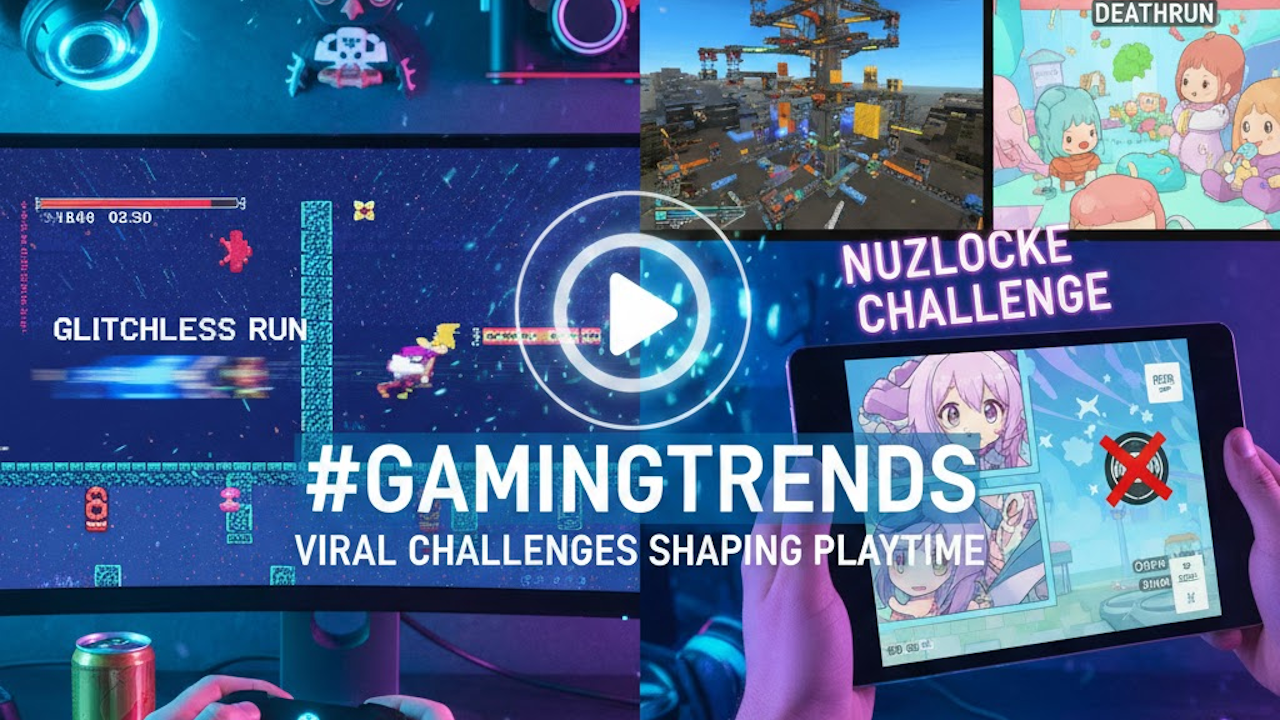
The world of video games has always evolved through technological advancements, new genres, and shifting player preferences. In recent years, one phenomenon has stood out as a major driver of engagement: viral challenges. These user-generated or community-driven tasks spread rapidly across social media platforms, streaming services, and in-game communities. They transform ordinary gameplay into shared experiences that boost playtime dramatically. From speedruns to creative builds, these challenges encourage players to return to games long after their initial release. This article explores how viral challenges are reshaping gaming trends, influencing how long and why people play.
Viral challenges in gaming trace their roots to early online communities. In the 2000s, forums and early YouTube videos featured players attempting difficult feats, such as completing a level without dying in classic titles. The rise of Twitch and TikTok accelerated this trend. What began as casual fun became a cultural force. Players now compete not just against the game but against each other in global arenas defined by rules invented by fans.
One of the most significant impacts of these challenges is the extension of playtime. Traditional metrics for game success included completion rates and sales figures. Today, retention and daily active users matter more. Viral challenges create reasons for players to log in repeatedly. A single popular challenge can add hours or even weeks to the average session length. Developers have noticed this and started incorporating elements that support such activities, such as leaderboards, replayable modes, and social sharing tools.
Consider the battle royale genre. Games like Fortnite and PUBG popularized challenges through seasonal events and limited-time modes. In Fortnite, dance emotes and building techniques became the basis for viral clips. Players recreated famous moments or invented new strategies, such as surviving with unconventional weapons. These challenges spread on platforms like Twitter and Instagram Reels, drawing in new audiences. Data from industry reports shows that games featuring strong social components see up to 30 percent higher engagement during challenge peaks.
Minecraft offers another prime example. Its open-ended nature makes it ideal for viral content. Challenges like surviving 100 days in hardcore mode or building massive replicas of real-world landmarks have fueled countless videos. Speedrunners attempt to beat the game in record times, while others focus on no-resource runs or themed survival scenarios. These activities keep the game relevant more than a decade after launch. Communities on Reddit and Discord organize group challenges, turning solo play into collaborative marathons. This social layer directly correlates with longer play sessions, as players coordinate, compete, and celebrate together.
Among mobile games, viral challenges thrive due to accessibility. Titles like Among Us exploded during the pandemic through impostor hunts and custom tasks shared in streams. Players invented rules such as playing with proximity chat restrictions or themed role-playing scenarios. Similarly, Genshin Impact and Honkai: Star Rail feature character collection challenges and exploration feats that players document online. The short, repeatable nature of mobile sessions pairs well with challenge formats, encouraging quick attempts that accumulate into substantial total playtime.
Esports and competitive scenes amplify these trends. Games like League of Legends and Valorant host community challenges tied to tournaments. Fans attempt to mirror professional strategies or complete “iron to challenger” climbs within time limits. Streaming platforms reward creators who participate in or invent challenges, creating a feedback loop. A popular streamer attempting a “no-death run” in a difficult boss fight can inspire thousands of viewers to try it themselves. This not only increases individual playtime but also builds community around the game.
The psychology behind viral challenges explains their power. They tap into intrinsic motivations like achievement, competition, and social connection. Completing a tough challenge provides dopamine hits similar to in-game rewards but with added external validation through likes, comments, and shares. Social proof plays a key role. When players see friends or influencers succeeding, they feel compelled to join. This creates streaks of daily play as participants track progress and share updates.
Challenges also lower barriers to entry for casual players. Not everyone aims for high-level competition, but a fun, themed challenge like “build a house using only dirt blocks” in Minecraft appeals to a broad audience. This inclusivity expands the player base while deepening engagement for veterans who set harder variants.
Platform-specific trends highlight diversity in challenge formats. On Steam, games with workshop support or modding communities see explosive growth in user-created challenges. Roblox stands out as a challenge incubator. Its user-generated experiences often revolve around obstacle courses, tycoons with specific goals, or horror games with survival twists. Popular Roblox challenges, such as escaping intricate maps or collecting all items in time trials, frequently trend on YouTube Shorts and TikTok.
Nintendo titles bring family-friendly viral moments. Super Mario Maker allows players to design and share levels with extreme difficulty or clever mechanics. Challenges like “beat this level blindfolded” or “using only one button” spread through family play sessions and online forums. Animal Crossing: New Horizons saw players participate in island design contests and themed events that extended playtime through creative expression.
The role of algorithms cannot be overstated. Social media platforms prioritize engaging content, so gaming clips with high rewatch value or humor perform well. A perfectly timed fail or an impressive skill shot becomes shareable currency. This visibility drives traffic back to the game. Developers respond by adding features like clip export tools or in-game cameras to facilitate content creation.
Economic aspects also emerge. Viral challenges create opportunities for monetization. Games with battle passes or cosmetic stores benefit when challenges tie into rewards. Players grind for items that help complete challenges, indirectly boosting revenue. Influencers earn through sponsorships and donations during challenge streams. This ecosystem sustains long-term interest in older titles that might otherwise fade.
However, challenges are not without drawbacks. Some promote unhealthy grinding or frustration, leading to burnout. Toxic competition can arise in leaderboards, discouraging newcomers. Accessibility issues affect players with disabilities who may struggle with certain physical or time-based challenges. Developers and communities increasingly address these by promoting inclusive variants and positive reinforcement.
Looking at recent examples, Elden Ring and its expansions inspired countless challenge runs. Players attempted no-hit boss kills, level-one runs, or themed playthroughs using specific weapon classes. These feats generated extensive discussion on forums and video essays, keeping the game in conversations years after release. Similarly, Baldur’s Gate 3 saw role-playing challenges where groups enforced narrative restrictions or honor mode constraints without saves.
Indie games leverage challenges for visibility. Celeste, with its precise platforming, became a hub for speedrunning and strawberry collection variants. Hades encouraged heat runs with increasing difficulty modifiers. These smaller titles gain mainstream attention through viral sharing, proving that quality gameplay mechanics support enduring challenge culture.
Future trends point toward deeper integration of challenges into game design. Artificial intelligence could generate personalized challenges based on player skill and history. Virtual reality titles might introduce physical movement challenges that blend gaming with fitness trends. Cross-platform events will likely grow, allowing console, PC, and mobile players to participate in unified challenges.
Blockchain and web3 elements introduce collectible aspects to challenges. Players earn NFTs or tokens for completing rare feats, though this space remains controversial due to volatility and environmental concerns. Mainstream adoption will depend on balancing innovation with player enjoyment.
Educational and therapeutic applications also expand. Schools use Minecraft challenges for collaborative problem-solving. Rehabilitation programs incorporate gamified tasks to encourage movement or cognitive exercises. These positive uses broaden the impact beyond entertainment.
In conclusion, viral challenges represent a fundamental shift in how games shape playtime. They turn static experiences into dynamic, communal adventures. By fostering creativity, competition, and connection, they keep players invested longer and attract new ones. As technology advances, these challenges will evolve, but their core appeal remains timeless. Game developers who embrace this trend through supportive tools and community features will thrive in the evolving landscape. Players, meanwhile, benefit from richer, more meaningful interactions with their favorite titles. The future of gaming looks increasingly interactive, social, and challenge-driven.