

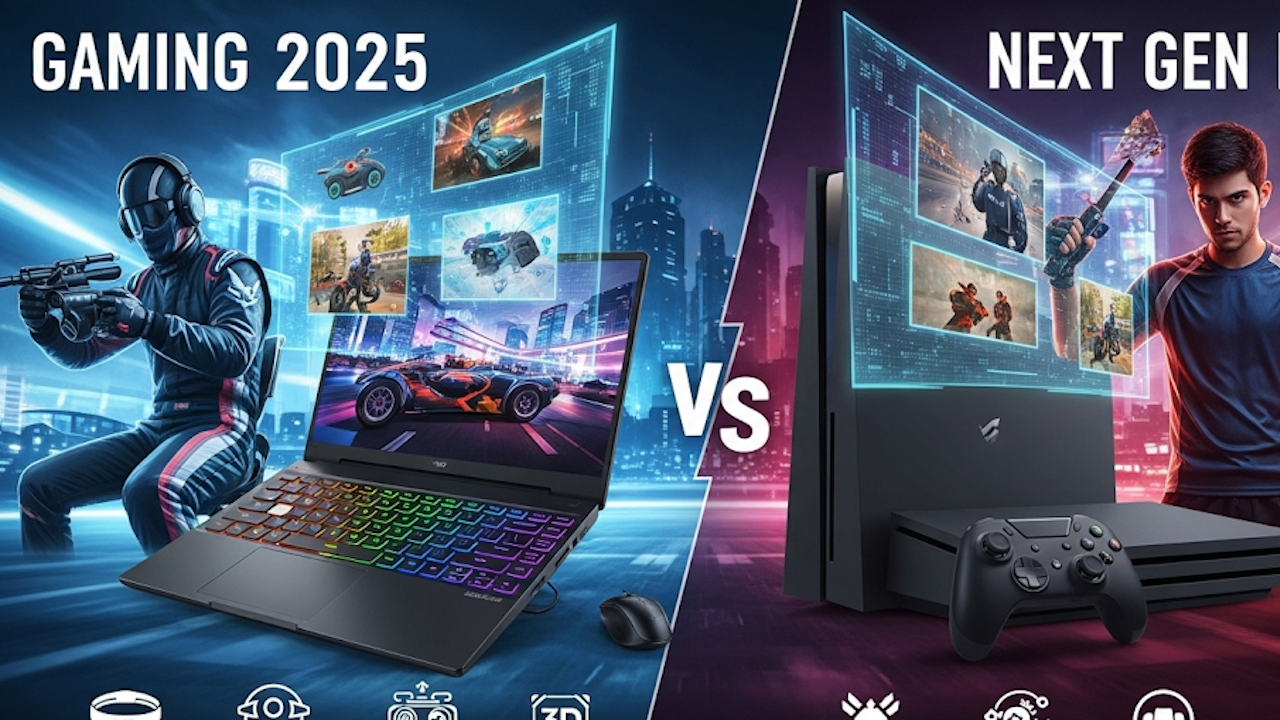
In 2025 the debate between gaming laptops and traditional consoles remains as heated as ever. Gamers face a fundamental choice: invest in a powerful yet portable PC that can handle work and play or opt for a dedicated console that delivers optimized experiences straight out of the box at a lower cost. With the PlayStation 5 Pro established as the top console performer, the Xbox Series X and Series S still delivering strong value, the Nintendo Switch 2 having launched in June as a hybrid powerhouse, and gaming laptops now featuring NVIDIA’s RTX 50 series GPUs, the landscape has evolved. This article dives deep into every major factor to determine which option truly comes out ahead in 2025.
The current lineup sets the stage clearly. On the console side the PlayStation 5 Pro stands as the graphics leader with enhanced hardware that pushes 4K visuals and improved frame rates across a wide library of titles. The standard PS5 Slim and Xbox Series X offer capable 4K gaming at around 500 to 600 dollars while the more affordable Xbox Series S targets 1440p or 1080p for budget buyers. Nintendo’s Switch 2 brings hybrid appeal with a larger 7.9 inch screen supporting up to 1080p at 120 frames per second in docked or handheld modes making it ideal for both home and on the go play. Meanwhile gaming laptops span a broad spectrum. Entry level models with RTX 5060 GPUs start near 800 dollars while flagship machines equipped with RTX 5090 laptop GPUs Intel Core Ultra 9 or AMD Ryzen AI processors and high refresh rate displays easily exceed 2500 dollars. These laptops leverage the full RTX 50 series architecture which includes advanced ray tracing DLSS 4 upscaling and substantial AI capabilities that consoles cannot match.
Performance remains the clearest area where laptops pull ahead for enthusiasts who demand the absolute best visuals and frame rates. A high end gaming laptop with an RTX 5090 can deliver significantly higher resolutions frame rates and ray tracing effects than even the PS5 Pro in cross platform titles. Benchmarks from late 2025 show that RTX 50 series mobile GPUs often achieve 50 to 100 percent more performance in demanding games like Cyberpunk 2077 with path tracing enabled when compared to console equivalents. The PS5 Pro excels at consistent 4K 60 frames per second or 120 frames per second in optimized titles thanks to its custom AMD hardware and advanced upscaling but it lacks the raw horsepower and flexibility of a laptop GPU running at higher power limits. The Xbox Series X sits close to the standard PS5 in power while the Switch 2 prioritizes efficiency and portability over raw graphical fidelity often targeting 720p or 1080p with dynamic scaling. Laptops also benefit from superior CPU options that handle complex simulations physics and multitasking better during open world games or when streaming. For competitive gamers chasing maximum frames per second in titles like Valorant or Call of Duty a laptop with a 240 hertz or higher display paired with an RTX 5070 or better provides an edge that no console can replicate without additional hardware.
Price and overall value tell a more nuanced story favoring consoles for most buyers. A complete console setup including the system a controller and perhaps a game subscription costs between 300 and 900 dollars depending on the model. The PS5 Pro at its premium price point still undercuts a comparable laptop by thousands while delivering years of hassle free high quality gaming. Gaming laptops on the other hand require a larger upfront investment. Even mid range RTX 5060 or 5070 models hover around 1200 to 1800 dollars and flagships with top tier components push well past 3000 dollars when factoring in accessories like cooling pads or external monitors. Over time however laptops offer better long term value for users who need a device for school work content creation or multiple tasks. Consoles lock users into a single purpose ecosystem with limited upgrade paths while laptops allow RAM and storage expansions in many models extending their usable life. Subscription services like Xbox Game Pass or PlayStation Plus provide excellent value on consoles by granting access to hundreds of games for a monthly fee but PC Game Pass and Steam sales often match or exceed this for laptop owners with broader library compatibility and mod support.
Portability and convenience highlight one of the biggest divides. Gaming laptops have improved dramatically in design with slim chassis options like the ASUS ROG Zephyrus series weighing under five pounds and offering several hours of unplugged play in lighter titles. Still they cannot match the true portability of the Switch 2 which slips easily into a backpack for travel or handheld sessions lasting several hours on battery. Traditional home consoles like the PS5 Pro or Xbox Series X are stationary devices best suited for living room setups connected to large televisions. They require no setup beyond plugging in and powering on which makes them far more approachable for casual gamers or families. Laptops demand more attention to thermal management power settings and occasional driver updates though modern RTX 50 series models run cooler and quieter than previous generations under load. For users who travel frequently or game in multiple locations a laptop or the Switch 2 provides flexibility that a bulky console cannot. Battery life remains a persistent laptop weakness with high performance gaming draining power in under two hours on most models whereas the Switch 2 achieves three to six hours depending on the game and settings.
Game libraries and exclusive content continue to influence purchasing decisions heavily. Consoles maintain strong advantages here particularly for narrative driven single player experiences. PlayStation studios deliver blockbuster exclusives like new entries in the God of War or Horizon series that look and play beautifully on the PS5 Pro. Nintendo’s Switch 2 library builds on the original’s family friendly hits with enhanced versions of Mario Zelda and other franchises plus a growing selection of third party ports optimized for its hardware. Xbox benefits enormously from Game Pass which includes day one releases from major studios creating unmatched variety for subscribers. Laptops running Windows or Linux gain access to the largest overall game library including Steam Epic and other storefronts plus thousands of indie titles older classics and user created mods. Many games launch simultaneously on PC and consoles in 2025 but PC versions frequently receive superior graphical options mouse and keyboard support or community enhancements that extend replayability. Cross play features have largely eliminated platform barriers allowing friends on different devices to play together but console owners still enjoy seamless controller integration and optimized performance without tweaking settings.
Upgradability and longevity favor laptops in theory though practical limitations exist. Most gaming laptops permit easy swaps of RAM and storage drives adding years of relevance as games grow more demanding. The RTX 50 series architecture also brings forward looking AI features that enhance upscaling frame generation and even productivity tasks making these machines more future proof for non gaming uses. Consoles on the other hand receive no hardware upgrades during their lifecycle relying instead on software optimizations and occasional mid generation refreshes like the PS5 Pro. The Switch 2 includes expandable storage via microSD which helps but its fixed hardware means it will eventually fall behind in multiplatform titles. Both platforms receive regular firmware and game updates but laptops benefit from the broader PC ecosystem including potential compatibility with future peripherals or virtual reality setups.
Power consumption heat and noise add another layer to the comparison. Consoles operate efficiently within their fixed power envelopes typically drawing under 200 watts during intense gameplay while producing manageable noise levels suitable for living rooms. High end gaming laptops can consume 300 watts or more when pushed to maximum performance generating significant heat that requires robust cooling solutions and fans that become audible under load. This makes laptops less ideal for quiet environments or extended sessions without proper ventilation. On the positive side laptop efficiency has improved with RTX 50 series chips and many models include hybrid modes that balance performance and battery life for lighter tasks.
Ultimately the winner in 2025 depends entirely on individual priorities and budget. For pure gaming value convenience and access to optimized exclusives consoles claim victory. A PS5 Pro or Xbox Series X delivers stunning visuals consistent performance and a massive game library at a fraction of the cost of a high end laptop while the Switch 2 excels for portable and family oriented play. Gamers seeking maximum graphical fidelity flexibility across work and entertainment or the ability to push settings to their limits should choose a gaming laptop. The RTX 50 series has narrowed the gap in design and efficiency but the premium pricing and power demands mean these devices suit enthusiasts willing to pay for versatility. Families or casual players will find consoles simpler and more cost effective while power users and mobile professionals benefit from a laptop’s all in one capabilities. Hybrid users might even consider pairing a Switch 2 for travel with a laptop or console for home use. In the end neither option universally wins but careful consideration of how when and where you game will point to the right choice for 2025 and beyond.