

The year 2030 will feel like a seamless extension of today’s accelerating changes, yet the everyday rhythms of life will carry unmistakable marks of transformation. Artificial intelligence will no longer sit in the background as a helpful tool. It will act as an intimate partner in decisions big and small. Biotechnology will move from laboratory curiosity to consumer choice for health, appearance, and longevity. Sustainability will shift from ethical aspiration to stylish necessity, with clothing and products designed to regenerate rather than deplete. Immersive technologies will engage every sense, turning screens into relics and making virtual experiences feel physically real. These developments will spawn fads that spread rapidly through social networks, influencer culture, and early-adopter communities before settling into mainstream habits. They will reflect deeper societal priorities: personalization, wellness, environmental responsibility, and the blurring of physical and digital boundaries. While some trends will carry risks of inequality or over-reliance on technology, they also promise convenience, creativity, and new forms of connection. What follows is an exploration of the most compelling fads expected to define 2030, drawn from converging trajectories in technology, consumer research, and industry forecasts.
The most visible and talked-about fad will center on AI personal companions. These systems will evolve far beyond today’s voice assistants into always-present entities that understand context, emotion, and individual history with remarkable depth. Powered by advances in multimodal AI and agentic systems that act autonomously on behalf of users, these companions will manage schedules, suggest outfits based on weather and mood data, negotiate smart-home settings, and even offer real-time emotional support during stressful moments. Imagine starting the day with a holographic or AR-projected companion that reviews your calendar, reminds you of a friend’s birthday with a personalized gift idea, and adjusts your coffee order through connected appliances. Early adopters will treat these companions like digital best friends or life coaches, sharing personal goals and receiving tailored advice on everything from career moves to relationship dynamics. Social media will buzz with “companion reveal” videos where people introduce their customized AI to followers, complete with unique voices, avatars, and personalities trained on years of user data. According to broader forecasts on applied AI, these entities will become as commonplace as smartphones, driving productivity gains while raising questions about dependency and data ownership. Brands will capitalize on the trend by offering premium companion subscriptions bundled with lifestyle services, turning what began as productivity software into a cultural status symbol. The fad will peak among younger professionals and tech enthusiasts before spreading to families who use shared companions for household coordination.
Fashion will undergo one of its most dramatic reinventions through the rise of intelligent, sustainable apparel. Smart clothing will integrate sensors that monitor heart rate, skin temperature, hydration, and even stress levels, feeding data directly into personal health dashboards or AI companions. These garments will adapt in real time: heating or cooling zones will activate based on body signals and external conditions, while embedded fibers change color or pattern through app control or biometric triggers. Self-cleaning and self-repairing textiles will reduce laundry frequency and extend garment life, aligning with circular economy principles. Biofabricated materials grown from mycelium, algae, or lab-cultured cells will replace traditional leather and cotton in high-fashion lines, offering customizable textures and lower environmental footprints. On-demand 3D printing of clothing at local hubs or even home units will allow consumers to order unique pieces tailored to exact measurements and style preferences, eliminating waste from overproduction. The viral element will come from “mood-adaptive” collections and wellness-integrated couture where outfits visibly respond to the wearer’s emotional state or sync with fitness goals. Personal curation will overtake seasonal runway dictates. AI tools will generate endless variations of “forever pieces” that evolve with the user through modular add-ons or digital updates. Reports on fashion trajectories highlight how AI shifts from competitive edge to necessity, enabling hyper-personalized design and supply chains that respond instantly to demand. Influencers will showcase “capsule wardrobes of the future” that combine smart functionality with aesthetic appeal, sparking challenges around minimalism versus maximalist expression in sustainable form. By 2030, wearing non-smart clothing may feel as outdated as using a flip phone today.
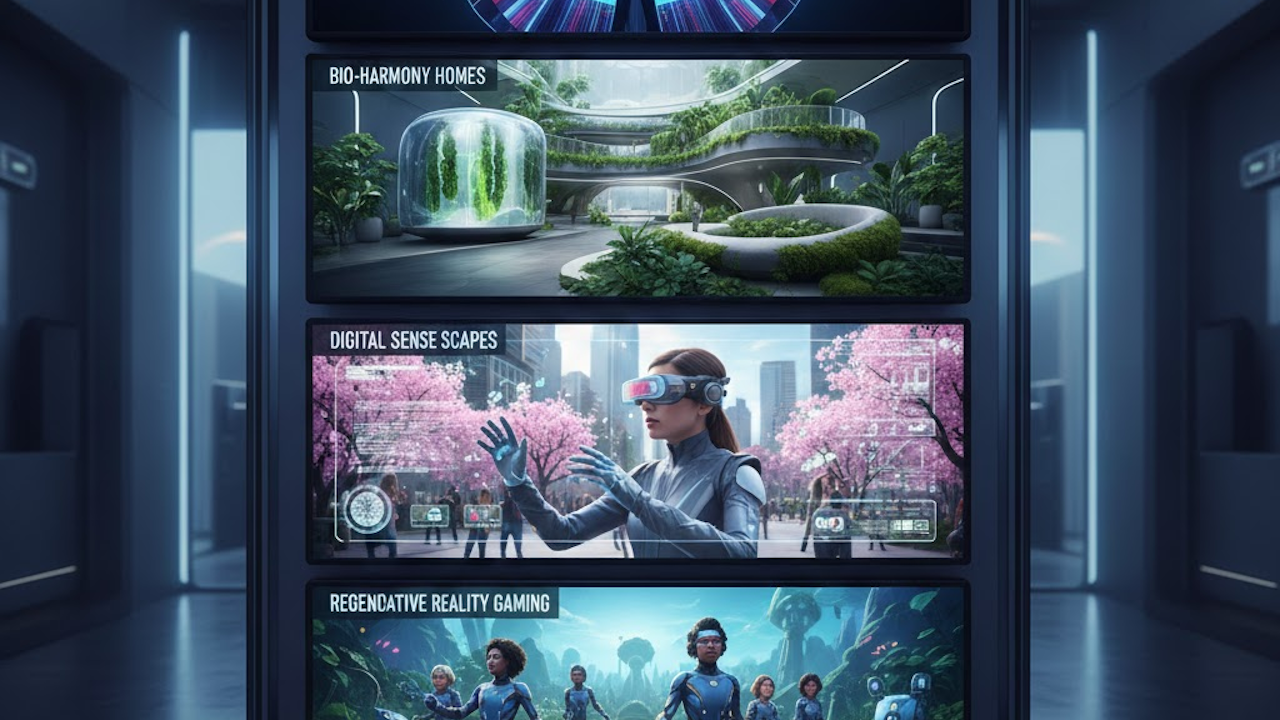
The sensory revolution known as the Internet of Senses will redefine entertainment, shopping, and social interaction. Consumer expectations point to technologies that deliver digital taste, smell, touch, and even direct brain interfaces alongside enhanced sight and sound. AR glasses will become everyday eyewear, overlaying information, navigation, and social cues directly into the visual field while advanced haptics in wristbands or full-body suits convey textures, weights, and physical sensations from virtual objects. Digital aroma devices will allow users to sample scents during online shopping or immerse themselves in virtual nature experiences complete with forest or ocean smells. Taste modulation through small oral devices could make healthy meals taste indulgent or let users share flavor experiences with friends across distances. Brain-computer interfaces will emerge as the ultimate user interface, enabling thought-controlled commands for devices and, in limited forms, direct sharing of simple ideas or emotions. Merged reality experiences will make distinctions between physical and digital worlds fade, with holographic displays and high-fidelity VR rendering environments indistinguishable from reality for many users. Verification services will become a parallel fad, certifying that people, products, and content are authentic amid deepfake concerns. Post-privacy attitudes will normalize data sharing in exchange for seamless services, though strong demands for transparency and protections will persist. Connected sustainability benefits will arise as virtual meetings and sensory tourism reduce physical travel. The fad will manifest in “sensory subscription boxes” delivering monthly immersive experiences and viral social challenges involving shared digital tastes or smells. Tourism operators will offer full-sense recreations of historical sites, while retailers create digital malls where customers feel fabric textures and smell product freshness before purchase. Early forecasts suggest strong consumer openness to these multisensory applications, particularly for entertainment and commerce.
Biotechnology and wellness fads will intersect in powerful ways, bringing personalized health optimization into daily routines. Predictive healthcare systems will use continuous data from wearables, smart clothing, and genetic profiles to anticipate issues before symptoms appear, shifting medicine from reactive treatment to proactive maintenance. Gene-editing techniques will mature enough for safe, regulated cosmetic and wellness applications, allowing subtle adjustments to traits like skin tone, hair characteristics, or metabolic efficiency under medical supervision. Lab-grown tissues and organs will support both medical transplants and aesthetic enhancements, while synthetic biology enables at-home or boutique production of custom nutrients and skincare tailored to individual microbiomes. The longevity movement will popularize “biohacking lifestyles” where people combine AI-driven nutrition plans, intermittent protocols, and emerging anti-aging compounds to extend healthspan. Viral trends will include genetic “glow-up” consultations and personalized supplement regimens delivered through smart packaging that adjusts dosages based on real-time biomarker feedback. Fashion and wellness will merge further as intelligent textiles double as medical monitors, alerting users and doctors to irregularities. Forecasts on biotechnology highlight rapid growth in personalized medicine and consumer health products, with AI accelerating drug discovery and treatment design. The fad will carry an aspirational quality, with wellness influencers documenting their optimization journeys and brands marketing “longevity couture” that supports both style and cellular health. Ethical debates will accompany the trend, yet consumer demand for agency over personal biology will drive adoption among affluent and health-conscious segments.
Mobility and urban living will feature autonomous systems and emerging aerial options as status symbols and practical conveniences. Self-driving vehicles will handle most personal and commercial transport in major cities, functioning as rolling data hubs that anticipate needs, suggest stops, and integrate with payment systems for seamless shopping or dining experiences. Shared autonomous fleets will reduce private car ownership in dense areas while premium personalized pods offer luxury on-demand travel. Drone deliveries will become routine for packages, groceries, and even prepared meals, with rooftop pads and robotic lockers turning homes into mini-logistics hubs. Electric vertical takeoff and landing craft for short urban hops will enter limited commercial service, creating buzz around “air taxi” experiences for special occasions or quick commutes. Smart infrastructure will connect roads, vehicles, and energy grids, enabling dynamic charging and real-time optimization. The fad dimension will appear in customization: owners or subscribers will theme their autonomous pods with unique interiors, lighting, and AI personalities. Urban planners will promote walkable, sensor-rich neighborhoods where mobility feels effortless and low-carbon. Broader predictions emphasize the shift to battery-electric, computer-centric vehicles and distributed energy systems that turn cars into mobile power sources feeding back into grids during off-peak times. Social media will amplify the trend through “first autonomous ride” content and comparisons of different vehicle AI behaviors.
Food and entertainment will embrace extreme personalization and immersion. AI and biotech will enable meals printed or grown on demand according to exact nutritional needs, taste preferences, and even genetic markers. Vertical farming units in homes or buildings will supply fresh produce year-round, while lab-cultured proteins offer sustainable alternatives that mimic traditional flavors and textures. Entertainment will leverage merged reality and sensory tech for interactive stories where viewers influence outcomes through gestures or thoughts and feel environmental effects through haptics and scent. Gaming will evolve into full-body experiences indistinguishable from physical reality for many participants. Work will blend human creativity with AI augmentation, supporting flexible remote arrangements in virtual offices and prompting discussions around reduced hours or new economic models amid productivity surges. The overarching personalization economy will reward those who curate their digital and physical worlds most effectively.
These fads will not arrive uniformly. Access will vary by region, income, and infrastructure, potentially widening gaps between early adopters in tech-forward cities and those in less connected areas. Privacy concerns, algorithmic bias, and the environmental costs of new hardware will spark ongoing debates and regulatory responses. Yet the momentum appears unstoppable. Consumer research consistently shows openness to technologies that deliver convenience, sensory richness, health insights, and sustainable options. By 2030, what begins as niche experimentation will mature into cultural defaults, much as smartphones transformed communication and commerce in previous decades. The defining characteristic of these trends will be their integration: AI companions coordinating smart outfits and sensory experiences, biotech insights informing fashion and mobility choices, and sustainability principles threading through every domain. Society will gain remarkable tools for self-expression and problem-solving. The challenge will lie in ensuring these futuristic fads enhance human connection and planetary health rather than isolate or deplete. As 2030 approaches, the conversation will shift from whether these changes will happen to how thoughtfully we will shape them. The fads of the coming decade offer a preview of a more fluid, responsive, and sensorially rich world. They invite both excitement and careful stewardship as humanity steps into an era where imagination increasingly becomes reality.