

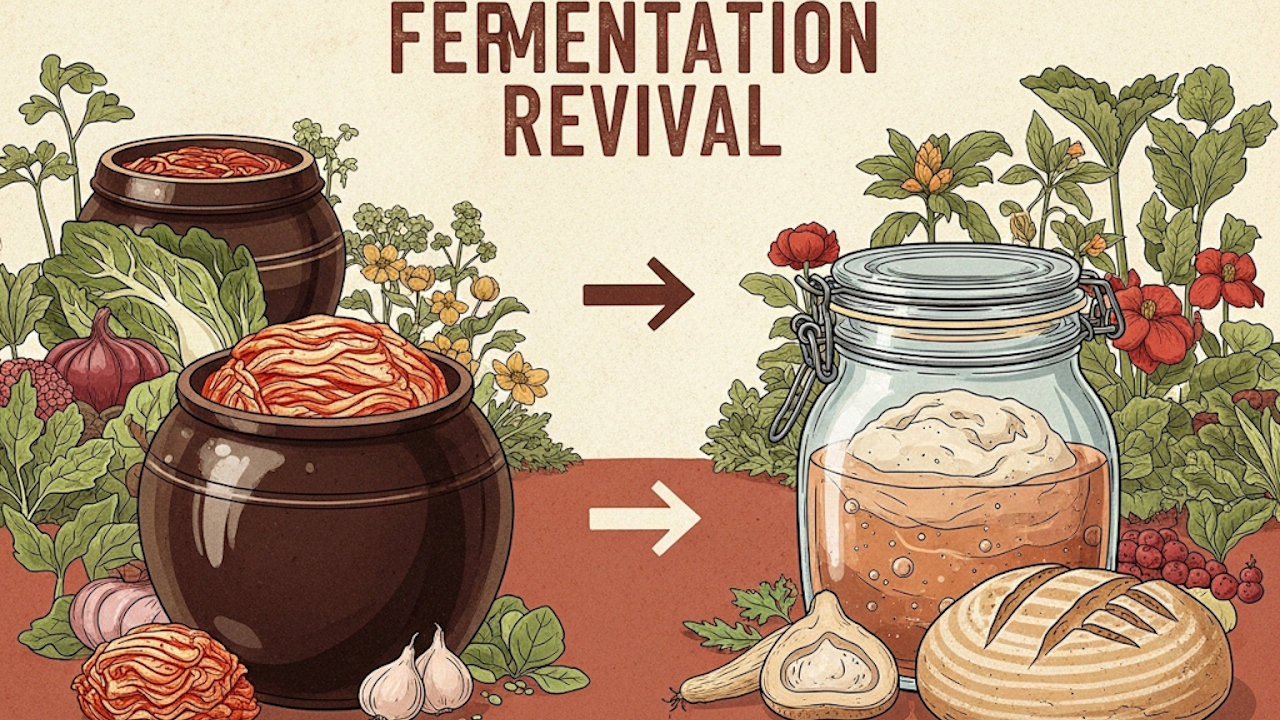
In kitchens across the globe, jars bubble and dough rises with a quiet energy that feels both ancient and brand new. Fermentation has returned to the forefront of home cooking and culinary innovation, transforming everyday ingredients into complex, living foods. Once dismissed as old fashioned or risky, these processes now stand at the center of a broader movement toward gut health, sustainability, and flavor depth. At the heart of this revival sit two icons: kimchi, the fiery Korean vegetable ferment, and sourdough, the naturally leavened bread born from wild yeasts and bacteria. Their stories illustrate how a simple microbial dance connects centuries of tradition with modern cravings for authenticity and wellness.
Fermentation itself is one of humanity’s oldest food technologies. Long before refrigeration or canning, people discovered that salt, time, and the right environment could preserve harvests through the action of beneficial microbes. Lactic acid bacteria convert sugars into lactic acid, lowering pH and creating an inhospitable setting for spoilage organisms. Yeasts produce carbon dioxide and alcohol, giving bread lift and beer sparkle. These transformations not only extend shelf life but also unlock new tastes, textures, and nutrients. Archaeological evidence shows fermented foods dating back more than eight thousand years in regions from China to the Middle East. Yet for much of the twentieth century, industrial food systems pushed these methods aside in favor of sterile processing and shelf stable products. The revival we witness today reverses that trend, driven by renewed curiosity about the microbiome and a desire to reclaim control over what we eat.
Kimchi represents the pinnacle of vegetable fermentation. Originating in Korea, where it has been a staple for over two thousand years, kimchi began as a practical solution to winter scarcity. Early versions involved burying vegetables in earthen jars to ferment underground. Today, more than two hundred recognized varieties exist, though the most familiar is baechu kimchi made from napa cabbage. The process starts with salting the cabbage to draw out moisture and create a brine. Garlic, ginger, fish sauce or anchovies, chili flakes, and green onions form a vibrant paste that coats every leaf. The mixture then rests at room temperature for days or weeks while lactic acid bacteria, primarily Leuconostoc and Lactobacillus species, take over. The result is a product that is simultaneously crunchy, sour, spicy, and umami rich.
What makes kimchi special extends beyond taste. During fermentation, the bacteria produce vitamins, including vitamin C and B vitamins, while breaking down compounds that can inhibit nutrient absorption. Studies have linked regular consumption to improved digestion, reduced inflammation, and even potential anticancer properties thanks to bioactive compounds like glucosinolates. In Korea, kimchi is more than food; it is cultural identity. Families gather each autumn for kimjang, the communal making of winter stores, reinforcing social bonds through shared labor. Korean immigrants carried the tradition abroad, and by the late twentieth century kimchi began appearing on Western supermarket shelves. The real surge came in the 2010s when health focused eaters discovered its probiotic content. Restaurants incorporated it into tacos, burgers, and grain bowls, while home cooks ordered gochugaru online and experimented with vegan versions using miso instead of fish sauce.
Sourdough tells a parallel tale but centers on grain rather than vegetables. The bread traces its lineage to ancient Egypt and the Levant, where wild yeasts floating in the air met flour and water. A sourdough starter is a living culture of Saccharomyces yeasts and Lactobacillus bacteria that coexist in symbiotic balance. The bacteria produce lactic and acetic acids that give the bread its characteristic tang, while the yeasts generate carbon dioxide for rise. Unlike commercial yeast, which offers quick predictable results, sourdough demands patience. Bakers feed the starter daily with fresh flour and water, discarding portions to maintain activity. The dough undergoes long fermentation periods, often overnight or longer, allowing enzymes to break down starches and proteins. This process creates the open crumb, chewy crust, and complex flavor profile that enthusiasts crave.
The nutritional advantages of sourdough are well documented. Fermentation reduces phytic acid, a compound in grains that binds minerals and makes them less available to the body. It also lowers the glycemic index compared with conventional bread, leading to steadier blood sugar responses. For many people with gluten sensitivities, the extended fermentation partially degrades gluten proteins, easing digestion even if it does not render the bread gluten free. During the early 2020s, when lockdowns confined people to their homes, sourdough experienced an unprecedented boom. Social media filled with photos of scored loaves and bubbling starters. Supply chains for commercial bread faltered, but flour and mason jars flew off shelves. The hobby offered structure, creativity, and tangible results in uncertain times. Professional bakers who had long championed sourdough suddenly found their craft mainstream.
The connection between kimchi and sourdough runs deeper than surface differences. Both rely on spontaneous or wild fermentation rather than laboratory isolated cultures. Both transform humble raw materials into something greater through microbial alchemy. Both have moved from regional specialties to global symbols of the fermentation renaissance. This revival gained momentum as scientific understanding of the gut microbiome matured. Researchers revealed that trillions of microbes in the digestive tract influence everything from immunity to mood. Fermented foods deliver live organisms and metabolites that can colonize or support this internal ecosystem. Public awareness campaigns, bestselling books on the microbiome, and documentaries popularized the idea that food could be medicine. At the same time, environmental concerns pushed people toward low waste methods. Fermentation reduces food loss by preserving surplus produce and allows bakers to use ancient grains or locally milled flours with better results.
Economic and cultural shifts have amplified the trend. Small batch producers now sell artisanal kimchi in farmers markets and online shops, often featuring heirloom vegetables or creative fusions like turmeric spiked golden kimchi. Craft bakeries advertise naturally leavened loaves with names that evoke heritage grains such as einkorn or spelt. Restaurants build entire menus around ferments, pairing kimchi with oysters or folding sourdough into pizzas topped with fermented peppers. Even large food corporations have taken notice, launching probiotic infused products that mimic traditional methods. Yet the heart of the movement remains domestic. Home fermentation kits, workshops, and online communities have lowered barriers to entry. Beginners discover that success requires only attention to temperature, salt concentration, and cleanliness rather than complicated equipment.
Making kimchi at home starts with choosing fresh, firm vegetables. Napa cabbage works best for beginners, but radish, cucumber, or scallions yield delicious alternatives. The salt should be non iodized sea salt or kosher salt to avoid inhibiting bacteria. After brining for several hours, the vegetables are rinsed and mixed thoroughly with the seasoning paste. Submerging the mixture under its own brine inside a clean jar prevents mold. Burping the jar daily releases carbon dioxide while a loose lid or fermentation weight maintains an anaerobic environment. Fermentation time varies with temperature; warmer kitchens speed the process to three or four days, while cooler spots may require a week or more. Taste testing guides the endpoint. Once it reaches the desired sourness, refrigeration slows activity and preserves the product for months.
Sourdough demands a similar blend of ritual and observation. Creating a starter from scratch involves mixing equal parts flour and water by weight and leaving the mixture uncovered briefly to capture wild yeasts. Daily feedings of fresh flour and water encourage the strongest microbes while discarding the rest prevents over acidification. After seven to ten days, the starter should double in volume within four hours and display bubbles and a pleasant yeasty aroma. Baking begins with an autolyse, a rest period for flour and water that develops gluten. The levain, or active starter portion, is incorporated along with salt. Multiple stretch and folds during bulk fermentation strengthen the dough without mechanical mixers. Shaping, proofing in a banneton, and scoring precede baking in a preheated Dutch oven that traps steam for an impressive oven spring. The finished loaf should sound hollow when tapped on the bottom and display a caramelized crust with irregular scoring patterns that tell the story of expansion.
Both processes reward experimentation. Home fermenters blend kimchi with local ingredients such as ramps in spring or persimmons in autumn. Sourdough bakers incorporate seeds, olives, or even leftover fermented vegetables into the dough for unique flavor layers. Safety remains paramount. Proper salt levels and submersion guard against harmful bacteria. Signs of trouble include unusual colors, off smells resembling rotten eggs, or visible mold on the surface. In such cases, the batch should be discarded. Most failures, however, result in pleasantly sour surprises rather than dangers. The living nature of these foods means each batch carries its own microbial signature shaped by kitchen air, water quality, and the cook’s hands.
Beyond individual kitchens, the fermentation revival carries broader implications. It challenges the dominance of ultra processed foods by celebrating imperfection and variability. It reconnects eaters with seasonal rhythms because fermentation captures abundance for leaner months. It fosters community as neighbors trade starters or attend kimchi making classes. Scientific research continues to uncover mechanisms behind observed benefits, from short chain fatty acids produced during fermentation that support colon health to peptides that may modulate immune responses. Psychologists note that the tactile, patient work of tending ferments offers mindfulness benefits in an age of digital distraction.
Looking ahead, the movement shows no signs of slowing. Chefs experiment with koji fermented grains for new textures. Home brewers combine kimchi brine with beer for sour ales. Nutritionists explore how diverse ferments might address specific health conditions such as irritable bowel syndrome or allergies. Climate conscious consumers appreciate that fermentation requires minimal energy compared with freezing or canning. As global interest grows, traditional knowledge from every continent finds new expression. Japanese miso, Indian idli batter, Ethiopian injera, and Mexican tepache join kimchi and sourdough in the modern pantry.
The revival ultimately reminds us that food is never static. It lives, changes, and interacts with us in profound ways. Kimchi delivers heat and crunch that awaken the senses while nourishing the gut. Sourdough offers comfort and sustenance through its earthy aroma and satisfying chew. Together they bridge cultures and eras, inviting anyone with a jar, a bowl, and a little patience to participate. In embracing fermentation, we honor the wisdom of ancestors and the ingenuity of microbes that have sustained humanity for millennia. The next time you slice into a warm sourdough loaf or spoon kimchi onto rice, remember the invisible orchestra at work. That faint fizz and tang are not mere flavor. They are the sound of life itself, revived and thriving in your own kitchen.