

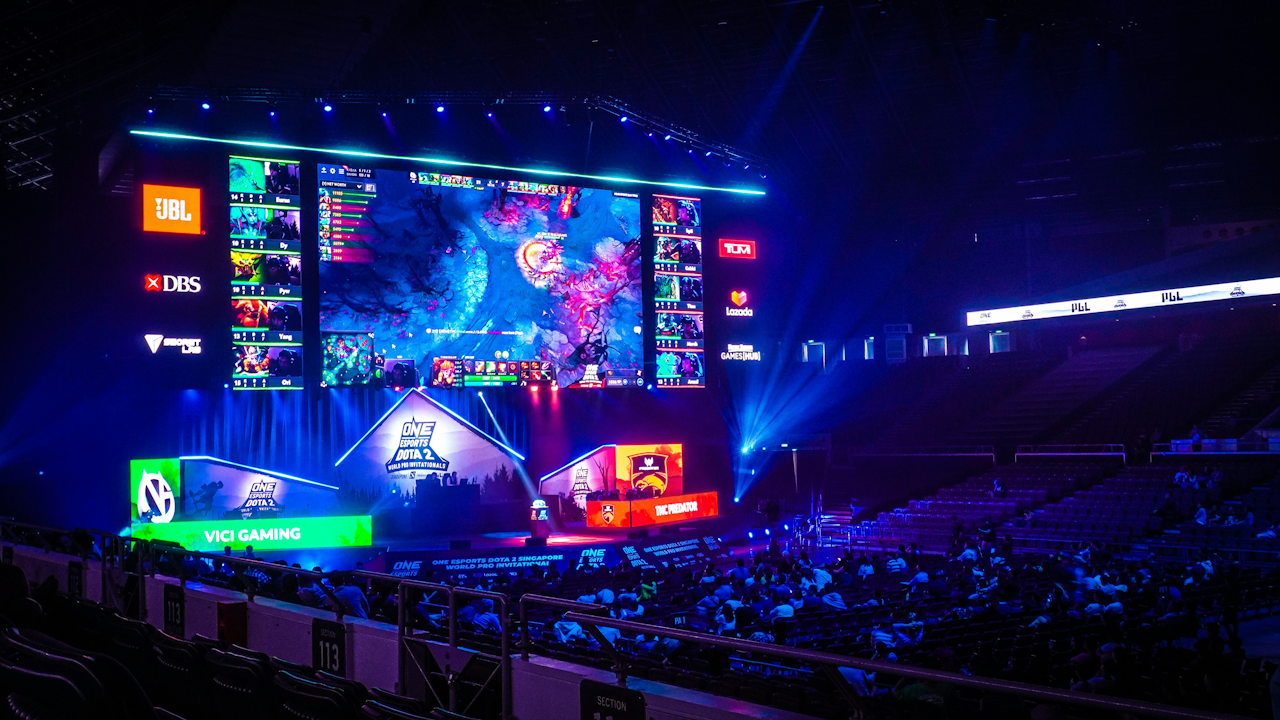
The world of competitive video gaming, known as eSports, has exploded into a global phenomenon worth billions of dollars annually, drawing millions of viewers and participants across continents. Professional players train with the discipline of elite athletes, competing in tournaments that rival traditional sports in spectacle and prize money. Yet for decades, the International Olympic Committee has approached the idea of integrating eSports into the Olympic Games with caution. Discussions have evolved from tentative explorations to concrete initiatives, but full inclusion remains a complex question. As of 2026, the Olympic Movement stands at a crossroads with dedicated eSports events on the horizon, yet traditional Olympic programs show no immediate signs of adopting video games as medal sports. This article examines the journey so far, the obstacles ahead, and just how near we are to seeing eSports claim its place under the Olympic rings.
The roots of eSports trace back to the 1970s and 1980s with early arcade competitions and LAN parties, but the modern era began in the late 1990s and early 2000s with games like StarCraft and Counter-Strike gaining professional circuits. By the 2010s, titles such as League of Legends and Dota 2 had turned eSports into a spectator sport with arenas filled to capacity and online streams breaking viewership records. Organizations like the International Esports Federation emerged to standardize rules, while national bodies in countries from South Korea to the United States began recognizing eSports as a legitimate competitive activity. This growth caught the attention of the Olympic Committee, which saw an opportunity to engage younger audiences who increasingly view traditional sports as distant from their digital lives.
The International Olympic Committee first signaled serious interest around 2018. During an Olympic Summit, leaders acknowledged that competitive gaming could qualify as a sporting activity provided it aligned with Olympic values of excellence, respect, and friendship. President Thomas Bach emphasized the need for any inclusion to avoid games promoting violence or discrimination. This stance set a clear boundary: first-person shooters and titles heavy on combat would likely remain excluded, steering the focus toward simulation-based or virtual versions of established Olympic disciplines. Early experiments tested the waters without committing to full integration.
A pivotal moment arrived in 2021 amid the COVID-19 pandemic. The Olympic Virtual Series launched as an online-only competition featuring five virtual sports: baseball, cycling, motorsport, rowing, and sailing. Organized in collaboration with international federations and game publishers, it drew hundreds of thousands of participants worldwide. Though it lacked the in-person drama of the Games, the series demonstrated feasibility and generated data on qualification processes, anti-doping measures adapted for digital play, and audience engagement. It paved the way for more ambitious steps.
Building on that foundation, the IOC introduced the Olympic Esports Series in 2023. Qualification rounds opened to both amateurs and professionals across nine events, including archery, baseball, chess, cycling, dance, motorsport, sailing, taekwondo, and tennis. The finals took place live in Singapore during the inaugural Olympic Esports Week in June 2023, marking the first time such competitions occurred in a physical venue under the Olympic banner. Over 130 players competed in mixed-gender formats, and the event blended exhibition matches, fan zones, and discussions on the future of digital sports. Winners received trophies rather than medals, underscoring its status as a pilot rather than a formal Olympic contest. The success highlighted eSports potential to bridge virtual and physical worlds while adhering to Olympic principles.
Momentum accelerated in 2024. At the 142nd IOC Session in Paris, members unanimously approved the creation of the Olympic Esports Games, a landmark decision that formally established a new multi-sport event dedicated to virtual and simulated competitions. The proposal, developed by the IOC Esports Commission, aimed to balance the interests of the gaming community with the Olympic Movement’s long-term goals. Initial plans targeted 2025 as the debut year, with a partnership announced alongside the Saudi Arabian Olympic and Paralympic Committee to host the inaugural edition in Riyadh. The agreement extended for 12 years, signaling a commitment to sustained development. By early 2025, however, the timeline shifted to 2027 to allow more preparation time.
Then came an unexpected turn. On October 30, 2025, the IOC issued a statement announcing the mutual termination of cooperation with the Saudi partners and the Esports World Cup Foundation. After extensive discussions, both sides agreed to pursue their esports ambitions independently. The IOC committed to a new approach informed by a “Pause and Reflect” review process, seeking fresh partnership models to better align the Games with Olympic values and broaden opportunities across the Movement. The statement emphasized overwhelming support from stakeholders and the esports community, with the goal of staging the inaugural edition as soon as possible under this revised framework. No new host or exact date has been confirmed since, though speculation points to alternatives like Singapore or South Korea based on prior hosting success.
This setback illustrates the practical hurdles in launching such an event. Unlike traditional sports with centuries of federations and standardized rules, eSports relies heavily on private game publishers for titles, formats, and updates. Intellectual property rights complicate matters, as the IOC must negotiate with companies like Electronic Arts, Nintendo, or Riot Games for official use. Qualification systems must ensure fair global access, yet connectivity issues in developing regions can exclude talented players, as seen in the 2023 series where African representation was limited. Anti-cheating measures, including software monitoring and live verification, must match the rigor of Olympic drug testing. Gender equality poses another challenge, since many popular eSports scenes remain male-dominated despite mixed events in Olympic pilots.
Proponents argue that eSports deserves Olympic recognition for several compelling reasons. It demands intense mental focus, strategic thinking, and rapid decision-making comparable to chess or shooting sports already in the program. Training regimens mirror athletic preparation, involving physical fitness to combat sedentary risks, team coordination, and psychological resilience. The global reach is unmatched: eSports attracts billions of digital natives who may never attend a swimming final but will tune in for a virtual cycling race. Inclusion could revitalize the Olympic brand among youth, countering declining interest in some demographics and expanding the Movement’s relevance. Events like the Asian Games, which featured eSports demonstrations in 2018 and 2022, proved that large-scale competitions can succeed without diluting core values when limited to approved titles.
Critics, however, raise valid concerns about authenticity and compatibility. Traditional Olympic sports emphasize physical exertion, a criterion many video games fail to meet despite controller fatigue or standing desks used by pros. The corporate nature of eSports, where publishers control game balance and can alter rules mid-season, clashes with the independence required of Olympic disciplines. Violent content remains a red line, excluding blockbuster titles that dominate professional circuits and limiting appeal to core gamers. Governance fragmentation adds complexity, with no single world body equivalent to the IOC for all eSports. Doping analogies extend to performance-enhancing software or stimulants, requiring new regulatory frameworks. Cultural and ethical issues, including inclusivity for underrepresented regions and alignment with human rights standards in potential host countries, further complicate progress.
Looking beyond the dedicated Games, integration into the main Summer Olympics program appears distant. The 2028 Los Angeles Games and 2032 Brisbane Games have finalized their sports programs without eSports slots, focusing instead on additions like flag football or cricket to appeal to local audiences. Any future inclusion would require approval from a majority of IOC members and demonstration of widespread national federation support, a high bar for a format still evolving. Separate Olympic Esports Games may serve as a parallel event, similar to the Youth Olympic Games, allowing experimentation without altering the flagship program.
Despite recent delays, the trajectory points toward realization. The IOC’s persistent efforts, from virtual series to week-long festivals, reflect a strategic embrace rather than fleeting curiosity. Publisher and developer forums, such as the one planned in Lausanne, continue to shape roadmaps. Public enthusiasm remains high, with surveys showing strong youth support for digital competitions under the Olympic umbrella. If the new partnership model resolves logistical and intellectual property barriers efficiently, the first Olympic Esports Games could debut within the next few years, potentially by 2027 or shortly thereafter in a revised format.
In the end, eSports stands closer than ever to the Olympics, yet full convergence demands patience and innovation. The path forward will test the Olympic Movement’s adaptability in a digital age while preserving its foundational ideals. For gamers worldwide dreaming of Olympic glory, the wait continues, but the foundation laid through trials and adjustments suggests that virtual champions may soon stand alongside their physical counterparts in celebration of human achievement. Whether through a standalone event or eventual program inclusion, the fusion of pixels and podiums could redefine what it means to compete on the world’s greatest stage. The question is no longer if, but when and how the Olympic rings will illuminate the next frontier of sport.