

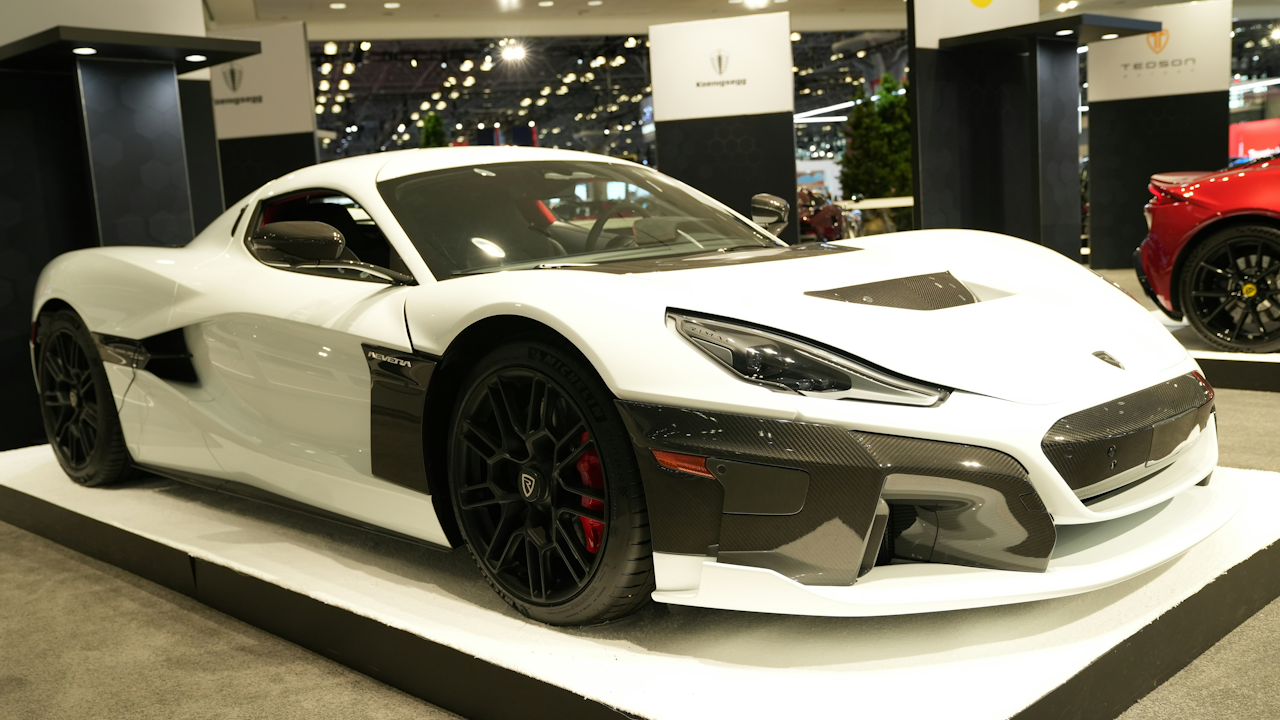
The automotive world has always chased extremes. Hypercars represent the pinnacle of engineering ambition, machines that blend blistering speed, exotic materials, and eye-watering price tags into rolling sculptures of performance. For decades, these vehicles relied on massive internal combustion engines fueled by gasoline, delivering drama through roaring exhaust notes and gear shifts. Then came the electric revolution. Suddenly, hypercars shed their pistons and camshafts for batteries and motors, promising instant torque, zero tailpipe emissions, and performance numbers that once seemed impossible. Models like the Rimac Nevera, Pininfarina Battista, and Lotus Evija have redefined what a hypercar can be. But as these vehicles enter their prime in 2026, a question lingers: Are electric hypercars truly worth the hype, or do they represent more flash than substance?
To understand the phenomenon, it helps to define the category clearly. Electric hypercars are ultra-exclusive, high-performance electric vehicles designed for extreme speed, handling, and luxury. They typically produce well over 1,000 horsepower, achieve zero-to-60-mph times under two seconds, and carry price tags starting in the millions of dollars. Unlike mainstream electric vehicles focused on efficiency or family transport, these machines prioritize raw capability and exclusivity. Their power comes from multiple electric motors, often one at each wheel for precise torque vectoring, fed by large lithium-ion battery packs. Aerodynamics play a massive role, with active elements that adjust for downforce or reduced drag. In 2026, these cars sit at the intersection of cutting-edge technology and automotive artistry, but they also highlight the growing pains of the electric transition.
The current leaders in this space showcase just how far electric hypercars have come. The Rimac Nevera remains the benchmark. Produced by the Croatian firm Rimac Automobili, the Nevera and its track-focused Nevera R variant deliver around 1,914 to 2,078 horsepower from four motors. It accelerates from zero to 60 mph in as little as 1.7 seconds and reaches top speeds exceeding 258 mph in standard form or 268 mph in the R. Its 120-kilowatt-hour battery provides a real-world range of roughly 205 miles under aggressive driving. Priced from about 2.2 million dollars, the Nevera has shattered multiple performance records, including those for acceleration and braking in a production car. It feels approachable despite its power, thanks to sophisticated software that manages power distribution and stability.
Close behind sits the Pininfarina Battista. This Italian-designed machine shares its core powertrain technology with the Nevera but tunes it for a more grand-touring character. It generates approximately 1,874 to 1,900 horsepower and hits 60 mph in under two seconds while topping out at 217 mph. The Battista offers an estimated range of around 300 miles, making it slightly more usable for longer journeys than some rivals. Its elegant styling draws on Pininfarina’s heritage of coachbuilt masterpieces, blending carbon-fiber bodywork with luxurious interiors. At prices near 2 million to 2.5 million dollars, it appeals to buyers seeking beauty alongside brutality.
The Lotus Evija takes a different path. As the British brand’s first all-electric hypercar, it emphasizes lightweight construction and driver engagement over outright top speed. With nearly 2,000 horsepower (and special editions like the Evija X pushing beyond 2,000), it achieves rapid acceleration while focusing on agility. Its top speed sits around 200 mph, but the Evija shines on twisty roads or circuits, where its carbon-fiber monocoque and advanced suspension deliver sharp handling. Range hovers near 250 miles, supported by a 70- to 120-kilowatt-hour battery depending on configuration. Prices start above 2.1 million dollars for the base model. Lotus positions it as a spiritual successor to its lightweight sports car legacy, proving electric power can enhance rather than dilute the brand’s ethos.
Emerging challengers add variety. The Aspark Owl, a Japanese-engineered rarity priced around 3.5 million dollars, claims 0-to-60 mph in 1.72 seconds with nearly 2,000 horsepower. Niche entries like the Austrian-built Deus Vayanne promise even more extreme outputs, such as 2,243 horsepower from three motors, though production remains limited. These vehicles demonstrate how electric hypercars have proliferated beyond the established players, with small teams leveraging battery and motor technology to create bespoke machines.
What sets electric hypercars apart from their internal-combustion counterparts is performance delivery. Traditional hypercars like the Bugatti Chiron or Koenigsegg Jesko rely on massive engines that build power through revs and gears. Electric motors deliver full torque instantly from zero rpm, eliminating lag and gearshifts. This results in seamless, explosive acceleration that feels otherworldly. Four-wheel torque vectoring allows each motor to adjust output independently, improving traction, cornering, and even simulated differentials for better handling. Braking benefits too, with regenerative systems that recapture energy while providing immense stopping power.
Efficiency tells another compelling story. Electric drivetrains convert more than 85 percent of battery energy into motion, compared to 20 to 30 percent for gasoline engines, where most energy dissipates as heat. This advantage translates to lower operating costs over time, even if upfront prices remain stratospheric. Maintenance is simpler without oil changes, spark plugs, or complex transmissions. Noise levels drop dramatically, creating a serene cabin experience punctuated only by wind and tire roar at speed. For many enthusiasts, the absence of engine drama feels like a loss at first, but the purity of electric thrust often wins them over.
Technology underpins the hype. Modern electric hypercars use advanced carbon-fiber structures to offset battery weight, though curb weights still exceed 4,000 pounds in many cases. Active aerodynamics adjust in real time, generating downforce for grip or reducing drag for efficiency. Software defines the experience, with drive modes that alter power output, suspension stiffness, and even artificial sound profiles for those craving auditory feedback. Battery management systems optimize energy flow to prevent overheating during sustained high-power runs. These innovations do not stay confined to million-dollar machines. Rimac supplies components and expertise to mainstream manufacturers, accelerating the trickle-down effect into performance sedans and SUVs. In this way, electric hypercars act as rolling testbeds that advance the entire industry.
Yet the drawbacks are significant and cannot be ignored. Battery packs add substantial mass, which hurts agility compared to lighter gasoline hypercars despite the low center of gravity. Range remains a limitation. While 200 to 300 miles suffices for short blasts, it pales against the 400-plus miles some hybrid hypercars achieve with quick refueling. Charging a depleted pack takes 20 to 30 minutes even on high-speed stations, versus minutes at a fuel pump. Infrastructure challenges persist for owners who want to push these cars to their limits far from urban chargers. Tire and brake wear accelerate dramatically under repeated high-performance driving, increasing running costs.
Price represents another barrier. At two million dollars or more, these vehicles remain toys for the ultra-wealthy. Production is capped at dozens or low hundreds of units, preserving exclusivity but limiting broader impact. Resale values hold strong due to rarity, but the environmental cost of production raises eyebrows. Mining lithium, cobalt, and rare earths for batteries carries ecological and ethical concerns, though recycling programs are improving and newer chemistries reduce reliance on problematic materials. Critics argue the resources poured into these halo cars could address more pressing sustainability needs.
Economically, electric hypercars influence the market in subtle ways. They generate excitement around electrification, helping normalize EVs among performance buyers who once dismissed them as slow or boring. Sales may be tiny, but the publicity drives investment in battery research and charging networks. Governments offer incentives for electric vehicles, indirectly subsidizing development even at the hypercar level. Still, the segment faces headwinds from slowing overall EV adoption in some markets and competition from high-end hybrids that blend electric assistance with familiar engine character.
Looking ahead, the future appears promising but uncertain. Solid-state batteries represent the next leap, with higher energy density, faster charging, and improved safety. Prototypes in 2026 achieve 400 watt-hours per kilogram or more in lab settings, potentially doubling range while slashing weight. Commercialization remains in early pilot stages, however, with full integration into hypercars likely arriving later in the decade. Companies pursue semi-solid designs as interim steps. Meanwhile, 800-volt architectures enable quicker charging, and software updates continually refine existing models. New entrants, including potential offerings from Ferrari and others shifting toward full electrification, could expand the field.
In the end, are electric hypercars worth the hype? The answer depends on perspective. For purists who value mechanical symphony and lightweight purity, the shift feels like a compromise, trading soul for silicon. Yet objectively, these vehicles deliver superior acceleration, efficiency, and technological sophistication. They prove electric powertrains can exceed internal-combustion limits in key areas while advancing sustainability goals. The hype is justified because they accelerate innovation that benefits all drivers, from mainstream commuters to weekend enthusiasts. They embody ambition in an era of rapid change, showing that performance need not sacrifice progress.
For those fortunate enough to experience one, the thrill is undeniable. The silence before launch, the surge of uninterrupted power, the precision of digital control. Electric hypercars do not merely keep pace with the past. They redefine the future. Whether they represent the ultimate evolution or a transitional extravagance, their impact will echo long after the batteries fade. In an industry hurtling toward electrification, these machines light the way, hype and all.