

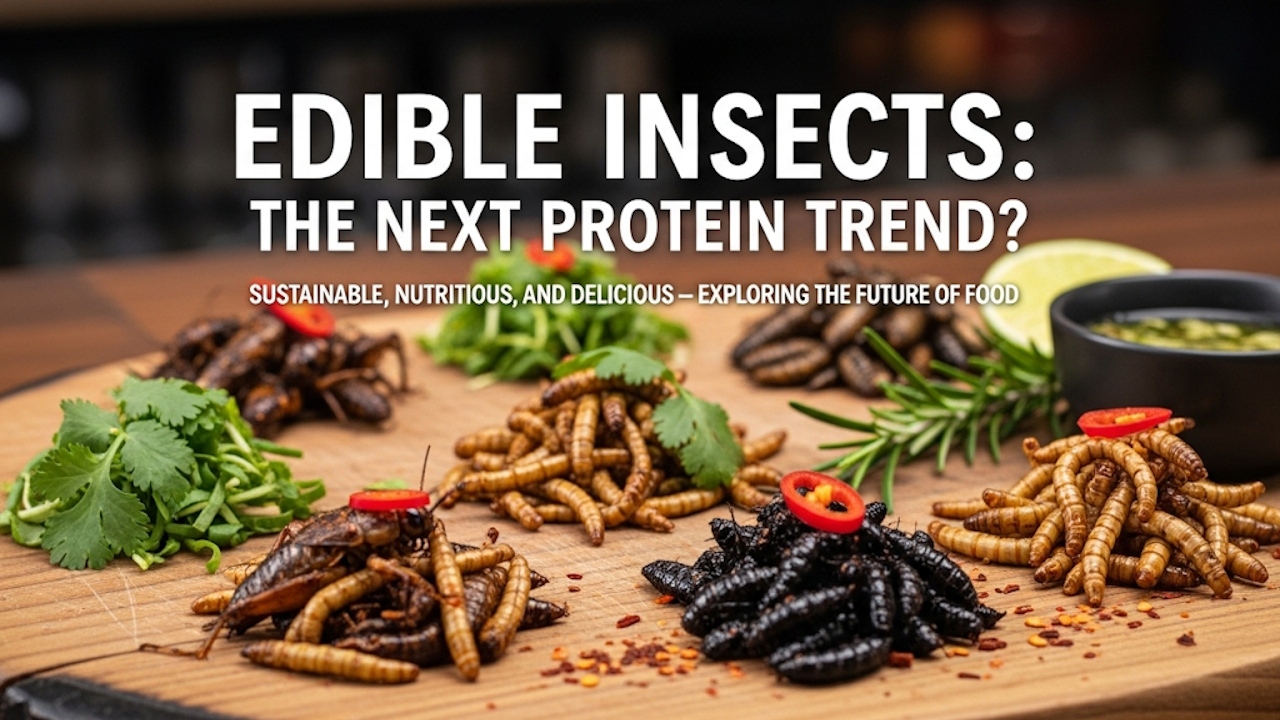
As the global population surges toward 10 billion by 2050, the demand for protein is skyrocketing. Traditional livestock farming, long the backbone of meat production, strains natural resources with high greenhouse gas emissions, vast land and water requirements, and significant contributions to deforestation. Amid these pressures, a surprising contender has emerged in the quest for sustainable nutrition: edible insects. From crickets and mealworms to black soldier fly larvae, these tiny creatures offer a compelling alternative. But can they truly become the next major protein trend? The evidence suggests a strong potential, backed by nutritional superiority, environmental advantages, cultural precedents, and a rapidly expanding market. Yet barriers remain that could slow their path to mainstream acceptance.
The practice of eating insects, known as entomophagy, is far from novel. It dates back thousands of years and remains a dietary staple for approximately two billion people across more than 128 countries. In regions of Asia, Africa, and Latin America, over 2,200 species of insects are consumed regularly, often as seasonal delicacies or everyday snacks. For instance, mopane worms in southern Africa provide a vital source of income and nutrition during harvest seasons, while grasshoppers and ants feature prominently in Mexican and Thai cuisines. Historical records trace the tradition to ancient civilizations, with references appearing in Roman texts, Greek writings, and even the Bible. Indigenous communities worldwide have long recognized insects not merely as survival food but as flavorful, nutrient-dense options integrated into cultural rituals and daily meals. In contrast, Western societies have largely viewed insects through a lens of aversion, associating them with dirt or pests rather than plates. This cultural divide persists, yet globalization and sustainability concerns are bridging the gap, prompting a reevaluation of entomophagy as a viable modern solution.
Nutritionally, edible insects stand out as a powerhouse. Many species boast protein levels that rival or exceed those of conventional meats when measured on a dry-weight basis. Crickets, for example, can contain up to 65 percent protein, compared to roughly 25 percent in beef or chicken on a similar basis. Studies highlight that insects like mealworms and grasshoppers deliver complete proteins with all essential amino acids, alongside superior bioavailability of key minerals such as iron, zinc, calcium, and magnesium. One analysis found crickets outperforming beef in iron content and absorption rates, making them particularly valuable in combating deficiencies common in both developing and developed nations. Insects also provide healthy fats, including omega-3 and omega-6 fatty acids, B vitamins, and antioxidants, often with lower saturated fat content than red meat. The index of nutritional quality for protein in insects frequently exceeds 1.0, indicating well-balanced profiles that support muscle maintenance, immune function, and overall health. Unlike some plant-based alternatives that require fortification, insect proteins come packaged with a broad spectrum of micronutrients, positioning them as an efficient option for athletes, families, and populations facing food insecurity.
The environmental case for insect farming is equally persuasive, though not without nuance. Compared to traditional livestock, insects require dramatically less land, water, and feed to produce equivalent protein yields. Rearing crickets or black soldier fly larvae can use up to 10 times less land than beef production and generate a fraction of the greenhouse gas emissions associated with cattle. Insects thrive on organic waste streams, such as food scraps or agricultural byproducts, turning potential pollutants into high-value protein while minimizing methane output from manure. The United Nations Food and Agriculture Organization has long championed insects for their role in addressing food security, noting their high feed conversion efficiency, rapid reproduction cycles, and low ecological footprint. A single hectare of insect farming can yield far more protein annually than the same area dedicated to cattle grazing. However, recent life-cycle assessments caution that benefits depend on production methods. In energy-intensive indoor facilities common in temperate climates, emissions and resource use can approach those of poultry or pork if not optimized. Still, when insects are fed low-impact substrates and scaled vertically with waste integration, their advantages shine, offering a pathway to reduce the 14.5 percent of global emissions tied to livestock while easing pressure on freshwater and arable land.
Market momentum underscores the growing recognition of these benefits. The global edible insects sector, valued at approximately 1.2 to 1.8 billion USD in 2025, is projected to reach between 4 billion and 10 billion USD by 2030 to 2035, with compound annual growth rates ranging from 13 percent to 25 percent depending on the forecast. Drivers include rising consumer interest in sustainable proteins, regulatory approvals for species like crickets and mealworms, and innovations in processing that mask insect origins in familiar formats. Applications span human food, animal feed for aquaculture and pets, and even pet nutrition, where insect-based meals are gaining traction as eco-friendly alternatives to fishmeal. North America and Europe, though starting from smaller bases, show the fastest adoption rates, fueled by health-conscious millennials and Gen Z buyers seeking low-carbon options. Asia-Pacific leads in volume due to established traditions, but Western markets are catching up through retail expansions in supermarkets and online platforms. Investments from agribusiness giants signal confidence, with venture funding flowing into farms that co-locate production with waste streams to cut costs and emissions.
Product innovation is transforming insects from niche curiosities into everyday staples. Early pioneers focused on whole insects, roasted and seasoned like peanuts, but today’s offerings emphasize discretion and convenience. Cricket flour and powders blend seamlessly into protein bars, baked goods, pasta, and snacks, delivering a nutty flavor without the visual crunch. Companies have launched chocolate-covered ants, mealworm burgers, and insect-enriched granola, while black soldier fly oil serves as a sustainable cooking fat. Startups are experimenting with 3D-printed insect-based meats and fortified beverages aimed at fitness enthusiasts. These developments address the primary psychological hurdle by integrating insects invisibly, allowing consumers to reap benefits without confronting their preconceptions. Pet food brands have led the charge here, incorporating larvae into kibble and treats, proving market viability before full human-food penetration. As processing technologies advance, costs are declining, making insect proteins competitive with premium plant-based alternatives.
Despite the promise, significant challenges persist. The most formidable is consumer disgust, a deep-seated psychological barrier rooted in cultural norms and associations with filth. Surveys consistently show Western audiences rating whole insects as unappealing, with food neophobia slowing trial and repeat purchases. Education campaigns highlighting nutritional and environmental gains help, but shifting perceptions requires time and creative marketing. Regulatory frameworks add another layer of complexity. In the European Union and United Kingdom, insects fall under novel food regulations, demanding rigorous safety assessments that impose high compliance costs on small producers and delay market entry. While approvals for certain species exist, the process remains burdensome compared to established proteins. Safety concerns, including potential allergens (similar to shellfish), microbial contamination if not farmed hygienically, and heavy metal accumulation from feed, necessitate strict standards. Scaling production also demands investment in automated farming to ensure consistency and traceability. Without addressing these, the sector risks remaining a boutique player rather than a transformative force.
Looking ahead, the trajectory for edible insects appears promising yet contingent on collaborative efforts. Policymakers could streamline approvals and incentivize sustainable farms through subsidies or carbon credits, mirroring support for other alternative proteins. Public-private partnerships, drawing on FAO guidance, can standardize safety protocols and promote research into optimized rearing conditions. Consumer acceptance will hinge on transparent storytelling that emphasizes taste, ethics, and planetary health. If trends continue, insects could capture a meaningful share of the alternative protein market by 2035, particularly in feed applications that indirectly reduce pressure on wild fisheries and soy monocultures. Hybrid products blending insects with plants or cultured meat may accelerate mainstreaming. Ultimately, the question is not whether insects will play a role but how large. With global protein needs projected to double in coming decades, their efficiency and versatility position them as a pragmatic solution rather than a fad.
In conclusion, edible insects represent more than a quirky trend; they embody a practical response to intertwined crises of nutrition, environment, and resource scarcity. Their nutritional density, minimal footprint, and cultural depth make a compelling case for broader adoption. While disgust and regulations pose real obstacles, innovation and awareness are eroding them steadily. As supermarkets stock more insect-derived items and chefs experiment openly, the path to normalization grows clearer. The next protein trend may well crawl onto plates worldwide, offering a sustainable, delicious way to feed a hungry planet. The choice lies with consumers, innovators, and leaders to embrace it fully.