

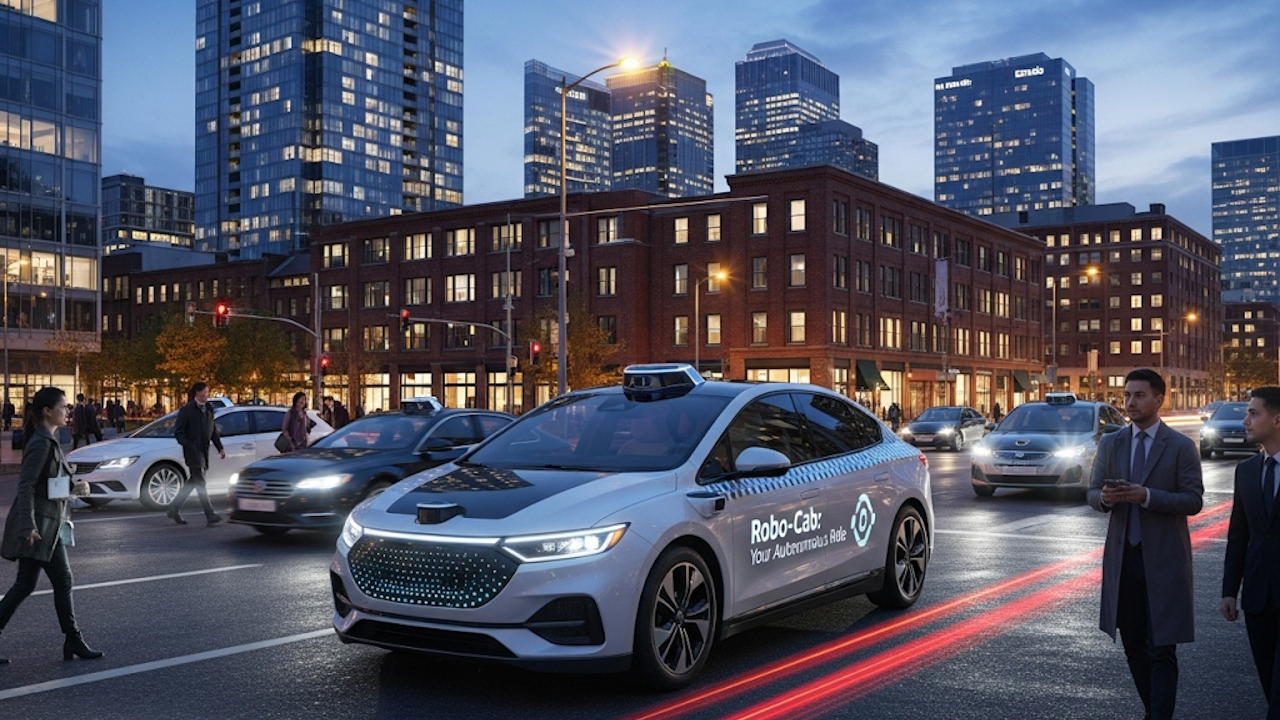
Driverless taxis, often called robo-cabs or robotaxis, represent one of the most significant shifts in urban transportation since the introduction of the automobile itself. These autonomous vehicles operate without a human driver, relying on advanced sensors, artificial intelligence, and mapping technologies to navigate city streets. As of 2026, companies like Waymo have deployed thousands of such vehicles in multiple U.S. cities, providing paid rides to the public. This technology is not just altering how people move from point A to point B. It is reshaping city landscapes, economies, and daily life in profound ways.
The promise is compelling: safer roads, reduced congestion in some scenarios, greater accessibility for those who cannot drive, and a potential decrease in private car ownership. Yet the reality on the ground includes challenges such as regulatory hurdles, job displacement for drivers, and questions about long-term traffic impacts. This article explores the evolution, current state, benefits, drawbacks, and future trajectory of driverless taxis and their influence on urban environments.
A Brief History of Autonomous Taxis
The concept of self-driving vehicles dates back decades. Early experiments in the 1950s and 1970s involved basic automation, but real progress accelerated in the 2000s with initiatives like the DARPA Grand Challenge, which spurred development of autonomous driving systems. Google, now through its Waymo subsidiary, began serious work on self-driving cars around 2009. By the mid-2010s, Waymo had logged millions of test miles.
The first commercial robotaxi services emerged in the late 2010s. Waymo launched its Waymo One service in Phoenix, Arizona, in 2018, initially with safety drivers and later without. Other players, including Cruise from General Motors, entered the fray, though Cruise faced significant setbacks after incidents that led to operational pauses. By the early 2020s, testing expanded to cities like San Francisco. Progress accelerated in the mid-2020s as technology matured and regulators gained confidence.
As of 2026, Waymo operates commercial services in about 10 U.S. metropolitan areas, with a fleet exceeding 3,700 vehicles and hundreds of thousands of paid rides per week. Tesla has introduced limited unsupervised robotaxi operations in places like Austin, though on a much smaller scale. Chinese operators like Baidu’s Apollo Go have achieved comparable scale in cities such as Wuhan. These deployments mark a transition from experimental pilots to mainstream urban mobility options.
How Robo-Cabs Work
Driverless taxis integrate multiple technologies for safe operation. LiDAR (Light Detection and Ranging) sensors create detailed 3D maps of surroundings. Radar and cameras provide additional data on objects, while high-definition maps and GPS ensure precise positioning. Artificial intelligence algorithms process this information in real time, making decisions about speed, lane changes, and interactions with pedestrians, cyclists, and other vehicles.
Unlike human drivers, robo-cabs do not suffer from fatigue, distraction, or impairment. They communicate with each other in some fleets to optimize routes and avoid bottlenecks. Most current operations remain geofenced within approved areas with favorable conditions, such as milder weather and mapped streets. Expansion beyond these zones requires extensive data collection and regulatory approval.
Deployment in Cities Today
Phoenix was an early adopter, benefiting from its predictable weather and grid-like streets. San Francisco followed, navigating complex hills, dense traffic, and unpredictable pedestrians. By 2026, Waymo has expanded to Los Angeles, Austin, Atlanta, and others. Users hail rides via apps similar to Uber or Lyft, often at competitive or lower prices due to the absence of driver wages.
In these cities, robotaxis integrate with existing transport systems. Some serve as first-mile or last-mile connectors to public transit. Others compete directly with traditional taxis and ride-hailing services. Public reception has improved over time, with many riders praising the smooth, predictable rides. However, early deployments faced protests, vandalism in some cases, and concerns over job losses.
Safety Advantages
One of the strongest arguments for robo-cabs is improved safety. Human error causes the vast majority of traffic accidents. Waymo has reported significantly lower crash rates compared to human drivers, with data showing reductions in serious injuries. Autonomous systems excel at consistent rule-following and quick reactions to predictable hazards.
Still, challenges remain. Robo-cabs can struggle with edge cases such as construction zones, unusual weather, or erratic human behavior. Incidents, though rare, attract significant media attention and can erode public trust. Overall, the industry trend points toward safer streets as adoption grows, provided operators maintain rigorous testing and transparency.
Economic and Accessibility Impacts
Driverless taxis lower operating costs by eliminating driver compensation, which often accounts for a large portion of traditional taxi expenses. This can translate to more affordable rides, particularly for frequent users. For people with disabilities, the elderly, or those without access to a car, robotaxis expand mobility options dramatically. Studies suggest increased travel for these groups, enhancing social and economic participation.
On the economic front, cities see shifts in transportation spending. Households may reduce car ownership, freeing up money for other needs. Businesses benefit from reliable logistics, and tourism can increase with easier navigation. However, traditional taxi and ride-hailing drivers face displacement. Estimates suggest substantial reductions in frontline transportation jobs, prompting calls for retraining programs and support.
Transforming Urban Space and Planning
One of the most visible changes involves parking. Private cars spend much of their time parked, consuming valuable urban land. With shared robotaxis operating at higher utilization rates, cities could need far fewer parking spaces. This opens opportunities to repurpose lots and garages for housing, parks, or commercial development. Streets might become narrower or reallocated for pedestrians and bikes.
Traffic patterns could evolve too. Robo-cabs optimize routes and reduce circling for parking, potentially easing congestion. On the other hand, lower costs and greater convenience might induce more travel demand, leading to increased vehicle miles traveled if not managed carefully. Planners emphasize the need for policies that encourage shared rides over private autonomous vehicles to maximize benefits.
Public transit faces both competition and complementarity. In dense areas, high-capacity options like buses and trains remain essential. Robotaxis can feed into these systems, improving overall connectivity, especially in suburbs or off-peak hours.
Environmental Considerations
Electric robotaxis offer potential emissions reductions compared to gasoline-powered private cars. Higher utilization means fewer vehicles overall for the same number of trips. However, if total travel increases significantly, net environmental gains could diminish. Cities investing in charging infrastructure and renewable energy stand to benefit most.
Challenges and Criticisms
Despite progress, hurdles persist. Regulatory frameworks vary widely, slowing expansion in some regions. Technical limitations in bad weather or complex environments require ongoing improvements. Cybersecurity risks, liability questions in accidents, and data privacy concerns also demand attention.
Public acceptance varies. While many appreciate the service, others worry about job losses or prefer human interaction. Equity issues arise if services concentrate in wealthier neighborhoods initially. Cities must ensure broad access to avoid exacerbating divides.
Induced demand remains a key debate. Cheaper, easier travel could encourage longer commutes and sprawl, counteracting density goals in many urban plans. Careful zoning, pricing strategies, and infrastructure investments are necessary to steer outcomes positively.
Case Studies: San Francisco and Phoenix
San Francisco offers a compelling example. After initial resistance, including protests and temporary bans, Waymo services have grown popular. The city has seen adjustments in traffic management and integration with public transit. Economic ripple effects include growth in related tech and service sectors.
Phoenix demonstrates scalability in a car-oriented city. Reliable operations in suburban and urban mixes have built rider confidence. Expansion here has influenced neighboring areas and provided data for broader U.S. rollout.
The Road Ahead
Looking forward to the 2030s and beyond, robotaxis could become dominant in many developed cities. Projections suggest they might capture a majority of taxi and ride-hailing trips in suitable markets. Integration with other technologies, such as smart city infrastructure and advanced public transit, will determine success.
Policy will play a crucial role. Cities that proactively plan for mixed fleets, dedicated lanes where appropriate, and support for displaced workers will fare best. International variations are notable, with China advancing rapidly under coordinated policies, while Europe and North America balance innovation with caution.
Tesla’s efforts, though currently limited, could accelerate if full unsupervised capabilities scale. Other entrants like Zoox add diversity to the ecosystem.
Conclusion
Driverless taxis are already changing cities. They promise safer, more efficient, and more inclusive mobility while challenging planners to rethink street design, parking, and economic transitions. The technology is not a panacea. Its impacts depend on how societies choose to deploy and regulate it.
As adoption spreads, collaboration among companies, governments, and communities will be essential. The goal should be urban environments that are not only more mobile but also more livable, sustainable, and equitable. Robo-cabs are tools. How cities wield them will define the next chapter in urban history.