

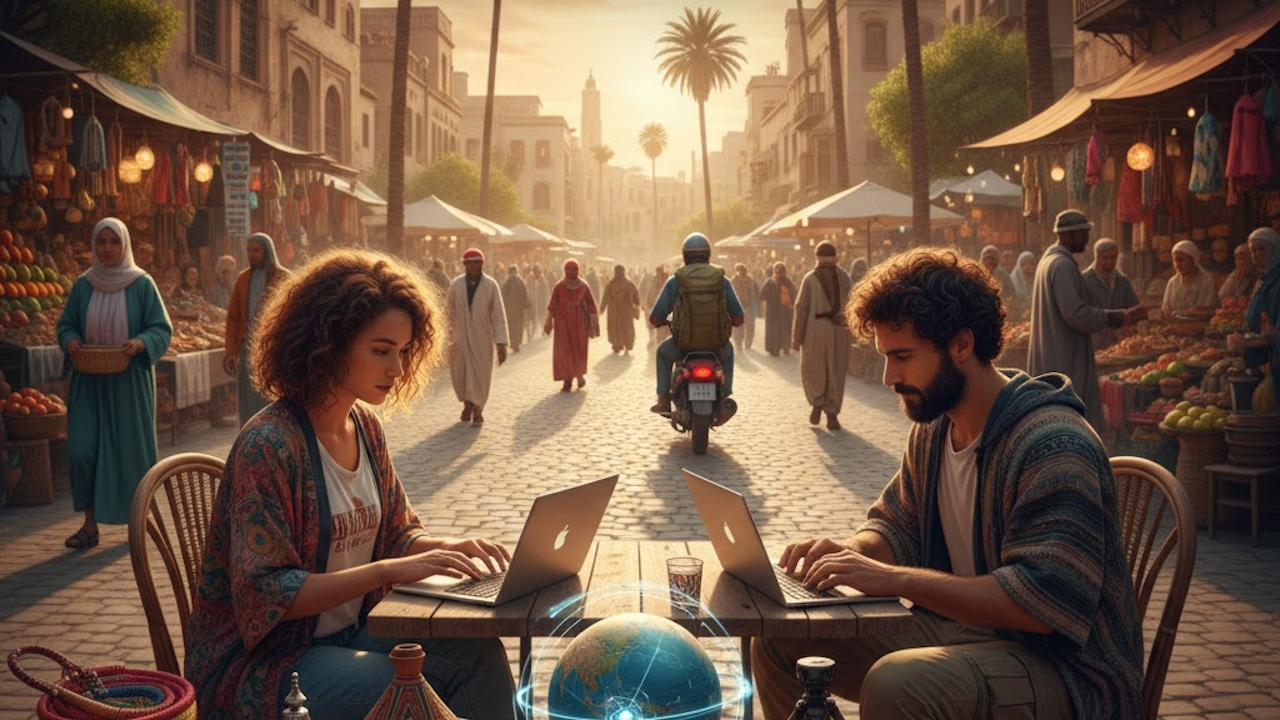
Digital nomad life is often portrayed as an adventurous mix of freedom, sunlit cafés, and endless horizons, but the most meaningful part of it may be the way cultures collide on the road. When people work in one country while living in another, when a coworking space becomes an international meeting ground, and when daily conversations involve accents from every corner of the world, cultural intersections become part of the workday rather than an occasional moment. These encounters shape not only how nomads see others but also how they understand themselves.
Most nomads begin their journey thinking they will learn about the world, but they soon discover that the world is learning about them at the same time. The simple act of ordering breakfast becomes a cultural lesson. In Thailand, what feels like friendly casual speech to someone from the United States may come across as abrupt. In Portugal, the relaxed pace of service can feel unfamiliar to a person used to fast efficiency. Nomads quickly adjust, finding that patience and curiosity open more doors than certainty ever could. These early interactions often reveal how deeply rooted their habits are, and how many of those habits were simply cultural patterns they had never questioned.
In coworking spaces the cultural mix is even more obvious. A developer from Germany may sit beside a writer from Argentina who chats with a marketing professional from South Korea. Despite different backgrounds, they share an interest in mobility and independence, so conversations feel natural. Still, misunderstandings happen. Humor varies across cultures. Some people communicate directly while others prefer subtlety. Nomads learn to listen carefully and ask questions when something feels unclear. This skill becomes essential. It reduces conflict and builds trust among people who did not grow up with the same social expectations.
Daily routines also change when cultures meet. Mealtimes shift depending on where someone travels. In Spain dinner may start long after a visitor expects it to end. In Southeast Asia breakfast can involve rice or noodles rather than toast. These differences shape the rhythm of a nomad’s day. Some nomads maintain their home habits, but many embrace local routines. They might take a long midday break in Mexico or join an evening food market in Vietnam. Over time these habits combine into a blended lifestyle that feels both foreign and familiar.
Cultural collisions extend beyond food and timing. Work culture itself can vary dramatically. A nomad who schedules meetings with colleagues back home must adapt to time zone differences, but they also need to adjust to regional norms. In Northern Europe people often value concise communication, while in Latin America relationships may play a larger role in collaboration. A nomad who understands these differences can work smoothly with an international team. A nomad who ignores them may stumble. The experience encourages flexibility and empathy, traits that become valuable long after the journey ends.
Language learning is another constant part of the experience. Even when a nomad stays in a city where English is commonly spoken, small daily tasks require at least a few local words. Buying groceries, reading signs, and interacting with neighbors feel more respectful when someone makes an attempt to learn the language. It also opens more opportunities for connection. Locals often appreciate even imperfect attempts, which can lead to conversations that go deeper than travel tips.
Yet cultural collisions are not always comfortable. Sometimes a nomad may feel out of place or misunderstood. A gesture that seems polite in one place may be unusual in another. Lines between private and public space can differ widely. Nomads often face moments when they feel like outsiders, but these moments offer insight. They help people recognize how every society has its own rules and values. This awareness reduces judgment and encourages understanding. Over time nomads develop a form of cultural agility, the ability to shift perspectives and interpret situations through multiple lenses.
Community becomes essential in managing these challenges. In many destinations digital nomad groups form naturally. They create meetups, share tips, and offer support. These communities bring together people from extremely diverse backgrounds who find common ground in their shared mobility. Within these groups cultural collisions still happen, but the shared lifestyle creates a foundation for mutual respect. These connections often become lifelong relationships that continue long after travel ends.
As nomads move from place to place, they become carriers of culture as well. They share their own traditions with locals and with each other. Someone might cook a dish from home for new friends. Another might teach a word or expression from their native language. Exchange becomes a two way street. This flow of ideas enriches everyone involved, and it shows how culture grows through contact rather than isolation.
Eventually many nomads realize that constant movement has given them a blended identity. They carry habits, expressions, and perspectives from multiple cultures. Home becomes a flexible concept rather than a fixed location. This transformation is one of the most profound results of cultural collision. It expands someone’s sense of belonging and makes the world feel both larger and closer.
Digital nomad life highlights the beauty and complexity of cultural interaction. It shows that differences are not barriers but invitations to learn. Each encounter, whether simple or profound, becomes part of a larger journey of understanding. Cultures collide on the road, but instead of creating division, they often create connection. In the process, nomads discover that the world is richer, more varied, and more welcoming than they imagined before they began their travels.