

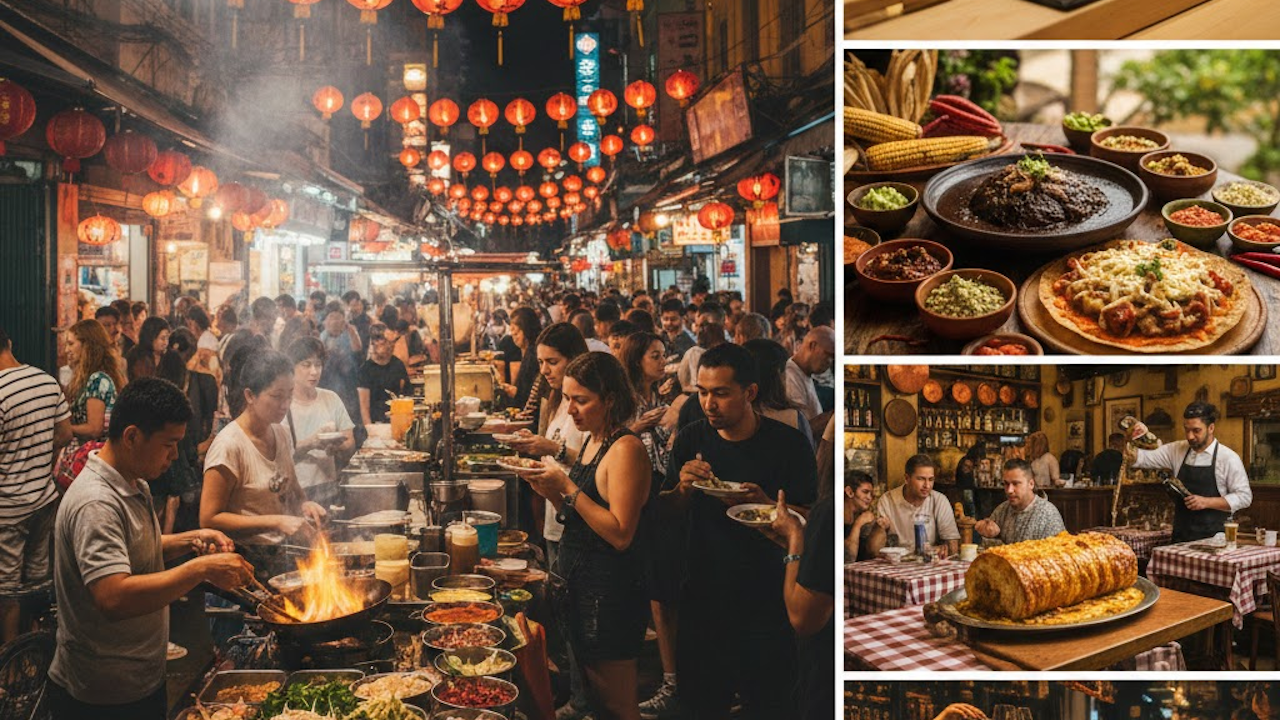
For those who believe that the best way to understand a culture is through its stomach, travel is more than just sightseeing. It is an iterative process of tasting, smelling, and discovering. Culinary exploration allows us to bypass the usual tourist traps and find the literal heartbeat of a city in its kitchens.
From the high-tech neon streets of Tokyo to the sun-drenched hills of Tuscany, here is a guide to the world’s most essential destinations for food-focused travelers.
1. Tokyo, Japan: The Art of Precision
Tokyo holds more Michelin stars than any other city in the world, yet some of its finest meals are found in basement subway stations or standing-only kiosks. The Japanese approach to food is defined by shokunin, the social obligation to master one’s craft.
- What to eat: Authentic Edomae sushi, charcoal-grilled yakitori, and bowls of rich tonkotsu ramen.
- The experience: Visit the Tsukiji Outer Market for a breakfast of kaisendon (seafood bowls) before heading to the upscale Ginza district for a refined kaiseki dinner.
2. Oaxaca, Mexico: The Soul of the Mole
Often called the culinary capital of Mexico, Oaxaca is a land of ancient traditions and complex flavors. This is not the “Tex-Mex” found in international chains. It is a place where corn, chilies, and chocolate are treated with a sense of sacredness.
- What to eat: The seven classic varieties of mole, particularly Mole Negro. Don’t miss tlayudas, which are large, crispy tortillas topped with beans, cheese, and meat.
- The experience: Wander through the Mercado 20 de Noviembre. Here, the “Smoke Alley” offers a sensory overload of grilled meats and fresh salsas prepared right before your eyes.
3. Lyon, France: The Gastronomic Heart
While Paris gets the fame, Lyon is widely considered the true gastronomic capital of France. The city sits at the crossroads of some of the finest agricultural regions in Europe, providing chefs with unparalleled access to poultry from Bresse and cheeses from the Alps.
The Bouchon Tradition
Unique to Lyon are the “Bouchons,” which are small, convivial restaurants that historically served the city’s silk workers. They focus on hearty, meat-centric fare.
| Dish | Description |
| Quenelle | A delicate creamed fish dumpling served in a rich crayfish sauce. |
| Saucisson Brioché | A savory garlic sausage baked inside a soft, buttery brioche loaf. |
| Salade Lyonnaise | Frisée lettuce topped with warm bacon lardons and a poached egg. |
4. San Sebastián, Spain: The Pintxos Crawl
Located in the Basque Country, San Sebastián boasts a stunning coastline and a culinary scene that revolves around social interaction. The local culture of “Pintxos” (the Basque version of tapas) encourages travelers to move from bar to bar, enjoying one small plate and one small drink at each stop.
- The Strategy: Start in the Parte Vieja (Old Town). Look for bars where the counters are piled high with creative appetizers held together by toothpicks.
- The Drink: Pair your meal with Txakoli, a slightly sparkling, dry white wine poured from a height to aerate it.
5. Bangkok, Thailand: A Symphony of Four Flavors
Bangkok is a city that never stops eating. The Thai culinary philosophy relies on a delicate balance of four essential flavors: sweet, sour, salty, and spicy.
- Street Food Excellence: You can find world-class pad thai or green curry on nearly every street corner. For a unique experience, head to the Yaowarat district (Chinatown) after dark when the area transforms into a massive outdoor dining room.
- The Heat: Be prepared for the bird’s eye chili. If you aren’t used to high levels of spice, “mai phet” (not spicy) is a phrase you will want to memorize.
Tips for the Culinary Traveler
To make the most of your food-focused journey, keep these three rules in mind:
- Follow the Crowds: A long line of locals is the most reliable indicator of quality, regardless of how modest the stall looks.
- Eat with the Season: Ingredients are at their peak when they are grown locally. Ask your server what is fresh today rather than sticking to a fixed menu.
- Be Brave: Some of the most rewarding flavors come from ingredients that might seem intimidating at first, such as fermented shrimp paste, tripe, or durian fruit.
Culinary exploration is about stepping outside of your comfort zone. When you eat what the locals eat, you aren’t just a tourist. You are a guest at the global table.