

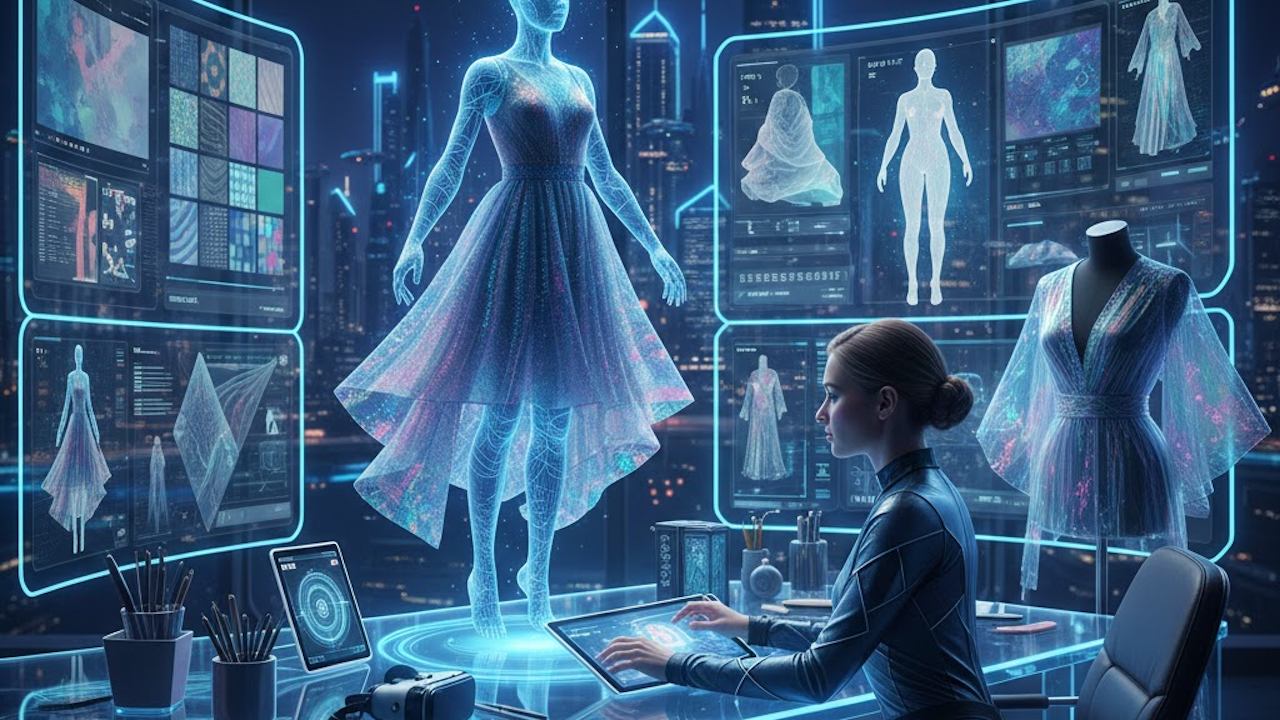
In the expanding universe of virtual worlds, digital avatars serve as the primary vessels for personal expression, social interaction, and identity exploration. These representations range from simple profile pictures on social platforms to fully realized three dimensional characters in immersive games and metaverses. As technology advances, the role of outfit design in shaping these avatars has grown immensely, influencing everything from user engagement to economic systems within digital economies. Outfit design is not merely about aesthetics. It encompasses functionality, technical feasibility, cultural resonance, and the capacity to convey narrative or status in environments where physical presence is absent.
The process of designing outfits for digital avatars requires a unique blend of artistic vision, technical knowledge, and an understanding of how virtual clothing interacts with simulated bodies and environments. Unlike traditional fashion design, which must account for fabric drape on real human forms under gravity and movement, digital design must simulate these behaviors through software while optimizing for performance across devices and networks. This article explores the multifaceted discipline of avatar outfit design, providing insights into principles, methods, challenges, and evolving practices that define this creative field.
The Importance of Outfit Design in Digital Spaces
Outfit design holds profound significance in digital contexts because avatars often act as extensions of the self. Users invest time and resources into customizing their virtual appearances to reflect personality, aspirations, or affiliations. In multiplayer games, distinctive outfits can signal skill level, group membership, or even serve as conversation starters. In social virtual platforms, clothing becomes a form of nonverbal communication, helping individuals stand out or blend in according to preference.
Economically, virtual fashion has emerged as a substantial industry. Creators sell custom items on marketplaces, and platforms host virtual fashion weeks or collaborations with real world brands. This creator economy empowers independent designers to reach global audiences without the constraints of physical production. Users purchase these digital garments to enhance their avatars, sometimes spending significant amounts on limited edition or rare pieces. The psychological impact is notable as well. A well designed outfit can boost confidence in virtual interactions, much like clothing does in the physical world, fostering deeper immersion and emotional connection to the digital self.
Furthermore, outfit design contributes to world building in games and simulations. Consistent visual language through clothing styles helps establish the tone of a universe, whether it is futuristic, historical, fantastical, or contemporary. Poorly designed outfits can break immersion, drawing attention to technical flaws or stylistic inconsistencies. Thus, thoughtful design supports narrative coherence and enhances the overall user experience across genres and platforms.
Core Design Principles
Effective avatar outfit design begins with foundational principles adapted from traditional art and fashion but tailored to the digital medium. These principles guide decisions from initial concept to final implementation, ensuring that the resulting garments look appealing, move naturally, and perform efficiently.
Understanding Avatar Anatomy and Rigging
Avatars possess underlying skeletal structures known as rigs that dictate how bodies deform during animation. Designers must comprehend the specific rig of the target platform or engine to create clothing that follows joint movements without clipping or stretching unnaturally. Humanoid avatars typically feature standard bone hierarchies including spine, limbs, and facial bones, but stylized characters may have exaggerated proportions or additional deformers.
Clothing layers interact with these rigs through weighting, where vertices are assigned influence from nearby bones. A jacket sleeve, for example, requires careful weighting to bend at the elbow without bunching or tearing the mesh. Some platforms support advanced features like blend shapes for muscle flexing or secondary motion for loose fabric. Designers who ignore rigging fundamentals often produce outfits that appear stiff or glitch during gameplay, diminishing quality and user satisfaction.
Different avatar creation systems impose varying constraints. Some allow full custom meshes while others restrict modifications to predefined slots or modular pieces. Understanding these limitations early in the design process prevents wasted effort and ensures compatibility. For instance, certain social platforms emphasize quick customization through color swaps and accessory attachments, whereas high fidelity VR experiences demand detailed sculpting that respects anatomical accuracy.
Silhouette, Proportion, and Movement
Silhouette refers to the overall shape an outfit creates against the background, a critical element for visual recognition from a distance or in crowded scenes. Strong silhouettes make avatars memorable and readable, whether in fast paced action games or slower social simulations. Proportions must harmonize with the avatar’s body type. An outfit that overwhelms a petite avatar or appears too small on a larger frame disrupts visual balance.
Movement adds another dimension. Digital clothing must accommodate animations such as walking, jumping, running, or gesturing. Flowing elements like capes or skirts require simulation systems to react realistically to velocity and external forces such as wind. Designers incorporate constraints or use cloth physics solvers to achieve believable motion without excessive computational cost. In real time applications, overly complex simulations can cause frame rate drops, so optimization techniques like simplified collision meshes or pre baked animations become essential.
Camera perspectives also influence design choices. Many games feature third person views where outfits are seen from behind and above, making back details and overall form important. First person or close up interactions in VR demand high resolution textures and clean topology around the face and hands. Considering these viewpoints during design ensures the outfit performs well across typical usage scenarios.
Color Theory and Visual Harmony
Color selection profoundly affects mood, readability, and cultural interpretation in avatar outfits. Digital displays render colors differently than physical fabrics, with factors like screen calibration, lighting models, and post processing altering appearance. Designers work in color spaces such as sRGB or linear color for accurate previewing within game engines.
Harmonious palettes often employ analogous colors for cohesive looks or complementary schemes for contrast and emphasis. Patterns and prints must scale appropriately to avatar size. A small repeating motif might become muddy when viewed up close, while large graphics could dominate and clash with other elements. Texture variety within color choices adds depth, distinguishing matte fabrics from shiny metallics or translucent materials.
Lighting interaction is integral. Modern rendering pipelines use physically based rendering where materials respond to light sources according to real world physics. A leather jacket reflects highlights differently than cotton cloth. Designers specify albedo, roughness, metallic, and normal maps to control these responses. Testing outfits under various lighting conditions, from bright outdoor scenes to dim interiors, reveals how colors shift and ensures consistent appeal.
Textures, Materials, and Lighting Interaction
Textures provide surface detail beyond basic geometry. High quality texture work elevates an outfit from basic to professional. Diffuse or albedo maps establish base color, while normal maps simulate fine details like stitching or fabric weave without adding polygons. Roughness and metallic maps define how light scatters or reflects, creating the illusion of different material types.
Material authoring tools allow precise control over these properties. Layered materials can combine multiple effects, such as a base fabric with overlaid embroidery or dirt maps for wear and tear. In stylized games, artists often use hand painted textures for a unique aesthetic, whereas realistic projects rely on photogrammetry or procedural generation for authenticity.
Transparency and translucency require special handling. Sheer fabrics, lace, or glass elements need alpha blending or refraction settings that interact correctly with sorting and lighting. Performance considerations arise here too, as complex transparency can impact rendering speed. Designers balance visual richness with technical constraints by using techniques like dithering or simplified transparency where full fidelity is unnecessary.
Technical Aspects of Creation
Creating digital outfits involves a pipeline of specialized tools and techniques. Proficiency in 3D software combined with knowledge of game engine integration separates successful designs from those that fail to function properly.
Modeling and Sculpting Clothing
The modeling stage transforms concept art into three dimensional geometry. Block out the basic shape using low polygon primitives, then refine with subdivision or sculpting tools. Clothing must fit the avatar body with appropriate clearance to avoid intersection during animation. Thickness is often added to give substance, especially for items like coats or armor.
Sculpting programs excel at adding organic details such as folds, wrinkles, and creases that suggest fabric behavior. These high resolution details are later baked into normal maps for real time use. Modular design approaches, where separate pieces like torso, sleeves, and pants are modeled independently, facilitate customization systems and reduce redundancy across multiple outfits.
Topology matters greatly. Clean edge flow following natural body contours ensures smooth deformation. Avoid excessive triangles or ngons that can cause shading artifacts. Retopology tools help convert sculpts into game ready meshes with optimized polygon distribution focused on areas of high deformation or visibility.
UV Unwrapping and Texturing
UV unwrapping projects the three dimensional surface onto a two dimensional plane for texture application. Efficient UV layouts minimize wasted space and stretching, allowing higher texture resolution within memory budgets. Multiple UV sets may be used, one for the main texture and another for lightmaps or detail maps.
Texturing workflows vary by project needs. Hand painting offers artistic control for stylized looks. Photorealistic texturing draws from reference photography or material libraries. Procedural methods using noise functions and layering create variations quickly, useful for generating multiple colorways from a single base design.
Baking transfers details from high poly sculpts to low poly game meshes. This includes normal, ambient occlusion, curvature, and thickness maps. Proper baking settings prevent artifacts like edge bleeding or incorrect directionality. The resulting maps enable detailed appearances at low computational cost, a necessity for real time applications.
Rigging and Simulation
Rigging assigns the clothing mesh to the avatar skeleton through skin weights. Automatic weighting provides a starting point, but manual painting refines influence to prevent unwanted deformation in areas like shoulders or hips. Corrective blend shapes address specific problem poses where standard weighting falls short.
Cloth simulation brings life to garments. Physics engines calculate vertex positions based on forces, constraints, and collisions with the body and environment. Parameters control stiffness, damping, and gravity response. For performance, designers use simplified proxy meshes for collision detection and limit simulation to key areas rather than the entire outfit.
Some platforms support runtime simulation while others require precomputed animations or vertex animations baked into the mesh. Understanding the target platform’s capabilities guides whether to invest in complex dynamic systems or opt for more static but reliable solutions.
Optimization for Real-Time Rendering
Real time rendering demands efficiency. Polygon counts must stay within platform limits, often measured in thousands rather than millions for clothing items. Level of detail systems swap high resolution versions for lower ones based on distance from camera, preserving performance in populated scenes.
Texture resolution and compression affect memory usage and load times. Power of two dimensions work best with most hardware. Mipmapping generates smaller versions for distant views, reducing aliasing. Material complexity, including the number of texture samples and shader instructions, should be minimized without sacrificing essential visual quality.
Batch rendering and instancing help when multiple avatars wear similar items. Shared materials and atlased textures reduce draw calls. Profiling tools within engines identify bottlenecks, allowing targeted optimization. The goal is an outfit that looks detailed up close yet maintains frame rates during intense gameplay or crowded virtual gatherings.
Platform and Genre Considerations
Design approaches shift dramatically depending on the platform and genre. What works in one context may fail in another due to technical, aesthetic, or social factors.
Stylized versus Realistic Avatars
Stylized avatars, common in games like Fortnite or Roblox, feature exaggerated proportions, bold colors, and simplified forms. Outfit design here emphasizes readability, vibrant patterns, and compatibility with cell shaded or cartoon rendering. Details can be larger and more graphic to read at typical viewing distances.
Realistic avatars, found in titles aiming for photorealism or in high fidelity VR, require outfits that mimic real world construction and material properties. Subtle wear patterns, accurate stitching, and nuanced color variation become important. Lighting and shading must align with the overall scene realism, demanding higher fidelity textures and more sophisticated material setups.
Hybrid approaches exist where stylized characters receive semi realistic clothing or vice versa. Consistency within the project’s art direction remains paramount. Breaking style rules intentionally can create striking effects but requires careful execution to avoid visual dissonance.
Game Specific Constraints
Popular battle royale or extraction shooters often feature extensive customization through skins and cosmetics. Outfits must withstand scrutiny in replays and highlight moments while functioning during rapid movement and combat. Attachment points for weapons or gear influence design, as do team color requirements in some modes.
Social simulation games and life sims prioritize everyday wearability and variety. Users expect seasonal collections, formal wear, and casual options that reflect real world trends or fantasy themes. Modular systems allowing mixing and matching pieces increase replayability and personal expression.
Massively multiplayer online games balance individual flair with performance across thousands of simultaneous users. Outfits may include particle effects for magic or status indicators, but these must be optimized to avoid network or rendering strain. Guild or faction specific designs can foster community identity.
Social and Metaverse Platforms
Virtual social spaces and metaverses emphasize self expression and social signaling over competitive mechanics. Outfit design here often leans toward fashion forward or avant garde styles, with users seeking uniqueness. Platforms may support user generated content with varying degrees of moderation and technical standards.
Events such as virtual concerts or fashion shows highlight outfit design as central activity. Designers create for specific themes or collaborate across communities. Interoperability remains a challenge, with efforts toward standards that allow items to transfer between compatible platforms.
Accessibility features, such as color blind friendly palettes or simplified models for lower end hardware, broaden participation. Platforms increasingly recognize diverse body representations, requiring outfits that adapt gracefully to different avatar configurations including non humanoid forms.
The Creative Process: From Concept to Final Asset
A structured creative process helps manage the complexity of digital outfit design. It typically begins with research and ideation before moving through modeling, texturing, and integration phases.
Research involves gathering references from fashion history, contemporary trends, material science, and existing virtual creations. Mood boards collect color palettes, silhouette ideas, and detail inspirations. Understanding the target audience and platform culture informs choices that resonate with users.
Concept art translates ideas into visual form. Multiple iterations explore variations in style, color, and accessory combinations. Feedback from team members or community previews refines the direction before committing to three dimensional work.
Once modeling commences, maintain version control and organized file structures. Regular exports to the game engine allow early testing of deformation and performance. Iterative refinement addresses issues discovered during animation review or playtesting.
Final polish includes creating variants for different color schemes or levels of detail. Documentation of creation methods aids future updates or similar projects. Submission to platforms involves adhering to specific guidelines for file formats, naming conventions, and metadata.
Customization Systems and Player Agency
Successful platforms empower users through robust customization. Outfit design must anticipate how players will interact with and modify the base creations.
Slot based systems categorize items into categories such as headwear, tops, bottoms, footwear, and accessories. This structure prevents conflicts and enables easy swapping. Designers create pieces that layer logically, considering thickness and coverage to avoid visual clipping.
Color and material customization extends the lifespan of individual items. Supporting multiple texture variations or dye channels allows personalization without new geometry. Some systems permit users to upload custom patterns within guidelines, expanding creative possibilities while managing content moderation.
Procedural generation introduces variability. Algorithms can randomize elements within designer defined ranges, producing unique combinations from base assets. This technique reduces asset creation burden while offering players surprising and personalized results.
Balancing designer intent with player freedom requires thoughtful constraints. Too much restriction limits expression. Too little risks visual chaos or inappropriate combinations that undermine the intended aesthetic of the world.
Cultural Sensitivity and Inclusive Design
Digital spaces reach global audiences, making cultural sensitivity essential in outfit design. Representations of traditional garments, symbols, or styles must be handled with respect and accuracy to avoid appropriation or offense.
Research into cultural contexts informs authentic interpretations. Collaboration with cultural consultants or community members provides valuable perspective. When drawing inspiration from specific heritages, clear attribution and respectful adaptation demonstrate good practice.
Inclusivity extends to body diversity. Avatars increasingly support varied heights, weights, and abilities. Outfit designs should accommodate these differences without requiring extensive adjustments. Adaptive clothing options, such as items that work with mobility aids or accommodate different torso proportions, promote broader participation.
Gender expression and identity representation benefit from flexible design. Many platforms move beyond binary defaults, offering fluid customization. Outfits that avoid reinforcing stereotypes and instead celebrate variety contribute to welcoming environments.
Age appropriate content considerations apply particularly to platforms with younger users. Design guidelines often restrict certain themes or levels of realism in clothing to maintain suitable spaces for all age groups.
Economic Aspects: Virtual Fashion Markets and Creator Economy
Virtual fashion represents a growing economic sector. Designers can monetize creations through direct sales, subscriptions, or revenue sharing on platform marketplaces. Understanding these systems helps creators build sustainable practices.
Pricing strategies balance accessibility with perceived value. Limited editions, collaborations, and rarity mechanics drive demand. Secondary markets for resale introduce additional dynamics, sometimes leading to significant value appreciation for popular items.
Intellectual property protection matters. Watermarking, blockchain verification for NFTs, and platform enforcement mechanisms help creators retain control over their work. Licensing agreements with real world brands bring mutual benefits but require careful negotiation of rights and usage terms.
The creator economy extends beyond individual sales. Successful designers build brands, release collections, and cultivate followings through social media and virtual events. Community engagement, tutorials, and behind the scenes content foster loyalty and support long term careers in digital fashion.
Challenges in Digital Outfit Design
Despite its creative rewards, avatar outfit design presents notable challenges that require problem solving skills and adaptability.
Technical limitations persist even as hardware improves. Polygon budgets, texture memory, and simulation complexity constrain ambition. Cross platform compatibility adds difficulty when different devices or engines interpret assets differently.
Animation fidelity varies. Outfits designed for one set of animations may deform poorly with another. Extensive testing across poses, transitions, and interactions is necessary but time consuming.
Content moderation and community standards create boundaries. What seems appropriate to one designer may violate platform rules or offend users. Clear guidelines and responsive support systems help navigate these issues.
Keeping pace with evolving technology and trends demands continuous learning. New rendering techniques, input methods like hand tracking in VR, and shifting user preferences require designers to adapt workflows and aesthetics regularly.
Current Trends and Innovations
Several trends shape contemporary avatar outfit design. Sustainability concepts appear in virtual contexts through designs that minimize resource use or promote timeless rather than disposable aesthetics. Modular and upgradable systems reduce waste in digital libraries.
Integration of real world fashion continues through partnerships. Brands leverage virtual spaces for marketing, exclusive drops, and experimentation free from physical manufacturing constraints. These collaborations expose traditional fashion audiences to digital possibilities.
Artificial intelligence assists in various stages. Generative tools suggest patterns, automate texturing variations, or even create base meshes from descriptions. While not replacing human creativity, these technologies accelerate iteration and lower barriers for new designers.
Interoperability initiatives aim to allow outfits to function across multiple virtual worlds. Standards for file formats, rigging compatibility, and material definitions support a more open ecosystem where users carry their digital wardrobes between experiences.
Fashion cycles in virtual spaces often mirror or accelerate physical trends. Streetwear influences, retro revivals, and avant garde experiments appear rapidly as communities share and remix designs.
The Future of Avatar Fashion
Looking ahead, avatar outfit design will likely incorporate more advanced simulation, deeper personalization, and tighter connections between physical and digital realms. Improved physics engines may enable more realistic cloth behavior with less manual tuning. Machine learning could predict optimal weighting or suggest improvements based on usage data.
Digital twins of physical clothing may become commonplace, allowing users to scan real garments and wear them virtually or vice versa. Augmented reality overlays could blend virtual outfits with physical environments seamlessly.
As metaverses mature, fashion may evolve into new categories unique to digital existence, unbound by gravity, material limits, or traditional construction methods. Floating elements, morphing structures, and light based adornments could define future aesthetics.
Ethical considerations will grow in importance. Questions around data privacy in personalized design, environmental impact of always on virtual worlds, and equitable access to creation tools will influence how the field develops.
Practical Tips for Aspiring Designers
Aspiring designers benefit from deliberate practice and strategic learning. Begin with foundational skills in 3D modeling and texturing using accessible software. Many free or low cost options provide robust capabilities for learning and prototyping.
Study both traditional fashion and digital art. Understanding garment construction, draping, and historical styles informs better digital interpretations. Analyze existing virtual outfits critically, noting what succeeds technically and aesthetically.
Build a portfolio showcasing range and technical competence. Include process documentation demonstrating problem solving. Participate in community challenges or platform creation programs to gain feedback and visibility.
Collaborate with others. Programmers, animators, and fellow designers offer complementary perspectives that improve final results. Networking within virtual communities opens opportunities for commissions or team projects.
Stay informed about platform updates, new tools, and industry discussions. Experiment with emerging technologies like AI assistance or new material workflows. Continuous adaptation ensures relevance in a fast moving field.
Conclusion
Designing outfits for digital avatars stands at the intersection of art, technology, and human expression. It demands creativity tempered by technical discipline, cultural awareness paired with innovation, and individual vision aligned with platform realities. As virtual worlds become more integral to daily life, the outfits that populate them will continue to shape identities, communities, and economies.
The principles and processes outlined here provide a foundation for thoughtful practice. Whether creating for personal enjoyment, professional opportunities, or community contribution, designers who approach the craft with care and curiosity will find rich rewards. The digital wardrobe remains an open frontier, inviting ongoing exploration and reinvention.
The future promises even greater possibilities as tools evolve and audiences expand. Those who master the balance between beauty and function, between individual expression and collective experience, will define the visual language of tomorrow’s virtual selves. Through careful design, every avatar can tell a compelling story, one outfit at a time.