

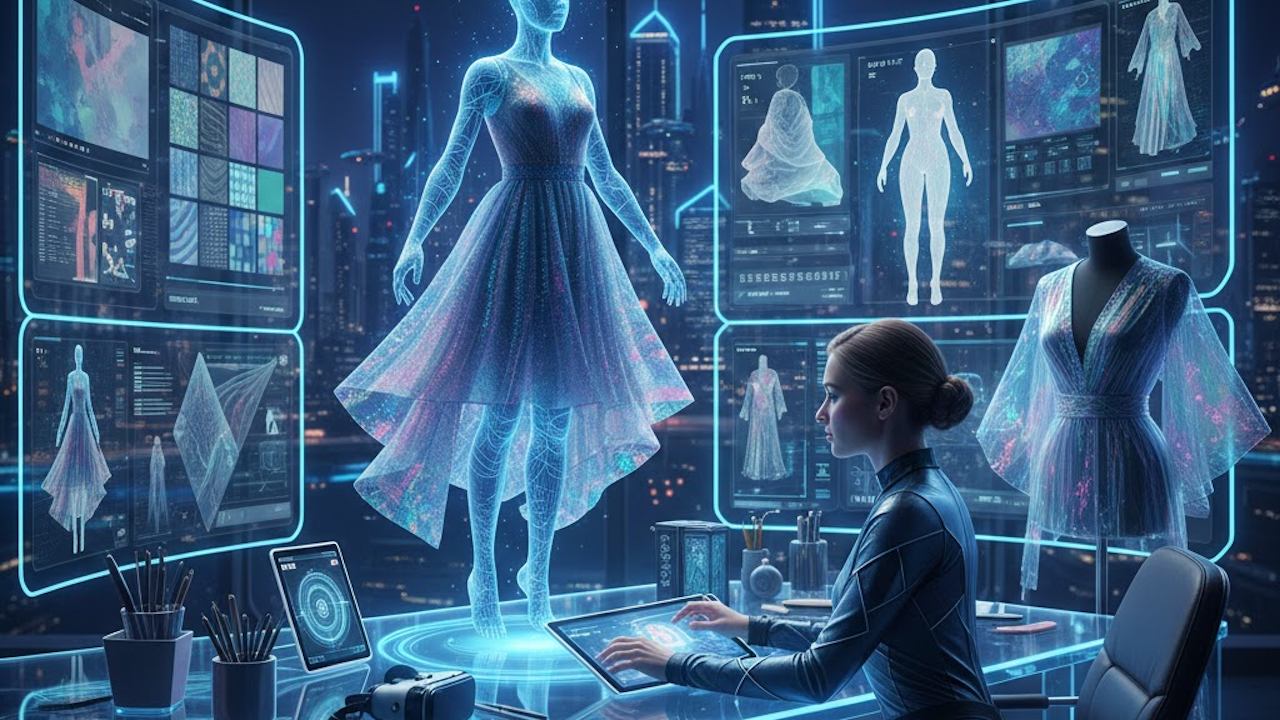
In the ever-expanding realm of virtual worlds, digital avatars serve as our online personas, representing us in video games, social platforms, virtual reality environments, and even professional meetings. Designing outfits for these avatars is not just a creative endeavor; it is a blend of artistry, technology, and cultural expression that allows users to project their identity in digital spaces. This article delves into the intricacies of avatar outfit design, exploring its fundamentals, processes, tools, trends, and future possibilities. Whether you are a novice creator or an experienced designer, understanding how to craft compelling virtual attire can enhance user engagement and immersion.
The Importance of Avatar Outfits in Digital Ecosystems
Digital avatars have become ubiquitous in modern life. From massively multiplayer online games like World of Warcraft to social metaverses such as Roblox and Decentraland, avatars are the vessels through which we interact in virtual environments. Outfits play a pivotal role in this interaction, as they convey personality, status, and style without the constraints of physical reality.
One key aspect is personalization. Users often spend significant time and sometimes real money customizing their avatars’ clothing to reflect real-world fashion preferences or fantastical ideals. For instance, a player might dress their avatar in sleek cyberpunk gear for a dystopian game or elegant formal wear for a virtual conference. This customization fosters a sense of ownership and emotional connection, which in turn boosts retention rates for platforms. Studies from gaming industries show that players who engage deeply with avatar customization are more likely to remain active and make in-app purchases.
Moreover, outfits in digital spaces can transcend traditional boundaries. Unlike physical clothing, virtual outfits can incorporate elements like glowing effects, shape-shifting fabrics, or impossible geometries, opening up endless creative avenues. Designers must balance realism with innovation to create attire that feels authentic yet exciting.
Historical Evolution of Avatar Outfit Design
The concept of dressing digital avatars traces back to early computer graphics and video games. In the 1980s, simple pixelated characters in games like The Legend of Zelda featured basic clothing variations, often limited by hardware constraints. As technology advanced in the 1990s, titles such as The Sims introduced more detailed customization, allowing players to mix and match outfits from predefined wardrobes.
The 2000s marked a turning point with the rise of online multiplayer games and virtual worlds like Second Life. Here, users could create and sell custom outfits using in-game tools, fostering a user-generated economy. This democratization of design empowered amateur creators to experiment with textures, patterns, and styles, leading to vibrant marketplaces.
Today, with the advent of blockchain and non-fungible tokens (NFTs), outfits for avatars in platforms like The Sandbox or Axie Infinity can be owned as digital assets. This evolution has shifted design from mere aesthetics to valuable commodities, where rarity and exclusivity drive demand.
Core Principles of Designing Outfits for Avatars
Effective avatar outfit design relies on several foundational principles that ensure the final product is visually appealing, functional, and adaptable.
First, consider anatomy and proportions. Avatars come in various body types, from humanoid to abstract forms. Outfits must fit seamlessly, avoiding clipping issues where clothing intersects with the body model. Designers often start with base meshes, which are 3D models of the avatar’s form, and build layers of clothing on top. Symmetry and balance are crucial; an asymmetrical jacket might look edgy, but it needs to align properly during animations like walking or jumping.
Color theory is another essential element. Virtual environments can have dynamic lighting, so colors should be chosen for visibility and harmony. High-contrast palettes work well for action-oriented games, while subtle tones suit narrative-driven experiences. Patterns and textures add depth; for example, a leather jacket might use bump mapping to simulate wrinkles, enhancing realism.
Functionality cannot be overlooked. Outfits should not hinder gameplay. In a fast-paced shooter, bulky armor might provide thematic appeal but could obstruct movement animations if not optimized. Accessibility is also key; designs should accommodate color-blind users by offering alternative schemes.
Finally, cultural sensitivity matters. Avatars are global, so outfits inspired by real-world cultures should be respectful to avoid appropriation. Inclusive designs that cater to diverse genders, ethnicities, and abilities promote broader appeal.
Tools and Software for Creating Avatar Outfits
A variety of tools empower designers to bring their visions to life. For beginners, user-friendly platforms like Roblox Studio or VRoid Studio offer drag-and-drop interfaces for assembling outfits from pre-made assets. These tools include libraries of fabrics, accessories, and colors, making it easy to prototype ideas.
For professionals, advanced software like Blender or Maya is indispensable. These 3D modeling programs allow for intricate sculpting of garments, rigging them to avatars, and simulating physics like cloth draping. Texturing tools such as Substance Painter enable the application of realistic materials, from silk sheen to metallic gloss.
Integration with game engines like Unity or Unreal Engine is common. Designers export outfits as assets, ensuring compatibility with lighting and shading systems. For metaverse platforms, tools like Marvelous Designer specialize in virtual clothing simulation, mimicking how fabrics fold and flow in real life.
Collaboration tools have also emerged. Platforms like Figma or Adobe XD facilitate team-based design, where artists sketch concepts before moving to 3D implementation. Additionally, AI-assisted tools are gaining traction, using machine learning to generate outfit variations based on user inputs, speeding up iteration.
The Design Process: From Concept to Implementation
Designing an avatar outfit typically follows a structured workflow.
- Conceptualization: Begin with ideation. Sketch rough ideas on paper or digitally, considering the avatar’s role. Is it a warrior, a socialite, or a explorer? Research references from fashion history, pop culture, or nature to inspire unique elements.
- Modeling: Create a 3D model of the outfit. Start with basic shapes, then refine details like seams, buttons, or embroidery. Ensure the model is low-poly for performance in real-time environments, especially on mobile devices.
- Texturing and UV Mapping: Unwrap the 3D model onto a 2D plane (UV mapping) and apply textures. This step involves painting colors, adding patterns, and incorporating effects like transparency for sheer fabrics.
- Rigging and Animation: Attach the outfit to the avatar’s skeleton. Test animations to ensure the clothing moves naturally, using techniques like cloth simulation to handle dynamics.
- Optimization and Testing: Reduce file sizes and polygon counts. Test in the target environment for bugs, such as texture stretching or lighting artifacts. Gather feedback from users to iterate.
- Deployment: Upload the outfit to the platform, whether as a free asset, paid item, or NFT. Monitor usage and update based on trends.
This process can take hours for simple designs or weeks for complex ones, depending on scope.
Current Trends in Avatar Fashion
Avatar outfit design mirrors and influences real-world fashion. Minimalism is popular, with clean lines and neutral tones dominating platforms like Meta’s Horizon Worlds. Conversely, maximalism thrives in games like Fortnite, where bold, crossover collaborations (e.g., with luxury brands) create hype.
Sustainability is an emerging theme. Virtual fashion reduces physical waste, and designers are creating “eco-friendly” digital lines to promote awareness. Gender-fluid designs are on the rise, allowing avatars to mix traditionally masculine and feminine elements freely.
Augmented reality (AR) integration blurs lines, with apps like Snapchat letting users try virtual outfits on real bodies. NFT fashion, seen in collections from brands like Gucci or Nike, adds exclusivity, where owners can flaunt rare pieces across metaverses.
Inclusivity trends include adaptive clothing for avatars with disabilities, such as wheelchairs or prosthetics, ensuring representation.
Technical Challenges and Solutions
Designing for avatars presents unique hurdles. Performance optimization is critical; high-detail outfits can cause lag in multiplayer settings. Solutions involve level-of-detail (LOD) systems, where outfits simplify at a distance.
Cross-platform compatibility is another issue. An outfit designed for PC might not render well on consoles or VR headsets. Standardized formats like glTF help mitigate this.
Intellectual property concerns arise with user-generated content. Platforms implement moderation to prevent copyright infringement, such as unauthorized replicas of branded clothing.
On the positive side, advancements in procedural generation allow for infinite outfit variations, reducing manual work.
Social and Cultural Implications
Avatar outfits influence social dynamics in digital spaces. They can signal group affiliations, like guild uniforms in MMOs, or spark conversations in social VR. However, they also highlight inequalities; premium outfits might create divides between paying and non-paying users.
Culturally, virtual fashion explores identity fluidity. Users experiment with styles unattainable in reality, fostering self-expression. This has therapeutic benefits, aiding those with body image issues.
Ethically, designers must avoid stereotypes. For example, exoticizing cultural attire can perpetuate harm. Community guidelines and diverse teams help address this.
The Future of Avatar Outfit Design
Looking ahead, AI will revolutionize design. Generative models could create outfits from text descriptions, like “a steampunk dress with neon accents.” Quantum computing might enable hyper-realistic simulations.
Interoperability across metaverses is a goal, allowing outfits to travel between platforms via standards like those proposed by the Metaverse Standards Forum.
With the growth of extended reality (XR), outfits could interact with the physical world, such as AR overlays on real clothing.
Sustainability will deepen, with virtual fashion shows replacing physical ones to cut carbon footprints.
In conclusion, designing outfits for digital avatars is a dynamic field at the intersection of creativity and technology. It empowers users to express themselves unbound by physical limits, while challenging designers to innovate responsibly. As virtual worlds expand, the art of avatar fashion will continue to evolve, shaping how we connect in the digital age. Whether crafting a simple tunic or an elaborate ensemble, the key lies in blending form, function, and flair to create memorable experiences.