

In 2025 the English language did not simply evolve. It fractured, remixed, and reassembled itself at the speed of a scrolling thumb. Social platforms rewarded anything that sparked an immediate reaction. Artificial intelligence flooded feeds with content that looked human but felt hollow. Younger users, particularly Gen Z and Gen Alpha, turned everyday moments into elaborate systems of scoring, farming, and calling out. Dictionaries noticed. Merriam-Webster named “slop” its Word of the Year. Oxford University Press crowned “rage bait.” Both choices pointed to the same underlying exhaustion: too much noise, too little signal, and a growing awareness that the internet was deliberately messing with our heads.
Yet the year’s linguistic creativity extended far beyond those two official selections. A constellation of phrases captured the contradictions of the moment. People spoke of farming aura while doomscrolling through slop. They cheered “let me cook” one moment and admitted they were cooked the next. They clocked tea, paid fanum tax, and gave or received meticulous tiers of praise measured in bites taken or left behind. These expressions were not random. They formed a shared code for navigating algorithmic outrage, performative self-presentation, digital fatigue, and the small rebellions of friendship and humor that still felt human.
Slop: The Low-Quality Flood We Could Not Escape
Merriam-Webster defined slop as digital content of low quality produced usually in quantity by means of artificial intelligence. The word itself carried centuries of baggage. In the 1700s it meant soft mud. Later it described pig feed made of scraps. By the nineteenth century it had broadened to any rubbish or worthless product. In 2025 the term snapped back into relevance with new precision.
The flood arrived everywhere. Absurd AI-generated videos of cats playing pianos or historical figures rapping. Off-kilter advertising images that looked almost right until you noticed the extra fingers. Cheesy propaganda. Fake news articles written in fluent but soulless prose. Junk novels churned out by the thousands and listed on Amazon. Even workplace documents began to carry the telltale signs of machine generation: repetitive phrasing, generic insights, and a strange lack of voice. Commentators began calling some of it workslop, the reports and emails that wasted everyone’s time while pretending to add value.
What made slop sting was not just its volume but its uncanny ability to mimic competence. It looked professional enough to fool casual viewers and busy executives. It sounded confident enough to spread before fact-checkers caught up. Yet beneath the surface it offered nothing original, nothing felt. The word slop carried judgment without needing a long explanation. Calling something slop was both diagnosis and dismissal. It acknowledged the mechanical origin while refusing to grant it the dignity of real creation. In a year when fears about AI replacing writers, artists, and analysts reached new heights, slop became the shorthand for everything that felt like a cheap substitute.
Rage Bait: The Engine of the Outrage Economy
Oxford’s choice, rage bait, described online content deliberately designed to elicit anger or outrage by being frustrating, provocative, or offensive, typically posted to increase traffic or engagement. The term had existed before 2025, but its usage tripled in the twelve months leading up to the announcement. Public voting helped select it after more than thirty thousand people participated over three days.
Rage bait represented an evolution from older attention tactics. Clickbait promised curiosity. Rage bait weaponized emotion. A headline did not merely tease. It accused, exaggerated, or framed an issue in the most inflammatory way possible. A video clip was trimmed to remove context. A quote was presented without the surrounding sentence that softened it. The goal was never neutral information. The goal was the spike in comments, shares, and watch time that followed collective fury.
By mid-2025 the phenomenon had become impossible to ignore. Political posts, culture-war content, and even seemingly innocuous topics such as parenting styles or restaurant etiquette were engineered to trigger. Algorithms noticed the engagement and amplified it further. Users reported feeling drained yet unable to look away. Oxford’s president of languages noted that the word signaled a deeper shift in how people discussed attention itself. The internet had moved from grabbing curiosity to hijacking emotions. Rage bait and brain rot formed a destructive cycle: outrage drove engagement, platforms rewarded it, and constant exposure left people mentally exhausted. The phrase gave users a way to name the manipulation they sensed but struggled to articulate.
Aura Farming: Performing Cool Without Trying Too Hard
Aura farming appeared on Oxford’s shortlist and dominated conversations across TikTok, anime communities, and Gen Alpha circles. The phrase combined two existing slang senses. Aura referred to the intangible quality of coolness, charisma, or presence that some people seemed to radiate effortlessly. Farming borrowed from gaming, where players repeat actions to accumulate resources or points.
To farm aura was to do something deliberately yet appear effortless in order to increase one’s perceived coolness. A slow walk into a room. A perfectly timed glance away from the camera. A casual toss of an object that landed exactly where intended. The best aura farming moments looked accidental. The worst ones looked calculated and therefore lost points immediately. A viral dance originating with a young Indonesian boy in 2024 helped popularize the visual language, but by 2025 the concept had spread far beyond any single clip. Anime protagonists leveling up their presence provided endless reference material. Real life supplied daily opportunities to score or lose aura in group chats and school hallways.
The term revealed a generation acutely aware of how they appeared to others. Social media had turned every outing into potential content. Aura farming gave people a playful framework for thinking about self-presentation without descending into pure cynicism. It acknowledged the performance while celebrating the moments when the performance felt natural. Negative aura existed as the counterpart. One wrong move, one obvious attempt, and the score dropped. The language turned social perception into a visible, debatable system that anyone could reference with a single phrase.
Let Me Cook, I’m Cooked: The Full Arc of Creative Risk
The cooking metaphor expanded dramatically in 2025. “Let me cook” became an invitation to watch someone attempt something ambitious, creative, or skillfully executed. It carried confidence and a touch of showmanship. The speaker asked for space and time to deliver. Success meant the dish, the plan, or the performance came out perfectly. Partial success earned the gentler “she chewed.” True excellence received the ultimate compliment: “she ate.”
Failure had its own language. “I’m cooked” or simply “cooked” signaled that a person was exhausted, out of options, or about to face consequences. The phrase worked whether the situation was literal (too many deadlines) or metaphorical (a relationship or reputation beyond saving). “I’m fried” served as a close cousin. Both expressions captured the moment when effort had been expended and the outcome was no longer in doubt.
The cooking family of phrases reflected a culture that celebrated bold attempts while offering graceful ways to acknowledge limits. In creative communities, gaming circles, and even everyday planning conversations, the language turned potential embarrassment into shared theater. A friend announcing a risky new project could be met with “let him cook” rather than immediate skepticism. When the project collapsed, “he’s cooked” arrived with sympathy rather than mockery. The phrases created emotional safety around trying and failing in public.
Fanum Tax and the Economics of Friendship
Fanum tax originated with a popular Twitch streamer and spread into mainstream TikTok usage. The core idea was simple and affectionate. When someone had food, friends could claim a small portion without asking. The tax represented the unspoken price of companionship. Refusing to pay it marked a person as stingy or overly serious. Paying it generously earned social credit.
By 2025 the phrase had loosened from its food-specific origins. People spoke of paying fanum tax in other contexts: sharing credit for an idea, lending emotional support, or tolerating a friend’s quirks. The humor remained, but the underlying value stayed consistent. Good relationships involved small, cheerful transfers of resources and patience. The phrase gave a lighthearted name to the micro-economies that sustain friendships. It also provided a gentle way to call out stinginess without starting an argument. “You owe fanum tax on that story” could defuse tension while reminding everyone of the social contract.
Clock It and Clock That Tea: Anticipating the Narrative
“Clock it” meant to draw attention to something that would matter later. The phrase functioned as a sophisticated “I told you so” delivered in advance. A viewer spotting foreshadowing in a show or a friend noticing tension in a group could say “clock it” to mark the moment for future reference. When the predicted development arrived, the original observer earned quiet satisfaction.
“Clock that tea” added the element of gossip and revelation. Tea had long meant juicy information. Clocking it meant noticing the significance before others did. The expression carried a sense of perceptual sharpness. It praised the person who read the room or the timeline accurately. Both phrases rewarded attentiveness in an environment where information moved quickly and context often disappeared. They turned passive consumption into active interpretation. In group chats and comment sections, clocking moments became a way to demonstrate social intelligence and build shared memory.
Ate, Chewed, Nibbled: A Hierarchy of Excellence
The tiered language of consumption moved from ballroom and queer communities into broader usage. “She ate” or “he ate” meant the performance, outfit, or moment achieved absolute perfection. Nothing remained to criticize or improve. “She chewed” indicated strong execution with minor flaws still visible. “She nibbled” acknowledged effort that fell short of full success but still deserved recognition.
The system offered nuance that simple praise lacked. It allowed friends to celebrate without inflating expectations or delivering backhanded compliments. In 2025 the language appeared across fashion content, music reactions, sports highlights, and everyday compliments. A well-executed presentation at work could earn “you ate that.” A solid but unremarkable date might receive the gentler “it was a nibble.” The phrases traveled because they balanced honesty with encouragement. They gave people vocabulary for degrees of success rather than forcing every outcome into binary win or loss.
Additional Phrases That Shaped the Conversation
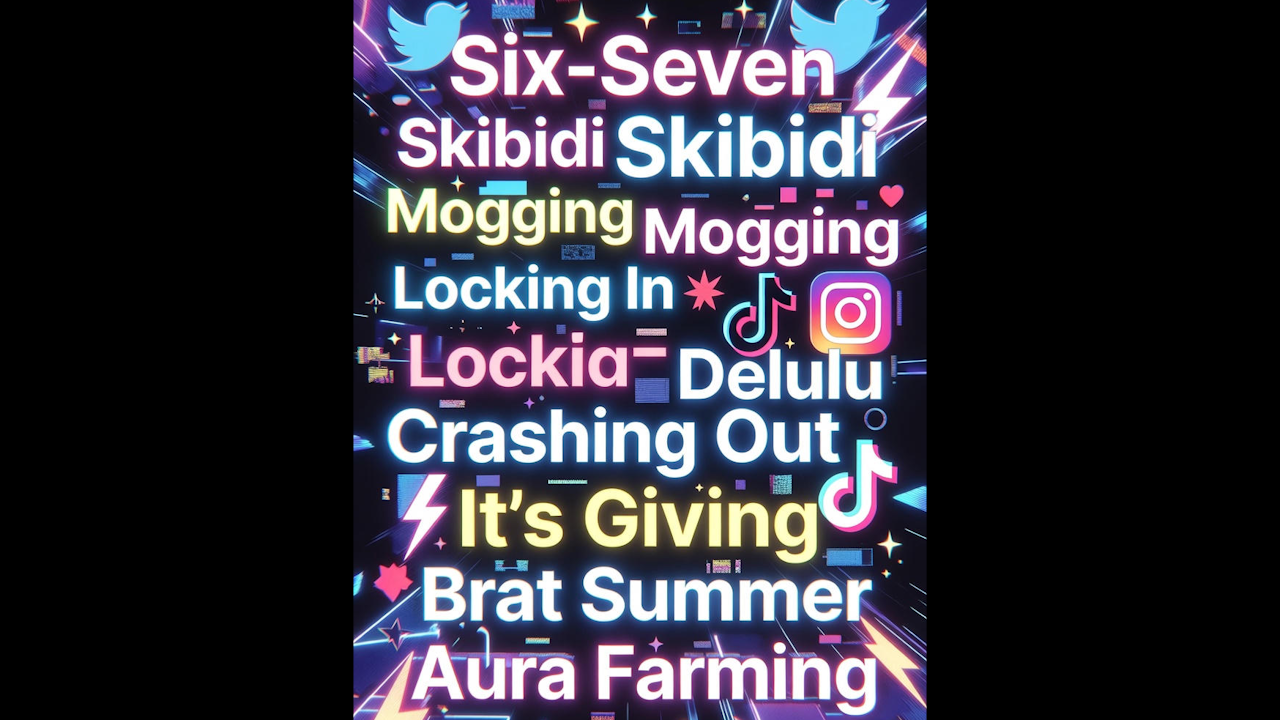
Several other expressions deserve mention for the frequency and cultural weight they carried. “Brain rot” described the mental fog that followed prolonged exposure to low-quality online content. It paired naturally with slop, naming the effect rather than the cause. “Touch grass” served as the perennial antidote, urging people to step away from screens and engage with physical reality. “Delulu” remained useful shorthand for delusional optimism or denial. “For the plot” justified impulsive or chaotic choices as necessary story development. “Lock in” demanded total focus before a demanding task. “W” and “L” continued as the simplest possible scoreboard for any outcome. The nonsense phrase “6-7” spread as pure absurdist joy, repeated for the pleasure of shared silliness rather than any literal meaning.
The looksmaxxing ecosystem contributed “mewing” (positioning the tongue to improve jawline, later used as an excuse to stay silent) and “mogger” (someone whose appearance effortlessly overshadowed others). These terms lived at the intersection of self-improvement culture and ironic detachment.
What the Phrases Revealed About 2025
Taken together, the hottest phrases of 2025 painted a portrait of a culture negotiating several simultaneous pressures. Artificial intelligence had made content abundant and often hollow, prompting the sharp dismissal contained in “slop.” Platforms had perfected the extraction of emotional engagement, making “rage bait” a necessary diagnostic term. Self-presentation had become constant and quantifiable, giving rise to “aura farming” and its elaborate scoring systems. Creative risk and social support required new language of encouragement and graceful failure, supplied by cooking metaphors and fanum tax. Perception and narrative control needed precise tools, which “clock it” and the eating hierarchy provided.
The phrases also demonstrated resilience. Users did not merely suffer the conditions of 2025. They named them, mocked them, and built small communities around shared recognition. Humor, affection, and playful competition persisted inside the very systems designed to exploit attention. Language became both symptom and partial cure. By articulating the mechanisms of manipulation and fatigue, people gained a measure of distance from them. By celebrating small acts of coolness, focus, and generosity, they preserved space for human connection amid the noise.
As 2026 began, many of these expressions continued to circulate while new ones emerged. Some would fade into niche usage. Others would embed themselves more deeply. What remained clear was that the linguistic creativity of 2025 had not been random. It had been a collective effort to decode an environment that often felt deliberately indecipherable. The phrases gave people handles on experiences that otherwise threatened to overwhelm. In that sense they performed one of language’s oldest functions: helping humans make sense of the world they had built and the tools that were reshaping it.