

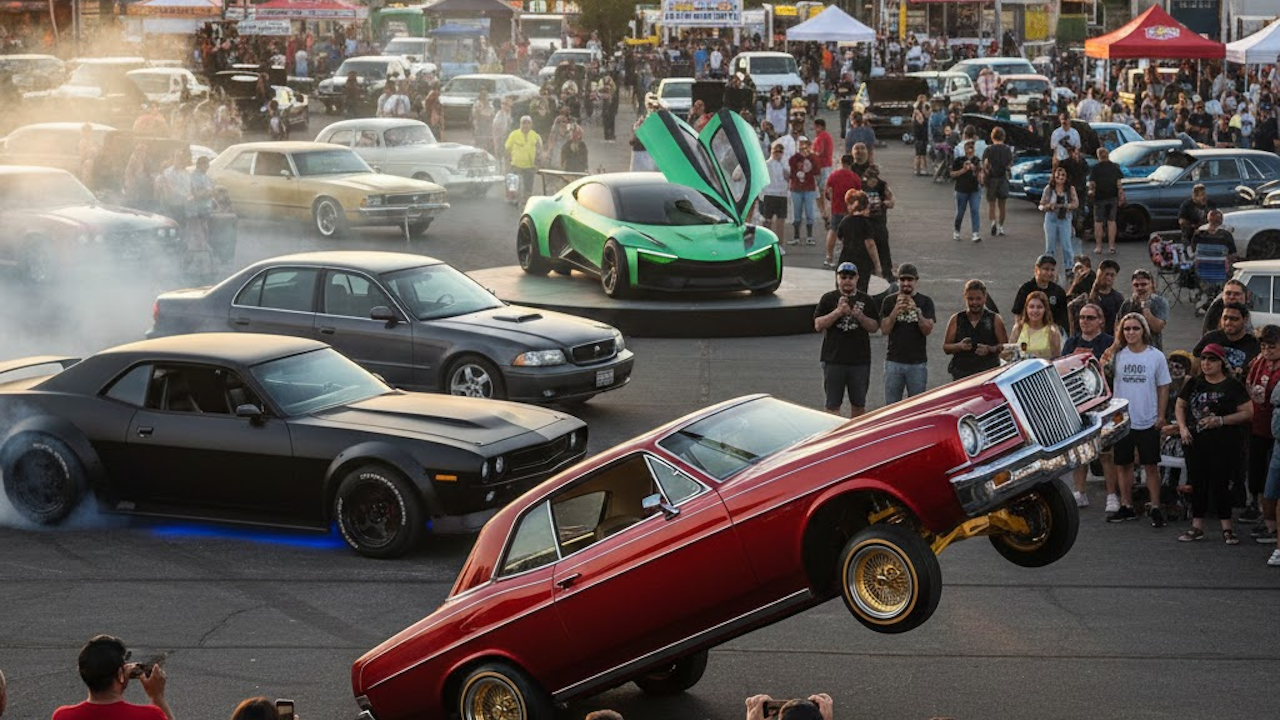
Walk through any major automotive event today and the shift is impossible to ignore. Rows of perfectly restored classics still draw respectful nods from purists, yet the real energy, the gasps, the phone cameras raised high, and the judges handing out top honors cluster around something else entirely. These are the custom rides. Vehicles that began life as ordinary transportation or forgotten projects but emerged as rolling statements of creativity, engineering daring, and personal vision. They are not merely participating in car shows anymore. They are taking them over.
The transformation did not happen overnight. Early automobile exhibitions in the late 1890s and early 1900s existed mainly to introduce new production models to the public. Events like the first Paris show in 1894 or the New York display in 1900 showcased factory offerings from a handful of pioneering manufacturers. By the 1950s General Motors Motorama tours brought futuristic concept cars to eager crowds, yet these remained manufacturer-driven spectacles. The real spark for the custom movement came after World War II. Returning servicemen brought home advanced mechanical skills, a hunger for speed, and the desire to make something uniquely their own. Surplus parts, hot rodding know-how, and a rebellious spirit turned ordinary cars into something faster, lower, and more personal.
Grassroots events soon followed. The Detroit Autorama launched in 1953 under the Michigan Hot Rod Association and quickly became the premier stage for hot rods and customs. Since 1964 it has awarded the Ridler Award, named for promoter Don Ridler, to the most outstanding custom vehicle making its public debut. The Grand National Roadster Show, which began focusing on roadsters in the early 1950s, added its own crown jewels: the America’s Most Beautiful Roadster award and the Al Slonaker Memorial Award for the finest non-roadster custom. These competitions demanded that entries had never been shown publicly before, forcing builders to deliver fresh, groundbreaking work each season.
Today the calendar overflows with opportunities for customs to shine. Goodguys Rod and Custom events hand out Builder’s Choice awards and name a Street Rod of the Year and Street Machine of the Year after vehicles prove themselves on an autocross course. The National Street Rod Association Nationals in Louisville draws more than ten thousand vehicles and crowns an Elite Builder of the Year. The Triple Crown of Rodding recognizes excellence across multiple categories. Even concours-style gatherings that once prized originality now feature strong custom classes, and many overall Best of Show trophies go to heavily modified machines. At every level, from local cruise-ins to national spectacles, the vehicles that stop traffic are the ones that started as blank canvases and became something no factory ever imagined.
Nowhere does this dominance appear more clearly than at the SEMA Show in Las Vegas. What began in 1963 as a trade gathering for specialty equipment manufacturers has grown into the world’s largest celebration of the aftermarket. Hundreds of thousands of attendees wander halls filled with vehicles that exist solely to showcase the latest parts, finishes, and ideas. Builders arrive with machines that may have cost hundreds of thousands of dollars and years of labor. These are not simple bolt-on projects. They are complete reimaginings: classic bodies hiding modern suspension geometry, carbon fiber components, electric powertrains, or thundering V8s tuned for both street manners and track performance. SEMA’s Battle of the Builders competition and its various category awards turn the spotlight squarely on the people who turn raw metal and imagination into finished art. The show has also become a platform for advocacy, pushing for the right to modify and repair vehicles against regulatory pressures that could stifle the very creativity on display.
Behind every trophy-winning custom stands a builder or team willing to pour heart, skill, and resources into the project. Legends such as Chip Foose brought custom culture to mainstream television through shows that revealed the sweat and problem-solving behind each transformation. Dave Kindig captured the Ridler in 2024 with a 1953 Corvette named TwelveAir, a car that blended traditional proportions with contemporary execution so convincingly that it swept multiple honors across the season. Earlier standouts like the 1957 Chevrolet 150 called Imagine collected the Ridler and then the Al Slonaker Memorial Award in successive years, proving that a single exceptional build can dominate the circuit. Other names surface repeatedly: shops that deliver flawless metalwork, painters whose finishes shift color under different light, and fabricators who hide modern engineering inside vintage silhouettes. These builders often work in small teams or family operations, passing techniques across generations while incorporating new tools such as CNC machining and digital design.
What draws the crowds and the cameras is not merely rarity. A well-executed custom offers layers of discovery that a stock restoration cannot match. Walk around a Ridler contender and you notice the way the roofline has been subtly altered to improve proportions, how the stance sits perfectly over custom wheels without rubbing, and how every interior surface has been reimagined in materials never available when the car was new. Open the hood and a modern powerplant sits in a bay that has been massaged for both beauty and function. The paint might contain metal flake so fine it looks like liquid mercury until the sun hits it at an angle. These details reward close inspection in a way that a numbers-matching original rarely does. Judges and spectators alike respond to the evidence of human ingenuity applied without factory constraints.
Social media has accelerated the effect. A single stunning build can reach millions within hours of its debut. Builders document every stage of construction, turning months or years of garage labor into serialized stories that build anticipation long before the car arrives at a show. Attendees arrive already familiar with the vehicle and eager to see it in person. This feedback loop rewards bold choices. Subtle restorations still earn admiration, yet the vehicles that generate the loudest buzz and the longest lines are the ones that took risks with color, stance, power, or concept.
The appeal extends far beyond traditional hot rods. Lowrider culture brings its own mastery of hydraulics, intricate murals, and velvet interiors that turn cars into mobile art installations. Japanese builders have embraced American-style customs while adding their own precision and sometimes blending them with JDM platforms, creating fascinating hybrids that appear at events such as the Yokohama Hot Rod Custom Show. Pro-touring machines hide sophisticated suspension and braking under classic skins so they can carve corners as well as cruise. Overland builds transform trucks and SUVs into self-sufficient explorers. Even electric vehicle conversions are appearing, proving that the custom spirit adapts to new powertrains without losing its soul. At any given show you might see a slammed 1960s Impala next to a lifted classic truck next to a restomod Mustang running a modern Coyote engine. The common thread is personal expression rather than factory correctness.
This creative explosion has economic consequences that reach well beyond the show grounds. The aftermarket parts industry represented at SEMA generates tens of billions in annual sales. Custom shops employ fabricators, painters, upholsterers, and engineers. Local economies benefit when thousands of enthusiasts travel to events, filling hotels and restaurants. Manufacturers watch these builds closely; features that first appear on customs, such as specific wheel designs, lighting treatments, or interior materials, often migrate to production vehicles years later. The custom scene functions as a research and development laboratory that no corporate design studio could replicate at the same cost or speed.
Yet the rise of customs has not been without friction. Some traditionalists argue that the emphasis on radical modification erodes respect for original design and historical accuracy. They prefer events that strictly judge cars on how faithfully they represent a particular year and model. Others worry that rising costs, driven by premium materials and complex engineering, price out younger enthusiasts and turn the hobby into an elite pursuit. Certain segments of the scene have drawn criticism for repetition, with similar “bro truck” or over-styled builds appearing in volume at some larger events. Regulatory hurdles around emissions, safety equipment, and vehicle registration continue to challenge builders who want their creations on public roads. SEMA and enthusiast organizations actively lobby to protect modification rights, recognizing that without legal pathways the culture loses its living, driving dimension.
Despite these tensions the custom movement shows remarkable resilience and inclusivity. Women builders and fabricators are increasingly visible in competitions and shops. Young creators bring fresh perspectives, often blending digital tools with traditional skills and emphasizing storytelling alongside the metalwork. Family participation remains strong; many builders credit parents or grandparents who introduced them to the garage. International exchange continues to enrich the scene, with ideas flowing between American hot rod roots, Japanese execution, European refinement, and emerging markets discovering the joy of personalization.
Looking forward, the trajectory appears clear. Electric powertrains open new possibilities for packaging, weight distribution, and instant torque that builders are only beginning to explore. Sustainable materials and advanced manufacturing techniques will allow even more intricate designs. Content platforms will continue to lower barriers, letting talented individuals from anywhere in the world share their work and attract collaborators or clients. Car shows themselves are evolving into hybrid experiences that combine physical displays with live streams, virtual tours, and interactive builder interviews. The core impulse, however, stays constant: the desire to take something mass-produced and turn it into something unmistakably personal.
Custom rides are not stealing car shows in any destructive sense. They are revitalizing them. They remind attendees that automobiles can be more than transportation or investments. They can be canvases, engineering puzzles, social statements, and sources of profound pride. When a builder rolls a finished project out of the garage after thousands of hours and finally sees it under show lights surrounded by fellow enthusiasts, the moment captures everything that makes the culture vital. The trophies, the crowds, the photographs, and the conversations that follow simply confirm what has become obvious to anyone paying attention. In the modern automotive world, the vehicles that command the greatest respect are the ones that never existed until someone decided to build them.
That is why custom rides now own the spotlight at car shows everywhere. They always will, as long as people continue to dream with wrenches in their hands and vision in their minds.