

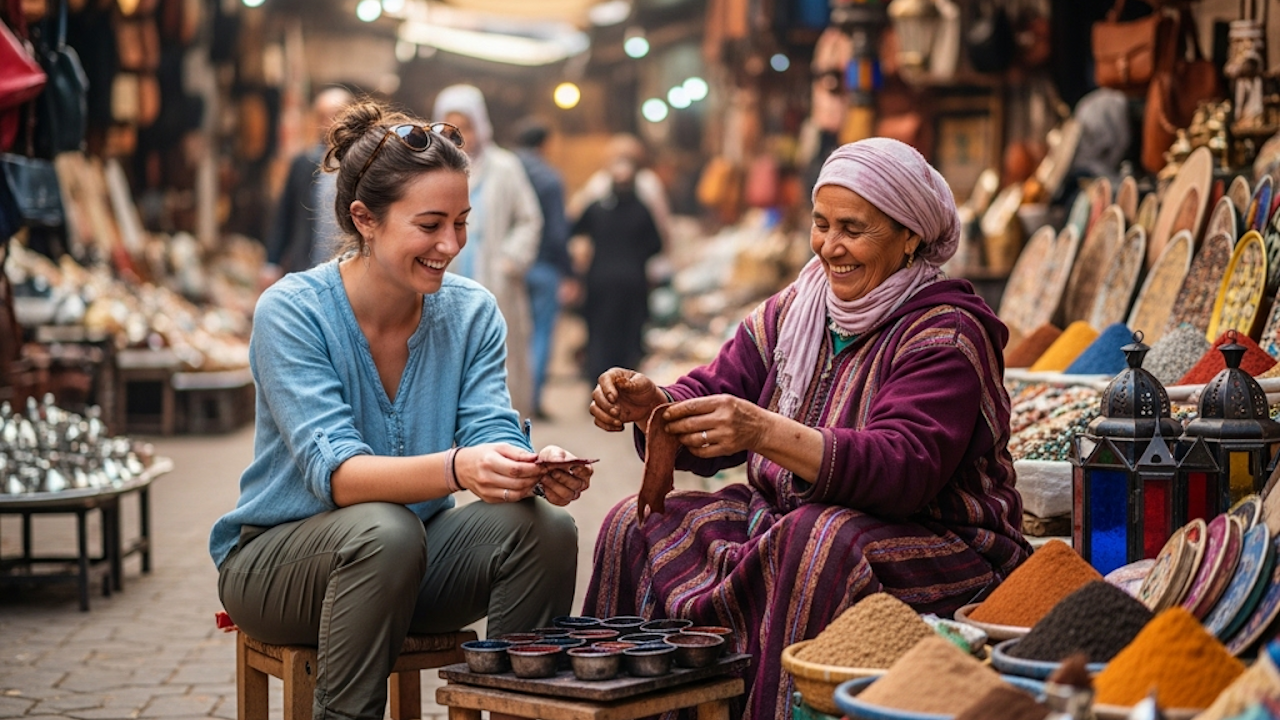
In an age when airplanes crisscross the globe in hours and smartphones deliver instant recommendations for every destination, travel has never been easier or more popular. Yet many wanderers find themselves returning home with a lingering sense of emptiness. They have seen the sights, snapped the photos, and checked the boxes, but they have not truly felt the pulse of the places they visited. This growing dissatisfaction has fueled a quiet revolution in how people explore the world: the pursuit of cultural immersion through authentic travel experiences.
Cultural immersion is more than a buzzword. It is the deliberate choice to step beyond the surface of a destination and engage directly with its people, traditions, history, and daily rhythms. Instead of viewing a culture from behind a tour bus window or through the lens of a staged performance, immersive travelers seek to participate. They live in local homes, share meals prepared from family recipes, join community rituals, and listen to stories passed down through generations. The result is a profound shift in perspective that transforms a vacation into a journey of mutual understanding.
The roots of this approach stretch back further than one might expect. For centuries, explorers, traders, and scholars crossed borders not merely to conquer or collect but to learn and exchange ideas. Marco Polo did not simply catalogue the wonders of the East; he absorbed customs, languages, and cuisines that reshaped European tastes for generations. In the nineteenth and early twentieth centuries, anthropologists embedded themselves in remote societies to document ways of life before modernization erased them. What distinguishes today’s cultural immersion trend is its democratization. No longer reserved for the wealthy or the academic elite, authentic experiences are now accessible to anyone willing to slow down, relinquish control, and embrace discomfort.
The contrast with conventional tourism is stark. Mass-market travel often packages destinations into consumable bites: a morning at the Colosseum, an afternoon at a souvenir shop, an evening at a chain restaurant serving approximations of local fare. Such trips deliver convenience and comfort but rarely depth. Authentic immersion rejects this checklist mentality. It favors slow travel, where a single village or neighborhood might occupy an entire week. It values quality of connection over quantity of locations. Travelers who choose this path report stronger memories, richer personal growth, and a lingering sense of belonging long after their return.
The personal benefits of cultural immersion are numerous and well documented through traveler accounts and academic studies alike. First and foremost, it cultivates empathy. When a visitor spends days helping harvest rice in a Balinese paddy or learning the intricate steps of a flamenco class in Andalusia, abstract notions of “otherness” dissolve. Differences in language, dress, or belief become bridges rather than barriers. This heightened empathy extends beyond the trip itself, influencing how individuals engage with diverse communities at home.
Cognitive flexibility also expands. Navigating daily life without familiar conveniences forces problem-solving in real time. Ordering coffee in a bustling Marrakech market using hand gestures and broken Arabic requires presence and adaptability. Over time, these small challenges rewire the brain to tolerate ambiguity and appreciate nuance. Many immersive travelers describe returning home with sharper observational skills and a more open mindset toward change in their own cultures.
Emotional resilience grows as well. Culture shock is inevitable when immersion is genuine. The first time a traveler wakes to the call to prayer in Istanbul or tastes the fermented sting of kimchi straight from a Korean grandmother’s cellar, discomfort can feel overwhelming. Yet pushing through that discomfort builds confidence. The traveler learns that unease is temporary and that curiosity is a reliable antidote. This emotional muscle memory proves invaluable in an increasingly interconnected but often polarized world.
Beyond individual transformation, authentic travel experiences deliver tangible advantages to host communities. When visitors stay in family-run guesthouses rather than international hotel chains, money circulates directly into local economies. Artisans who demonstrate traditional crafts receive fair compensation instead of seeing their work mass-produced overseas. Language revitalization projects gain volunteers who practice endangered dialects alongside native speakers. In places where overtourism has strained resources, immersion offers a counterbalance by spreading visitors across lesser-known areas and encouraging longer, more respectful stays.
Consider the example of Bhutan, a Himalayan kingdom that famously measures success through Gross National Happiness rather than Gross Domestic Product. The country limits tourist numbers and requires visitors to pay a sustainable development fee that funds education and healthcare. Travelers who commit to multi-week homestays in rural dzongs participate in archery competitions, learn Buddhist meditation practices, and help with farm chores. These exchanges preserve Bhutanese traditions while providing economic stability without the environmental degradation seen in neighboring regions overwhelmed by day-trippers.
In Peru’s Sacred Valley, community-based tourism cooperatives invite guests to live with Quechua families. Participants weave textiles using backstrap looms, prepare pachamanca feasts cooked in earth ovens, and trek ancient Inca trails guided by elders who recount oral histories. The revenue supports local schools and medical clinics while reinforcing pride in indigenous identity. Similar models thrive in Namibia’s conservancies, where San communities share tracking skills and storytelling traditions with small groups of visitors who camp under the stars and contribute to wildlife monitoring.
Food offers one of the most immediate and memorable gateways to immersion. Eating is never merely sustenance in a deeply rooted culture; it is history, identity, and love made edible. A traveler who joins a Thai morning market tour, selects ingredients with a vendor, and then cooks alongside a village auntie learns far more than recipes. She discovers the spiritual significance of certain spices, the seasonal rhythms of monsoon planting, and the subtle social cues that govern family meals. In Oaxaca, Mexico, mezcal tastings evolve into all-night conversations about land rights and ancestral knowledge when hosted by small-batch producers rather than commercial distilleries.
Festivals and rituals provide another powerful entry point, provided travelers approach them with humility. Attending Carnival in Salvador de Bahia, Brazil, as a passive spectator yields colorful memories. Dancing in the streets with local blocos, learning the drum patterns of candomblé, and sharing homemade caipirinhas with neighborhood families creates lifelong bonds. The key distinction lies in preparation and attitude. Authentic participants research the event’s history, respect sacred elements, and contribute rather than consume.
Learning even basic phrases of the local language multiplies the depth of every interaction. A simple greeting in Swahili opens doors in Tanzanian villages that remain closed to English-only visitors. In Japan, mastering the polite bowing etiquette and a handful of honorifics transforms a ryokan stay from polite service into genuine hospitality. Language classes, whether formal or informal through conversation exchanges, signal respect and invite reciprocity.
Volunteering offers yet another avenue for meaningful engagement. Programs that pair travelers with conservation efforts in Costa Rican rainforests or teaching English in remote Mongolian ger camps create mutual benefit. The visitor gains insight into environmental challenges and educational realities while providing labor or skills that communities genuinely need. Ethical considerations remain paramount: programs must be community-led rather than outsider-driven, ensuring that volunteers do not displace local workers or impose external agendas.
Despite its rewards, cultural immersion is not without challenges. Language barriers can lead to misunderstandings or unintended offense. Cultural norms around personal space, gender roles, or religious observance vary widely and require constant vigilance. Health and safety concerns arise when medical facilities are limited or political situations shift unexpectedly. Perhaps most difficult is the internal struggle against one’s own preconceptions. Travelers must confront the discomfort of being an outsider and resist the urge to judge or romanticize what they encounter.
Ethical questions also surface. When does participation cross into appropriation? Photographing sacred ceremonies without permission or commercializing traditional designs for social media can harm communities. Responsible immersive travel demands ongoing self-reflection. Travelers should ask themselves whether their presence adds value or merely extracts entertainment. Supporting initiatives that include local decision-making helps ensure authenticity flows both ways.
Practical tips can smooth the path for those ready to embrace this style of travel. Begin research months in advance by reading works written by local authors rather than guidebooks alone. Seek out small-group operators who partner directly with communities and can provide transparent financial breakdowns showing how funds are distributed. Pack light and plan to acquire clothing and necessities locally to support artisans. Commit to at least two weeks in any single location to move past initial awkwardness into genuine connection. Keep a journal that records not only sights but emotions, questions, and conversations; these reflections often become the most treasured souvenirs.
Technology can assist without undermining presence. Translation apps bridge gaps in real time, yet overreliance on screens can isolate travelers from spontaneous interactions. A wiser approach uses digital tools sparingly for navigation or translation while prioritizing face-to-face exchange. Offline maps and phrasebooks remain valuable backups.
The global pandemic temporarily halted many travel plans but ultimately strengthened the appetite for meaningful experiences. As borders reopened, a new cohort of travelers emerged who valued health, sustainability, and depth over volume. Destinations that had suffered from overtourism began rethinking their models, favoring quality over quantity. Rural areas once overlooked suddenly found themselves in demand from visitors seeking uncrowded, genuine encounters.
Looking ahead, cultural immersion appears poised to shape the future of travel. Climate awareness encourages slower journeys by train or sailboat that allow deeper appreciation of landscapes and cultures along the way. Generational shifts toward experiential spending suggest younger travelers will continue prioritizing stories over stuff. Advances in community tourism platforms make it easier to connect directly with hosts, bypassing intermediaries that dilute authenticity.
Yet technology’s role remains double-edged. Virtual reality tours promise to simulate distant cultures, but no screen can replicate the scent of incense in a Kyoto temple or the warmth of a shared blanket during a Mongolian winter. The irreplaceable value of physical presence ensures that authentic immersion will endure.
Ultimately, cultural immersion reminds us that travel at its best is not escape but connection. It dissolves the illusion of separateness and reveals the common humanity threading through every society. When a traveler sits on a woven mat in a Moroccan riad listening to elders recount Berber legends, or helps prepare mochi in a Japanese mountain village, the world shrinks and expands simultaneously. Differences become fascinating rather than frightening. Shared laughter and shared meals forge memories that no postcard can capture.
Those who choose this path return home changed, carrying fragments of other cultures in their speech, their cooking, and their worldview. They become informal ambassadors, challenging stereotypes and encouraging friends and family to travel more thoughtfully. In a world often divided by headlines and algorithms, these quiet acts of cross-cultural friendship may prove among the most powerful forces for understanding.
The invitation stands open to anyone willing to trade comfort for curiosity. Pack fewer clothes and more openness. Choose depth over distance. Step off the beaten path and into someone else’s daily life. The rewards, measured not in photographs but in transformed perspectives, will linger long after the journey ends. Authentic travel experiences do not merely show us the world; they help us find our place within it.