

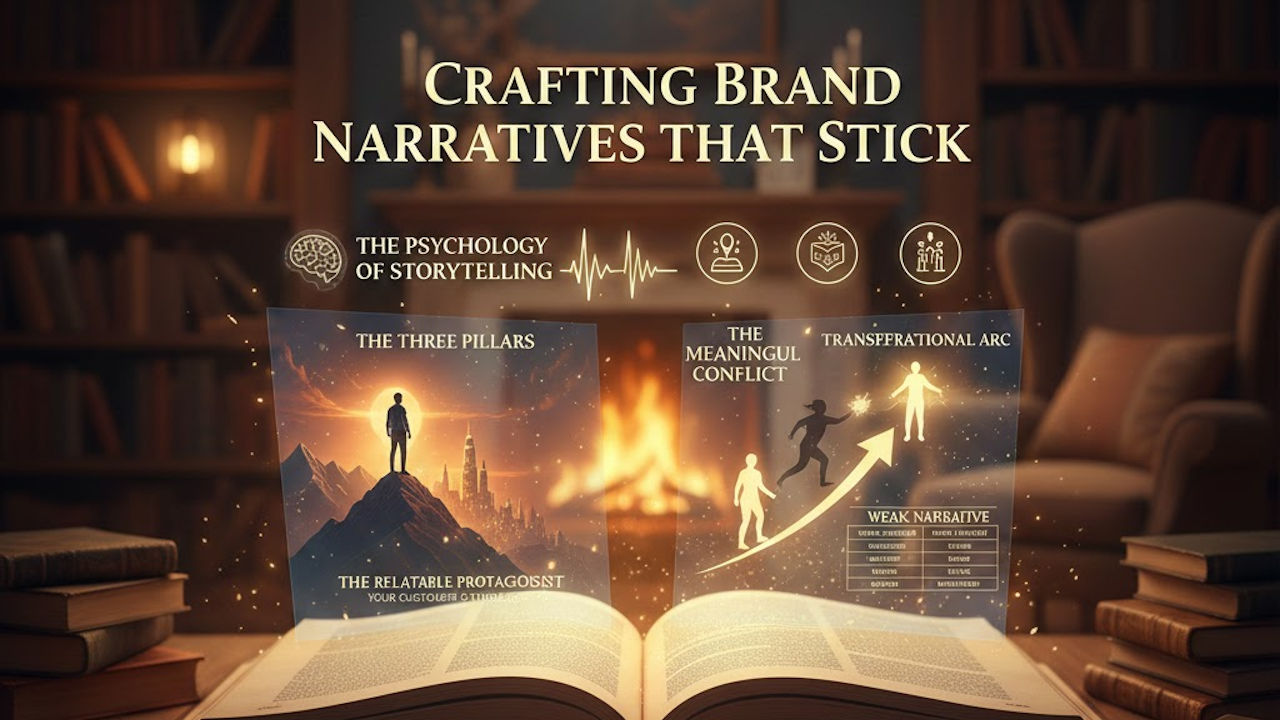
In an era of endless scrolling and information fatigue, the difference between a brand that thrives and one that fades into the background is the quality of its story. People do not buy products. They buy better versions of themselves, fueled by the narratives that brands weave.
A brand narrative is not a slogan or a mission statement. It is the cohesive thread that connects your history, your values, and your customer’s aspirations into a single, compelling journey.
The Psychology of Storytelling
The human brain is wired for story. Before the written word, we passed knowledge through oral narratives. When we hear a dry list of facts, only the language processing parts of our brain activate. However, when we hear a story, our sensory cortex and emotional centers light up.
By using a narrative, you bypass the logical filters that look for reasons to say no. Instead, you create a sense of empathy and shared experience. This is known as neural coupling, where the listener’s brain activity mirrors that of the storyteller. If you want your brand to be remembered, you must stop presenting and start narrating.
The Three Pillars of a Sticky Narrative
To create a story that stays with your audience long after they have closed their browser, you must anchor it in three specific elements.
1. The Relatable Protagonist
The biggest mistake brands make is positioning themselves as the hero of the story. In a successful brand narrative, the customer is the hero. Your brand is the guide, like Merlin to King Arthur or Gandalf to Frodo.
Your narrative should reflect the hero’s challenges, fears, and desires. When the customer sees themselves in your story, they feel understood. That emotional connection is the foundation of brand loyalty.
2. The Meaningful Conflict
A story without conflict is just a series of events. Your brand exists because there is a problem in the world that needs solving. This could be a functional problem, like a slow computer, or a philosophical one, like the feeling of being uninspired.
By identifying the “villain” in your customer’s life, you create tension. The resolution of that tension is your product or service. Without a clear conflict, your narrative lacks stakes and fails to grab attention.
3. The Transformational Arc
Every great story ends with the protagonist changed for the better. Your narrative must paint a vivid picture of the “After” state. How is the customer’s life different because they interacted with your brand? Do they feel more confident? Are they more productive?
Show the transformation through imagery and testimonials rather than just listing features. Features tell, but transformations sell.
Strategy for Building Your Narrative
Developing a narrative requires a disciplined approach to communication. Use the following table to audit your current brand messaging.
| Element | Weak Narrative | Sticky Narrative |
| Focus | Product features and specs | Customer goals and emotions |
| Tone | Corporate and detached | Human and conversational |
| Mission | To be the market leader | To solve a specific human struggle |
| Outcome | Transactional purchase | Identity and belonging |
Consistency Across Touchpoints
A brand narrative only sticks if it is consistent. If your website tells a story of luxury and ease, but your customer service is cold and bureaucratic, the narrative breaks. Every email, social media post, and packaging insert should feel like a page from the same book.
Think of your brand narrative as a North Star. Every business decision, from product development to marketing campaigns, should be filtered through the question: “Does this advance the story we are telling?”
The Power of the “Why”
Simon Sinek famously noted that people don’t buy what you do; they buy why you do it. Your narrative should be rooted in a belief system. When you lead with your “Why,” you attract people who share your values. These are the customers who will not only buy from you but will also become advocates for your brand.
Authenticity is the currency of the modern market. If your story feels manufactured for the sake of profit, it will be rejected. If it feels like a genuine expression of your brand’s purpose, it will stick.