

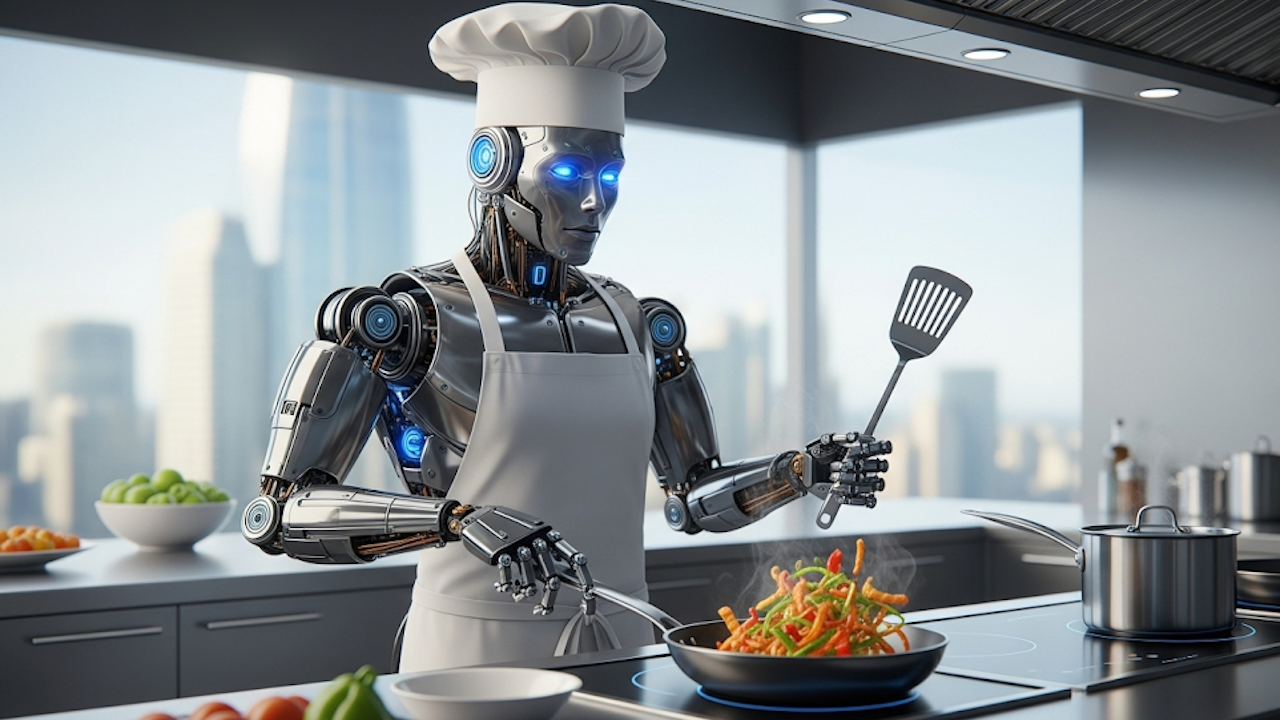
The kitchen has long been a realm of human intuition, passion, and improvisation. Chefs rely on taste buds, experience, cultural heritage, and that elusive spark of creativity to craft dishes that define restaurants, family traditions, or personal identities. Yet as artificial intelligence and robotics advance rapidly, a provocative question emerges: Can a robot or an AI system truly create a signature dish, one that bears a unique identity, delights the senses in unexpected ways, and stands out as an original culinary achievement?
This inquiry goes beyond mere automation. It probes the boundaries between computation and creativity, between precise execution and soulful invention. In 2026, AI already assists with recipe suggestions, optimizes ingredient combinations, and powers robots that chop, stir, and plate food. Home devices and restaurant systems handle repetitive tasks with impressive consistency. But does this technological progress allow machines to originate something truly signature, or do they remain sophisticated imitators, remixing existing knowledge without the spark that makes a dish memorable and personal?
The Rise of AI in the Kitchen
Artificial intelligence has entered cooking through multiple avenues. On the digital side, generative AI tools analyze vast databases of recipes, nutritional data, flavor profiles, and user preferences to suggest or create new instructions. Platforms and assistants can take a list of pantry items, dietary restrictions, or a mood description and output a complete recipe with ingredients, steps, and even estimated nutrition. Some systems draw on molecular gastronomy principles, pairing ingredients based on shared chemical compounds to propose novel combinations that humans might not intuitively try.
For instance, researchers have developed algorithms that recombine ingredients into fresh dishes, testing sustainability or unexpected flavor harmonies. Virtual assistants from major tech companies integrate recipe generation, allowing users to ask for meal ideas based on what is in the fridge or what fits a busy schedule. These tools promise to reduce food waste, personalize nutrition, and inspire home cooks who feel stuck in routine.
On the physical side, robotic systems bring AI into tangible action. Early examples focused on narrow tasks, such as flipping burgers or assembling salads with computer vision to handle variable ingredients. More advanced setups feature robotic arms that mimic human motions: stirring pots, adding spices from carousels, monitoring doneness through cameras, and adjusting heat or timing in real time. Some countertop models claim to prepare hundreds of dishes from loaded ingredients, using perceptive AI to decide when onions are properly browned or when a sauce reaches the right consistency.
Restaurant applications have expanded too. Automated systems handle high-volume preparation of standardized items like fries, pizzas, or stir-fries, aiming for consistency and speed while addressing labor shortages. In some concepts, entire kitchens operate with minimal human intervention, from prep to plating. These developments highlight efficiency gains: faster service, lower costs, and the ability to scale operations without proportional increases in staff.
Yet the core promise, and the deeper challenge, lies in whether these systems can move from replication to genuine creation.
How AI Approaches Recipe Creation
AI generates recipes by pattern recognition on a massive scale. It processes thousands or millions of existing recipes, scientific papers on flavor chemistry, and user feedback to identify successful combinations. When prompted with constraints, such as “create a vegan main course using kale, bananas, and chicken alternatives,” it produces a structured output: a title, ingredient list, step-by-step instructions, and sometimes variations.
This process can yield surprising results. Some experiments produce dishes that taste balanced and appealing, especially when the AI stays close to familiar flavor profiles. Tools can optimize for dietary needs, seasonal availability, or cost, generating options that feel tailored. In controlled tests, certain AI-suggested recipes have earned praise for creativity within bounds, such as novel twists on classics or efficient use of leftovers.
Robotic execution adds another layer. A system might follow a generated recipe precisely, using sensors to replicate temperatures, timings, and techniques. Advanced models learn from demonstrations, recording human movements and adapting them to their mechanical capabilities. In theory, this combination allows an AI to propose a dish and a robot to prepare it repeatedly with minimal variation.
Proponents argue this democratizes culinary excellence. Busy families could enjoy restaurant-quality meals without expertise. Chefs might use AI as a brainstorming partner, accelerating innovation by exploring vast possibility spaces quickly. Data-driven insights could lead to healthier or more sustainable options by analyzing global ingredient interactions.
The Human Element in Signature Dishes
A signature dish transcends technical correctness. It carries emotion, story, and context. Think of a chef’s interpretation of a regional classic, refined over years through trial, error, customer feedback, and personal memory. It might reflect childhood flavors, seasonal inspiration at a particular market, or a bold risk taken during service that unexpectedly worked. The dish evolves through sensory feedback that no current AI fully replicates: the subtle shift in aroma as spices bloom, the exact moment a reduction thickens to perfection, or the visual cue of browning that signals depth without bitterness.
Humans bring adaptability that handles real-world variability. Ingredients differ by batch, season, or supplier. A skilled cook tastes, adjusts seasoning on the fly, and compensates for inconsistencies. AI and robots can incorporate sensors for vision, temperature, or even basic taste simulation in research settings, but they lack the integrated, intuitive palate that integrates smell, texture, sound, and memory into instantaneous decisions.
Creativity poses a deeper hurdle. AI excels at interpolation and recombination within trained data. It can suggest a fusion of cuisines or an unusual pairing based on statistical correlations. However, true originality often involves breaking patterns in ways that feel inspired rather than calculated. Critics note that many AI-generated recipes, while functional, can feel generic or occasionally bizarre, such as combinations that ignore cultural coherence or produce muddled flavors upon real-world testing. Without lived experience or emotional investment, the output may lack the narrative resonance that elevates a plate from good to iconic.
Cultural and sensory dimensions further complicate matters. Cuisine is deeply tied to heritage, rituals, and community. An AI might generate a recipe labeled as “authentic” by averaging common elements, yet miss nuances of technique, regional variation, or the intangible “feel” passed through apprenticeship. Taste itself is subjective and multisensory, influenced by personal history, mood, and environment. Robots can execute steps, but they do not savor the result or feel the satisfaction of creation.
Real-World Examples and Experiments
Practical implementations illustrate both progress and limits. Home-oriented robots load ingredients via app instructions and handle stirring, timing, and basic monitoring. Some systems use computer vision to assess progress, similar to autonomous vehicle perception. In commercial settings, robots manage repetitive stations, freeing humans for higher-level tasks like menu design or guest interaction.
Tests of AI recipe generators show mixed outcomes. When given random or challenging ingredients, results range from pleasantly surprising to unpalatable. Certain combinations work well because they align with established flavor science, but others reveal gaps in understanding balance or texture. Human chefs often need to intervene, tweaking proportions or methods after tasting.
In one approach, algorithms focus on sustainability, proposing dishes that minimize waste or use underutilized ingredients. Another leverages large language models to create step-by-step guidance, complete with substitutions. Robotic kitchens have demonstrated the ability to prepare complex sequences, such as multi-component meals, with consistency that surpasses tired human line cooks during peak hours.
Nevertheless, signature status remains elusive. A dish prepared identically every time by a machine might achieve reliability, but it risks losing the variability and personal touch that make repeated visits to a favorite restaurant rewarding. When AI proposes something novel, validation still requires human evaluation and refinement. The most successful integrations appear collaborative: AI handles data crunching and suggestion, while chefs provide judgment, seasoning intuition, and final creative direction.
Challenges and Limitations
Several barriers prevent robots from independently creating signature dishes. First, sensory perception remains incomplete. While research explores robotic “tasting” through chemical sensors or simulated chewing analysis, it falls short of the holistic human experience. Adjusting on the fly for an over-salted batch or under-ripe produce demands nuanced judgment.
Second, data biases influence outputs. AI trains on available online recipes, which may overrepresent certain cuisines, popular trends, or simplified versions of traditional dishes. This can lead to homogenization, where generated recipes echo common internet styles rather than introducing groundbreaking ideas. Cultural appropriation risks arise if systems flatten nuanced traditions into generic templates.
Third, the physical world introduces complexity. Food is not uniform; it behaves unpredictably under heat, humidity, or handling. Robots handle variability better with advanced grippers and AI operating systems designed for “messy” real ingredients, yet scaling to fine dining precision or delicate presentations challenges current hardware.
Ethical and societal questions add layers. Automation could displace kitchen workers, particularly in entry-level roles. Intellectual property concerns emerge when AI draws heavily from existing chef creations without clear attribution. Over-reliance might erode cooking skills in homes or diminish the joy of shared meal preparation.
Finally, the absence of genuine emotion or intentionality matters. A signature dish often stems from a chef’s desire to express something, to delight specific diners, or to push boundaries after years of mastery. Machines optimize for metrics like efficiency or average appeal but lack intrinsic motivation or the capacity for serendipitous discovery born from mistakes.
The Path Forward: Collaboration Over Replacement
The evidence suggests that robots and AI can excel as powerful assistants in cooking, but creating a true signature dish likely requires human partnership for the foreseeable future. AI shines in exploration, generating hundreds of variations rapidly or identifying efficient techniques. Robots deliver consistency and relieve drudgery, allowing chefs to focus on innovation, plating artistry, and guest experience.
In restaurants, hybrid models may emerge: AI-optimized menus with robotic preparation of base components, finished by human hands for that final flourish. At home, devices could handle weeknight meals while special occasions remain arenas for personal creativity. Future advances in multimodal AI, better sensors, and adaptive learning could narrow the gap, enabling systems that learn from user feedback loops or incorporate more sophisticated taste simulation.
Ultimately, the question of whether a robot can create a signature dish hinges on definitions. If “create” means generating and executing a novel, tasty recipe from data, then current technology already achieves versions of this. If it means originating something with lasting cultural impact, emotional depth, and the indefinable quality that makes diners return for the story behind the plate, then human chefs retain the edge.
Cooking remains an art as much as a science. Technology can augment the craft, making it more accessible, efficient, and exploratory. Yet the soul of a signature dish, the element that transforms ingredients into identity, continues to flow from human experience, passion, and the unpredictable joy of the kitchen. As AI and robotics evolve, they may become indispensable collaborators, but the signature will likely stay handwritten by people who cook with heart as well as code. The future kitchen promises smarter tools, not a replacement for the creative spirit that has defined cuisine for centuries.