

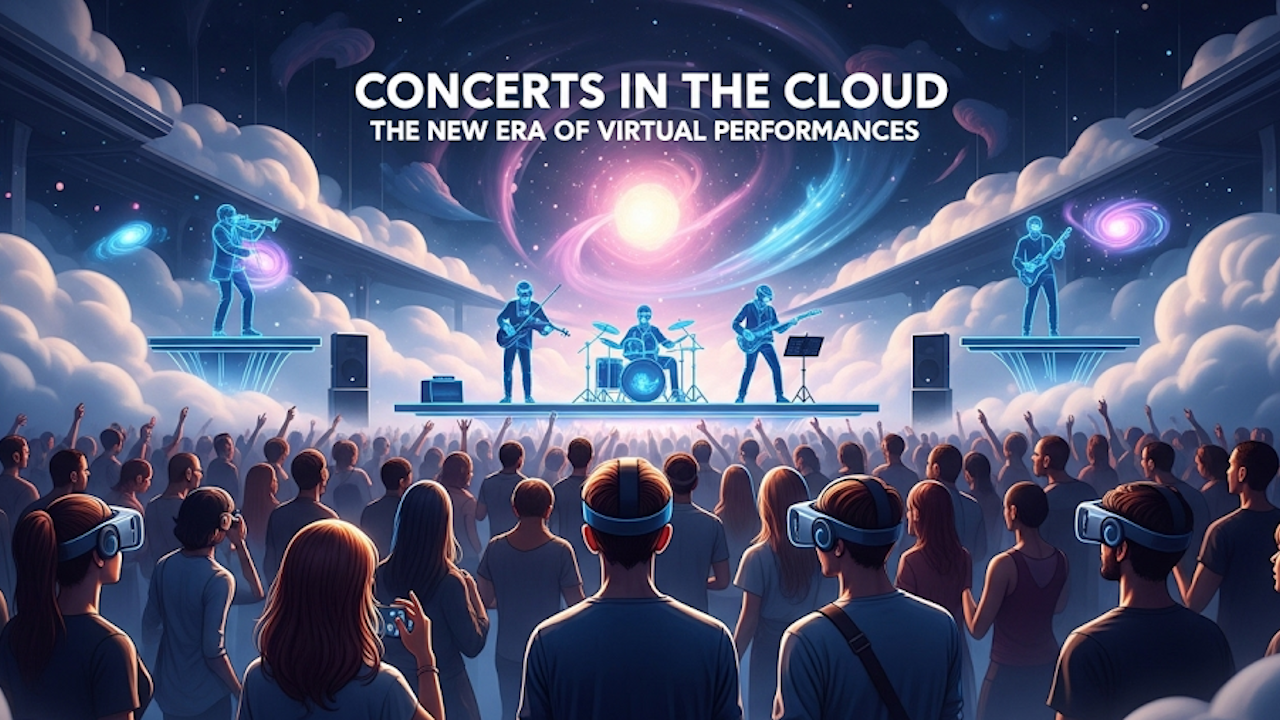
The music industry has always thrived on shared energy. Fans packed into sweaty venues, lights pulsing in sync with bass drops, and the raw thrill of collective screams have defined live performance for generations. Yet a profound shift is underway. Concerts are migrating to the cloud, where virtual performances blend cutting edge technology with artistic expression to create experiences that are accessible, immersive, and often more innovative than their traditional counterparts. This new era, fueled by advances in cloud computing, virtual reality, augmented reality, and artificial intelligence, is not merely a substitute for in person shows. It represents a fundamental evolution in how artists connect with audiences and how fans engage with music.
The roots of virtual concerts trace back further than many realize. Early experiments with live streaming appeared in the 1990s and 2000s, but they remained niche. The COVID 19 pandemic accelerated everything. When global lockdowns halted tours in 2020, artists turned to platforms like YouTube, Twitch, and gaming worlds to keep performing. What began as necessity quickly proved its staying power. Events such as Marshmello’s 2019 Fortnite concert, which drew over ten million players, laid the groundwork. By 2020, Travis Scott’s Astronomical event in Fortnite shattered records with more than twelve million concurrent viewers. These spectacles demonstrated that digital stages could deliver spectacle on a scale impossible in any physical arena.
Today, virtual performances have matured into a sophisticated ecosystem. Cloud infrastructure serves as the invisible backbone. It enables low latency streaming, real time rendering of complex environments, and seamless synchronization across millions of devices worldwide. Artists no longer need massive physical setups or costly tours. Instead, they collaborate with developers to craft custom digital worlds where avatars perform amid floating stages, interactive light shows, and audience generated effects. Fans participate from living rooms, bedrooms, or even commutes, often using nothing more than a smartphone or affordable headset.
Technological innovation drives this transformation. Cloud based extended reality, or XR, streaming allows high fidelity visuals and audio to reach users without demanding powerful local hardware. Services leverage distributed GPU resources to handle volumetric video, holographic projections, and dynamic environments in real time. Artificial intelligence personalizes experiences further. Algorithms analyze listener preferences to adjust camera angles, suggest virtual merchandise, or even generate custom set lists. Holographic technology adds another layer. Performers appear as lifelike projections that interact with virtual objects or respond to audience input, creating moments that feel startlingly present.
Platforms have proliferated to support these shows. Fortnite and Roblox remain leaders, hosting blockbuster events that double as social gatherings. In late 2024, Fortnite’s Remix: The Finale featuring Snoop Dogg, Ice Spice, Eminem, and a tribute to Juice WRLD attracted a record 14.3 million concurrent players. Roblox has welcomed acts like Lil Nas X, Charli XCX, and Twenty One Pilots, turning concerts into multi hour festivals complete with mini games and virtual hangouts. Wave VR specializes in premium, on demand experiences, while Meta’s Horizon Worlds has launched K pop series with artists such as NCT Dream, Stayc, and Riize in 2025. Emerging players like AmazeVR focus on polished, narrative driven VR concerts that feel closer to cinematic events than traditional gigs.
These platforms emphasize interactivity. Fans can dance with friends via avatars, collect digital souvenirs as non fungible tokens, or influence the show through polls and triggers. Blockchain integration ensures secure ticket sales and ownership of exclusive content. The result is a concert that feels less like passive viewing and more like active participation in a shared universe.
Several factors explain the appeal. Accessibility stands out as the most immediate benefit. Traditional concerts exclude many due to geography, cost, or mobility issues. Virtual events erase those barriers. A fan in a remote village can attend the same show as someone in a major city, often for a fraction of the price or even free. Global reach expands dramatically. One performance can touch tens of millions without the carbon footprint of international flights or tour buses. Environmental sustainability gains traction as artists and labels seek greener alternatives amid growing climate awareness.
For musicians, virtual concerts open new creative and financial doors. Production costs drop significantly. There are no venue rentals, stage crews, or transportation logistics to manage. Revenue streams diversify. Beyond ticket sales, artists earn from virtual merchandise, avatar skins, sponsored integrations, and replay viewings. Data analytics provide instant feedback on what resonates, allowing rapid iteration on future shows. Emerging and independent acts gain visibility that once required years of touring. Established stars experiment boldly. They can teleport across impossible landscapes, duet with digital versions of themselves, or collaborate with global talent in real time without leaving the studio.
The music industry as a whole benefits from this expansion. Market projections reflect optimism. The immersive entertainment sector, which includes virtual concerts, is expected to grow substantially through the end of the decade. Virtual concert platforms alone are forecasted to reach significant valuations by 2029. Hybrid models, blending live and digital elements, are becoming standard. A physical tour might include a simultaneous virtual counterpart, broadening the audience while preserving the in person magic for those who attend.
Yet challenges remain. Technical hurdles can frustrate users. Lag, poor internet connections, or device incompatibility sometimes disrupt immersion. Not everyone owns a virtual reality headset, and while smartphone access helps, the fullest experiences still require specialized gear. Some fans lament the absence of physical presence. The sweat, the press of bodies, and the unpredictable energy of a crowd cannot be fully replicated, even with advanced haptics or spatial audio. Critics argue that virtual shows risk commodifying music further, turning performances into polished digital products rather than raw communal rituals.
Revenue questions persist as well. While virtual events generate income, they do not always match the scale of sold out stadium tours. Artists worry about piracy in digital spaces or diluted exclusivity when replays circulate freely. Platform dependency raises concerns. Reliance on a handful of tech giants could limit creative control or bargaining power. Accessibility gaps also exist. High speed internet remains unevenly distributed, potentially widening rather than narrowing cultural divides.
Cultural impact extends beyond economics. Virtual concerts reshape fandom. They foster communities that transcend borders and time zones. Fans form lasting bonds in virtual lobbies, share custom dances, and co create memories. Genres evolve as artists incorporate gaming aesthetics, interactive storytelling, and metaverse lore into their work. Younger audiences, digital natives comfortable in Roblox or Horizon Worlds, expect this level of engagement. Older generations may discover renewed interest through familiar acts appearing in fresh formats.
Looking ahead, 2026 and beyond promise deeper integration of emerging technologies. Artificial intelligence will likely generate responsive elements, such as dynamic backdrops that react to crowd mood or AI companions that guide personalized tours of the virtual venue. Cloud advancements will reduce latency to imperceptible levels, enabling truly synchronous global experiences. Holographic displays could move from niche installations into homes, allowing fans to summon performers into their living spaces. Hybrid events will refine the balance between physical and digital, perhaps letting in person attendees interact with remote participants in augmented overlays.
Sustainability will gain emphasis. Cloud optimized streaming minimizes energy use compared to massive physical productions. Artists may prioritize virtual tours to reduce touring emissions while still delivering high production value. Regulatory frameworks around digital rights, data privacy, and virtual intellectual property will evolve to support this growth.
Ultimately, virtual performances do not replace live music. They complement and expand it. The cloud offers a stage without limits, where imagination sets the only boundary. Artists who embrace this era gain tools to innovate, connect, and sustain careers in ways previous generations could scarcely imagine. Fans receive unprecedented access to the sounds and stories they love. As cloud technology matures and immersive tools become everyday realities, concerts in the cloud will define a new golden age of musical connection.
This shift reflects broader societal changes. We live in an increasingly digital world, yet the human desire for shared experience endures. Virtual performances satisfy that desire by redefining what sharing means. They prove that music’s power lies not in the venue but in the moment of communion between artist and audience. Whether experienced through a headset in a quiet room or alongside thousands in a bustling virtual plaza, these cloud born concerts remind us that the future of live music is boundless, inventive, and profoundly human. The stage has moved to the cloud, and the show has only just begun.