

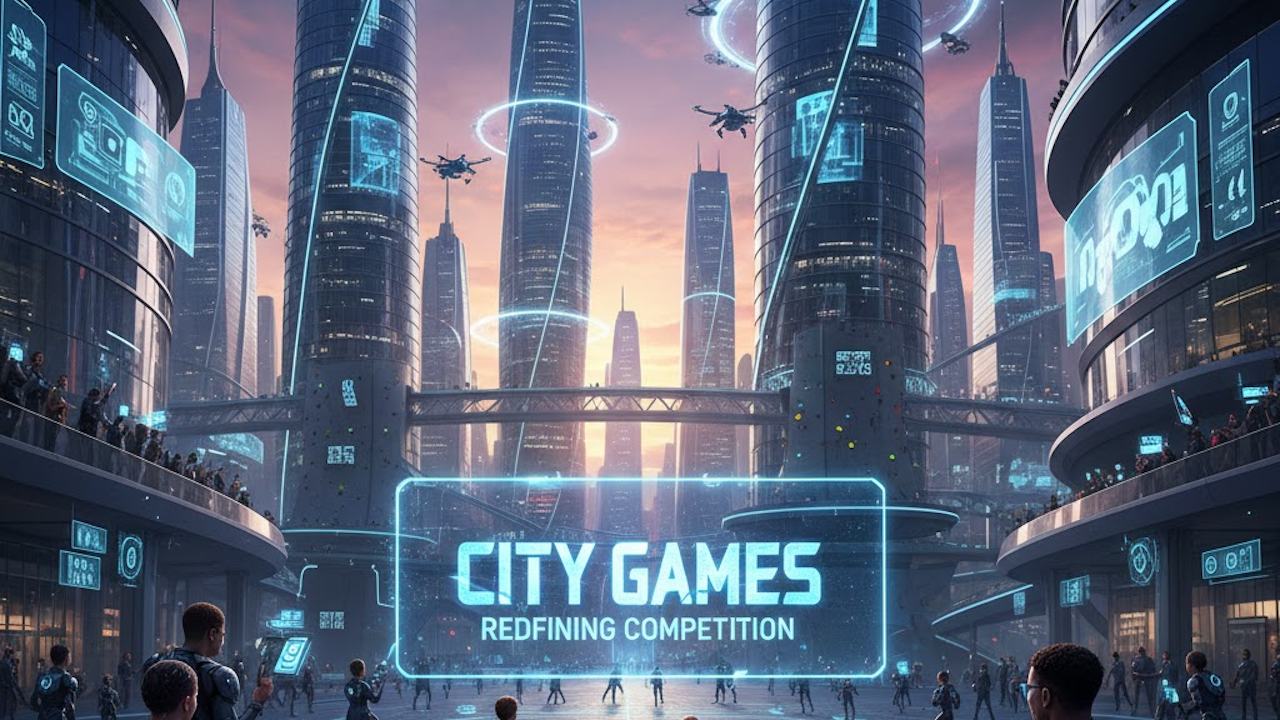
Across the world, cities have become more than backdrops for competition. They are now active arenas that shape how people play, compete, and define success. City games, ranging from organized urban sports to informal, location based challenges, are redefining what competition looks like in the modern age. Unlike traditional competitions that take place in controlled environments such as stadiums or courts, city games unfold in public spaces filled with unpredictability, diversity, and constant motion. This shift is changing not only how competition is experienced but also who gets to participate and what it means to win.
At their core, city games are deeply tied to urban life. Streets, parks, rooftops, subways, and abandoned lots become playing fields. Examples include parkour races through dense neighborhoods, street basketball leagues, urban cycling events, scavenger hunts powered by mobile apps, and large scale games like urban tag or city wide puzzle competitions. These activities blur the line between sport, play, and everyday movement. Competition is no longer separated from daily life but woven directly into it, making participation feel more accessible and less intimidating.
One major way city games redefine competition is by emphasizing adaptability over specialization. Traditional sports often reward athletes who master a narrow set of skills in a predictable environment. City games, by contrast, reward those who can react quickly to changing conditions. Weather, crowds, traffic patterns, and architecture all influence outcomes. A runner navigating stairs, alleyways, and uneven pavement must constantly adjust pace and strategy. Success depends not just on physical ability but on awareness, creativity, and decision making. Competition becomes multidimensional rather than purely physical.
City games also challenge the idea that competition must be exclusive. Many traditional competitive spaces are gated by cost, membership, or access to facilities. City games tend to be more open. A public court, an open street, or a free app lowers the barrier to entry. This openness allows people from different backgrounds, ages, and skill levels to participate together. Competition becomes a shared social experience rather than a selective one. In many cases, the emphasis shifts from defeating others to testing oneself within a community.
Technology plays a crucial role in this transformation. Smartphones, GPS tracking, and augmented reality have enabled new forms of urban competition. Players can compete asynchronously, compare scores across neighborhoods, or collaborate and compete simultaneously. Games that use city maps turn entire urban areas into interactive boards. This expands competition beyond a single moment in time. A person can set a record on a route in the morning and be challenged by someone else hours later. Competition becomes ongoing, fluid, and deeply connected to place.
Another important shift is how city games redefine the meaning of victory. In traditional competition, winning is often binary. You either win or lose. In city games, success can take many forms. Completing a route creatively, discovering hidden parts of a city, or improving personal performance can matter as much as ranking first. Some city games reward exploration, collaboration, or endurance rather than speed or dominance. This reframing encourages intrinsic motivation. Players compete because the experience itself is rewarding, not only because of external recognition.
City games also reshape social dynamics around competition. Because they take place in shared public spaces, they are inherently visible. Spectators may not even realize they are watching a competition, yet their presence influences the game. This creates a sense of collective involvement. Strangers cheer, observe, or even join in. Competition becomes less isolated and more communal. It fosters connections among participants who might never meet in formal sports settings.
There are also cultural implications. City games reflect the identity of the places where they occur. A parkour event in Paris feels different from one in Tokyo because the architecture, rhythm, and social norms differ. Competition becomes a form of urban expression. Players engage with the history and character of their city through movement and play. This localized nature pushes back against the standardization seen in global professional sports. Instead of uniform rules and venues, city games embrace variation.
However, this redefinition of competition also raises challenges. Safety, inclusivity, and regulation are ongoing concerns. Not all urban spaces are designed for play, and competition in public areas can create conflict. Cities must balance spontaneity with responsibility. Yet even these challenges highlight how city games push competition into new territory, forcing communities to rethink how public space is used and who it is for.
In the end, city games are not replacing traditional competition but expanding its meaning. They show that competition does not have to be confined to arenas, rigid rules, or elite participants. By turning cities into living game boards, they redefine competition as adaptive, inclusive, and deeply human. In doing so, they reflect the complexity of urban life itself, where success is rarely simple and the journey matters as much as the outcome.