

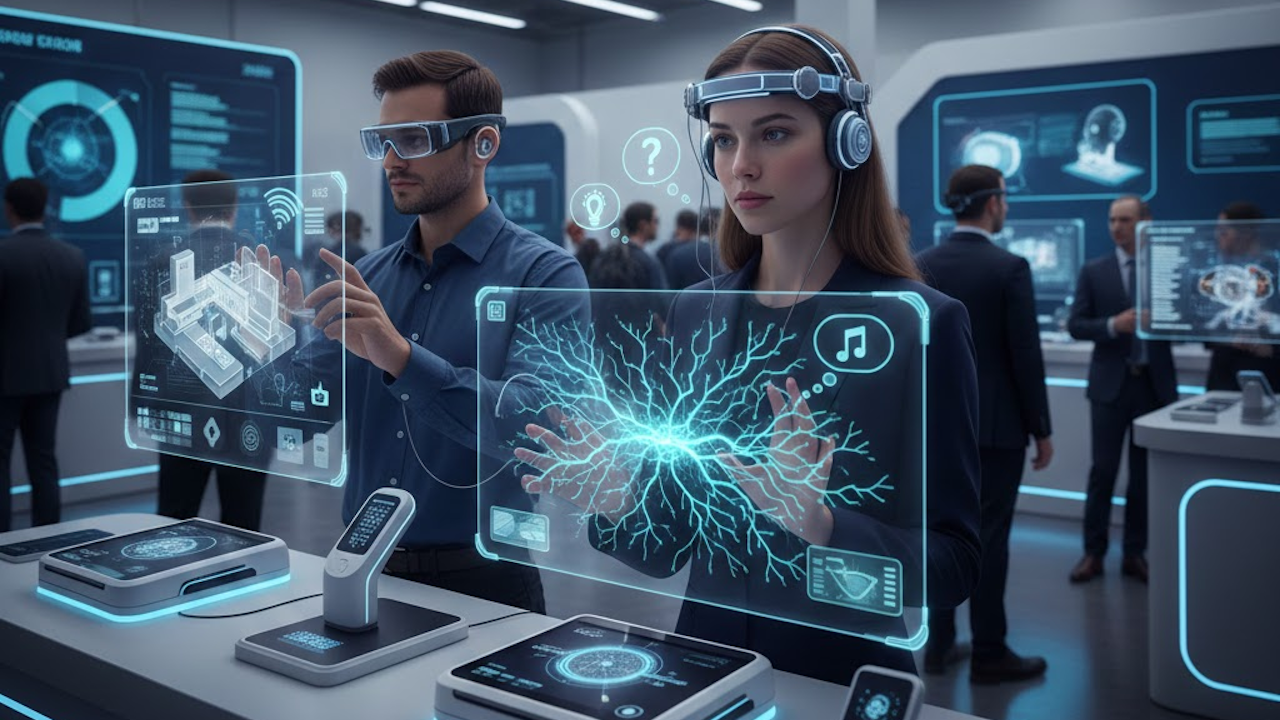
In 2026, the boundary between human thought and digital interaction is blurring faster than ever before. Brain-computer interfaces, or BCIs, once confined to research labs and science fiction, are transitioning into practical tools. These gadgets can interpret neural signals to restore lost functions for people with disabilities or enhance cognitive abilities for everyday users. From implanted devices that let paralyzed individuals control computers with their minds to wearable headsets that track focus during work or gaming, brain tech is entering a new era of accessibility and capability.
This article explores the state of brain tech in 2026. It covers major players, technological approaches, real-world applications, challenges, and what lies ahead. The field combines neuroscience, artificial intelligence, materials science, and engineering to create systems that read, and in some cases influence, brain activity.
Understanding Brain-Computer Interfaces
BCIs establish a direct communication pathway between the brain and external devices. They work by detecting electrical signals generated by neurons. These signals are then decoded by algorithms, often powered by AI, into actionable commands such as moving a cursor, typing text, or controlling a prosthetic limb.
There are three main categories of BCIs:
- Invasive: Electrodes are implanted directly into or on the brain tissue for high-resolution signal capture.
- Semi-invasive: Devices sit on the surface of the brain or within blood vessels without penetrating deep tissue.
- Non-invasive: Wearable sensors, typically using electroencephalography (EEG), detect signals through the skull for broader consumer access.
Non-invasive options sacrifice some precision for safety and ease of use, while invasive systems deliver richer data at the cost of surgical procedures.
Invasive Breakthroughs: High-Precision Implants
Invasive BCIs dominate headlines in 2026 due to impressive clinical results. Leading the pack is Neuralink, founded by Elon Musk. Its N1 implant features over 1,000 electrodes distributed across ultra-thin threads inserted into the brain via a custom robotic system. By mid-2026, Neuralink has implanted devices in more than 20 patients across multiple countries. Users have demonstrated thought-controlled cursor movement, internet browsing, gaming, and even robotic arm operation. The company is expanding trials and planning automated high-volume surgeries.
China has taken a significant step forward with regulatory approval of the world’s first commercial invasive BCI. NeuraMatrix’s NEO implant, a coin-sized device with eight sensors placed on the dura mater (the protective membrane around the brain), received approval earlier in 2026. Unlike deeper-penetrating designs, it avoids direct brain tissue insertion, potentially reducing risks like scarring or bleeding. Patients use it to control robotic gloves for grasping objects and performing daily tasks. It has also secured health insurance coding, paving the way for wider adoption.
Other notable players include Synchron, which uses the Stentrode, delivered endovascularly through a blood vessel in the neck to the brain’s motor cortex. This less invasive implantation method has enabled patients with ALS to send messages, bank online, and control devices. Precision Neuroscience offers a flexible surface array called Layer 7, which provides high electrode density with easier removal. Blackrock Neurotech’s Utah Array has a long track record in research and supports applications like speech synthesis and sensory restoration.
These systems are achieving remarkable feats. Speech decoding can reach 97 percent accuracy in some studies, and cursor control often exceeds 95 percent. Companies are also exploring vision and hearing restoration, such as Neuralink’s Blindsight program.
Consumer Wearables: Mind Reading for Everyone
While implants target medical needs, non-invasive gadgets are democratizing brain tech for healthy users. In 2026, EEG-based wearables are proliferating in headphones, headbands, beanies, and even earbuds.
Neurable is licensing its AI-powered brain-sensing technology for integration into consumer products like gaming headsets from HyperX. These devices monitor brain waves to optimize focus, suggest breaks, and enhance performance. Users receive insights into alertness, relaxation, and cognitive states via companion apps.
Sabi is developing a thought-to-text beanie or baseball cap with tens of thousands of miniature sensors. It aims to decode internal speech for typing at around 30 words per minute initially, with improvements over time. NAOX Wave earbuds incorporate EEG to track brain activity throughout the day, providing data on focus and sleep without medical claims.
China’s BrainCo is betting heavily on wearables for applications ranging from rehabilitation to consumer wellness, including bionic hands and sleep aids. Other innovations include devices for productivity, gaming, and even silent communication via neural signals preceding speech.
These gadgets do not achieve the bandwidth of implants but suffice for detecting attention levels, mental states, and basic intentions. AI algorithms compensate for signal noise from the skull, enabling practical uses like adaptive learning tools or stress management.
Real-World Applications in 2026
Medical applications remain the strongest driver. Patients with paralysis, spinal cord injuries, ALS, epilepsy, and locked-in syndrome benefit most. BCIs restore communication, mobility, and independence. For example, users can type, control wheelchairs, or operate prosthetics using thought alone.
Beyond medicine, consumer uses are expanding. Gamers adjust strategies based on real-time focus data. Professionals monitor cognitive load to prevent burnout. Educational tools could personalize learning by detecting engagement. Military and research applications explore enhanced training or injury detection.
In China, government support accelerates development, with policies targeting breakthroughs by 2027. The United States leads in innovation and funding, with billions invested across companies. Global BCI market projections reach tens of billions in the coming decade.
Challenges and Ethical Considerations
Despite progress, significant hurdles remain. Invasive procedures carry surgical risks, though newer designs minimize them. Signal longevity, biocompatibility, and device removal are ongoing concerns. Non-invasive systems struggle with lower resolution and environmental interference.
Ethical issues loom large. Mental privacy is paramount: Who owns neural data? Could it be used for surveillance, advertising, or manipulation? Brain data reveals not just intentions but potentially subconscious thoughts, emotions, and predispositions. Existing privacy laws like GDPR offer partial protection, but gaps persist regarding inferred neural information and post-mortem data.
Concerns include “brain jacking,” cognitive liberty, and equitable access. Will these technologies widen social divides between those who can afford enhancements and those who cannot? Regulatory frameworks are evolving but lag behind technological advances. Experts call for clear guidelines on consent, data security, and prohibitions on non-therapeutic cognitive manipulation.
National security implications arise as countries compete in BCI development, raising questions about dual-use technologies in defense applications.
The Road Ahead for Brain Tech
In 2026, brain tech stands at an inflection point. Clinical trials are scaling, consumer products are shipping, and AI integration is boosting decoding accuracy. Future milestones may include higher-bandwidth implants, seamless non-invasive thought communication, and hybrid systems combining reading and stimulation for enhanced therapies.
Optimists envision a world where BCIs erase disabilities and augment human potential, enabling direct brain-to-internet links or collective intelligence. Skeptics warn of unintended consequences for autonomy and society.
One certainty is rapid evolution. As materials improve, AI advances, and regulations mature, gadgets that read minds will become more commonplace. The question is not if they will transform daily life, but how society will adapt to ensure benefits outweigh risks.
Brain tech in 2026 offers a glimpse of a more connected, capable humanity. With thoughtful development and governance, it could usher in an era where the mind’s potential is truly unlocked.