

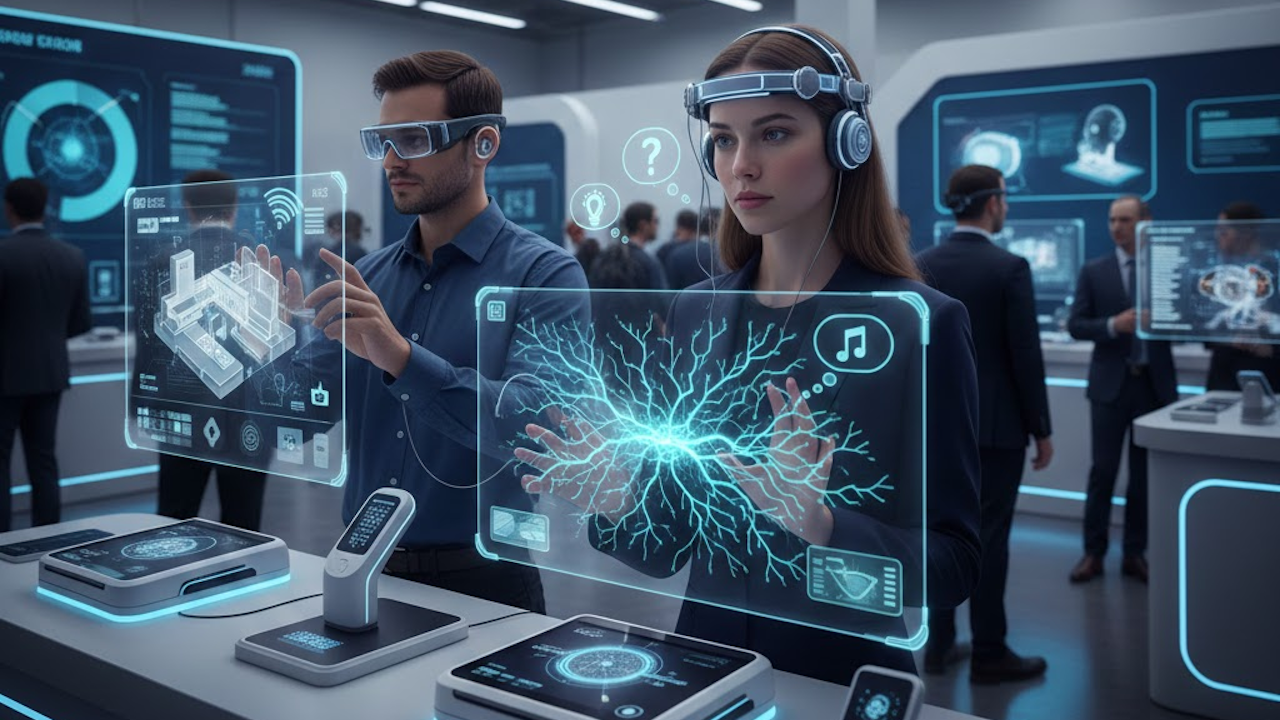
In the year 2026, the boundary between human thought and machine action has blurred more than ever before. What once seemed like science fiction, mind-reading gadgets, is now a burgeoning reality shaping industries from healthcare to entertainment. Brain tech, often referred to as brain-computer interfaces or BCI, allows devices to interpret neural signals directly from the brain. This enables users to control computers, prosthetics, or even virtual environments through mere thoughts. Advances in this field have accelerated rapidly, driven by companies like Neuralink, Neurable, and Meta. These innovations promise to enhance human capabilities, restore lost functions, and raise profound questions about privacy and identity. This article explores the state of brain tech in 2026, highlighting key gadgets, their mechanisms, applications, and the challenges ahead.
The Evolution of Brain Tech: From Concept to Commercial Reality
Brain tech has roots in decades of neuroscience research, but 2026 marks a pivotal moment where gadgets have moved from labs to consumer markets. Early experiments in the 20th century involved basic electroencephalography, or EEG, which measures electrical activity on the scalp. By the 2010s, companies like Emotiv and Muse introduced affordable EEG headsets for meditation and focus training. However, the real breakthrough came with refined signal processing powered by artificial intelligence. AI algorithms now filter noise from brain waves, translating vague patterns into precise commands.
In 2026, the Consumer Electronics Show, or CES, showcased a flood of brain-related devices, signaling mainstream adoption. For instance, Neurable’s brain-sensing headphones use EEG sensors to monitor cognitive states, helping users track reaction times and improve focus. These gadgets represent a shift toward non-invasive tech, where no surgery is required. Meanwhile, invasive options like Neuralink’s implants have expanded trials to 21 participants, demonstrating thought-controlled computing in real-world scenarios.
The driving force behind this surge is miniaturization and improved accuracy. Chips like Intel’s Loihi 3, a neuromorphic processor, mimic the brain’s structure to process signals efficiently. This “smartphone moment” for brains allows gadgets to handle complex tasks, such as decoding internal thoughts with up to 80 percent accuracy, as shown in Meta’s non-invasive BCI research. As a result, brain tech is no longer niche; it’s integrated into everyday devices, from earbuds to gaming headsets.
Non-Invasive Gadgets: Wearables That Tune Into Your Thoughts
The most accessible brain tech in 2026 comes in wearable form, relying on external sensors to capture brain activity without penetrating the skull. These devices primarily use EEG, which detects electrical impulses through the scalp, or functional near-infrared spectroscopy, fNIRS, which measures blood flow changes in the brain.
One standout example is the Neurable-HyperX gaming headset, unveiled at CES 2026. This device embeds EEG sensors in comfortable over-ear headphones, reading brain waves to assess focus levels and mental fatigue. Gamers can use it to train their concentration, with AI providing real-time feedback to prevent “tilt,” or frustration-induced performance drops. During demos, users reported improved reaction times after short mindfulness exercises guided by the headset. Priced around $300, it’s marketed not just for esports pros but for anyone seeking productivity boosts in work or study.
Another innovative non-invasive gadget is the Frenz Brainband, a sleep-focused wearable that tracks brainwaves to deliver personalized audio cues for better rest. In its SuperBrain Edition, it includes a Focus mode for daytime use, helping users alternate between relaxation and high-alert states to enhance mental elasticity. This band uses AI to interpret EEG data, offering insights into stress and cognition without invasive procedures.
Beyond headsets, earbuds are entering the fray. Naqi Neural Earbuds, highlighted in tech previews, allow thought-controlled navigation of devices. By detecting subtle neural signals through the ear canal, users can skip tracks or answer calls mentally. OpenAI’s rumored AI-powered earbuds, slated for late 2026, promise similar features, integrating voice assistants with brain signal decoding.
Hair-thin interfaces represent the cutting edge of non-invasive tech. Developed by teams at Georgia Tech and South Korea, these devices slip between hair follicles, achieving 96.4 percent accuracy in signal reading for up to 12 hours. They connect wirelessly to smartphones, enabling control of smart homes or VR environments. For people with disabilities, this means independence without surgery; for others, it’s a seamless way to interact with tech.
DIY enthusiasts can explore OpenBCI kits, which provide open-source hardware for building custom mind-controlled gadgets. Using Texas Instruments chips, users hack robots or games, fostering a community-driven innovation wave.
Invasive Implants: Direct Links to the Brain
For more precise control, invasive brain tech involves surgically implanted electrodes that interface directly with neurons. Neuralink leads this category, with its coin-sized implant now in 21 human trials as of early 2026. Participants, many paralyzed, achieve typing speeds of 40 words per minute and cursor control matching able-bodied individuals at 8-10 bits per second. The device reads from 1,024 electrodes, with plans to triple that number soon.
Neuralink’s Blindsight feature aims to restore vision by stimulating the visual cortex, bypassing damaged eyes. Early tests show promise for the blind, turning biology into upgradable software. Beyond medicine, Neuralink envisions “consensual telepathy” for healthy users, sharing thoughts like data packets.
Other implants include Gbrain’s Phin Stim, which sits on the brain’s surface to regulate irregular signals for conditions like Parkinson’s or epilepsy. Unlike deeper implants, it minimizes irritation while monitoring and guiding brain activity.
Paradromics, a competitor, focuses on high-bandwidth interfaces for full-body control in paralyzed patients. These advancements suggest that by 2030, implants could enable memory uploads or instant skill acquisition.
Applications: Transforming Daily Life and Industries
Brain tech’s applications in 2026 span gaming, healthcare, productivity, and beyond. In gaming, Neurable’s headset helps players maintain peak performance by monitoring cognitive load. Thought-controlled interfaces allow immersive experiences, like navigating VR worlds mentally.
In healthcare, gadgets restore functions. Neuralink users control robotic arms with thoughts, aiding those with spinal injuries. Non-invasive options like the Reconcept mental health pod use brainwave analysis to reduce stress. For dementia patients, AI companions like Mind with Heart Robotics’ panda robot respond to emotional cues detected via sensors.
Productivity tools shine in wearables like the Pebble Index 01 ring, which captures dictated thoughts for notes. SwitchBot’s AI MindClip records conversations and summarizes them, acting as a “second brain.”
In education and work, brain tech decodes internal chatter for thought-to-text conversion, with implants achieving high accuracy. This could revolutionize communication for those with speech impairments.
Ethical Concerns: Privacy, Equity, and Human Identity
As brain tech advances, ethical dilemmas emerge. Privacy is paramount; devices that read thoughts could expose inner monologues to hacks or corporate surveillance. Who owns neural data? Regulations lag behind, with calls for “neuro-rights” to protect mental privacy.
Equity issues arise too. Invasive implants cost thousands, limiting access to the wealthy or insured. Non-invasive gadgets are more affordable, but disparities could widen social divides.
Philosophically, merging minds with machines questions what it means to be human. If thoughts control devices, or AI augments cognition, where does the self end? Experts warn of addiction or over-reliance, akin to smartphone dependency.
Despite these concerns, proponents argue benefits outweigh risks, especially for medical applications.
Looking Ahead: Brain Tech Beyond 2026
By 2030, brain tech could integrate seamlessly into life, with 30 percent of inputs driven by intent or BCI. Future gadgets might enable shared experiences, like telepathic communication or downloaded skills. Neuromorphic chips will make processing faster, while hybrid invasive-non-invasive systems offer flexibility.
Challenges remain in battery life, signal accuracy, and biocompatibility. Yet, with ongoing trials and CES innovations, 2026 is just the beginning. Brain tech isn’t about reading minds to control us; it’s about empowering thoughts to shape the world. As these gadgets evolve, they remind us that the most powerful computer is still the one between our ears.