

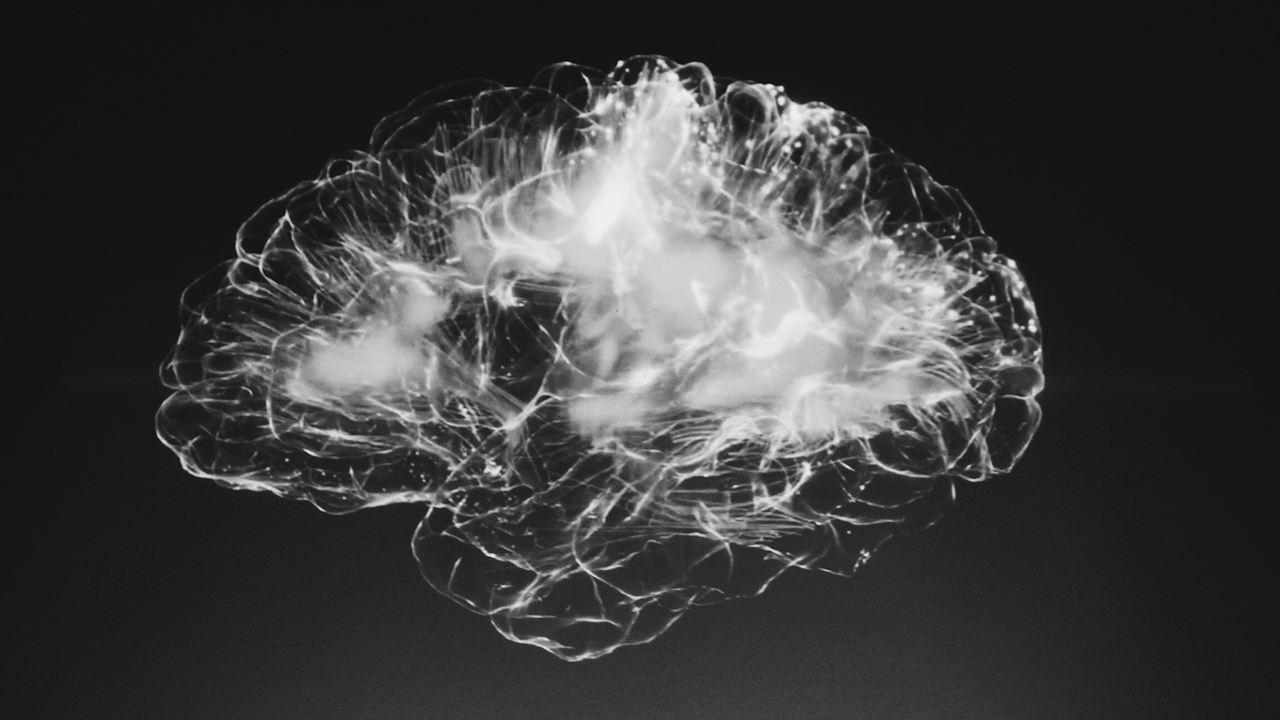
For decades, the notion of connecting the human mind directly to machines existed only in the pages of speculative fiction and on cinema screens. Writers and filmmakers imagined worlds where thoughts could control devices, where memories could be uploaded or downloaded, and where the boundary between brain and computer blurred into something unrecognizable. From the cybernetic enhancements in William Gibson’s Neuromancer to the neural jacks in The Matrix, brain-computer interfaces represented the ultimate fusion of biology and technology. Yet what once seemed like distant fantasy has steadily crossed into the realm of laboratory experiments, clinical trials, and real patient experiences. Today, in 2026, brain-computer interfaces are no longer confined to science fiction. They are restoring movement, speech, and independence to people with paralysis and neurological disorders, while raising profound questions about the future of human capability and identity.
The journey from concept to application stretches back further than many realize. The scientific roots trace to the 1920s with the discovery of electroencephalography, or EEG, by Hans Berger. This technique allowed researchers to record electrical activity from the scalp without opening the skull. By the 1960s and 1970s, scientists began experimenting with using those signals to influence external devices. In 1973, a landmark study at the University of California, Los Angeles, demonstrated the first successful human brain-computer interface. Participants used their brain waves, captured via EEG, to move a cursor across a screen. The term “brain-computer interface” itself was coined around that time by researcher Jacques Vidal, who envisioned systems that could translate neural intent into action.
Early work often relied on animals. Researchers trained monkeys to control computer cursors or robotic arms through implanted electrodes. These experiments proved that the brain’s motor cortex could be decoded in real time to predict intended movements. By the 1980s and 1990s, the Utah array emerged as a pivotal tool. Developed at the University of Utah, this silicon-based microelectrode array could record signals from dozens of individual neurons simultaneously. It was first implanted in humans during clinical trials in the 1990s, laying groundwork for more advanced systems.
The turn of the century marked a shift toward human applications. In 2004, the BrainGate consortium launched one of the most influential series of trials. This collaboration among institutions including Brown University, Massachusetts General Hospital, and Stanford University implanted Utah arrays in people with severe paralysis. Participants, including those with spinal cord injuries or amyotrophic lateral sclerosis, learned to control computer cursors, type messages, and even operate robotic arms using nothing but thought. One early participant famously used the system to check email and play simple games. These demonstrations showed that, even years after injury, the brain retained the ability to generate clear motor commands that could be intercepted and translated by technology.
Noninvasive approaches developed alongside invasive ones. EEG-based systems required users to wear caps with electrodes and focused on surface-level brain signals. Functional near-infrared spectroscopy and magnetoencephalography offered alternatives, though they often sacrificed precision for safety and ease of use. Invasive implants, placed directly into or on the brain’s surface, captured richer data from individual neurons or small groups of cells. Each method carried trade-offs: noninvasive options avoided surgery but delivered lower resolution and slower response times, while invasive ones promised higher performance at the cost of greater risk.
The 2010s brought refinements in signal processing and machine learning. Algorithms improved dramatically at filtering noise, decoding intentions, and adapting to changes in brain activity over time. Researchers demonstrated that people with paralysis could achieve typing speeds of dozens of words per minute through thought alone. In some cases, participants controlled prosthetic limbs with enough dexterity to grasp objects or even feed themselves. These advances relied on recurrent neural networks and other artificial intelligence techniques that mapped fleeting patterns of neural firing to specific actions.
By the mid-2020s, the field accelerated. Several companies and research groups pushed the technology into broader clinical use. Neuralink, founded in 2016, became one of the most visible players. Its N1 implant features ultra-thin threads with thousands of electrodes, inserted by a specialized surgical robot. As of early 2026, the company reported 21 human participants worldwide enrolled in its trials. These individuals, primarily those with quadriplegia from spinal cord injury or ALS, have demonstrated control over computers, cursors, and assistive robotic arms. Neuralink has expanded trials to include speech restoration through its VOICE study, decoding intended words from brain regions involved in speech production. Participants have achieved communication rates approaching conversational speeds in some sessions. The company also announced plans for high-volume production of devices and nearly automated surgical procedures in 2026, alongside an upcoming Blindsight trial aimed at restoring visual perception for people who are blind.
Other innovators have pursued complementary paths. Synchron employs a less invasive stentrode, inserted via blood vessels to sit against the brain’s surface. Blackrock Neurotech, building on decades of Utah array experience, has enabled participants to achieve high-performance control in tasks ranging from bimanual robotic manipulation to quadcopter flight simulation. Paradromics introduced its Connexus system with its first human implant in 2025. Precision Neuroscience focuses on surface arrays that can be placed with minimal tissue disruption. BrainGate continues to publish landmark results, including speech neuroprostheses that translate thoughts into spoken words with accuracies reaching 97 percent in some participants and systems that decode finger movements for precise digital control.
These systems operate through a common pipeline. Sensors, whether scalp electrodes or implanted arrays, detect electrical signals generated by neurons firing. Signal processing hardware amplifies and filters the raw data. Advanced algorithms, often powered by machine learning models trained on the user’s own neural patterns, decode the signals into commands. The decoded output then drives an external device, such as a cursor, prosthetic, or speech synthesizer. Some modern interfaces incorporate bidirectional communication, delivering sensory feedback directly to the brain through microstimulation. This closed-loop design mimics natural motor control more closely, allowing users to feel resistance or texture in a robotic hand, for instance.
The human impact has been profound. People once locked in their bodies have regained the ability to communicate with family, browse the internet, and perform everyday tasks. One participant with ALS regained nearly fluent speech within minutes of activating his system, selecting words from a vocabulary of over 100,000 options at high accuracy. Others have returned to college, played video games competitively, or simply regained enough independence to reduce reliance on caregivers. These stories move beyond statistics to illustrate restored agency and dignity.
Yet significant challenges remain. Biocompatibility poses a persistent hurdle. The brain’s immune response can cause scarring around implants, degrading signal quality over months or years. Engineers work on materials that minimize inflammation, such as flexible polymers or coatings that promote tissue integration. Power and data transmission require wireless solutions to avoid external tethers. Surgical risks, though reduced by robotic assistance, still include infection, bleeding, or unintended neurological effects. Long-term durability is unproven for many devices, and periodic recalibration can frustrate users.
Bandwidth limitations also constrain performance. Even the most advanced implants capture only a tiny fraction of the brain’s 86 billion neurons. Current systems excel at decoding discrete motor or speech intentions but struggle with complex cognitive tasks or nuanced emotional states. Scaling electrode counts to tens of thousands, as some roadmaps propose, will demand breakthroughs in data compression, wireless telemetry, and computational efficiency.
Ethical and societal dimensions loom large as the technology matures. Privacy emerges as a primary concern. Neural data could reveal not only intended actions but also unspoken thoughts, memories, or emotions if decoding algorithms advance sufficiently. Who owns this data, and how can it be protected from hacking or commercial exploitation? Security researchers already warn of potential vulnerabilities where malicious actors might interfere with signals or extract private information.
Autonomy raises equally difficult questions. If a device can influence or interpret brain activity, where does personal agency end and technological mediation begin? In therapeutic contexts, consent must be carefully managed, especially for patients with cognitive impairments. As applications expand beyond medicine toward enhancement, such as boosting memory or focus in healthy individuals, society must confront questions of fairness and coercion. Will access be limited to the wealthy, creating a divide between those who can augment their cognition and those who cannot? Regulatory bodies grapple with balancing innovation against safety, while ethicists debate whether neural interventions alter fundamental aspects of personhood or identity.
Broader societal implications extend to employment, education, and warfare. Military interest in BCIs for enhanced soldier performance or remote drone control dates back years, yet civilian oversight remains essential to prevent misuse. In workplaces, thought-controlled interfaces could transform productivity but might also enable unprecedented surveillance of mental states. Cultural attitudes toward the merging of mind and machine vary widely, with some viewing it as liberation and others as a threat to human essence.
Looking forward, the trajectory points toward greater integration. Vision restoration through cortical stimulation, already in early trials, could evolve from low-resolution “Atari-like” percepts to more detailed sight. Speech and motor restoration will likely become faster and more natural, approaching the fluidity of biological communication. Hybrid systems combining BCIs with artificial intelligence may enable seamless interaction with digital worlds or even direct brain-to-brain communication, once the stuff of pure speculation.
Challenges in scalability and ethics will shape whether these possibilities realize their potential responsibly. Regulatory frameworks must evolve alongside the technology, incorporating robust data protections and equitable access programs. Public engagement will be vital to ensure that development aligns with societal values rather than narrow commercial or military interests.
In the end, brain-computer interfaces exemplify humanity’s enduring drive to overcome limitations and expand understanding. What began as imaginative leaps in literature and film has become tangible progress through decades of painstaking research. Patients who once could only imagine moving a limb now do so through thought alone. The gap between sci-fi and reality has narrowed dramatically, yet the most transformative chapters may still lie ahead. As these interfaces continue to evolve, they invite reflection not only on what technology can achieve but on what kind of future we choose to create. The brain, long the most private and mysterious organ, is yielding its secrets. How society navigates that revelation will define the next era of human experience.