

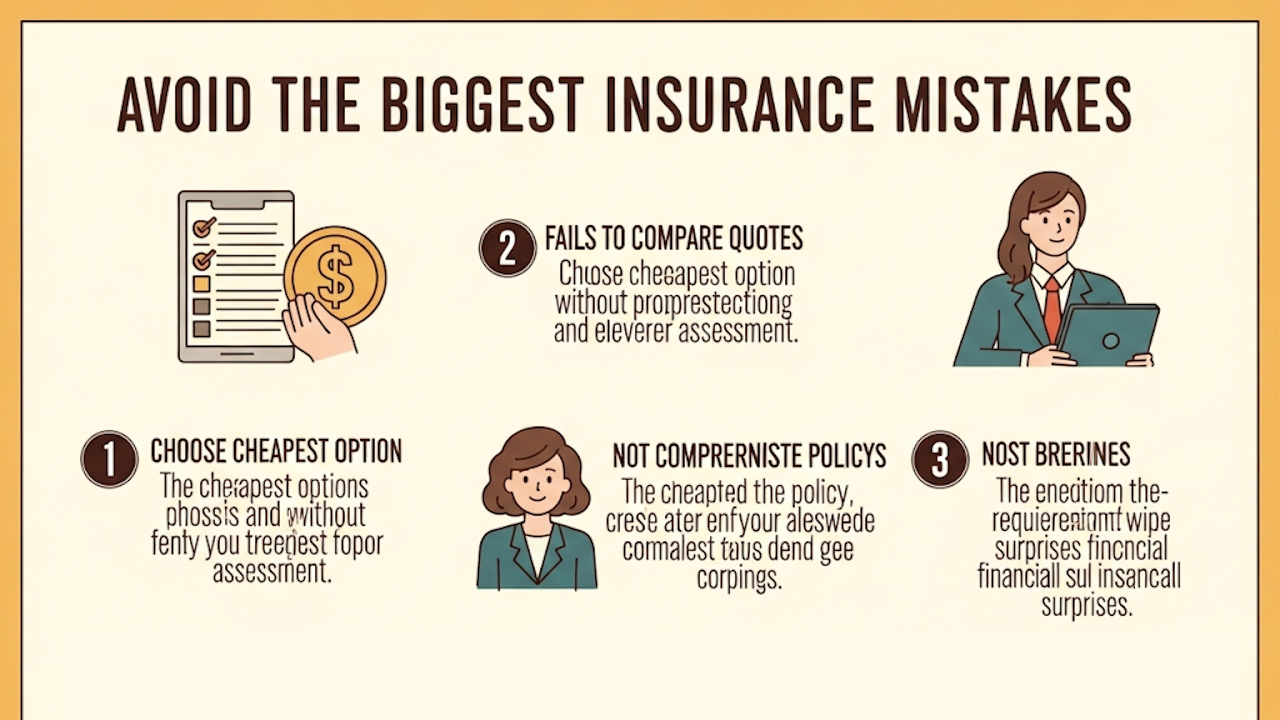
Insurance plays a critical role in protecting financial security against unexpected events such as accidents, illnesses, natural disasters, or loss of life. Yet many people approach the process of selecting coverage with misconceptions or rushed decisions that lead to inadequate protection or wasted money. These errors often stem from a lack of understanding about how policies work, overreliance on assumptions, or pressure from aggressive sales tactics. The consequences can be severe: denied claims, higher out-of-pocket costs, or even complete financial ruin in the event of a loss. This article explores the most common mistakes people make when choosing insurance, drawing on patterns observed across auto, home, renters, health, and life policies. By examining these pitfalls in detail and offering practical strategies to avoid them, readers can make more informed choices that align with their actual needs and budgets.
Mistake One: Choosing the Cheapest Policy Without Evaluating Coverage Quality
One of the most frequent errors is fixating on the lowest premium while ignoring what the policy actually delivers. Insurance is not a commodity like groceries where the cheapest option always suffices. A low-cost policy might exclude key protections or impose strict limitations that render it useless when a claim arises. For instance, an inexpensive auto insurance plan could omit comprehensive coverage for theft or collision, leaving the driver responsible for thousands of dollars in repairs after a minor accident. Similarly, a budget health plan might feature sky-high deductibles or narrow provider networks that exclude preferred doctors and hospitals.
This mistake often occurs because consumers compare only monthly prices rather than total value. Insurers compete aggressively on advertised rates, but the fine differences in coverage limits, exclusions, and renewal terms create hidden costs. Studies from consumer advocacy groups consistently show that policyholders who switch to the absolute cheapest option regret the decision when filing claims, as they end up paying more overall through uncovered losses. To avoid this trap, request detailed quotes that break down coverage components side by side. Calculate the potential out-of-pocket expenses under various scenarios, such as a major claim or multiple smaller ones. A slightly higher premium that includes broader protections often proves far less expensive in the long run.
Mistake Two: Failing to Assess Personal Risks and Coverage Needs Accurately
Many individuals select insurance based on generic advice or what friends and family recommend rather than conducting a thorough personal risk assessment. Life circumstances vary widely: a single renter in a low-crime area needs different protection than a homeowner with children, expensive belongings, and a swimming pool. Yet people frequently buy standard packages without considering unique factors like location-specific hazards, lifestyle habits, or future plans.
For home insurance, overlooking flood or earthquake risks in certain regions can prove disastrous, since standard policies exclude these perils unless riders are added at extra cost. In health insurance, failing to account for chronic conditions or planned medical procedures leads to surprise bills from out-of-network specialists. Life insurance buyers often underestimate future income needs for dependents or overlook inflation adjustments. The result is either over-insurance, where premiums drain budgets unnecessarily, or dangerous under-insurance that leaves gaps wide enough for financial catastrophe.
The solution involves creating a personalized inventory of assets, liabilities, and potential risks. List valuables, review mortgage or lease documents, and consult professionals such as financial planners for life coverage calculations. Revisit this assessment every year or after major life events like marriage, home purchase, or job change. Accurate needs evaluation ensures premiums support meaningful protection rather than superficial peace of mind.
Mistake Three: Not Shopping Around or Comparing Multiple Providers Thoroughly
Settling for the first quote from a familiar insurer or relying on a single agent represents another widespread error. Insurance rates and terms differ significantly across companies due to varying risk models, underwriting standards, and discount structures. What one carrier views as a high-risk driver another might rate more favorably based on different data points. Yet many consumers contact only one or two providers before deciding, missing opportunities for substantial savings or superior terms.
This laziness stems partly from the perceived complexity of insurance shopping and partly from loyalty to longtime agents. However, online comparison tools, independent brokers, and direct insurer websites make side-by-side analysis straightforward. Differences of hundreds of dollars annually are common even for identical coverage levels. Beyond price, compare customer service ratings, claims satisfaction surveys, and financial strength indicators from independent rating agencies. A policy from a carrier with poor claims handling can turn a straightforward accident into months of frustration and delayed payments.
To sidestep this mistake, obtain at least five quotes from different sources for the same coverage specifications. Use standardized request forms that list exact limits and deductibles. Factor in bundling discounts if applicable, but verify that the combined package still outperforms separate policies. Treat insurance shopping like any major purchase: invest time upfront to secure better value.
Mistake Four: Overlooking Policy Exclusions, Limitations, and Fine Print
Insurance documents contain dense language filled with exclusions, sublimits, and conditions that can void coverage entirely. Consumers who skip reading these sections often discover too late that their policy does not cover certain common events. A classic example involves home insurance excluding mold damage unless caused by a sudden covered peril like a burst pipe, or auto policies limiting roadside assistance to specific scenarios. Health plans frequently exclude pre-existing conditions during waiting periods or impose annual benefit caps on certain treatments.
The fine print also includes important details about cancellation rights, renewal guarantees, and proof-of-loss requirements. Ignoring these leads to denied claims and arguments with adjusters. Many people assume that if an event sounds reasonable it must be covered, but insurers operate under strict contractual terms designed to limit liability.
Prevent this by allocating dedicated time to review the full policy document before purchase. Highlight unclear sections and demand written explanations from the agent or insurer. Request sample policies during the quoting stage rather than waiting until after binding coverage. When in doubt, consult an independent insurance advisor who has no financial stake in a particular carrier. Understanding exclusions transforms insurance from a black box into a reliable safety net.
Mistake Five: Selecting Inappropriate Deductible Levels
Deductibles represent the amount policyholders pay before insurance kicks in, and choosing them incorrectly causes ongoing issues. Opting for the lowest possible deductible inflates premiums dramatically without proportional benefits, while selecting an excessively high one creates cash-flow problems during claims. Many drivers choose high auto deductibles to lower monthly costs but cannot afford the out-of-pocket expense when repairs become necessary. Homeowners sometimes mirror this pattern, underestimating repair costs for roof damage or water leaks.
The optimal deductible balances affordability with premium savings. A rule of thumb suggests setting it at a level equivalent to what one could comfortably cover from savings within a month. For health insurance, high-deductible plans paired with health savings accounts suit those with strong emergency funds, but they burden individuals with frequent medical needs. Life insurance rarely involves deductibles, but analogous choices appear in riders or benefit structures.
Calculate break-even points by comparing total annual costs under different deductible scenarios. Factor in inflation and rising repair costs. Review deductibles annually, as income and savings levels change. This disciplined approach prevents both overpaying for coverage and facing unaffordable gaps when protection is needed most.
Mistake Six: Assuming Employer-Provided or Group Insurance Is Always Sufficient
Workers often rely exclusively on employer-sponsored health, life, or disability plans without evaluating gaps. While convenient and sometimes subsidized, group coverage frequently offers lower benefit limits, shorter disability payout periods, or restrictive definitions of disability compared to individual policies. Portability also poses problems: coverage ends upon job loss, leaving families vulnerable during unemployment or transitions.
For example, employer life insurance might provide only one or two times salary, far below the recommended eight to ten times for adequate income replacement. Health plans may exclude dental or vision entirely or impose lifetime maximums on certain therapies. Many people discover these shortcomings only after a layoff or serious illness, when switching to individual coverage becomes more expensive due to age or health changes.
Supplement employer plans strategically. Purchase portable individual policies for critical needs like life or long-term disability. Compare total coverage by adding employer benefits to any personal policies. During open enrollment periods, scrutinize plan summaries rather than assuming defaults suffice. This layered approach ensures comprehensive protection regardless of employment status.
Mistake Seven: Neglecting to Review and Update Policies Regularly
Insurance needs evolve, yet many policyholders renew automatically year after year without reassessment. A policy purchased five years ago may no longer match current home value, vehicle usage patterns, or family size. Inflation drives up replacement costs, while lifestyle changes such as teenage drivers, home renovations, or new valuables introduce fresh risks. Automatic renewals lull consumers into complacency, resulting in outdated limits or missed discounts.
Claims data reveal that underinsured properties often stem from policies that have not been adjusted for years. Auto insurance may continue charging rates based on old driving records or vehicle values. Life insurance face amounts might fail to account for additional children or mortgage increases.
Establish a calendar reminder to review all policies annually, ideally before renewal dates. Update asset inventories, request coverage adjustments, and shop for alternatives if rates have risen disproportionately. Notify insurers promptly about changes like home improvements or reduced mileage to qualify for discounts. Regular maintenance keeps coverage aligned with reality and often uncovers cost-saving opportunities.
Mistake Eight: Relying Solely on Agents or Online Tools Without Asking Critical Questions
Both captive agents tied to one insurer and online comparison sites serve useful roles, but blind reliance creates blind spots. Agents may prioritize products that generate higher commissions, while digital tools simplify comparisons but cannot capture nuanced personal circumstances. Consumers who fail to probe deeper miss opportunities to customize coverage or uncover better alternatives.
Prepare a list of targeted questions before any consultation: How does this policy define covered perils? What is the claims process timeline? Are there any surcharges for future claims? For life insurance, inquire about conversion options from term to permanent coverage. Health plan questions should address prior authorization requirements and appeal processes for denied treatments.
Document responses in writing for future reference. Cross-check information with multiple sources, including state insurance department complaint databases. Treat agents as advisors rather than final authorities. Informed questioning bridges the knowledge gap and prevents mismatched expectations.
Mistake Nine: Misunderstanding Key Insurance Concepts and Terminology
Jargon such as actual cash value versus replacement cost, umbrella liability, or coinsurance confuses many buyers. Selecting a policy with actual cash value for a home means receiving depreciated amounts for damaged items rather than full replacement costs. Umbrella policies extend liability protection beyond standard limits but require underlying coverage minimums that many overlook. These misunderstandings lead to inadequate safeguards or unexpected expenses during claims.
Consumers also confuse riders with endorsements or mistake temporary binders for full policies. In auto insurance, underinsured motorist coverage protects against drivers with insufficient limits, yet many policies default to minimal or no such protection. Health insurance terms like out-of-pocket maximum versus deductible create budgeting errors.
Educate yourself through neutral resources from state regulators or nonprofit consumer organizations before shopping. Request glossaries with every quote. When terminology arises during discussions, pause and demand plain-language explanations. Mastery of core concepts empowers better decision-making and reduces the likelihood of post-claim surprises.
Mistake Ten: Ignoring Bundling Opportunities and Available Discounts
Many households maintain separate policies for auto, home, and other needs without exploring multi-policy discounts. Insurers routinely offer 10 to 25 percent savings for bundling, yet consumers overlook this because they focus narrowly on individual coverages. Additional discounts for safe driving history, security systems, or loyalty programs frequently go unclaimed simply because buyers never inquire.
This oversight compounds when people switch providers piecemeal without coordinating renewals. The cumulative effect can add hundreds of dollars annually to household expenses without any improvement in protection.
Audit current policies to identify bundling eligibility. Request quotes that incorporate all eligible discounts before committing. Track qualifying events such as installing home alarms or completing defensive driving courses. Periodic discount reviews ensure that savings accumulate rather than evaporate through neglect.
Conclusion: Building a Smarter Insurance Strategy
Avoiding these mistakes requires discipline, research, and periodic reevaluation rather than one-time decisions. Insurance should function as a tailored financial tool rather than a reactive expense. Begin by documenting assets and risks, then gather multiple quotes while scrutinizing every detail. Maintain open communication with providers and treat policy documents as living contracts that deserve regular attention.
Ultimately, the right insurance delivers confidence during crises rather than additional stress. By recognizing common pitfalls and adopting proactive habits, individuals and families can secure meaningful protection at reasonable costs. The time invested in thoughtful selection pays dividends through reduced financial vulnerability and greater peace of mind. Review coverage today, ask the hard questions, and treat insurance as the important investment it truly is.