

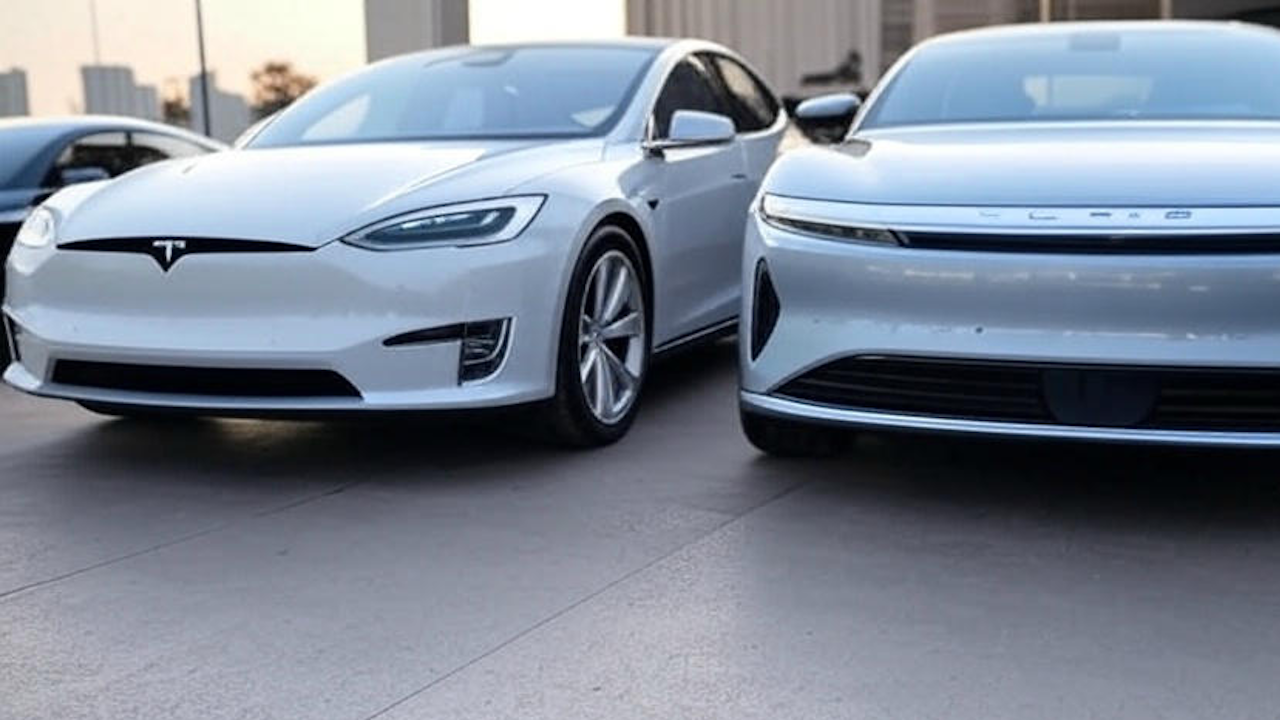
The electric vehicle industry stands at a crossroads in 2026. Three American companies, each with distinct visions and strategies, lead the charge among pure-play EV makers. Tesla, the undisputed volume leader and technology pioneer, faces mounting pressure from upstarts Rivian and Lucid. These challengers have carved niches in premium adventure vehicles and ultra-luxury sedans and SUVs, respectively. Yet all three grapple with slowing demand in some markets, supply chain hurdles, and the urgent need to scale production while advancing autonomy and affordability. This battle will shape not only corporate fortunes but the broader transition to sustainable transportation.
Tesla entered the fray first and remains the benchmark. Founded in 2003 and propelled by CEO Elon Musk since 2004, the company transformed EVs from niche curiosities into mainstream choices. Its mission centers on accelerating the world’s shift to sustainable energy through vehicles, energy storage, and solar products. By 2025, Tesla delivered 1.636 million vehicles globally, down slightly from prior years amid pricing pressures and economic headwinds. In the United States, its market share slipped to 46 percent for the full year from 49 percent in 2024 but rebounded sharply to 59 percent in the fourth quarter. Early 2026 data shows continued strength: production exceeded 408,000 vehicles in the first quarter, with deliveries at 358,000. Revenue reached 94.8 billion dollars in 2025, and the company stayed profitable even as automotive sales dipped 10 percent to 69.5 billion dollars. Model Y led sales with roughly 357,000 units in the United States alone, followed by Model 3 estimates around 173,000. Cybertruck contributed an estimated 20,000 to 29,000 units, a modest but growing presence in the pickup segment.
Rivian, by contrast, emerged more recently with a focus on rugged, lifestyle-oriented trucks and SUVs. Founded in 2009 and based in California, the company went public in 2021 after raising billions. Its flagship R1T pickup and R1S SUV emphasize off-road capability, adventure features, and software-driven personalization. Rivian also secured a major partnership with Amazon for electric delivery vans, which provided critical early revenue and validation. In 2025, the company produced and delivered about 42,000 vehicles, including vans, a figure that reflected steady but limited growth constrained by factory retooling. Rivian remains unprofitable, yet it projects a significant leap in 2026: 62,000 to 67,000 total deliveries. The catalyst is the new R2 midsize SUV, with production ramping in the second quarter and deliveries starting in spring. Pricing begins at around 45,000 dollars for the Standard trim, rising to 57,990 dollars for the Performance Launch Package. Additional trims arrive later in 2026 and 2027, positioning Rivian to compete directly in the mass-market crossover space long dominated by Tesla’s Model Y.
Lucid Motors represents the luxury end of the spectrum. Evolving from Atieva in 2016, the company leverages expertise from former Tesla chief engineer Peter Rawlinson. Backed heavily by Saudi Arabia’s Public Investment Fund, Lucid prioritizes extreme efficiency, advanced battery technology, and opulent interiors. Its Air sedan and newer Gravity SUV target high-end buyers willing to pay premiums for class-leading range and refinement. Production doubled in 2025 to 18,378 vehicles, with deliveries climbing 55 percent to 15,841. The fourth quarter set records at 8,412 produced and 5,345 delivered. Gravity, launched amid early supply chain issues involving magnets and other components, has gained traction; interim data suggest it outsold Rivian’s R1S at a comparable market stage in some metrics. For 2026, Lucid guides production at 25,000 to 27,000 units, a moderated target after trimming expectations amid softer U.S. demand. The company eyes a midsize EV in coming years to broaden appeal beyond its current high-price lineup.
Product lineups highlight sharp differences in strategy and target customers. Tesla offers a broad portfolio from the entry-level Model 3 and Y to the premium Model S and X, plus the polarizing Cybertruck. Range varies by configuration, but efficiency and over-the-air updates keep vehicles competitive. Software defines the experience: Full Self-Driving (Supervised) version 14 advanced significantly in early 2026, with features like active road noise reduction and expanded robotaxi-style drop-off options. Production of the Cybercab robotaxi begins in April 2026 at Giga Texas, with unsupervised autonomy targeted for rollout later in the year. This positions Tesla not just as a carmaker but as a mobility platform provider.
Rivian’s R1T and R1S deliver adventure-focused utility with configurable powertrains, air suspension, and features like Launch Mode enhanced in 2026 software updates. Battery packs offer strong range, and the vehicles excel in towing and off-road scenarios. The incoming R2 shrinks the footprint while retaining Rivian’s signature design language, with horsepower up to 656 in Performance trim and estimated ranges approaching 330 miles. R3, a crossover variant, follows to further expand the lineup. Amazon vans provide a commercial backbone, potentially scaling if the e-commerce giant accelerates its own delivery network.
Lucid’s Air and Gravity emphasize serenity and efficiency. The Air has long claimed among the longest real-world ranges in production, often exceeding 500 miles in optimal configurations. Gravity brings SUV practicality to the luxury segment, with strong early sales momentum despite production hiccups. Both models feature DreamDrive advanced driver assistance, though it trails Tesla’s FSD in scope and deployment speed. Lucid’s battery and motor technology set efficiency benchmarks that force rivals to respond.
Technology and innovation separate the titans. Tesla’s vertical integration, from cells to software, enables rapid iteration. Its 4680 battery cells, energy storage deployments (46.7 gigawatt-hours in 2025), and camera-only autonomy approach underpin ambitions beyond vehicles. Full Self-Driving progress and robotaxi networks could generate recurring revenue streams far exceeding hardware sales. Rivian invests in zonal electrical architecture for future scalability and over-the-air enhancements that improve performance without hardware changes. Its focus remains vehicle-centric but increasingly software-defined. Lucid excels in powertrain efficiency and structural battery integration, drawing on Formula E heritage. Yet it lags in software ecosystem depth and lacks Tesla’s data advantage from millions of vehicles.
Manufacturing scale reveals the clearest disparity. Tesla operates Gigafactories across the United States, China, Germany, and beyond, churning out vehicles at rates Rivian and Lucid can only dream of. Recent quarters show production stability even amid model refreshes. Rivian retooled its Illinois plant in 2025 for R2 and R3 preparation while breaking ground on a Georgia facility slated for 2028 volume. This expansion aims to support 150,000 annual units eventually. Lucid’s Arizona plant achieved record output in late 2025 but still operates at a fraction of rivals’ pace. Supply chain vulnerabilities, including reliance on certain imported components, constrained growth and prompted guidance cuts.
Financial health underscores the stakes. Tesla generated nearly 95 billion dollars in revenue in 2025 and maintained positive margins despite market softness. Cash reserves exceed 44 billion dollars, funding robotaxi, Optimus robot, and energy bets. Rivian and Lucid continue burning cash, with losses in the billions annually. Rivian trades at a lower sales multiple than Lucid, reflecting investor bets on its volume ramp. Both challengers depend on fresh capital and execution to reach breakeven. Policy shifts, including potential tariff impacts and EV incentive changes, add uncertainty across the board.
Challenges confront all three. Broader EV demand slowed in 2025, with Tesla’s U.S. sales declining before a late rebound. Competition from legacy automakers and Chinese brands intensifies pricing wars. Rivian and Lucid face particular pressure to prove they can scale without sacrificing quality or margins. Tesla must deliver on autonomy timelines to justify its valuation premium. Regulatory hurdles for unsupervised robotaxis and infrastructure gaps remain hurdles, though Tesla’s Supercharger network provides a lasting advantage.
Looking ahead, strategies diverge yet converge on affordability and autonomy. Tesla pushes robotaxis and potentially lower-cost models while expanding energy and robotics. Rivian bets the R2 family unlocks mainstream buyers, with Georgia production unlocking volume. Lucid eyes a midsize vehicle to complement Gravity and Air, leveraging Saudi support for global expansion. All invest heavily in software to differentiate experiences and reduce reliance on hardware alone.
The battle yields clear winners for consumers: more choices, faster innovation, and improving value. Tesla retains the lead through scale and ecosystem lock-in, but Rivian and Lucid demonstrate viable paths in adventure and luxury niches. Success in 2026 and beyond hinges on execution. Can Rivian deliver on R2 promises without delays? Will Lucid stabilize production and expand downward? Can Tesla convert FSD hype into robotaxi revenue? The answers will determine market leadership for the decade.
In this contest of titans, no single victor emerges yet. Tesla’s first-mover advantage and resources give it the edge today, but the challengers’ focused differentiation and upcoming affordable entries keep the race fiercely competitive. The real prize extends beyond sales charts to redefining mobility itself. As these companies push boundaries, the electric future accelerates for everyone on the road.