

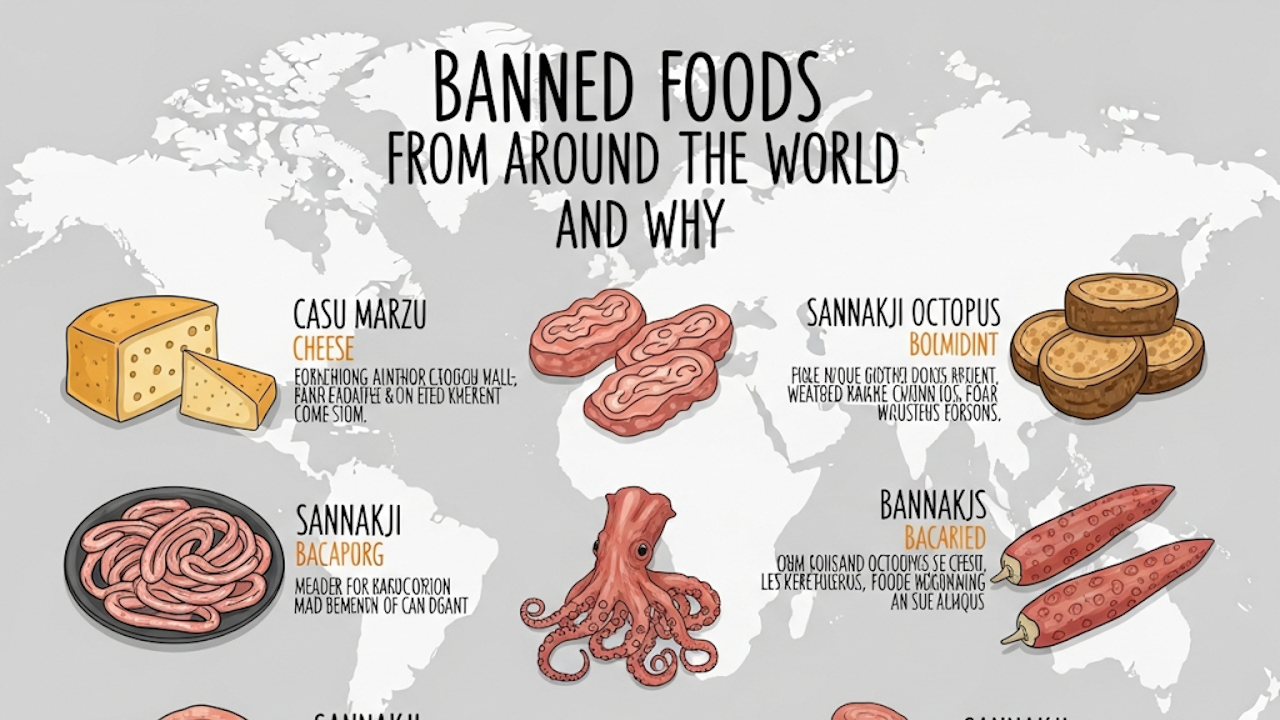
Food regulations vary widely across the globe reflecting a complex mix of public health priorities animal welfare standards environmental protections cultural norms and sometimes religious beliefs. What one country considers a delicacy another may outlaw entirely due to risks of illness toxicity cruelty or ecological harm. These bans often spark debate with critics arguing they reflect overreach or cultural bias while supporters point to science and ethics as justification. This article explores some of the most notable banned foods from different regions explaining the specific reasons behind each prohibition and the contexts in which they apply. From everyday staples altered by processing to rare delicacies tied to endangered species the list reveals how societies draw lines around what is safe acceptable or sustainable to consume.
Health and safety concerns drive many food bans with governments acting to prevent outbreaks of illness or exposure to toxins. One prominent example is akee fruit the national fruit of Jamaica. Unripe akee contains high levels of a toxin called hypoglycin A that can trigger severe vomiting low blood sugar and even fatal Jamaican vomiting sickness. In the United States fresh akee is banned from import and sale though processed forms like canned or frozen versions may appear rarely under strict controls. The prohibition stems from documented cases of poisoning and the difficulty in ensuring ripeness where the fruit must split open naturally to reveal safe edible parts. Consumers in Jamaica know to avoid unripe specimens but the strict import rules in the United States prioritize consumer protection over availability.
Raw milk represents another widely restricted item. Unlike pasteurized milk which undergoes heat treatment to kill harmful bacteria raw milk can harbor pathogens such as Salmonella E. coli Listeria and Campylobacter. These pose serious risks particularly to vulnerable groups including children pregnant women the elderly and those with weakened immune systems potentially leading to severe illness hospitalization or death. Countries including Scotland Australia and Canada maintain outright bans on its sale while about 20 states in the United States prohibit it entirely with others allowing limited sales under regulation. Proponents claim raw milk offers superior nutrition and digestibility but health authorities counter that scientific evidence does not support these benefits and the dangers far outweigh any perceived gains. Similar logic applies to unpasteurized apple juice which faces comparable restrictions in some areas due to bacterial contamination risks.
Certain cheeses push safety boundaries even further. Casu marzu a traditional Sardinian product also known as maggot cheese is made by allowing flies to lay eggs in pecorino cheese so that larvae break it down into a soft creamy texture. The live maggots can survive human stomach acid and potentially bore into intestinal walls causing serious damage. It is banned from commercial sale across the European Union and the United States though it persists informally in local Sardinian markets. The prohibition balances respect for culinary tradition against clear public health hazards with regulators citing the potential for infection and the unsanitary nature of the process.
Pufferfish or fugu offers a high stakes delicacy primarily in Japan where specially trained chefs remove toxic organs containing tetrodotoxin a neurotoxin more potent than cyanide. Even a tiny error in preparation can lead to paralysis respiratory failure and death. In the United States fugu cannot be sold or served without a special license reflecting the extreme risk involved. While Japan regulates it tightly other nations impose broader bans or heavy restrictions to avoid any chance of accidental poisoning.
Additives in processed foods also trigger bans in many places. Potassium bromate used as a dough conditioner in bread and baked goods has been classified as a possible carcinogen. It is prohibited in the European Union Canada China and several other countries though it remains permitted in the United States with some states requiring warning labels. Similarly artificial food dyes such as Yellow 5 Yellow 6 and Red 40 appear in countless snacks and cereals but face restrictions in parts of Europe including Norway and Sweden due to links with hyperactivity in children and potential allergic reactions. Preservatives like BHA and BHT found in some American cereals and snacks are banned in the United Kingdom Australia New Zealand Japan and much of Europe over concerns they may act as carcinogens or hormone disruptors. These differences highlight varying regulatory philosophies where some nations adopt a precautionary approach while others allow additives deemed safe within limits.
Animal welfare issues form another major category of bans. Foie gras the enlarged liver of force fed ducks or geese stands out as particularly controversial. The production process involves inserting tubes into the birds throats to overfeed them causing the livers to swell dramatically up to eight times normal size which leads to pain infections and mobility problems. India became the first country to ban its import entirely in 2014 while production is outlawed in California Argentina Australia and the Flemish region of Belgium. Cities like New York have attempted similar restrictions citing cruelty though enforcement varies. Supporters argue the practice mirrors other livestock methods but opponents view it as uniquely inhumane and unnecessary for a luxury item.
Horse meat illustrates how cultural perceptions can evolve into legal prohibitions. Horses are often regarded as companion animals or symbols of nobility in many Western societies making their consumption taboo. In the United States horse slaughter for human consumption is illegal in several states including California Illinois and others with federal restrictions limiting export for meat. The practice remains legal and common in parts of Europe Mexico Canada and Asia where it is valued for its lean protein high iron content and omega 3 fatty acids. Bans or limits arise not only from ethics but also from concerns over drug residues in former racing or working horses that could pose health risks.
Environmental protection and species conservation motivate bans on foods tied to overexploitation. Shark fin soup a traditional delicacy in some Asian cuisines has led to widespread prohibitions because the fins are harvested through finning a practice where sharks are caught have their fins sliced off and are thrown back to die slowly. High mercury levels in some species add health concerns and the trade threatens shark populations critical to ocean ecosystems. The United States United Kingdom and Canada have banned the sale import and export of shark fins with the United States enacting its federal prohibition in 2022. Similar logic applies to beluga caviar from endangered sturgeon. Overfishing has decimated populations prompting the United States to ban its import since 2005 under endangered species protections. Bushmeat from wild animals such as bats monkeys or giraffes faces strict controls in the United States and elsewhere due to both biodiversity loss and disease transmission risks including Ebola which can spread through handling even without consumption. Sea turtle meat and eggs are outlawed in the United States and many other nations as felonies because these ancient species are endangered and historical overharvesting nearly wiped them out.
Broader categories of processed imports reveal transatlantic divides. Chicken washed in chlorine to kill bacteria is standard in the United States but banned in the European Union since 1997 over fears it masks poor farming hygiene and leaves chemical residues. Meat treated with ractopamine a growth promoter used in some United States pork and beef production is prohibited in more than 120 countries including China Russia and the European Union due to potential links to cardiovascular issues and residue concerns. Milk from cows injected with recombinant bovine growth hormone or rBGH is banned in the European Union Canada Japan Australia and New Zealand because of worries it may increase cancer risks or affect human health though usage has declined in the United States. Genetically modified foods face cultivation bans or strict labeling in much of the European Union and other regions amid debates over long term safety environmental impact and corporate control of seeds. Many specific American snacks and cereals containing these additives or processing methods are effectively barred from sale in Europe and parts of Asia illustrating how one nations approved ingredients become another’s contraband.
Some bans stem from quirky regulatory or cultural factors rather than direct health threats. Kinder Surprise chocolate eggs are illegal in the United States because they contain a small toy inside which regulators classify as a choking hazard for children under the federal rule against non nutritive objects embedded in food. A safer version called Kinder Joy separates the toy but the original remains prohibited. Haggis the Scottish national dish of sheep organs including lungs mixed with oats and spices is banned in the United States since 1971. The lungs are the issue as they can absorb contaminants during slaughter making them unsuitable for human consumption under Food and Drug Administration guidelines. Efforts to lift the ban continue but it persists. Chewing gum has been illegal to import or sell in Singapore since the 1990s to maintain public cleanliness and reduce litter though therapeutic or dental gums receive exemptions. Durian fruit known for its intense odor is prohibited in many public spaces such as hotels buses and airports across parts of Asia not for toxicity but because the smell is deemed too overpowering for shared environments.
Blood based foods encounter restrictions in unexpected places. Black pudding or blood sausage popular in the United Kingdom and Ireland faces limits in the United States due to sanitary concerns over blood products which require extensive approval processes to ensure safety. Similar rules apply to other items like certain French cheeses made from unpasteurized milk or those with natural rinds that harbor bacteria deemed risky.
Religious and cultural taboos sometimes gain legal force. Pork is haram or forbidden under Islamic dietary laws in countries like Saudi Arabia where it is banned outright for religious reasons. Beef is prohibited in much of India due to the sacred status of cows in Hinduism with many states criminalizing slaughter or transport of cattle. Dog meat which appears in some traditional cuisines in parts of Asia is outlawed in Western nations and places like Hong Kong Germany and parts of the United States on grounds of animal welfare and cultural disgust. These prohibitions blend faith with modern ethics highlighting how food laws encode societal values.
In conclusion the landscape of banned foods underscores that edibility is not universal but shaped by evidence ethics and identity. Bans evolve as science advances trade agreements shift and public awareness grows. What seems arbitrary in one context protects lives or ecosystems in another. Travelers and consumers benefit from understanding these rules not only to avoid legal trouble but also to appreciate the deeper principles at play. As global food systems interconnect debates over bans will likely intensify prompting ongoing reassessment of what belongs on our plates and why.