

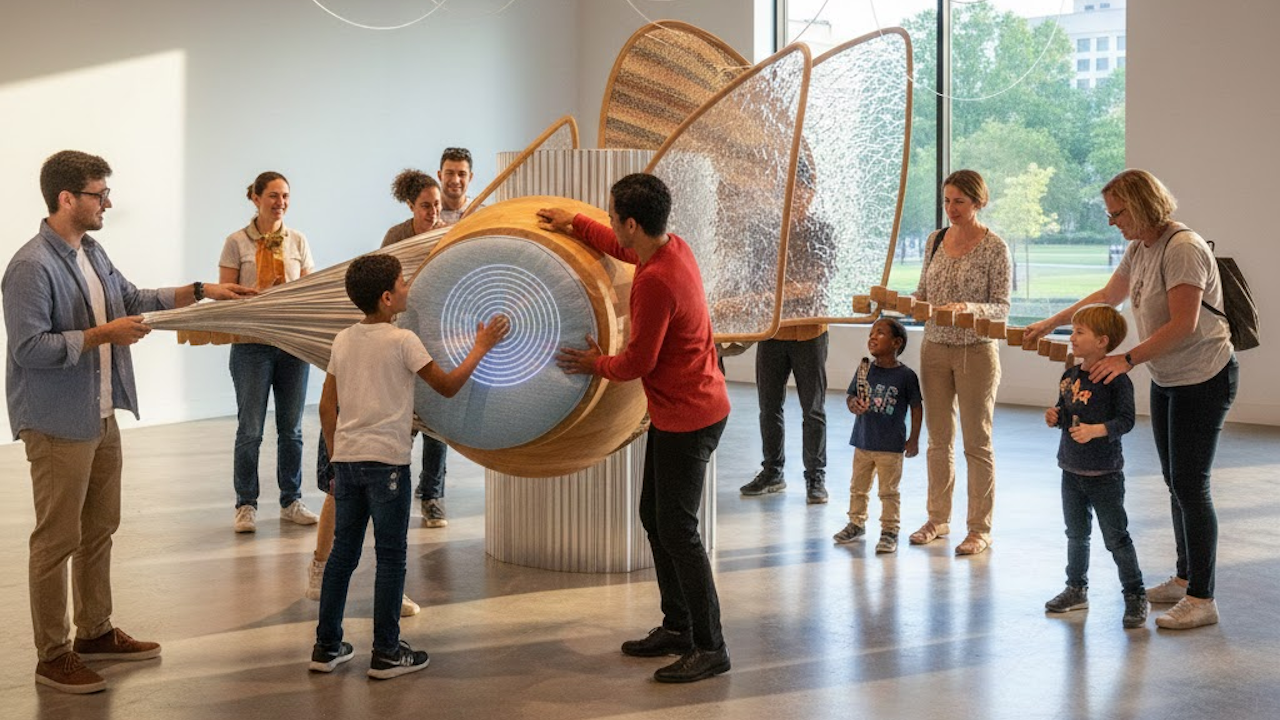
Art has traditionally been something to observe from a distance. Paintings hang on walls behind velvet ropes. Sculptures sit on pedestals under careful lighting. Viewers admire but rarely participate. Yet a growing movement challenges this separation. Artists create works meant for direct engagement. These pieces invite hands to explore textures, bodies to move through spaces, and minds to play. This is art you can touch, feel, and interact with. It blurs the line between creator and audience. It turns passive looking into active experiencing.
The idea of tactile art reaches back through history. Ancient cultures shaped clay into vessels not only for utility but for the pleasure of their surfaces. Cave paintings may have involved fingers smearing pigments. In the Renaissance, sculptors like Michelangelo carved marble that begged to be felt, though rules often prevented it. The 20th century brought bolder experiments. Artists such as Alexander Calder introduced kinetic sculptures that moved with air currents or viewer interaction. The Fluxus movement in the 1960s encouraged playful, participatory events. Yoko Ono’s “Cut Piece” asked audiences to cut away her clothing with scissors. These works questioned what art could be and who it was for.
Today tactile and interactive art appears in galleries, museums, public spaces, and even homes. It serves many purposes. Some pieces focus on sensory exploration. Others promote healing or education. Many simply bring joy. The common thread is physicality. Viewers become participants. They press buttons, stroke fabrics, build structures, or walk through immersive environments. This engagement creates personal connections that static art rarely matches.
One major category is sculpture and installation art designed for touch. Traditional sculpture often carries warnings against handling. Contemporary artists flip this. They use materials with rich textures. Soft fabrics, rough woods, smooth metals, and flexible plastics invite different sensations. Anish Kapoor creates large-scale works that reflect light and distort space, but many of his pieces also encourage walking around and even inside them. Other artists go further. They craft enormous beanbag-like forms or padded rooms where people can lie down and roll. These environments turn galleries into playgrounds.
Fiber art and textiles offer particularly intimate experiences. Artists weave, knit, crochet, and felt materials into large tapestries or sculptural forms. Viewers can run fingers over intricate patterns. Some installations feature hanging threads or curtains that part like waterfalls when touched. The Japanese artist Chiharu Shiota creates rooms filled with red yarn webs. Visitors navigate through them carefully, feeling the tension and softness. Such works engage not only sight but also the sense of proprioception, or body awareness in space.
Ceramics and pottery provide another tactile avenue. While finished pots are delicate, many artists invite participation in the creation process. Workshops allow people to throw clay on wheels and feel the wet material spin under their hands. Some exhibitions display unfired or partially completed works alongside tools. The cool, malleable quality of clay offers immediate feedback. A slight pressure changes the shape dramatically. This direct cause and effect makes the art feel alive and responsive.
Kinetic art adds movement to the mix. Pieces respond to wind, water, motors, or human push. Jean Tinguely built chaotic machines from scrap metal that whirred, clanked, and sometimes self-destructed in performance. Modern versions use sensors and simple electronics. A sculpture might spin faster when approached or light up when touched. These works combine visual appeal with the thrill of physical interaction. Children and adults alike delight in setting them in motion.
Interactive installations often scale up to room-sized or building-sized experiences. TeamLab, a Japanese collective, designs digital environments projected onto walls and floors. While much is screen-based, many include physical elements like water, sand, or balls that influence the projections. Stepping on certain spots changes flower patterns or sends digital butterflies flying. The boundary between physical and virtual blurs. Participants feel the cool mist from fog machines or the texture of artificial grass underfoot while digital elements react in real time.
Public art takes these ideas into everyday life. Cities commission playgrounds that double as sculptures. Climbing structures with varied grips and surfaces engage multiple senses. Sound installations in parks respond to footsteps or voices. One famous example is the “Cloud Gate” in Chicago, also known as the Bean. People touch its mirrored surface, see their reflections warp, and walk underneath it. The cool metal and distorted views create shared moments of wonder. Similar works appear in plazas worldwide, turning urban spaces into interactive galleries.
Accessibility drives much of this art. Traditional visual art excludes those with low vision or blindness. Tactile versions open doors. Museums create touch tours with replicas of famous sculptures. Raised-line drawings and 3D printed models allow exploration by hand. Artists like Carmen Papalia create guided experiences using sound, touch, and smell instead of sight. His “mobility device” workshops turn canes and human chains into collaborative performances. Such work challenges assumptions about who art is for and how it should be experienced.
Education benefits enormously from hands-on art. Schools incorporate maker spaces where students build with recycled materials. They learn physics through balancing sculptures or engineering through motorized creations. Tactile experiences improve memory and understanding. Children remember the feel of a bumpy texture or the weight of a balanced mobile better than descriptions alone. Universities and research centers explore haptics, the science of touch. Robotic interfaces simulate textures for remote learning or medical training. Art leads the way in making these technologies feel human and engaging.
Therapeutic applications continue to expand. Art therapy uses touch to reduce anxiety and process emotions. Squeezing stress balls or molding clay provides outlets for difficult feelings. Sensory rooms in hospitals and care facilities feature textured walls, fiber optic lights, and soft furnishings. Patients with dementia or autism spectrum conditions often respond positively to these environments. The predictable yet responsive nature of interactive pieces offers comfort and stimulation without overwhelming.
Technology amplifies possibilities. Sensors, microcontrollers like Arduino, and affordable 3D printers let artists experiment rapidly. A single piece might include pressure pads that trigger sounds, temperature-changing elements, or scent releases. Virtual reality adds another layer, though pure physical art remains distinct. Some hybrid works use augmented reality apps. Point a phone at a sculpture and see digital overlays, but the base object stays touchable. Haptic feedback suits and gloves bring touch into digital realms. While not replacing physical art, these tools expand creative options.
Challenges exist in this field. Durability becomes an issue when thousands of hands interact daily. Materials must withstand wear while remaining safe. Cleaning protocols matter, especially in public or institutional settings. Artists balance openness with preservation. Some works have limited interaction times or require gloves. Others embrace change and patina from human contact as part of the piece. Documentation through video and photography captures ephemeral moments.
Funding and space also constrain growth. Large interactive installations demand room and maintenance. Grants from arts councils and technology foundations help. Crowdfunding platforms allow direct support from enthusiasts. Pop-up events and festivals test ideas before committing to permanent displays. The Burning Man event in the desert showcases massive interactive works built by communities. Participants climb, spin, and play with art that often burns at the end, emphasizing impermanence.
Cultural differences influence approaches. In some societies, touching art has long been acceptable or even expected. Indigenous traditions incorporate tactile elements in ceremonies and storytelling. Western museums historically emphasized looking only, but attitudes shift. International exhibitions showcase diverse perspectives. African beadwork and textiles invite handling. Latin American carnival installations burst with color and movement. Asian garden designs use rocks, water, and plants for multisensory calm.
Artists leading this movement come from varied backgrounds. Some train traditionally then pivot to interactivity. Others emerge from engineering or computer science. Collaboration becomes key. Teams include fabricators, programmers, performers, and accessibility experts. The resulting works feel richer for these partnerships. One standout is the work of Studio Drift. Their “Fragile Future” series combines dandelion seeds with LED lights in delicate sculptures. Viewers can gently blow on them, watching seeds drift while lights respond.
Another example involves sound and touch. Artists create instruments that double as sculptures. Large xylophones or drum walls encourage rhythmic play. The vibrations travel through hands and bodies. Resonance and harmony emerge from group participation. These pieces foster social connection. Strangers play together, improvising and laughing.
Food-based art pushes boundaries further. Some creators design edible installations. Chocolate sculptures or sugar landscapes invite tasting alongside touching. While perishable, they highlight multisensory pleasure. Safety and hygiene guide these works carefully. The temporary nature adds urgency to the experience. Eat it now or miss it.
Fashion and wearable art bridge personal and public realms. Designers create garments with unusual textures or interactive elements. LED-embedded clothing changes with movement. Inflatable suits alter shape based on breath. Runway shows become performances where models and audience interact. Everyday clothing incorporates subtle tactile details like raised patterns for visual impairment or simply for pleasure.
Looking ahead, this art form will likely grow with new materials and technologies. Smart fabrics change color or stiffness with electrical input. Biodegradable composites reduce environmental impact. Artificial intelligence might generate responsive behaviors that evolve with each interaction. Yet the core remains human. The warmth of skin against wood, the give of foam underfoot, the satisfaction of fitting pieces together. These sensations ground us in physical reality even as digital worlds expand.
Critics sometimes question whether such playful works qualify as serious art. They argue that accessibility dilutes meaning or that interactivity distracts from deeper contemplation. Proponents counter that engagement deepens understanding. A piece felt and played with reveals layers a glance cannot. Documentation and reflection follow the experience. Both approaches have value. The best works accommodate quiet observation alongside active participation.
Institutions adapt. Major museums dedicate galleries to touchable collections. Staff train in facilitation rather than enforcement. Signage encourages rather than prohibits. Education programs teach visitors how to interact respectfully. Children especially thrive in these spaces. They approach without preconceptions. Their natural curiosity models ideal engagement for adults.
Communities benefit when public spaces incorporate interactive art. Neighborhood revitalization projects include murals with textured elements or seating that doubles as sculpture. Playful design combats urban stress. People linger, connect, and return. Tourism increases around notable installations. Cities compete to host the most innovative works.
Artists face the ongoing task of balancing novelty with substance. Gimmicks fade quickly. Enduring pieces combine strong concepts with excellent execution. They address themes like connection, environment, identity, or technology while remaining fun to experience. Humor often helps. A giant rubber duck floating in a harbor or a sculpture that makes silly noises when touched brings smiles and deeper reflection.
In schools and universities, curricula increasingly include hands-on creation. Students learn not only traditional techniques but also electronics, programming, and material science. This prepares them for careers in creative technology fields. Cross-disciplinary thinking flourishes. Future innovators emerge from these programs.
Personal collections can include small interactive pieces. Desktop kinetic sculptures, stress-relieving fidget objects with artistic merit, or modular building sets designed by artists. These items bring daily joy and remind owners of larger experiences.
The rise of maker culture supports this trend. Affordable tools allow more people to create tactile art at home. Online communities share designs and techniques. 3D printing files for touchable models circulate freely. This democratization expands who makes and enjoys such work.
Environmental consciousness influences materials. Artists repurpose waste into beautiful, touchable forms. Plastic bottles become luminous chandeliers. Discarded tires transform into playground equipment. These pieces highlight sustainability while offering sensory delight.
Mental health awareness amplifies interest. In stressful times, art that calms through touch gains importance. Weighted blankets with artistic patterns, gardens with varied plant textures, and sound baths with physical instruments all contribute. Art therapy certification programs grow. Practitioners use tactile methods extensively.
Global events showcase this art. Biennales and expos feature interactive pavilions. World fairs include zones dedicated to sensory experiences. Virtual tours supplement but never replace the real thing. The bodily presence matters.
Challenges around inclusivity persist. Not everyone can touch due to allergies, mobility issues, or cultural norms. Good design considers multiple access points. Audio descriptions, visual projections, and scent elements complement touch. Universal design principles guide thoughtful creators.
Economic aspects matter too. Interactive art can generate revenue through tickets, workshops, or merchandise. Yet many artists prioritize free public access. Hybrid models sustain practice. Corporations sponsor large works for branding while providing community benefit.
Education research supports the value. Studies show improved engagement, creativity, and empathy from hands-on learning. Tactile experiences activate more brain regions than visual alone. This has implications for all ages, from early childhood to elder care.
In conclusion, art you can touch, feel, and play with enriches human experience. It reconnects us with our senses in an increasingly digital world. It invites participation rather than spectatorship. It fosters joy, learning, healing, and connection. As technology and society evolve, this art form will continue to surprise and delight. The next time you encounter a sculpture with an inviting surface or an installation that beckons you closer, reach out. Touch it. Feel it. Play with it. You might discover something new about the artwork, the artist, and yourself. The boundary between art and life dissolves in those moments of direct contact. That is where the magic happens.