

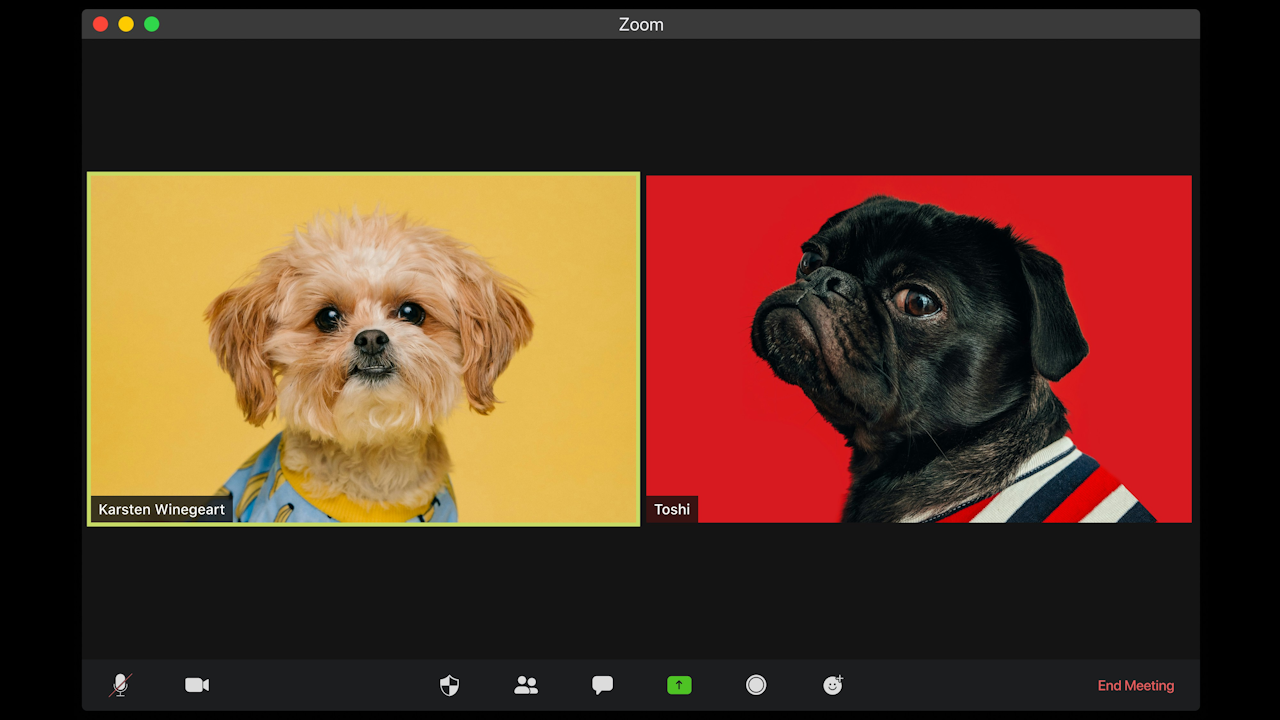
For centuries humans have gazed into the eyes of their canine companions and wondered what lies behind those wagging tails and soulful stares. What if your dog could tell you exactly why it barks at the mailman or why it suddenly refuses to eat its usual kibble? The idea of conversing with pets has long belonged to the realm of fantasy, from Doctor Dolittle to countless children’s stories. Yet in 2026 artificial intelligence is inching that fantasy toward reality. Researchers and tech developers are building systems that analyze barks, growls, body language, and even facial expressions to interpret what dogs might be trying to communicate. The question is no longer whether AI pet translators exist but whether they bring us meaningfully closer to genuine two-way dialogue with our dogs.
The fascination with animal communication is hardly new. Ancient civilizations depicted gods who spoke with beasts, and 19th-century naturalists meticulously cataloged bird songs and whale calls. In the modern era pet owners have relied on intuition, training manuals, and basic observation to guess at their animals’ needs. Early consumer gadgets in the 2000s, such as simple bark-activated toys or apps that played back recorded dog sounds, offered little more than entertainment. These tools mapped generic bark patterns to humorous translations like “I am happy” or “Feed me,” but they lacked scientific depth and often relied on crude pattern matching rather than true understanding.
The shift toward sophisticated AI began with advances in machine learning and large-scale data processing. Speech recognition models originally designed for human languages proved surprisingly adaptable to animal vocalizations. In 2024 researchers at the University of Michigan repurposed a model called Wav2Vec2, which had been trained on vast human speech datasets. They fed it recordings from 74 dogs of various breeds, ages, and sexes captured in different situations such as playtime, encounters with strangers, or moments of aggression. The system learned to classify barks with up to 70 percent accuracy, distinguishing playful sounds from aggressive ones while also predicting the dog’s age, sex, and breed from acoustic features alone. The lead researchers noted that this approach opened new avenues for leveraging existing human speech technology to explore animal sounds, potentially aiding biologists and animal behaviorists in interpreting emotional states more reliably.
Building on that foundation, work at the University of Texas at Arlington has pushed even further. Computer scientist Kenny Zhu and his team have assembled what they describe as the world’s largest synchronized video and audio catalog of canine vocalizations by mining public sources like YouTube. Their AI model breaks barks into discrete phonemes, the smallest sound units, much as linguists analyze human speech. Early results from 2025 publications identified repeating patterns that correlate with specific contexts, such as sounds resembling words for “cat,” “cage,” or “leash” depending on breed and activity. Zhu has expressed the ultimate ambition clearly: creating a device that lets owners hold something approaching a free-flowing conversation with their pet. His lab continues to transcribe dozens of hours of audio into syllable-like units, seeking statistical links between vocal output and observable behavior.
Other academic efforts echo this momentum. Researchers at the University of Lincoln in the United Kingdom announced in mid-2025 that they are training AI on thousands of pet vocalizations to decode emotions and needs in both dogs and cats. Meanwhile Chinese tech giant Baidu filed a patent in 2025 for an AI system capable of deciphering dog barks and cat meows into human-readable language. These projects share a common thread: they treat animal sounds not as random noise but as structured signals that machine learning can parse when given enough contextual data.
On the commercial front, several products have already reached consumers, blending research insights with accessible hardware. One prominent example is the Petpuls AI Smart Collar, which listens to barks in real time and translates them into one of five emotional states: happy, relaxed, anxious, angry, or sad. The collar also tracks activity levels and sleep patterns, providing owners with a dashboard that combines vocal analysis with behavioral metrics. Apps such as Barkly AI Dog Translator and Traini take a smartphone-based approach, allowing users to record a bark and receive an instant interpretation of the dog’s likely intent. Developers of Traini have claimed accuracy rates around 81 percent for basic behavioral cues when paired with certain collars, though independent verification remains limited. Zoolingua, a startup founded by animal behavior expert Con Slobodchikoff, goes further by incorporating computer vision. Its system analyzes not only sounds but also facial expressions, posture, and movements captured on video. The company aims to release practical devices within the next couple of years, with plans to expand beyond dogs to cats and other species.
These tools rely on deep learning techniques that improve with scale. Neural networks trained on massive datasets can spot subtle variations in pitch, duration, and rhythm that humans might miss. Multimodal AI, which fuses audio with video feeds from smart cameras or wearable sensors, adds another layer of context. A low growl accompanied by a relaxed tail wag might register as playful rather than threatening, something earlier single-mode systems struggled to discern. Some apps even allow two-way interaction by generating synthetic dog sounds that owners can play back, though the responses remain pre-programmed approximations rather than true replies.
Despite these strides, significant hurdles remain before we can claim to talk with dogs in any meaningful sense. First, dogs do not possess a human-style language with grammar, syntax, or abstract concepts. Their communication is primarily pragmatic, conveying immediate needs, emotions, or social signals shaped by evolution alongside humans. AI can detect patterns and correlate them with observable outcomes, but it cannot yet grasp intent the way a fluent speaker understands nuance. Accuracy drops sharply when applied to unfamiliar dogs or novel situations because individual vocal styles vary by breed, personality, and life experience. A Labrador’s excited yip may sound entirely different from a Chihuahua’s in the same emotional state.
Skeptics also point to the risk of anthropomorphism. When an app declares that a bark means “I love you” or “You are a terrible owner,” owners may project their own interpretations onto the output, leading to misguided training or even neglect of genuine veterinary issues. Most commercial translators openly acknowledge that they provide entertainment and broad insights rather than scientifically validated translations. Researchers emphasize that current systems excel at emotion detection but fall short of semantic understanding. Without massive, labeled datasets that include ground-truth observations from ethologists, AI risks mistaking correlation for causation.
Ethical considerations add another dimension. If AI translators become widespread, they could transform animal welfare by alerting owners to pain, anxiety, or illness earlier than traditional cues allow. In shelters or working-dog environments, such tools might reduce stress and improve outcomes. Yet privacy questions arise when constant monitoring captures every whimper, and there is the broader concern of over-reliance on technology at the expense of building intuitive human-animal bonds through time and training. Conservationists have already begun exploring similar AI for wild species, raising hopes that decoding dolphin clicks or elephant rumbles could aid protection efforts, but the same technology could be misused for exploitation.
So are we closer to talking to dogs? The answer is a qualified yes. In 2026 we stand at a threshold where basic emotional and need-based communication is within reach for many pet owners. A collar or app can reliably flag when a dog feels anxious before a thunderstorm or excited at the prospect of a walk, offering practical benefits that strengthen the bond. True conversational exchange, complete with back-and-forth reasoning or storytelling, remains a distant prospect, likely decades away if achievable at all. Dogs experience the world through scent and instinct in ways humans cannot fully replicate, so any translator will always be a human-centric approximation.
The coming years promise rapid progress as datasets grow and models become more sophisticated. Integration with augmented reality glasses or voice assistants could let owners receive real-time subtitles for their dog’s barks during play. Longitudinal studies tracking thousands of dogs across years will refine predictions and perhaps reveal breed-specific dialects or even learned signals unique to human households. Partnerships between AI labs and veterinary schools could accelerate clinical applications, such as detecting early signs of cognitive decline in senior dogs through changes in vocal patterns.
Ultimately the value of AI pet translators lies less in creating fluent dialogue and more in deepening empathy. By translating the inaudible into the understandable, these tools remind us that our dogs are not mere pets but sentient beings with rich inner lives. They encourage us to listen more attentively, respond more thoughtfully, and treat our companions with greater respect. Whether the technology ever delivers full sentences or remains an advanced emotion detector, it has already begun to bridge the ancient gap between species. The next bark you hear might not yet be a complete story, but it is no longer just noise. It is a signal, and for the first time we have the tools to start decoding it. The conversation, however one-sided it may still be, has truly begun.