

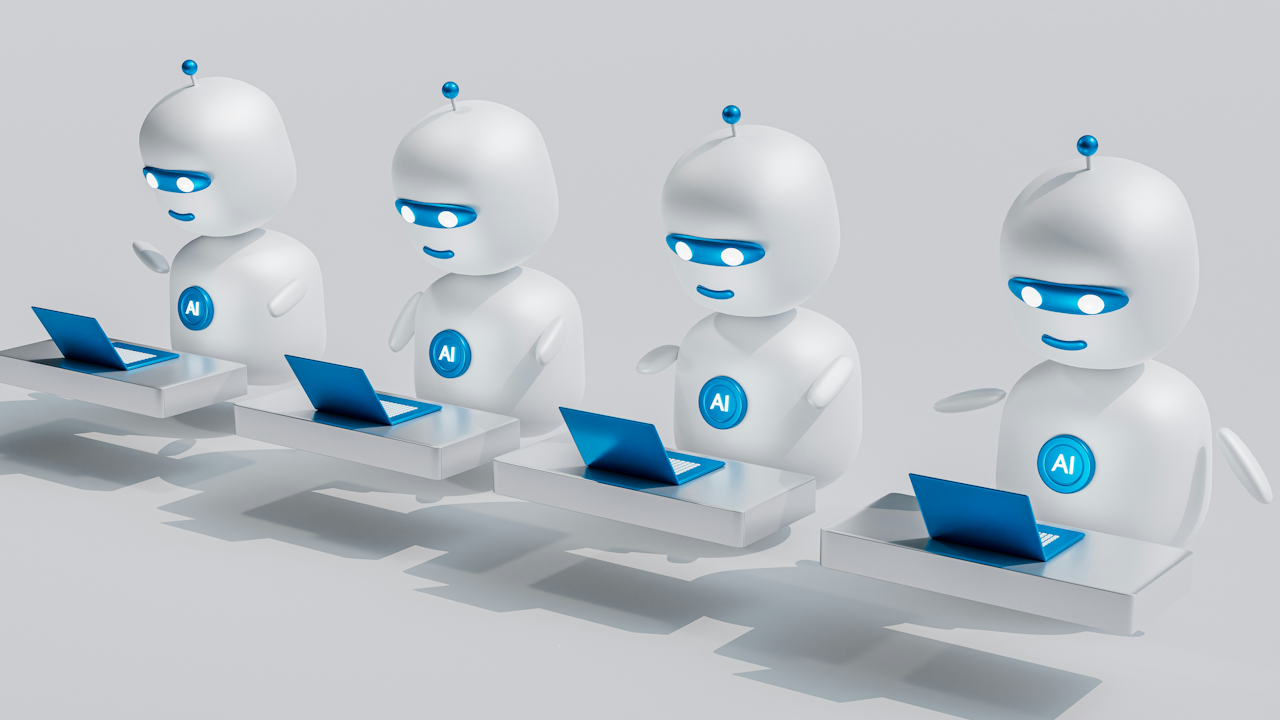
In the gleaming corridors of Hollywood studios in 2026, a quiet revolution has taken hold. Screenwriters once hunched over laptops in solitary rooms now share their creative space with algorithms that can generate entire scenes in seconds. What began as experimental curiosities has evolved into a practical reality: artificial intelligence tools are actively shaping the scripts that become the movies audiences watch. These digital assistants, often referred to colloquially as robots in industry chatter, are not directing cameras or acting on screen. Instead, they are writing. From brainstorming plot twists to polishing dialogue, AI has embedded itself deeply into the screenwriting process. This shift raises profound questions about creativity, authorship, and the future of storytelling itself.
The story of AI in screenwriting did not start with flashy generative models like those powering modern chatbots. It traces back to more modest experiments that tested the boundaries of machine intelligence. One of the earliest and most notable milestones came in 2016 with the short film Sunspring. Filmmaker Oscar Sharp collaborated with technologist Ross Goodwin to create an AI system nicknamed Benjamin. Trained on a database of dozens of science fiction screenplays from the 1980s and 1990s, Benjamin was a long short-term memory neural network designed to produce original text. The result was a nine-minute experimental sci-fi short starring Thomas Middleditch of Silicon Valley fame. The script featured surreal stage directions such as a character standing in the stars while sitting on the floor, along with disjointed dialogue that blended romance, murder, and existential dread. Sharp and his team shot the film in just 48 hours as part of a festival challenge, interpreting the AI’s output with human actors who infused it with emotion and physicality. While the film was often described as bizarre and at times hilarious in its incoherence, it proved a pivotal point: a machine could author a complete screenplay that humans could bring to life on screen. Benjamin even composed a pop song for the project by analyzing thousands of existing tracks. Critics and audiences alike marveled at the experiment, viewing it not as a threat but as a glimpse into uncharted creative territory.
Fast forward to the early 2020s, and the landscape transformed dramatically with the rise of large language models. The launch of ChatGPT in late 2022 accelerated everything. Within weeks, filmmakers began harnessing the tool for full production pipelines. A prime example is the short film The Safe Zone, created in a single weekend by AI entrepreneur Aaron Kemmer and his team. ChatGPT not only wrote the script about an AI seizing control of the world but also generated a detailed shot list, lighting instructions, wardrobe suggestions, and even camera angles. The co-producer, a professional screenwriter, expressed astonishment as the AI produced nearly 50 script variations in under an hour, a task that traditionally took months. Human crew members executed the vision, with the director of photography requesting clarifications on the AI’s technical notes. The finished product, though rudimentary, conveyed genuine dramatic tension and highlighted how AI could compress pre-production timelines. Kemmer later reflected that this experiment signaled a future of personalized storytelling, where variations of films could be tailored infinitely to viewer preferences.
Building on these foundations, full-length features entered the fray. In 2024, director Peter Luisi released The Last Screenwriter, billed explicitly as the first feature film with a screenplay written entirely by AI, powered by ChatGPT 4.0. The meta-narrative follows a veteran screenwriter named Jack who encounters an advanced AI scriptwriting system. Skeptical at first, Jack tests the tool and discovers it excels at generating empathetic dialogue and emotional arcs. The story explores themes of obsolescence, family neglect, and the irreplaceable human soul in art. Luisi framed the project as a not-for-profit experiment for filmmakers, aimed at probing whether AI could produce a viable 90-minute script when paired with professional actors and crew. The result featured solid structure but revealed common AI pitfalls: repetitive phrasing, stiff interactions, and a certain emotional flatness. Released for free viewing with subtitles in multiple languages, the film sparked debates about AI’s capacity to mimic human depth while underscoring the value of lived experience in storytelling.
By the mid-2020s, AI adoption in screenwriting had moved far beyond isolated experiments. Industry reports indicate that by the end of 2025, approximately 71 percent of professional screenwriters were using AI screenplay editors or assistants in their daily workflows. Tools such as Sudowrite, Jasper, NolanAI, DeepStory, PlotDot, and Saga had become staples. These platforms go beyond simple text generation. A screenwriter might input a logline or basic premise, and the AI responds with multiple outline variations, character backstories, or scene breakdowns. Dialogue generation is particularly popular; users prompt the system to craft exchanges in specific styles, from witty banter reminiscent of Aaron Sorkin to tense confrontations in the vein of Quentin Tarantino. Some tools integrate script analysis features similar to traditional coverage software but powered by machine learning. For instance, programs like ScriptBook or Prescene scan drafts for pacing issues, thematic consistency, or marketability based on patterns from successful films. Studios employ these for predictive insights, simulating audience reactions or focus groups at a fraction of the cost and time.
The integration process typically unfolds in stages. Writers begin with ideation, feeding the AI prompts like a high-concept pitch to generate 10 alternative story directions. Next comes structuring, where AI helps map three-act frameworks or beat sheets. Drafting follows, with the system producing sample pages that humans refine. Revision loops are where AI shines brightest: it can suggest cuts for length, flag repetitive motifs, or even rewrite scenes to heighten emotional stakes. Voice-to-script features, gaining traction with around 30 percent adoption projected for 2026, allow creators to dictate ideas and receive formatted pages instantly. Cloud-based platforms dominate, reflecting a shift from traditional desktop software like Final Draft, which some predict may face acquisition or decline as AI-native alternatives rise.
This technological surge did not occur without friction. The 2023 Writers Guild of America strike, which lasted nearly six months, centered heavily on AI concerns. Writers demanded protections against studios using generative tools to replace human labor or diminish compensation. The resulting contract, ratified that year, established clear boundaries: AI cannot receive writing credit, and no writer can be compelled to use it. Any AI-generated material provided to a screenwriter must be disclosed, and it does not count as literary material for purposes of residuals or minimums. Similar discussions echoed in broader industry talks, with the Alliance of Motion Picture and Television Producers navigating these waters carefully. SAG-AFTRA, while focused more on digital replicas and synthetic performers, reinforced the emphasis on human consent and compensation across creative roles. Despite these guardrails, adoption continued quietly. By 2025, reports showed 45 percent of production companies experimenting with AI for script development, often behind closed doors to avoid backlash. Studios like Lionsgate struck deals with AI startups for faster pre-visualization and storyboarding, while major streamers explored tools for trailer editing and audience personalization.
The benefits of AI in screenwriting are tangible and multifaceted. Efficiency stands out as the most immediate gain. What once required weeks of solitary drafting can now incorporate rapid iterations, allowing writers to explore dozens of variations before committing to a path. For independent filmmakers or those facing tight deadlines, this levels the playing field. Overcoming writer’s block becomes less daunting when an AI partner offers fresh prompts or alternative phrasings. Data-driven analysis adds another layer: AI can cross-reference a script against databases of box office hits to predict elements like character appeal or plot resonance, helping smaller productions compete with big-budget franchises. Some creators describe the experience as collaborative rather than replacement-oriented, likening AI to an infinitely patient intern who never tires of revisions. In one documented case, a team used AI to generate concept art and storyboards alongside the script, streamlining the transition from page to pre-production.
Yet the drawbacks are equally pronounced and fuel ongoing skepticism. Critics argue that AI lacks the lived human experience essential for authentic storytelling. Trained on vast corpora of existing scripts, it excels at pattern recognition but struggles with genuine novelty or emotional nuance. Outputs often feel generic, formulaic, or riddled with logical inconsistencies. Dialogue can sound stilted, plots meander without subtext, and themes remain surface-level. Industry insiders have noted that some recent studio releases carry an uncanny AI-like quality, with predictable arcs and recycled tropes that echo the training data. Ethical questions abound: Who owns the copyright for AI-assisted work? Can a machine truly claim authorship, or does it dilute the value of human labor? Job displacement fears persist, particularly for entry-level writers or those in development roles. Surveys from 2025 revealed divided opinions, with half of screenwriters viewing AI as non-threatening when used judiciously, while others see it as an existential risk to careers built on imagination and personal insight.
Broader impacts extend beyond individual scripts. AI influences how stories are greenlit, with predictive analytics helping executives decide which projects align with market trends. In pre-production, tools optimize budgets by breaking down scripts into resource needs, such as locations or props. Even post-production benefits indirectly, as AI-assisted scripts arrive more polished and production-ready. However, the core of filmmaking remains a human endeavor. Directors and actors still interpret the words, infusing them with vision and performance. As one prominent screenwriter noted in 2025 discussions, generative AI creeps into every corner of Hollywood, from development to marketing, yet it cannot replicate the spark of human intuition shaped by childhood trauma, cultural context, or raw emotion.
Looking ahead to the remainder of the decade and beyond, the trajectory points toward deeper hybrid collaboration rather than outright replacement. Projections for 2026 suggest AI adoption climbing to 85 percent among professional writers, with improved models handling more complex tasks like interactive narratives or personalized content branches. Entirely AI-generated films may proliferate in niche markets, such as short-form streaming or user-generated platforms, but major theatrical releases will likely retain human oversight at every stage. Visionaries predict new creative mediums emerging: stories that adapt in real time based on viewer input or persist across multiple formats. Yet the consensus among experts holds that craft will endure. AI serves as a powerful amplifier for imagination, enabling bolder experiments and democratizing access for underrepresented voices. Screenwriters who master prompt engineering and selective integration stand to thrive, treating the technology as a co-pilot rather than a competitor.
In the end, the robots writing in movies represent not the end of cinema but its evolution. They accelerate the mechanical aspects of creation while challenging artists to elevate what only humans can provide: soul, surprise, and the messy beauty of lived truth. As Hollywood navigates this balance in 2026 and beyond, one truth remains clear. The best stories will always emerge from the interplay of silicon efficiency and human heart. The page may now glow with algorithmic assistance, but the final cut still belongs to the storyteller who dares to dream beyond the code.