

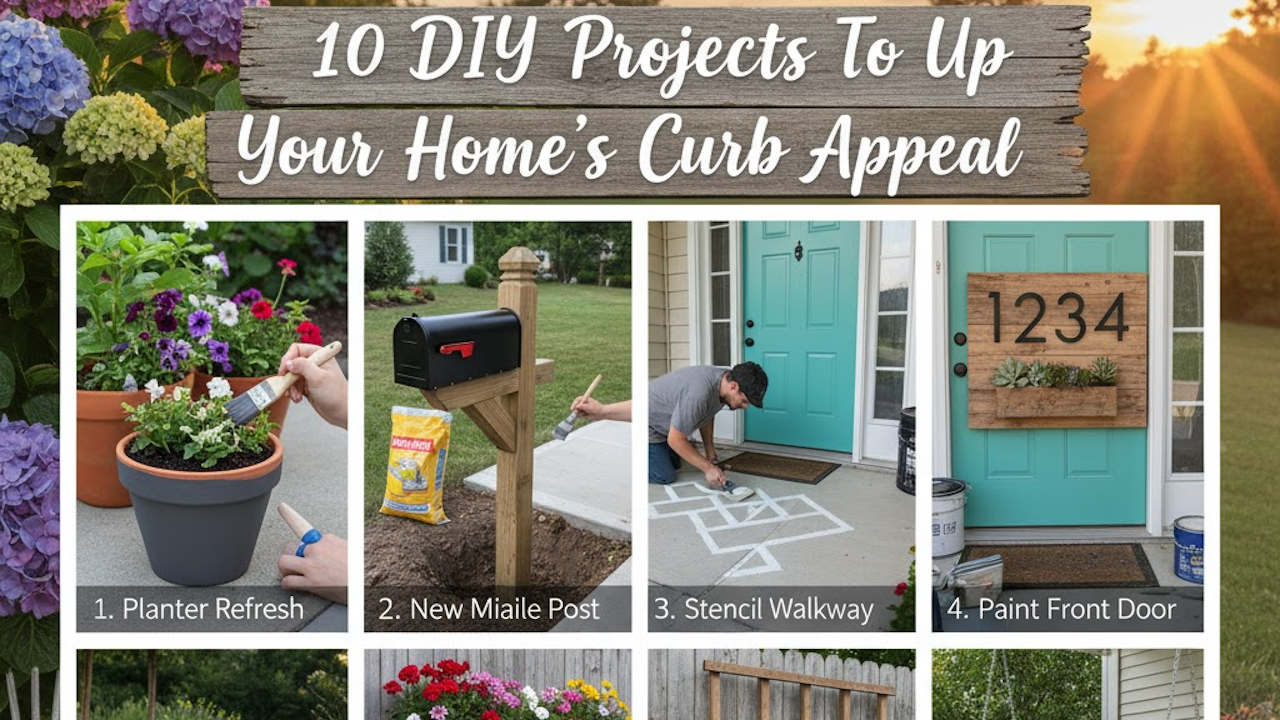
Curb appeal is the first impression your home makes on visitors, neighbors, and potential buyers. A well-maintained exterior not only boosts your property’s value but also creates a welcoming atmosphere that makes you proud to come home every day. The good news is that you do not need a big budget or professional contractors to make a significant difference. With some basic tools, a weekend or two, and a bit of creativity, you can transform your home’s exterior through these accessible DIY projects. Each one focuses on high-impact changes that are achievable for beginners and seasoned homeowners alike. Let’s explore ten projects that will elevate your home’s look from ordinary to outstanding.
1. Refresh Your Front Door with a Bold Paint Job
Your front door is the focal point of your home’s entrance and a quick way to add personality. A fresh coat of paint in a vibrant color can instantly make your entryway pop against the rest of the facade.
Materials needed: Exterior paint, primer, painter’s tape, sandpaper, paintbrushes or rollers, and drop cloths.
Start by cleaning the door thoroughly with soap and water to remove dirt and grime. Lightly sand any glossy surfaces for better adhesion, then apply primer if the door is bare wood or a dark color. Tape off hardware and glass panels, then apply two coats of paint, allowing drying time between coats. Reinstall hardware once everything is dry.
For extra impact, consider a glossy finish for modern homes or a matte look for traditional styles. This project typically costs under 50 dollars and can be completed in a single afternoon. Regular touch-ups will keep it looking sharp for years.
2. Create a Vibrant Flower Bed Along the Foundation
Flower beds soften hard lines and add color and texture to your landscaping. A well-planted bed draws the eye and signals that the home is cared for.
Materials needed: Shovel, garden edging, topsoil or compost, mulch, and flowering plants suited to your climate such as perennials or annuals.
Choose a spot along the front of the house and mark the border with a garden hose for a natural curve. Dig out grass or weeds to a depth of about six inches, then install edging to contain the soil. Mix in compost for nutrients, plant your flowers in clusters for visual interest, and finish with a layer of mulch to retain moisture and suppress weeds.
Water regularly during the first few weeks. Opt for low-maintenance plants like hostas, daylilies, or lavender to minimize ongoing work. This project enhances biodiversity and can be expanded over time as your confidence grows.
3. Install Modern House Numbers and Address Plaques
Large, stylish house numbers improve visibility and add a custom touch that feels polished and intentional.
Materials needed: House number plaques or individual numerals, drill with bits, screws or adhesive, level, and measuring tape.
Measure and mark the placement on your home’s exterior wall or post, ensuring they are at eye level and well-spaced. Use a level to keep them straight, then drill pilot holes and secure the numbers firmly. For brick or siding, choose appropriate anchors.
Select numbers in metal, ceramic, or painted wood to match your home’s style. This small upgrade takes less than an hour but makes a big statement, especially when paired with fresh paint nearby. It also helps emergency services locate your home quickly.
4. Add Solar-Powered Outdoor Lighting
Lighting extends the beauty of your home into the evening and improves safety around pathways and entrances.
Materials needed: Solar pathway lights, stake lights, or wall-mounted fixtures, and possibly outdoor extension cords if needed for non-solar options.
Position lights along walkways, near the front door, or to highlight architectural features. For solar models, simply stake them into the ground in sunny spots so they charge during the day. Test the lights at dusk to adjust angles for the best effect.
Choose warm white lights for a cozy feel or cool tones for a modern vibe. These fixtures require no wiring, making them ideal for renters or quick installations. Replace batteries as needed and clean the solar panels occasionally for consistent performance.
5. Build Simple Wooden Planter Boxes
Planters add height, color, and structure to porches or entry areas without permanent changes to the landscape.
Materials needed: Pressure-treated lumber or cedar boards, screws, drill, exterior wood stain or sealant, potting soil, and plants.
Cut boards to desired dimensions for rectangular boxes, then assemble the sides and base with screws. Drill drainage holes in the bottom to prevent root rot. Stain or seal the wood for weather resistance, then fill with soil and plant flowers, herbs, or small shrubs.
Place planters symmetrically on either side of the door or along railings. This project can be scaled to fit your space and completed in a few hours. Group planters of varying heights for dynamic visual appeal.
6. Pressure Wash the Exterior Surfaces
Years of dirt, mildew, and pollen can dull your home’s appearance. Pressure washing restores the original brightness of siding, walkways, and driveways.
Materials needed: Pressure washer (rent or buy a 2000-3000 PSI model), cleaning solution safe for your siding type, safety goggles, and gloves.
Test the pressure on an inconspicuous area first to avoid damaging paint or wood. Work from the top down in sections, maintaining a consistent distance from the surface. For stubborn spots, apply a mild detergent and let it dwell before rinsing.
Avoid washing windows directly or using excessive pressure on delicate materials. This task can make your home look newly built and is often the most satisfying before-and-after project. Schedule it annually for ongoing maintenance.
7. Hang Charming Window Boxes
Window boxes bring color up to eye level and frame your windows beautifully.
Materials needed: Window boxes (wood, metal, or plastic), brackets or mounting hardware rated for the weight, drill, and flowering plants.
Measure your windowsills and choose boxes that fit proportionally. Secure brackets firmly into the wall studs or use heavy-duty anchors. Plant a mix of trailing vines, upright flowers, and fillers for a full look, then water and fertilize as needed.
Coordinate flower colors with your door or trim for cohesion. These boxes are easy to swap out seasonally, keeping the display fresh year-round. They work especially well on homes with multiple front-facing windows.
8. Update or Customize Your Mailbox
A dated mailbox can drag down the entire curb appeal. Replacing or decorating it creates a neat, finished look.
Materials needed: New mailbox (post-mounted or wall-mounted), post if replacing, paint or decorative accents, and concrete for securing the post.
Dig out the old post if necessary, set the new one in concrete, and level it carefully. Attach the mailbox and add numbers or a flag. For a custom touch, paint it to match your home’s color scheme or add weatherproof decals.
This project is inexpensive and quick, often finished in one morning. Check local regulations for mailbox standards to ensure compliance.
9. Lay a Simple Gravel or Paver Pathway
A defined pathway guides visitors and adds structure to your front yard.
Materials needed: Gravel, pavers, or stepping stones, landscape fabric, edging, shovel, and tamper.
Mark the path route with stakes and string. Dig out the area to a few inches deep, lay fabric to block weeds, then add a base layer of gravel or sand. Set pavers or stones in place and fill gaps with more gravel or sand, tamping down for stability.
Curved paths feel more inviting than straight ones. This addition improves drainage and reduces mud tracking while looking intentional and well-planned.
10. Paint or Stain Your Fence or Garage Door
Fences and garage doors are large surfaces that benefit greatly from refreshed color.
Materials needed: Exterior paint or stain, brushes, rollers, sprayer if available, painter’s tape, and drop cloths.
Clean the surfaces thoroughly and repair any damaged sections. Tape off adjacent areas, then apply stain or paint in thin, even coats. For wood fences, a semi-transparent stain preserves the grain while protecting against elements.
Choose colors that complement your home’s palette. This project dramatically improves uniformity and can be done in sections over multiple weekends if needed. Proper preparation ensures the finish lasts longer.
These ten projects prove that meaningful improvements to your home’s curb appeal do not require massive overhauls. Start with one or two that fit your skill level and available time, then build momentum as you see results. Many of these enhancements use affordable materials from local hardware stores and can be completed with common household tools.
Beyond aesthetics, investing time in your home’s exterior fosters a sense of pride and can increase resale value significantly. Share your progress with neighbors or online communities for inspiration and ideas. With consistent effort, your home will stand out as the most inviting on the block. Grab your tools and get started. Your future self and every passerby will thank you.